2026 Best Zrhmed Endoscopy Systems for Global Buyers?

Time:2026-11-11 Author:Liam
0%

Choosing the best endoscopy system in 2026 is not simply a matter of comparing prices or screen size. A suitable system must fit the procedures performed, the available clinical space, and the team’s daily workflow. For global buyers, service access, installation requirements, training, and replacement-part availability also deserve careful attention. Small details matter. A connector that does not match existing equipment can complicate setup, while unclear warranty terms may affect long-term costs.

This guide examines Zrhmed Endoscopy systems through practical criteria buyers can verify: imaging and illumination specifications, processor and monitor compatibility, scope options, reprocessing needs, and documented support arrangements. Product names and configurations can vary by market, so confirm current specifications and included components directly with the supplier. Ask for written details about warranty coverage, delivery timelines, technical assistance, and user training. These checks help separate measurable features from broad marketing claims.

“Best” remains contextual. A system that suits a high-volume hospital may not be the right choice for a smaller clinic. Buyers should compare equipment against their intended procedures, staff experience, budget, and local maintenance capacity. A polished brochure can still leave practical questions unanswered. That is worth remembering. This overview is a starting point, not a substitute for clinical, technical, or procurement review. Careful verification can make a purchasing decision more transparent and better aligned with real operating needs.
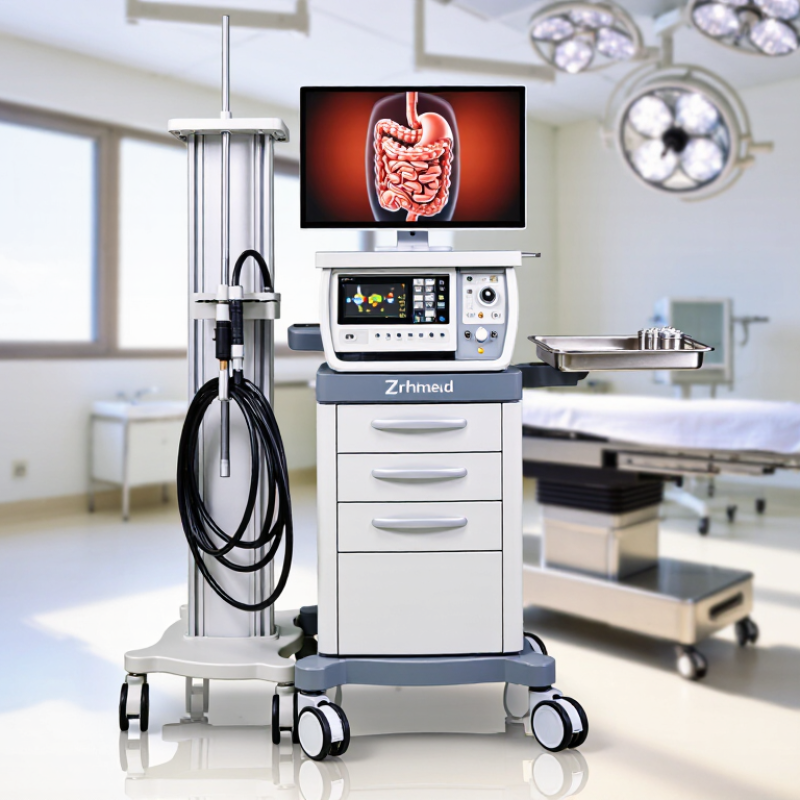
2026 Best Zrhmed Endoscopy Systems for Global Buyers?

Define the 2026 Zrhmed System Comparison by Clinical Use and Core Components

A 2026 endoscopy-system comparison should begin with clinical use, not a feature checklist. Upper gastrointestinal examinations, colonoscopy, and therapeutic procedures place different demands on image control, suction, irrigation, and scope maneuverability. IARC’s Global Cancer Observatory 2022 estimated about 1.9 million new colorectal cancer cases worldwide. That burden makes dependable colonoscopy capability important, but it does not make every facility’s needs identical.

Compare the core components as a working chain: endoscope, video processor, light source, display, and supporting functions such as insufflation and fluid management. Check image clarity under realistic room lighting, connector compatibility, service access, and the time required to prepare equipment between procedures. Small details matter. A bright monitor is less useful if the image lags or the scope is uncomfortable to handle. For reprocessing, review the manufacturer’s instructions and the facility’s established workflow; equipment choice cannot replace trained staff or documented checks.

Clinical performance also depends on the operator and examination quality. The ASGE/ACG quality-indicator guidance for colonoscopy sets a 95% cecal-intubation target for screening examinations. This is not a perfect proxy for system quality, but it offers buyers a measurable clinical reference. Compare systems using local procedure volumes, training needs, maintenance response, and total cost of ownership. Some comparison tables still overvalue headline resolution. That deserves a second look.

Compare Imaging Options Against 4K UHD Resolution: 3,840 × 2,160 Pixels

When comparing endoscopy imaging options with 4K UHD, use 3,840 × 2,160 pixels as a reference, not a guarantee of better images. Resolution describes the number of pixels, but the lens, sensor, illumination, and image processing also shape what appears on screen. A detailed image can still look soft if focus is uneven or the light falls off at the edges. Pixels are only part.

Ask how each system handles fine structures, subtle color differences, and movement. Compare the same scope, display, and recording setup where possible; changing several components can make results hard to interpret. Check whether the monitor and capture pathway can display or preserve the stated resolution. Otherwise, a 4K image may be reduced before it reaches the viewer. Test the full chain.

A useful evaluation includes live viewing, recorded footage, and close inspection of small details under realistic lighting. Note glare, noise in darker areas, and whether colors remain consistent as the scope moves. Request technical specifications and verify them through a hands-on demonstration, rather than relying on a resolution label alone. This takes time, and the comparison may still feel imperfect, but it gives buyers a clearer basis for judging image quality and workflow fit.

Check IEC 60601-2-18 Safety and ISO 13485 Quality-System Evidence

2026 Best Zrhmed Endoscopy Systems for Global Buyers?

A polished demo is useful, but it cannot establish electrical safety. Ask for evidence against IEC 60601-2-18, the particular standard for endoscopic equipment. Check the report’s edition, issuing laboratory, tested configuration, and model identifiers. Do they match the system you will receive?

Look closely at the camera processor, light source, monitor, and endoscope connections. A change in accessories or configuration may affect what the test evidence covers. Ask how electrical leakage, temperature, and essential performance were assessed. Small details matter. A certificate alone may not answer every question.

ISO 13485 evidence addresses the manufacturer’s quality-management system, not the safety of a specific device. Review the certificate’s scope, covered sites, and validity, then ask for an overview of traceability, corrective actions, and design-change controls. Does the documentation describe the actual production location? That is worth checking. Documents can appear complete while leaving a gap between a tested setup and a delivered one. Buyers should record unanswered questions and request clarifications before comparing systems. No checklist replaces a careful review, and I would not treat a neat file as proof by itself.

Verify Scope Compatibility and CDC High-Level Disinfection Requirements

For global buyers comparing endoscopy systems, verify compatibility before discussing price. Check the scope’s connector, processor, light source, working-channel diameter, valves, and leak tester against the equipment specifications. A mismatch may appear minor on a checklist, then stop a procedure when a scope will not connect. Confirm that each scope model has clear, validated reprocessing instructions for the facility’s washer-disinfector and disinfectant.

High-level disinfection is a core safety requirement for flexible endoscopes that contact mucous membranes. CDC guidance emphasizes meticulous cleaning before disinfection and following the scope and reprocessing-equipment instructions. FDA’s 2015 duodenoscope surveillance reported high-concern organisms on about 5% of sampled, reprocessed devices. The finding concerned duodenoscopes, not every endoscope type, but it shows why written procedures and routine quality checks matter. Compatibility on paper is not enough; staff need to confirm it in practice.

Tips: Request a model-by-model compatibility matrix. Ask who validates the full cleaning and disinfection cycle, and keep the answer with the purchase records. Check local water, utility, and service needs, too. Small details get missed. Then revisit the plan with reprocessing staff; they may spot a workflow issue that procurement cannot.

Assess Global Readiness Through Service Coverage, Training, and Total Cost

Global readiness for an endoscopy system is more than shipping equipment across borders. Buyers should check where trained service staff are based, how quickly they can respond, and whether common replacement parts are stocked nearby. Ask for written service hours and escalation steps. Small details matter. A scope awaiting repair can disrupt a full day of scheduled procedures, even when the system itself performs well.

Training should match the people who will use and maintain the equipment. Request hands-on sessions for clinicians, nurses, and biomedical staff, with clear materials in the working language. Confirm how new employees can receive training later. Remote instruction can help, but it may not replace practice with the actual controls, scopes, and reprocessing workflow. That distinction is easy to overlook.

Compare total cost over the expected service life, not only the purchase quote. Include installation, accessories, routine maintenance, repairs, training, and likely downtime. Ask which costs are fixed and which may change. A spreadsheet can make this look cleaner than it is. Local labor rates, shipping delays, and procedure volumes can shift the estimate. Use realistic scenarios, then verify assumptions with the facility’s own staff before committing.

This buyer-defined example allocates evaluation priorities across service coverage, training, total cost of ownership, and interoperability. The percentages are planning weights—not measured vendor results or a brand ranking. Compare suppliers using documented regional support, training plans, and itemized lifecycle costs.

FAQS

What evidence should buyers request for endoscopic equipment safety?

Request evidence against IEC 60601-2-18. Check the report edition, laboratory, tested configuration, and model identifiers.

Does a certificate prove the delivered system was tested?

Not by itself. Compare the tested setup with the delivered camera processor, light source, monitor, and endoscope connections. Small details matter.

Which safety checks should buyers ask about?

Ask how electrical leakage, temperature, and essential performance were assessed. I may be overlooking a detail, so request written clarification.

What does ISO 13485 evidence show?

It addresses the manufacturer’s quality-management system, not the safety of one specific device. Review its scope, sites, and validity.

What production records are worth reviewing?

Ask about traceability, corrective actions, and design-change controls. Confirm the documents describe the actual production location.

How can buyers assess service readiness?

Check where trained service staff are based, their response times, and whether replacement parts are stocked nearby. Ask for service hours and escalation steps.

What training should a facility request?

Request hands-on sessions for clinicians, nurses, and biomedical staff. Use materials in the working language and confirm how new employees can train later. Remote sessions may not be enough.

What costs belong in a total-cost estimate?

Include installation, accessories, maintenance, repairs, training, and likely downtime. Check which costs are fixed. Estimates can look tidier than reality.

How should facilities compare cost assumptions?

Use realistic scenarios that account for local labor, shipping delays, and procedure volumes. Verify assumptions with facility staff before committing. It is easy to miss something.

Conclusion

Choosing a Zrhmed Endoscopy system in 2026 starts with matching the configuration to its intended clinical use and identifying the essential components, such as the imaging unit, light source, monitor, and compatible scopes. Compare imaging options against the stated 4K UHD benchmark of 3,840 × 2,160 pixels, while also considering image clarity, workflow needs, and the procedures the system is expected to support.

Before purchasing, request evidence of applicable IEC 60601-2-18 safety testing and an ISO 13485 quality-management system. Confirm scope compatibility and follow current CDC guidance for high-level disinfection, including the instructions for each device. Finally, evaluate service coverage, technical support, user training, spare-parts access, and total cost of ownership across the intended operating region. A structured review of these factors can help buyers compare systems consistently and plan for safe, sustainable use.


Liam

Liam

Liam is a dedicated marketing professional with a profound expertise in the industry, where he excels at highlighting the unique advantages of our core products. With a keen understanding of market trends and consumer needs, Liam frequently updates our company’s professional blog, providing......