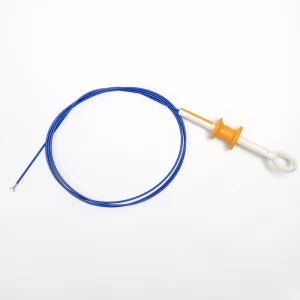
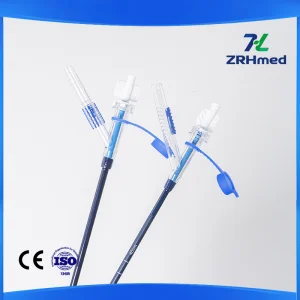
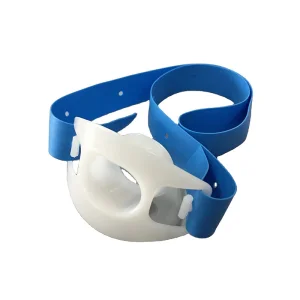
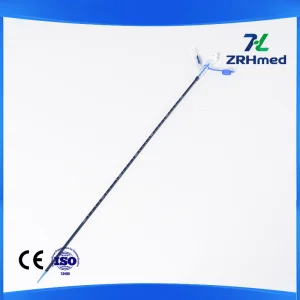
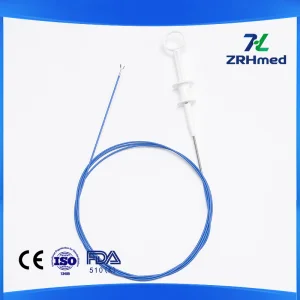
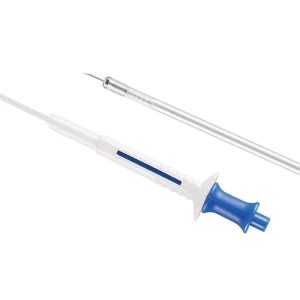
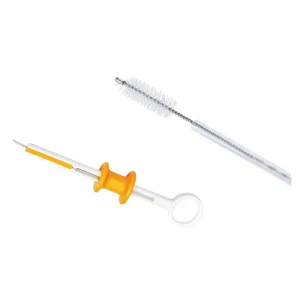
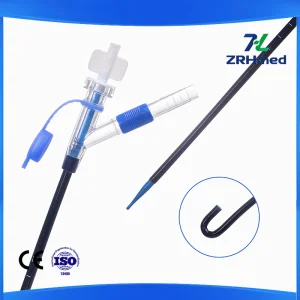
Featured sterile consumables engineered for high-precision diagnostic and interventional procedures.
Navigating structural transitions from reusable instruments to single-use precision endoscopic biopsy forceps and specialized diagnostic devices.
In modern minimally invasive medicine, endoscopic tissue sampling serves as the gold standard for definitive histopathological diagnosis of gastrointestinal, respiratory, and urological lesions. The global ecosystem of biopsy suppliers and factories has undergone a profound structural shift over the last decade. Historically dominated by reusable, multi-use stainless steel forceps requiring labor-intensive decontamination, reprocessing, and re-sterilization, the medical device sector has overwhelmingly pivoted toward single-use, pre-sterilized disposable biopsy instruments.
This macro trend is driven by three essential parameters: infection control mandates (mitigating cross-contamination risks associated with persistent prions and biofilm-forming pathogens), total-cost-of-ownership (TCO) optimization for hospital systems, and structural advancements in micro-engineering that allow single-use instruments to equal or surpass the mechanical performance of traditional multi-use devices. Today, specialized manufacturing hubs—most notably modern industrial medical clusters in China—are leading the global supply chain by delivering high-precision OEM and ODM biopsy instruments under strict ISO 13485, CE MDR, and US FDA 510(k) regulatory frameworks.
For international healthcare procurement directors, hospital group buyers, and medical distribution brands, selecting a biopsy manufacturing partner requires deep due diligence that extends beyond basic unit pricing. It demands an evaluation of metallurgical precision, sheath flexural rigidity, jaw sharp-edge retention, automated quality assurance workflows, and end-to-end regulatory technical documentation. This document serves as an exhaustive industry white paper outlining the engineering parameters, supply chain advantages, compliance benchmarks, and strategic purchasing dynamics that govern modern biopsy and endoscopic device manufacturing.
Technical breakdown of jaw architecture, sheath friction dynamics, and tactile actuation force.
At the core of an effective diagnostic tissue acquisition device lies intricate biomechanical engineering. A high-performance disposable biopsy forceps must pass through tortured endoscopic working channels—often bent up to 180 degrees during retroflexion—while maintaining minimal actuation resistance and delivering crisp, clean tissue shearing without tearing or crushing cellular structures.
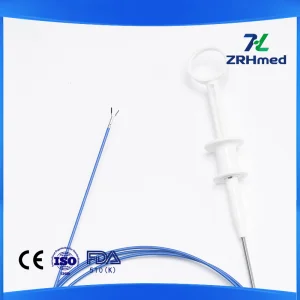
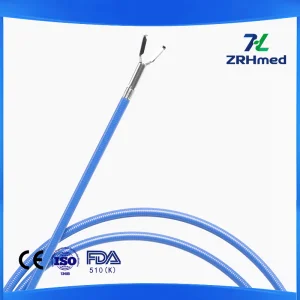
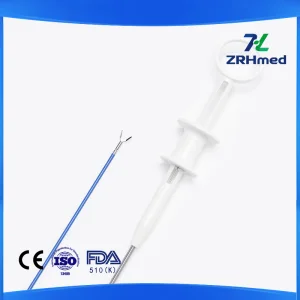
Leading biopsy factories utilize laser-cut medical-grade 316L stainless steel or martensitic alloys to manufacture the distal jaw cups. The geometric design of the jaw directly affects specimen volume and histological diagnostic accuracy:
The insertion tube (sheath) of the biopsy device must balance column strength (pushability) with flexural elasticity (trackability). Factories deploy specialized low-density polyethylene (LDPE), fluorinated ethylene propylene (FEP), or hydrophilic/PTFE-coated metal coil sheaths. The outer diameter is meticulously calibrated to standard endoscope channel dimensions (e.g., 2.0mm, 2.8mm, and 3.2mm channel compatibility), ensuring effortless passage and working channel fluid aspiration even when the endoscope is maximally angulated.
| Parameter | Gastrointestinal (GI) Forceps | Bronchoscopy Forceps | Hot Biopsy Forceps |
|---|---|---|---|
| Outer Diameter (OD) | 2.3mm / 1.8mm | 1.8mm / 1.5mm | 2.3mm |
| Working Length | 1600mm – 2300mm | 1050mm – 1200mm | 1800mm – 2300mm |
| Working Channel Min. | 2.8mm / 2.0mm | 2.0mm / 1.2mm | 2.8mm |
| Special Features | Oval / Alligator / Needle | 360° Rotation / Micro-jaw | Monopolar Electrosurgical Connection |
| Clinical Target | Gastric / Colonic Mucosa | Bronchial Epithelium | Small Polyp Resection & Hemostasis |
Why Tier-1 Chinese medtech factories deliver unmatched structural value to global medical brand owners and distributors.
Chinese endoscopy manufacturers feature fully integrated operations—from precision Swiss-type CNC micro-machining and wire EDM to plastic extrusion, automated laser welding, and high-speed cleanroom packing. This eliminates vendor markups and dramatically shortens product development cycles for custom OEM orders.
World-class factories operate under certified Medical Quality Management Systems (QMS). Every production batch undergoes strict incoming raw material verification, optical dimensional verification, tensile force testing, hinge action endurance cycling, and 100% post-sterilization bioburden testing.
By producing millions of single-use units annually, advanced Chinese medical suppliers achieve unmatched cost efficiency. This allows global brands and hospital tenders to achieve substantial gross margins while introducing superior quality instruments to healthcare facilities.
Key operational and technical metrics international procurement teams must evaluate during factory selection.
Enterprise procurement managers tasked with sourcing single-use biopsy forceps, hemoclips, and endoscopic accessories must follow a structured evaluation framework to mitigate supply chain risks. B2B purchasers should mandate the following verification milestones during supplier qualification:
1. Technical Dossier and Sterilization Validation: Ensure the factory maintains validated Ethylene Oxide (EO) sterilization processing complying with ISO 11135 standards. Request complete residual EO limits reports (ISO 10993-7) guaranteeing safety for patient mucosal contact.
2. Biocompatibility Assurance: Verify that all patient-contacting materials—including stainless steel alloys, plastic handle resins, and sheath coatings—have undergone complete ISO 10993 testing, encompassing cytotoxicity, sensitization, intracutaneous reactivity, and systemic toxicity evaluation.
3. Private Labeling & OEM Versatility: Evaluate the factory's capacity for customized primary blister packaging, inner box design, multi-language IFU (Instructions for Use) printing, and custom sheath color-coding to reflect brand identity.
Mapping specialized biopsy and accessory configurations to specific anatomical pathways and procedures.
Utilized extensively in Esophagogastroduodenoscopy (EGD) and Colonoscopy for tissue sampling of inflammatory bowel disease (IBD), Helicobacter pylori detection, adenomatous polyp evaluation, and suspicious mucosal neoplasms. Long-reach 2300mm flexible forceps are mandatory for lower GI passage.
Dedicated bronchoscopy biopsy forceps feature ultra-compact 1.5mm to 1.8mm sheath outer diameters designed to navigate distal segment bronchi. Rotatable mechanisms allow pulmonologists to obtain targeted transbronchial lung biopsies (TBLB) with minimal mucosal trauma.
Deployed alongside flexible ureteroscopes and access sheaths for upper tract urothelial carcinoma (UTUC) tissue sampling and stone retrieval. Highly flexible sheaths are imperative to maintain scope deflection angles inside the renal pelvis.
Anticipating next-generation technological advancements in biopsy forceps and therapeutic consumables.
The field of diagnostic endoscopy continues to evolve toward higher precision, smaller device profiles, and integration with digital imaging systems. Key R&D vectors reshaping the biopsy manufacturing sector include:
Comprehensive market access support for seamless international registration and distribution.
Navigating global regulatory pathways is a crucial capability for any top-tier biopsy manufacturer. Leading export factories maintain comprehensive regulatory engineering departments dedicated to assisting overseas distributors with national registrations:
European Union (CE MDR 2017/745): Technical documentation structures prepared in strict compliance with EU MDR standards, including Clinical Evaluation Reports (CER), Post-Market Surveillance (PMS) plans, and Periodic Safety Update Reports (PSUR).
United States (FDA 510k Clearance): Device master files and predicate device equivalence data ready for rapid 510(k) submissions.
Emerging Markets (ANVISA, NMPA, SFDA, MoH): Standardized Certificate of Free Sale (CFS), ISO 13485 certificates, plant audit reports, and localized stability testing reports enabling swift registration across Latin America, the Middle East, and Southeast Asia.
Advanced therapeutic devices for GI bleeding management, stone retrieval, and mucosal intervention.
Comprehensive technical and commercial responses to common procurement inquiries.