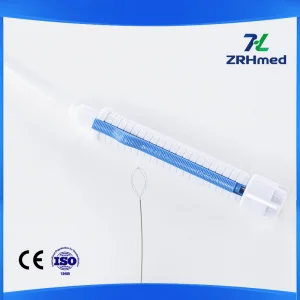
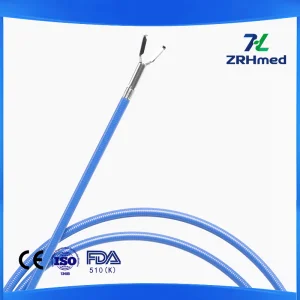
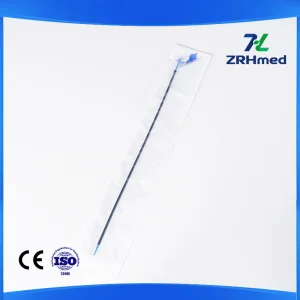
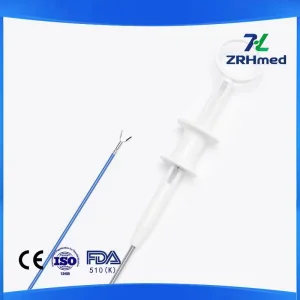
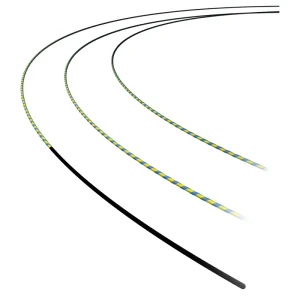
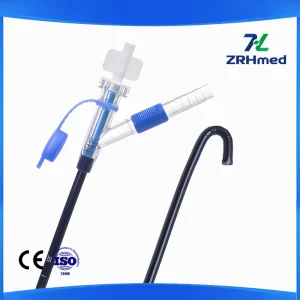
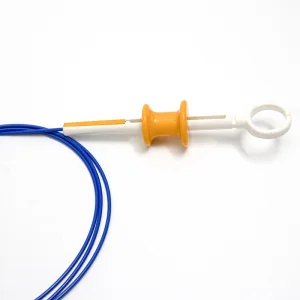
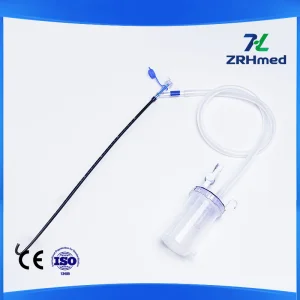
Engineered for seamless working-channel passage, low insertion drag, and instant needle actuation in therapeutic gastroenterology, bronchoscopy, and endourology.
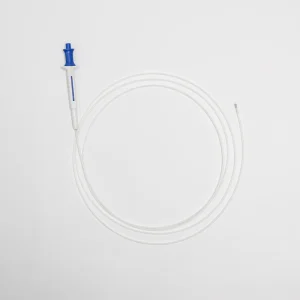
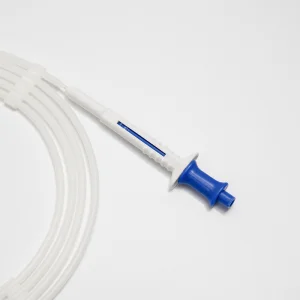
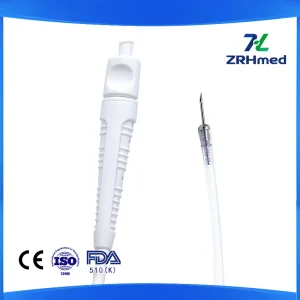
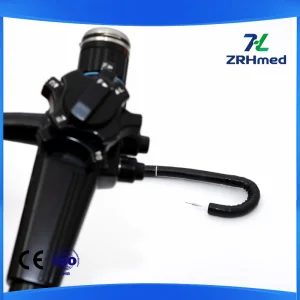
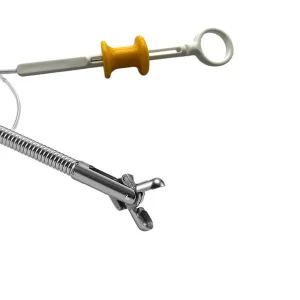
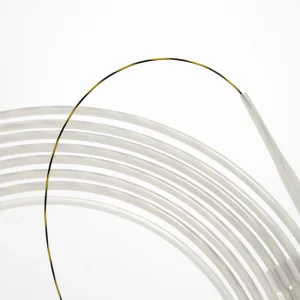
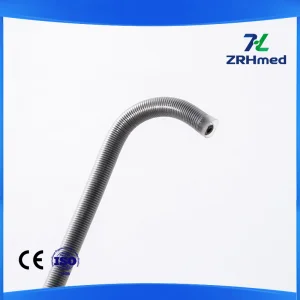
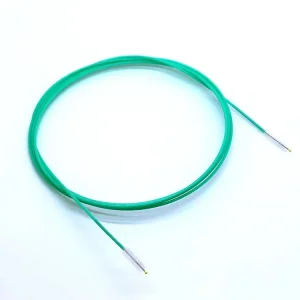
Endoscopic needles represent the critical gateway in minimally invasive GI interventional therapy, transitioning diagnostic inspection into targeted therapeutic interventions.
Effective endoscopic mucosal resection (EMR) and endoscopic submucosal dissection (ESD) depend entirely on the sustained elevation of the target lesion from the muscularis propria. Our needles deliver hypertonic saline, sodium hyaluronate, or viscous lifting agents through ultra-thin wall cannulas without excessive backpressure.
In cases of severe peptic ulcer bleeding, Mallory-Weiss tears, or Dieulafoy's lesions, targeted trans-endoscopic injection of epinephrine (1:10,000) or sclerosants (polidocanol, cyanoacrylate) provides immediate vasoconstriction and tamponade prior to mechanical endoclip deployment.
Longitudinal tumor tracking, surgical margin demarcation, and esophageal variceal obliteration require localized micro-injection of sterile carbon suspensions or ethoxysclerol. Precision bevel geometry guarantees minimal transmural extravasation and prevents needle clogging.
Conventional endoscopic needles frequently suffer from lumen collapse or excessive hydraulic resistance when injecting hyperviscous submucosal lifting agents (such as glycerol or hyaluronic acid). ZhuoRuiHua Medical employs precision micro-drawn 304V surgical steel cannulas with ultra-thin wall (UTW) geometry. This expands the internal lumen diameter by up to 22% while maintaining identical outer French gauges, reducing syringe thumb pressure by over 35% during prolonged ESD procedures.
The global endoscopic consumables sector is undergoing a profound structural transition, driven by stringent cross-contamination protocols, MDR tightening, and hospital procurement rationalization.
Historically, reprocessing endoscopic needles posed catastrophic clinical risks, including biofilm accumulation, micro-bent needle tips that scored expensive flexible endoscope channels, and residual pathogen transmission (including CRE and Hepatitis). International guidelines (ESGE, ASGE, SGNA) now universally advocate for 100% sterile, single-use injection devices.
For hospital supply chain managers, disposable needles eliminate steam autoclave degradation, tracking burdens, and reprocessing labor costs while providing documented sterility assurance per patient intervention.
With the implementation of the European Medical Device Regulation (EU MDR 2017/745), endoscopic needles—classified as Class IIa sterile invasive devices—require exhaustive clinical evaluation reports (CER), rigorous biocompatibility verification under ISO 10993, and unannounced notified body audits.
ZhuoRuiHua Medical maintains continuous ISO 13485:2016 certification and full technical dossier readiness. We empower international distributors to navigate MDR conformity, US FDA 510(k) clearances, and regional registrations (such as ANVISA, SFDA, and NMPA) without regulatory delay.
| Specification Parameter | Standard Market Generic | ZhuoRuiHua Medical High-Precision OEM Needle | Clinical Advantage to Gastroenterologists |
|---|---|---|---|
| Needle Tip Bevel Cut | Standard Dual Bevel (Rough ground) | Tri-Facet Ultra-Sharp Lancet (Electropolished) | Reduces mucosal tearing; requires ≤2.5N penetration force |
| Outer Sheath Material | Single-layer basic PTFE or PVC | Composite Co-extruded Lubricious Fluoropolymer / PEEK | Zero kinking in 210° retroflexion; protects endoscope channel |
| Inner Cannula Wall | Standard Wall (Thick, restricted bore) | Ultra-Thin Wall (UTW) 304V Stainless Steel | Higher flow rates for thick EMR cushions, less syringe resistance |
| Distal Tip Protection | Open metal tube, sharp edges | Smooth Atraumatic Stainless Steel / Rounded Polymer Cap | Cannot scratch or pierce working channel lining during advancement |
| Needle Extension Stroke | Fixed length, prone to play (±1.2mm) | Positive Click-Lock Stroke (4mm, 5mm, 6mm precise stops) | Eliminates risk of deep muscularis propria perforation |
An endoscopic needle must execute a contradictory set of physical demands: longitudinal rigidity for puncture force transmission, combined with exceptional circumferential flexibility to navigate an endoscope deflected to its limit.
We source vacuum-melted 304V austenitic stainless steel known for superior tensile strength and uniform grain boundaries. Through proprietary multi-axis computer numerical control (CNC) micro-grinding and electrochemical deburring, the needle tip achieves a microscopic edge radius below 3 micrometers.
This design prevents tissue core formation (coring), ensuring that blood or tissue plugs do not obstruct the needle orifice during the initial puncture.
The outer sheath incorporates co-extruded fluoropolymer engineering (low-friction PTFE/FEP), exhibiting an exceptionally low dynamic coefficient of friction (μ ≤ 0.04). Even within an endoscope working channel contorted through a tortuous gastrointestinal pathway, the inner needle advances smoothly without bucking or accordion telescoping.
The distal end features an atraumatic metal collar that shields the delicate working channel lining from puncture during catheter passage.
Actuation confidence is engineered into our one-handed ergonomic handle. Featuring a universal Luer-lock connection, clinical assistants can rapidly prime syringes without cross-threading. The thumb-ring sliding mechanism integrates dual physical tactile stops:
Across diverse diagnostic suites and surgical endoscopy operating theaters, needle specifications must directly correspond to tissue thickness, scope working length, and procedural velocity.
In upper gastrointestinal procedures, working lengths of 1600mm to 1800mm with outer diameters of 2.3mm are standard. Common interventions include:
Colonoscopic access requires extended working lengths of 2300mm to navigate the splenic flexure and cecum. Needles must withstand repeated flexure within large loop configurations:
Flexible bronchoscopy operates inside ultra-narrow working channels (2.0mm or 1.2mm in pediatric/ultrathin bronchoscopes), demanding specialized 1000mm–1200mm catheters:
Complementing our expansive portfolio of ureteral access sheaths, nitinol stone baskets, and biopsy forceps, custom extended injection devices support:
Our Jiangxi manufacturing campus operates under a unified quality management system certified to ISO 13485:2016, delivering full lot traceability from raw stainless cannula to the hospital loading dock.
Every endoscopic injection needle is assembled, cleaned, and packed within automated Class 100,000 (ISO Class 8) controlled cleanrooms. Continuous HEPA filtration, particulate particle counts, and environmental bioburden monitoring ensure pristine device baseline hygiene before final sealing.
Sterilization processes are strictly validated in accordance with ISO 11135 for Ethylene Oxide (EO) sterilization. We verify a Sterility Assurance Level (SAL) of 10-6, alongside exhaustive chromatographic residual testing to verify EO and ECH residues remain well below biocompatibility limits defined by ISO 10993-7.
For national medical device distributors and multinational brand owners, ZhuoRuiHua provides end-to-end OEM/ODM private-label capabilities. We deliver comprehensive technical dossiers ready for local regulatory submission:
As interventional endoscopy converges with advanced imaging, oncology, and robotic navigation, needle technology continues to advance beyond simple fluid transport.
With the rapid expansion of Endoscopic Ultrasound (EUS), standard needles lack acoustic reflectivity in deep parenchymal organs. Our advanced R&D pipeline includes circumferential laser micro-dimpling on distal tips. These micro-dimples scatter ultrasound acoustic waves, granting vivid echogenic visibility under EUS guidance for targeted tumor injection and pancreatic cyst ablation.
To eliminate catheter buckling in extreme retroflexion (such as during fundic ESD), our next-generation catheters integrate stainless steel micro-wire braiding within the sheath wall. This delivers instantaneous 1:1 torque transmission and near-infinite column strength without sacrificing bending flexibility.
Partnering with biomedical clinical researchers, we are testing dual-lumen endoscopic injection devices capable of in-situ polymer hydrogel mixing. This enables immediate polymerization of localized drug-eluting depots within submucosal defects, accelerating post-ESD ulcer re-epithelialization while releasing long-term therapeutic agents.
Clear, definitive technical guidance for hospital procurement committees, biomedical engineers, and global medical device importers.
Complete single-use endoscopic instrumentation engineered to optimize procedure times, patient outcomes, and supply chain reliability across all clinical departments.