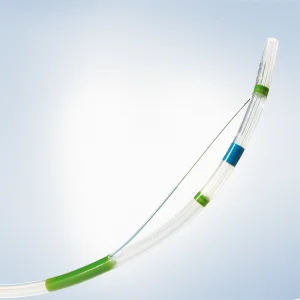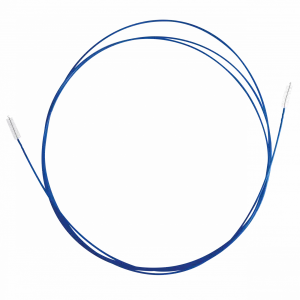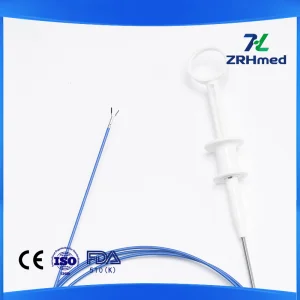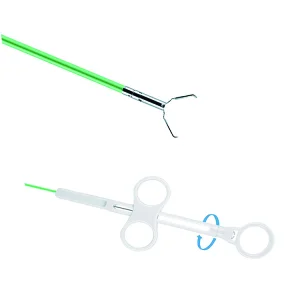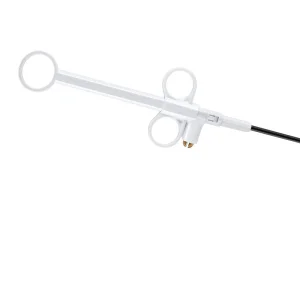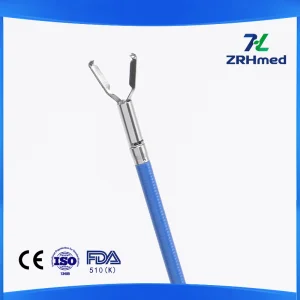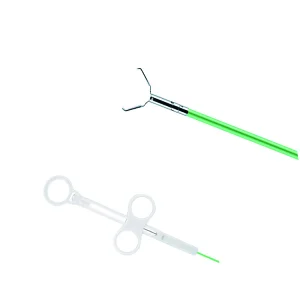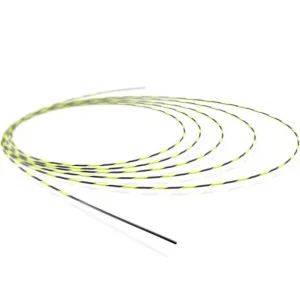
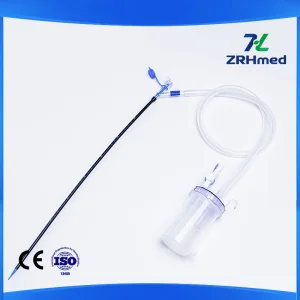
Engineered for seamless compatibility across Olympus, Pentax, Fujifilm, and Karl Storz flexible systems. Below are the priority sterile endotherapy and urological intervention devices manufactured in our Jiangxi precision cleanroom facilities.
The landscape of gastrointestinal endoscopy, bronchoscopy, and endourology has fundamentally transformed. Hospital cross-contamination incidents, particularly involving multidrug-resistant pathogens (such as Carbapenem-Resistant Enterobacteriaceae - CRE) linked to the complex internal lumens of reusable instruments, have driven regulatory bodies worldwide to mandate disposable, single-use solutions. B2B healthcare procurement teams must now navigate a global supply chain where accessory suppliers and factories are evaluated not solely on unit price, but on sub-millimeter manufacturing tolerances, material biocompatibility, and batch-to-batch sterility assurance.
Manual reprocessing of micro-lumen instruments—such as biopsy forceps with tension wires or multi-lumen sphincterotomes—poses persistent contamination liabilities. Single-use accessories eliminate bio-film retention entirely, achieving absolute sterilization certainty under validated EO protocols.
Reusable devices suffer progressive mechanical fatigue, blade dulling, wire stretch, and insulation breakdown during repeated autoclaving. Fresh factory-calibrated devices ensure pristine cutting edges, precise rotational tactile response, and guaranteed tensile strength every single procedure.
While capital outlays for reusable tools seem amortizable, hidden operational costs—chemical enzymatic detergents, staff labor hours, autoclave energy consumption, and repair logistics—frequently exceed consumable unit costs. Direct factory sourcing allows hospitals to cap predictable procedural expenditures.
China’s medical consumable manufacturing infrastructure has evolved from basic assembly plants to high-precision engineering epicenters. Combining vertical metallurgy clusters, advanced micro-polymer extrusion, automated cleanroom operations, and comprehensive tool-making agility, Chinese manufacturing centers like Jiangxi provide unmatched supply chain resilience and cost-to-quality ratios.
High-speed Swiss-type CNC micro-turning lathes and femtosecond laser-cutting platforms fabricate complex surgical stainless steel (304/316L) jaws, Nitinol shape-memory baskets, and articulated hemoclip arms with micron-scale repeatability.
Advanced multi-layer polymer co-extrusion technology enables the production of ultra-thin, kink-resistant Pebax, PTFE, and TPU catheter shafts, incorporating embedded stainless steel braids for exceptional 1:1 torque transmission.
In-house tooling centers drastically compress design iteration cycles. Custom handle designs, specialized biopsy cup curvatures, or proprietary luer-lock connectors transition from 3D CAD modeling to functional steel tooling in 10 to 14 days.
On-site industrial Ethylene Oxide (EO) sterilization chambers operate under strict ISO 11135 protocols. Real-time temperature, humidity, and degassing cycle controls ensure bioburden elimination while keeping EO residuals below detectable thresholds.
Clinical endoscopic intervention is accelerating beyond simple passive diagnostic sampling into aggressive, tissue-sparing microsurgical resections (EMR/ESD) and endourological stone clearance. Consumable manufacturers must engineer devices capable of active hemodynamic and pressure control.
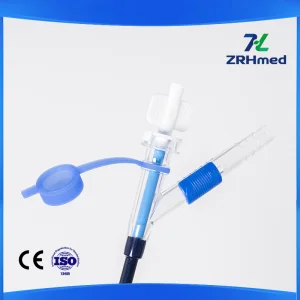
Modern ureteral access sheaths (UAS) integrate continuous negative-pressure aspiration ports. By actively balancing perfusion fluid inflow with continuous micro-stone evacuation, the system maintains renal pelvic pressure below 30 mmHg, preventing pyelovenous backflow and urosepsis.
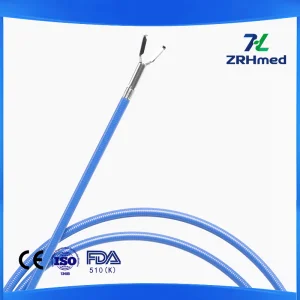
Endoscopic clip mechanics have advanced from rigid release systems to omnidirectional 1:1 rotation handles with repeated reopen-and-reposition capability. Clinicians can perfectly orient claw angles (90° to 135°) to secure arterial spurters and large mucosal defect margins prior to irreversible deployment.
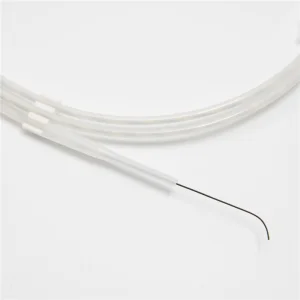
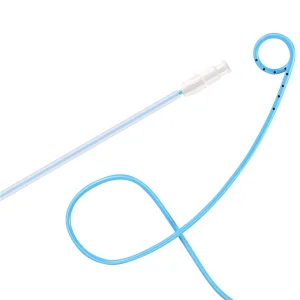
Biliary and urinary ductal cannulation demands a dual mechanical profile: an ultra-stiff, kink-resistant Nitinol core for accessory pushability, coupled with a flexible, radiopaque tungsten coiled tip enveloped in cross-linked hydrophilic polymer for atraumatic passage through strictures.
Regulatory gatekeeping has tightened dramatically. European Medical Device Regulation (MDR) requires exhaustive clinical evaluation reports (CER), stringent biocompatibility profiling (ISO 10993 cytotoxicity, sensitization, systemic toxicity), and rigorous post-market surveillance (PMS) for all single-use invasives.
Every clinical department imposes distinct mechanical, geometric, and hydrodynamic demands on working-channel tools. Accessories must perform flawlessly within curved anatomies, under electrosurgical currents, and through narrow endoscope channels.
High-volume upper and lower endoscopy units perform routine mucosal screening and aggressive lesion resections. Tools must navigate extreme tortuosity in the retroflexed gastroscope or cecal colonoscope.
Endoscopic Retrograde Cholangiopancreatography demands instruments capable of entering the papilla of Vater under precise fluoroscopic visual guidance.
Flexible ureterorenoscopy mandates tools that preserve endoscope deflection angles while safely navigating the ureterovesical junction.
Outpatient surgical centers prioritize throughput, fast room turnover, and instrument longevity through standardized procedural consumables.
Hospital networks, medical device distributors, and private-label brand holders face escalating risks from supply chain volatility, freight disruptions, and shifting regulatory demands. Leading Chinese manufacturing partners resolve these systemic bottlenecks through vertically integrated production models.
Rather than fragmenting procurement across specialized factories, distributors can consolidate their entire endoscopy working-channel portfolio under ZhuoRuiHua Medical. Sourcing biopsy forceps, hemoclips, snares, guidewires, sphincterotomes, and access sheaths from a single unified quality system streamlines customs declarations and drastically reduces shipping and administrative overhead.
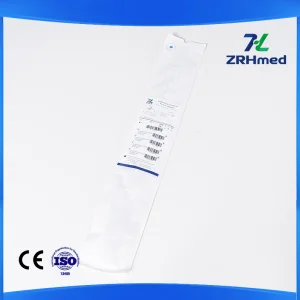
Turnkey contract manufacturing programs engineered to elevate private labels into hospital formularies. Services encompass customized handle coloring, laser-etched graduation marks, sterile primary blister pouch printing (Tyvek to PETG), multilingual Instructions for Use (IFU), and Master Regulatory File support tailored to local health ministries.
To safeguard against global supply shocks, our manufacturing operations maintain qualified dual-stream supply pipelines for medical-grade raw materials—including certified medical 304/316L stainless steel wire, Nitinol alloys, medical-grade PTFE resin, and DuPont Tyvek sterilization packaging—ensuring uninterrupted continuous supply runs.
| Clinical Device Category | Critical Engineering Parameter | Legacy Industry Baseline | ZRH Advanced Factory Standard | Clinical & Commercial Impact |
|---|---|---|---|---|
| Disposable Endoscopic Hemoclip | Jaw Rotation & Repositioning | Unidirectional / Lock-on-close | 360° Synchronous 1:1 Bilateral; Multi-Reopenable | Allows exact anatomical positioning before firing; reduces wasted clips. |
| Negative Pressure Ureteral Sheath | Pressure Control & Coil Reinforcement | Passive gravity outflow, uncoiled shaft | Active Luer Aspiration, Embedded SS Flat Wire Coil | Prevents ureteral kink collapse; maintains renal pelvic pressure < 30 mmHg. |
| Hydrophilic Guidewire (ERCP/Uro) | Lubricious Coating Integrity | Dip-coated, prone to flaking | Covalently Bonded Cross-Linked Hydrophilic Polymer | Zero particulate shedding; smooth navigation through severe strictures. |
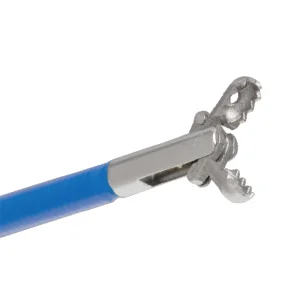
| Single-Use Biopsy Forceps | Blade Sharpness & Cup Match | Mechanical stamping, 0.08mm tolerance | Laser-Cut Razor Edge, Interlocking < 0.02mm Match | Clean histological specimen retrieval without tissue crush artifact. |
| Triple-Lumen Sphincterotome | Tip Deflection & Dielectric Strength | Manual tension, single wire insulation | Pre-Curved Tip, Multilayer PTFE Insulation > 3000V | Reliable 11 o'clock biliary orientation; eliminates current leakage into scopes. |
Selecting a long-term manufacturing partner requires thorough audit protocols that verify cleanroom controls, lot-level traceability, and engineering tolerances. B2B procurement committees should scrutinize four core technical layers.
Ensure total outer diameter (OD) verification against minimum scope channel tolerances. A nominal 2.8mm channel requires accessory catheters held to 2.3mm ± 0.05mm to maintain adequate fluid aspiration while the tool is engaged in a retroflexed endoscope tip.
Accessory failure inside a patient is catastrophic. Request destructive pull-test reports demonstrating that wire-to-jaw and basket-to-shaft welds withstand tension forces well in excess of ISO standards (e.g., > 40 N tensile hold for biopsy forceps mechanisms).
Verify that the factory’s EO cycle holds validated biological indicator (Bacillus atrophaeus) kill studies, alongside gas chromatographic testing confirming residual Ethylene Oxide (EO) and Ethylene Chlorohydrin (ECH) conform strictly to ISO 10993-7 allowable patient thresholds.
Examine packaging validation data according to ISO 11607 (dye penetration tests, peel strength assays, bubble emission leak tests). Ensure 3-year and 5-year accelerated shelf-life aging trials maintain sterile barrier integrity across international shipping climates.
Headquartered in Jiangxi, China, Jiangxi ZhuoRuiHua Medical Instrument Co., Ltd. (ZRH Med) has established itself as an authoritative manufacturer dedicated to the R&D, manufacturing, and international supply of specialized endoscopic and urological devices.
By housing product design, precision tooling, micro-extrusion, cleanroom assembly, quality inspection, and sterilization under one unified roof, ZRH Med provides global distributors with complete accountability. Our operations eliminate third-party sub-contractor risks, ensuring that lot-to-lot traceability and critical tolerances remain uniform across every shipment.
Every single production lot undergoes rigorous multi-stage quality gating: (1) Incoming Material QC (IQC) for polymer resins and surgical wire alloy composition; (2) In-Process QC (IPQC) validating concentricity, joint welds, and sheath wall thickness; and (3) Outgoing Final QC (OQC) executing full functional deployment, electrical insulation testing, and optical blade inspection.
Our regulatory affairs division provides comprehensive technical documentation packages matched to the importer’s jurisdiction. From EU MDR technical files and CE certificates to ISO 13485 QMS audits and biocompatibility dossiers, we support distributors to achieve swift product registration before local health authorities.
ZRH Med maintains an active presence across premier global digestive disease congresses, medical symposia, and trade exhibitions—including CMEF (Beijing/Shanghai) and SBAD 2026 (Brazilian Digestive Disease Week in Fortaleza, Brazil). We collaborate directly with clinical endoscopists and surgical urologists to continuously refine device ergonomics.
Direct, technical answers addressing the operational, regulatory, and engineering questions posed by hospital buyers, medical device importers, and private label brand managers.
For standard catalog SKUs under standard packaging, initial trial orders can be supplied with low MOQs (often 50 to 100 units per category) to facilitate clinical trial evaluations. Full custom OEM packaging (custom printed Tyvek blisters, branded outer shelf cartons, custom handle colorations) typically requires an MOQ of 1,000 to 2,000 units per SKU depending on tooling and print plate requirements.
All catheters, sheaths, and forceps are engineered to adhere strictly to outer diameter (OD) and working length tolerances matched to international standard working channel specifications (e.g., 2.0mm, 2.8mm, 3.2mm, and 3.7mm). Accessories are tested through articulated, curved tortuosity fixtures mimicking 180° and 210° scope retroflexion to verify zero friction drag or working channel lining abrasion.
Jiangxi ZhuoRuiHua Medical operates an audited ISO 13485:2016 quality management system. Major product lines carry CE certification under European standards, with active transitions and technical documentation compiled under EU MDR (EU 2017/745). We provide complete technical dossiers including biological evaluation reports (ISO 10993), sterilization validation (ISO 11135), and packaging transit reports (ASTM D4169).
Our negative pressure suction ureteral access sheaths incorporate an integrated proximal suction control port connected via standard Luer-lock to regulated hospital vacuum lines. During continuous irrigation, fluid, fine stone powders, and blood clots are actively evacuated through the channel gap between the flexible scope and inner sheath wall, maintaining renal pelvic pressures safely below the dangerous 30-40 cmH₂O pyelovenous backflow threshold.
Our rotatable hemostatic clips utilize an engineered multi-stage mechanical release system. The clip jaws can be opened, closed, and rotated bidirectionally through 360° repeatedly. The final permanent clamping mechanism requires deliberate tactile handle pull-force overcoming a calibrated breakaway threshold, ensuring the clip can never deploy prematurely inside the working channel or on sub-optimal tissue bites.
Standard mass-production lead times run between 25 and 35 calendar days following purchase order and artwork sign-off. Products are packaged in heat-sealed medical Tyvek-to-PET/PE pouches providing validated sterile barrier protection for 3 to 5 years from the date of Ethylene Oxide (EO) sterilization, backed by real-time and accelerated environmental chamber testing.
The complete secondary catalog of CE-certified single-use accessories engineered for high-precision diagnostic and therapeutic pathways. Each device is fully customizable under private-label and OEM supply agreements.