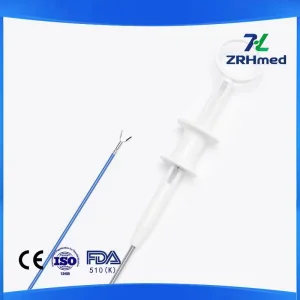
Direct factory production supporting international hospital groups, contract brands, and urological specialized tenders.
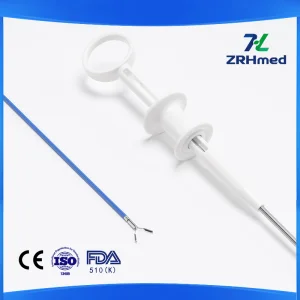
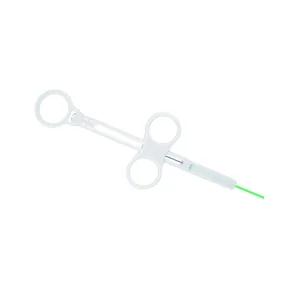
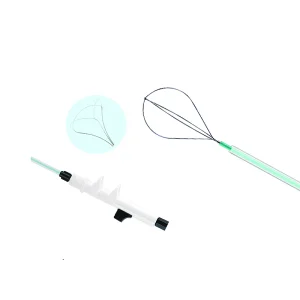
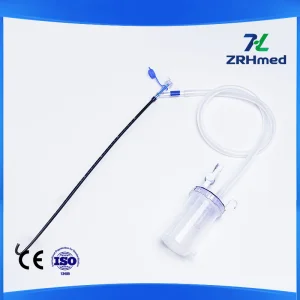
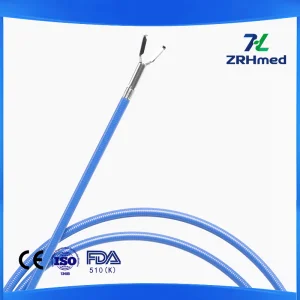
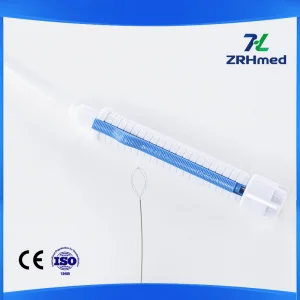
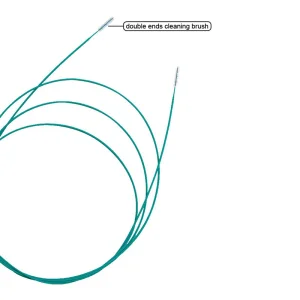
Overcoming intrarenal hyperpressure, pyelovenous backflow, and post-operative urosepsis through engineered continuous suction access systems.
Conventional Ureteral Access Sheaths (UAS) revolutionized upper urinary tract access by facilitating scope re-entry and reducing gross intrapelvic pressure. However, standard passive reflux channels frequently fail during high-power holmium or thulium fiber laser (TFL) lithotripsy. Constant high-flow irrigation generates fluid accumulation, raising Intrarenal Pressure (IRP) far beyond the critical physiological threshold of 30 mmHg (approx. 40 cmH₂O). Sustained elevations trigger pyelotubular, pyelolymphatic, and pyelovenous backflow, permitting bacterial endotoxins to enter the systemic vascular system and precipitating systemic inflammatory response syndrome (SIRS) or lethal urosepsis.
Furthermore, negative suction sheath systems revolutionize operative efficiency. Standard basket extraction requires hundreds of manual scope cycles to clear fragmented gravel, escalating operative time, mucosal shear strain, and scope fiber fatigue. Negative pressure UAS harnesses the hydrodynamic fluid vortex: stone dust, gravel, and mucosal clots are evacuated instantaneously around the scope shaft or via synchronized side-channels, achieving upwards of 95% single-stage Stone-Free Rates (SFR) while decreasing total anesthesia duration by up to 42%.
| Functional Metric | Standard Passive UAS | Negative Ureteral Access Sheath (ZRH Innovation) | Clinical / OEM Advantage |
|---|---|---|---|
| Intrarenal Pressure (IRP) | Uncontrolled fluctuations (> 45-70 mmHg) | Controlled steady state (< 20 mmHg active regulation) | Prevents fornix rupture and bacteremia seeding |
| Stone Fragment Evacuation | Manual grasping with Nitinol baskets | Autonomous convective vacuum evacuation | Reduces operative time and ureteral wall friction |
| Visual Field Clarity | Obscured by dust clouds and micro-bleeding | Instantaneous continuous particulate clearance | Optimizes laser ablation targeting & prevents scope burns |
| Thermal Accumulation | Elevated temperature with high-watt laser pulses | Continuous convection removes thermal energy | Protects urothelium against laser heat coagulation |
| Operative Re-entry Damage | Frequent re-passage damages ureteral orifice | Stationary sheath placement with single-entry protocol | Eliminates ureteral stricture and post-op hydronephrosis |
Engineered variations optimized for localized patient anatomy, reimbursement systems, and hospital clinical protocols worldwide.
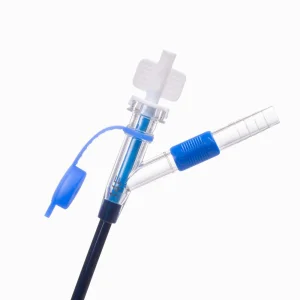
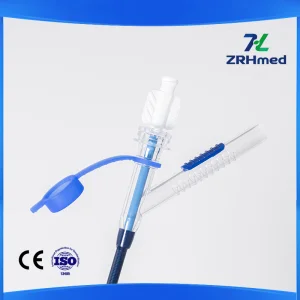
In Western outpatient surgery centers (ASCs), rapid room turnover and zero hospital readmission are vital KPIs. Negative suction UAS devices allow same-day discharge by eradicating post-operative infectious fever. Sheaths feature high-torque braided wire shafts and clear polycarbonate vacuum hubs that integrate seamlessly with hospital wall suction or regulated medical pump units.
Anatomical variances in Asian and Latin American demographics require ultra-slender outer diameters (9.5/11.5 Fr and 10/12 Fr) to avoid primary dilation trauma while retaining maximized inner lumen area for suction. Hydrophilic cross-linked polymer coatings minimize friction down to 0.02 N, ensuring smooth progression through undilated, tortuous ureters.
For struvite and infected staghorn calculi (>2 cm), localized protocols employ Y-shape bendable suction sheaths. The navigable distal tip articulates with the scope into difficult lower calyces, allowing continuous suction clearance directly at the stone interface without requiring auxiliary percutaneous nephrolithotomy (PCNL) access.
Direct-from-source engineering capabilities providing global procurement groups with margin protection, scale, and uncompromising quality assurance.
Our intelligent multi-layer extrusion lines manufacture three-layer composite sheath shafts in a continuous cycle: ultra-slick PTFE liner, 304/316 medical-grade stainless steel wire braiding or flat-wire coiling, and high-elastic Pebax/polyurethane outer jackets. This guarantees thin-wall dimensional accuracy, exceptional kink resistance, and 1:1 torque transmission.
Tooling, injection moulding of ergonomic Y-shape suction manifolds, laser tip beveling, radiopaque platinum marker embedding, and automated ultrasonic washing take place under Class 100,000 (ISO 8) cleanrooms, cutting component lead-times and preventing cross-contamination risks.
Operating high-throughput automated ethylene oxide (EO) sterilization facilities compliant with ISO 11135. We maintain continuous buffer stocks of raw medical tubing, Nitinol wire, and clinical packaging, safeguarding international distribution chains against geopolitical disruptions and erratic shipping bottlenecks.
Advancing from passive conduit devices to intelligent, closed-loop intrarenal hemodynamic ecosystems.
Embedded fiber-optic micro-piezoelectric sensors integrated into the sheath tip, broadcasting real-time renal pelvis pressure curves directly to clinical displays, alerting urologists before micro-vascular extravasation occurs.
AI-driven peristaltic suction-irrigation consoles that dynamically harmonize inflow pump rate with vacuum negative pressure, maintaining unwavering physiological equilibrium regardless of surgeon pedal input.
Bidirectional deflectable sheath tips driven by nitinol pull-wires, transforming the access sheath from a straight conduit into an active primary steerable access channel into acute-angled calyces.
Crosslinked bioactive non-leaching antimicrobial coatings utilizing silver nanoparticles or hydrophilic zwitterionic brushes to stop bacterial adherence during complex extended procedures.
Seamless customs clearance, regulatory filings, and dedicated local brand customization across key regional hubs.
Fully validated technical dossiers compliant with EU Medical Device Regulation (MDR 2017/745). Complete biocompatibility testing according to ISO 10993 (cytotoxicity, systemic toxicity, sensitization, intracutaneous reactivity, and hemocompatibility). Full lot trace reports supplied per order.
Extensive bench testing verification data matching predicate devices: tensile break force (dilator and sheath joint > 15N), kink resistance metrics, three-point bending flexibility curves, and simulated anatomical passage evaluations. Rapid provision of Device Master File (DMF) details.
Customization of hub colorations, laser-etched graduation scales, custom working lengths (25cm to 55cm), bespoke inner-to-outer diameter ratios, branded sterile medical blister packs, and multi-language IFU (Instructions for Use) documentation adapted to local Ministry of Health mandates.
Authoritative answers on sheath fluid dynamics, scope compatibility, vacuum pressure calibration, and OEM contract specifications.
Explore our complete range of certified medical consumables engineered for endoscopic therapy, tissue resection, and lithotripsy extraction.