Choosing the top Zrhmed Hemoclip manufacturer in China requires more than comparing prices or polished product images. A dependable assessment starts with verifiable details: clip design, material specifications, production controls, packaging integrity, and sterilization documentation. Buyers should also check whether the supplier can provide consistent batch records and clear responses to technical questions. Small details matter. A clip’s opening, rotation, and closure should be assessed against its intended use and the product’s documented specifications.
This introduction examines the evidence that can help distinguish a capable manufacturer from a merely visible one. It considers quality-management practices, relevant certifications, traceability, production capacity, and after-sales support. These indicators are useful, but they do not prove clinical performance on their own. That distinction is important. Reliable comparisons should draw on current documentation, independent verification where available, and feedback from qualified healthcare professionals. Manufacturer claims deserve careful review, especially when test methods or supporting records are not clearly described. A supplier may look convincing online and still leave unanswered questions. For that reason, identifying the “top” Zrhmed Hemoclip manufacturer should depend on transparent evidence and fit for specific purchasing needs, not a single ranking or marketing statement. The sections ahead offer a practical framework for making that assessment with care.
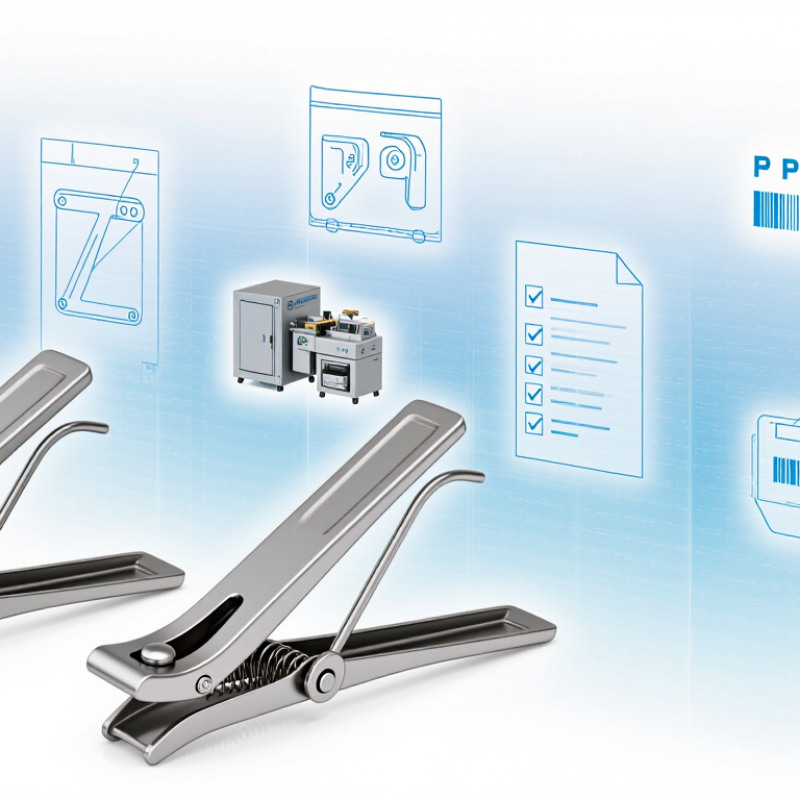
A hemoclip is a small mechanical device delivered through an endoscope’s working channel. Its jaws grasp tissue and pinch a bleeding vessel closed, without heat or injected medication. It is commonly used for bleeding peptic ulcers, bleeding after polyp removal, and selected small defects in the digestive tract. It can also mark a site for later identification. Small, but useful. The American College of Gastroenterology’s 2021 guideline reports acute upper gastrointestinal bleeding incidence of roughly 80–150 cases per 100,000 people each year, underlining why reliable endoscopic tools matter.
During a procedure, the clinician guides the scope to the site, opens the clip, and places it across the target tissue. The same guideline recommends endoscopic treatment for ulcers with active bleeding or a visible vessel; clips are one accepted option. Placement is not always straightforward. Fibrotic tissue, a steep approach, or a large vessel can make secure closure difficult, and another treatment may be needed. A clip also does not replace follow-up care or treatment of the underlying cause. I’d be cautious about treating “clip success” as a single figure: results depend on the lesion, device design, and operator experience.
| Topic | Evidence-Based Overview | Practical Considerations |
|---|---|---|
| What an endoscopic hemoclip is | A small mechanical device delivered through an endoscope to grasp and approximate tissue. Once deployed, its jaws close across the target area. | It is a mechanical treatment; it does not rely on cautery to achieve tissue approximation. |
| How it helps control bleeding | The clip compresses tissue and may close a bleeding vessel or the edges of a bleeding site. | Success depends on factors such as lesion location, bleeding pattern, tissue condition, and the clinician’s ability to position the clip. |
| Common endoscopic uses | Hemoclips may be used to treat selected cases of gastrointestinal bleeding, including bleeding after endoscopic procedures and bleeding from certain ulcers or lesions. | Choice of treatment is made by the endoscopist based on the source and severity of bleeding and available clinical options. |
| Tissue closure | Clips can approximate tissue edges after selected procedures, such as endoscopic mucosal resection or endoscopic submucosal dissection. | Whether a defect can be closed depends on its size, shape, location, and the capabilities of the particular clip system. |
| Other selected applications | In appropriate cases, clips may be used to mark a site or assist with closure of a small perforation or defect. | These uses require clinical judgment; a clip is not suitable for every defect or complication. |
| Typical delivery method | The clip is passed through the working channel of an endoscope using a compatible delivery catheter, then opened, positioned, and released. | Compatibility, working-channel size, rotation, jaw opening, and deployment characteristics vary by device design. |
| Device characteristics to compare | Relevant characteristics include jaw span, clip orientation, rotation, catheter length, working-channel compatibility, and whether the clip can be repositioned before release. | Specifications should be checked against the device’s current instructions for use and the intended endoscope. |
| Limitations | Clips may be difficult to apply when access is restricted, tissue is fibrotic, the target is poorly positioned, or the defect is larger than the device can close. | Alternative or additional endoscopic, radiologic, or surgical treatment may be considered by the care team. |
| How to assess a manufacturer | Review product-specific technical documentation, applicable regulatory clearances or registrations, quality-system information, and evidence supporting the stated indications. | Regulatory status and requirements differ by destination market. Verify claims with the relevant regulator and current product documentation; a “top” ranking requires transparent, comparable evidence. |
It is a small mechanical device passed through an endoscope. Its jaws pinch tissue to close a bleeding vessel. No heat is used.
They may treat bleeding ulcers, bleeding after polyp removal, and selected small digestive tract defects. They can also mark a site for later identification.
A clinician guides an endoscope to the target. The clip opens, grasps tissue, and closes across it. Placement can be tricky.
Fibrotic tissue, a steep approach, or a large vessel can make secure closure harder. Another treatment may be needed.
No. It does not treat the underlying cause or replace follow-up. A successful placement is only part of care.
ISO 13485:2016 covers areas such as design controls, supplier checks, traceability, and corrective actions. Ask whether a lot can be traced from incoming materials to finished-device records.
ISO 14971:2019 calls for lifecycle risk management. Relevant hazards include incomplete closure, difficult deployment, and damaged packaging. Residual risks deserve attention too.
No. A certificate alone does not prove risks are controlled for a specific device. Review validation evidence, risk records, and complaint-related changes. That question is easy to miss.
A Zrhmed Hemoclip is an endoscopic device used to close tissue, support hemostasis, and help manage selected defects in the digestive tract. Its practical value depends on how securely the clip closes, how well it remains in place, and whether it can be reopened or repositioned when needed. Buyers should assess these features alongside compatibility with endoscopic systems and the intended clinical applications, rather than relying on product descriptions alone.
When comparing manufacturers in China, use verifiable evidence: current quality-system certifications, documented risk-management processes, production capacity, product testing, and relevant clinical or performance data. ISO 13485:2016 and ISO 14971:2019 can provide useful reference points for evaluating quality management and risk control, but certification alone does not establish product performance. A careful assessment checks the scope and validity of certificates, consistency of manufacturing, and the clarity of supporting evidence before drawing conclusions about a manufacturer’s capabilities.