Fully compliant with EU MDR and global safety standards, manufactured in cleanroom facilities with traceable batch documentation.
A critical macro-level analysis of diagnostic gastrointestinal endoscopy consumables, shifting regulatory paradigms, and the global transition to single-use instrumentation.
Global national health programs (EU Colorectal Cancer Screening Directives, US Preventive Services Task Force, and APAC oncology guidelines) have lowered the recommended baseline screening age to 45. This epidemiologic shift generates an annual volume growth exceeding 7.2% CAGR for routine mucosal sampling consumables.
Hospital-acquired infections (HAIs) and the transmission of multidrug-resistant pathogens through complex micro-lumens have driven health authorities to favor sterile, single-use colonoscopy forceps. Eliminating reprocessing labor, chemical sterilization overhead, and cup dulling enhances diagnostic reliability.
The enforcement of the European Medical Device Regulation (MDR) has reshaped the supplier landscape. Stricter post-market clinical follow-up (PMCF), notified body scrutiny, and comprehensive General Safety and Performance Requirements (GSPR) have weeded out low-tier manufacturers, favoring integrated factories.
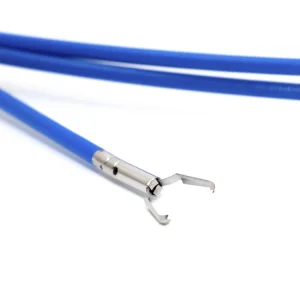
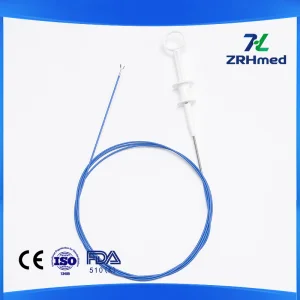
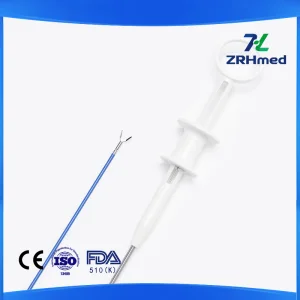
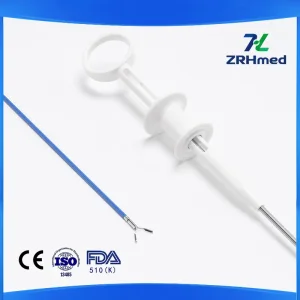
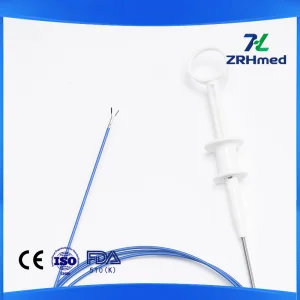
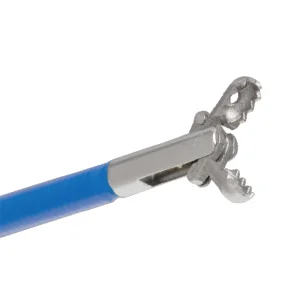
In pathology evaluations, specimen crush artifacts caused by dull reusable forceps can obscure dysplastic features and lead to repeat endoscopic interventions. ZhuoRuiHua Medical’s CE-certified disposable colonoscopy biopsy forceps utilize high-precision CNC laser-welded jaw assemblies that execute a razor-sharp shear cut, securing pristine lamina propria and submucosal tissue margins.
Vertically integrated Class 100,000 cleanroom manufacturing, micron-level CNC tooling, and multi-tier quality control ensure seamless performance inside complex anatomical pathways.
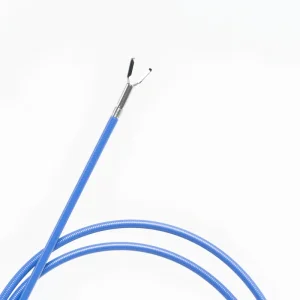
Manufactured from surgical-grade 304/316L and 17-4PH stainless steel via multi-axis electrical discharge machining (EDM). Cups close with zero lateral shift, preventing tissue tearing.
Medical-grade PTFE and hydrophilic polymer jacketing minimizes friction within working channels, preserving scope lining during tortuous sigmoid colon retroflexion.
High-tensile internal braided steel wire provides 1:1 tactile torque transmission, allowing full actuation and smooth cup opening even when the scope is looped 180 degrees.
Every lot undergoes 100% actuation verification, jaw pull-force tension threshold testing (exceeding ISO requirements), and EO residual gas analysis below 4 µg/g.
| Parameter / Characteristic | Standard Colonoscopy Forceps | Alligator Jaw with Needle | Hot Biopsy Forceps (Monopolar) |
|---|---|---|---|
| Outer Diameter (OD) | 2.3 mm / 1.8 mm (Pediatric) | 2.3 mm | 2.3 mm (Insulated) |
| Working Length (WL) | 2300 mm (GI / Colonoscopy) | 2300 mm / 1800 mm | 2300 mm |
| Channel Compatibility | ≥ 2.8 mm Working Channel | ≥ 2.8 mm Working Channel | ≥ 2.8 mm Working Channel |
| Cup Geometry | Oval Fenestrated (Clean Shear) | Serrated Alligator + Anchor Spike | Serrated Cup + High Frequency Port |
| Sterilization Standard | EO Sterilization (ISO 11135) | EO Sterilization (ISO 11135) | EO Sterilization (ISO 11135) |
| CE Certification Path | Class IIa (EU MDR 2017/745) | Class IIa (EU MDR 2017/745) | Class IIb (EU MDR 2017/745) |
From rapid-turnover outpatient screening centers to advanced university hospital gastrointestinal suites, colonoscopy biopsy instruments serve targeted clinical demands.
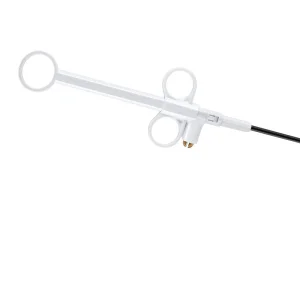
High-volume day surgery units require rapid turnover, zero scope channel wear, and consistent unpack-and-use sterile reliability. ZhuoRuiHua's ergonomic handle mechanism reduces operator hand strain across 20+ daily procedures, ensuring immediate deployment with zero maintenance delays.
Patients with Ulcerative Colitis or Crohn's Disease require extensive surveillance protocols involving 30+ biopsy bites per patient across all anatomical segments (cecum to rectum). The ultra-sharp cup profile and central anchor needle prevent mucosal slippage on inflamed, fibrotic folds.
Precision oncology depends on intact DNA/RNA yield from small endoscopic specimens. Fenestrated oval cups provide large volume-to-displacement ratios, ensuring adequate architectural preservation for immunohistochemistry (IHC), microsatellite instability (MSI), and KRAS mutation assays.
Forward-looking R&D pipelines integrating digital feedback, micro-electrosurgical refinement, and eco-sustainable circular polymers.
Collaborative alignment with CADe (computer-aided detection) and CADx systems. Novel biopsy tools are being optimized to work in concert with narrow-band imaging (NBI) and blue-laser imaging (BLI) to pinpoint dysplastic micro-vascular networks before mechanical cutting.
Investigating miniaturized cryo-tissue anchoring within standard 2.3 mm working lengths. Advanced cold biopsy iterations focus on dynamic blade tension geometry that guarantees clean muscularis mucosae separation without micro-vascular tearing.
Transitioning handle components and outer sheath jackets to recyclable, bio-derived medical plastics that reduce hospital carbon footprints without compromising tensile stiffness or EO sterilization permeability.
Empowering international brands, hospital suppliers, and distributors with fully customized manufacturing, regulatory dossier acceleration, and scalable supply chains.
Adjust working lengths (from 1600mm to 2600mm), cup volumes, serration pitch, and coating colors. Tailored handle branding and custom thumb-ring tensions designed to meet regional surgeon preferences.
Full technical documentation support for CE MDR (Annex II/III), US FDA 510(k), Brazil ANVISA, and UKCA submissions, including biocompatibility reports, sterilization validations, and clinical evaluation reports (CER).
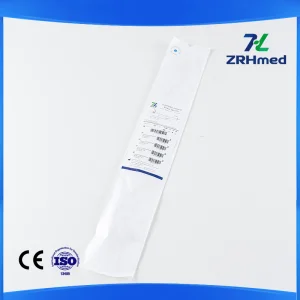
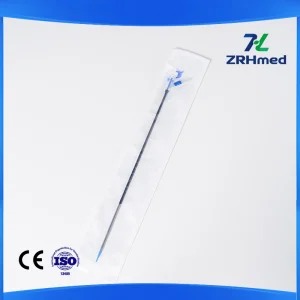
Medical-grade Tyvek blister pouches and SBS medical carton box printing with localized labeling, GS1-compliant DataMatrix barcodes, and multilingual instructions for use (IFU).
Eliminate middle-tier broker markups. High-volume automated cleanroom assembly lines allow regional distributors to bid competitively in public tender contracts while preserving healthy margin buffers.
Direct technical and commercial answers regarding CE certification, mechanical specifications, and factory engagement protocols.
Under EU MDR 2017/745, standard disposable mechanical biopsy forceps are classified as Class IIa medical devices pursuant to Rule 6 (surgically invasive devices intended for transient use). Electrosurgical hot biopsy forceps fall under Class IIb due to high-frequency electrical energy transmission. Both classifications necessitate full Notified Body conformity assessment, technical documentation review, and audited ISO 13485 quality systems.
Suboptimal sharpness results in tissue crushing rather than clean shearing. This cellular trauma compromises histological assessment of mucosal layers, making it difficult for pathologists to evaluate crypt architecture and identify low-grade dysplasia. ZhuoRuiHua Medical uses automated micro-grinding techniques to ensure blade sharpness, yielding intact, uncrushed tissue specimens suitable for molecular pathology.
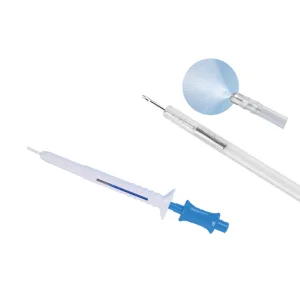
During difficult colonoscopy maneuvers (e.g., ascending colon or retroflexion in the cecum), peristalsis and anatomical tangency can cause smooth cups to slip off flat lesions. A central positioning needle (spike) anchors the forceps into the targeted mucosa, allowing secure bilateral cup closure directly over the lesion site without tissue migration.
Our 2.3 mm outer diameter colonoscopy forceps are optimized for flexible endoscopes featuring working channels of 2.8 mm diameter or larger. For pediatric or therapeutic small-lumen scopes, we manufacture 1.8 mm diameter variants tailored for 2.0 mm channels, ensuring low sliding resistance and protecting instrument channel lining from abrasion.
Our devices undergo validated Ethylene Oxide (EO) sterilization in strict adherence to ISO 11135, achieving an SAL of 10⁻⁶. Every production batch includes biological indicators (Bacillus atrophaeus) and chemical integrators. Residual ethylene oxide and ethylene chlorohydrin levels are tested in compliance with ISO 10993-7 prior to lot release.
Standard OEM sampling and compatibility evaluations take 2 to 3 weeks. Following packaging design and artwork sign-off, bulk production runs typically require 30 to 45 calendar days. We provide comprehensive master carton customization, custom language IFUs, sterile barrier sealing validation, and shipping drop-support.
High-precision mucosal intervention, stone management, and advanced hemostasis solutions engineered for demanding clinical environments.
Request our full product master catalog, product samples, or schedule an engineering consultation for OEM/ODM private labeling and EU MDR regulatory support.