Precision-manufactured single-use devices engineered to stringent tolerances for working-channel safety, tactile responsiveness, and uncompromised mucosal resection reliability.
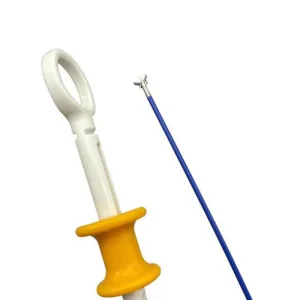
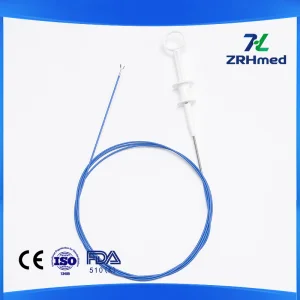
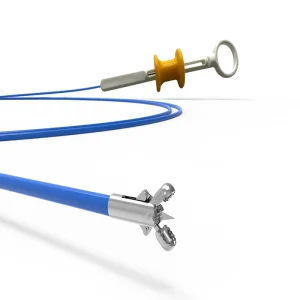
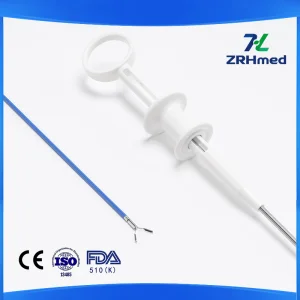
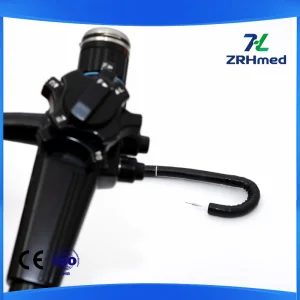
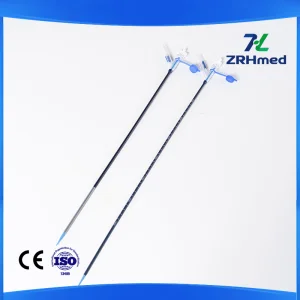
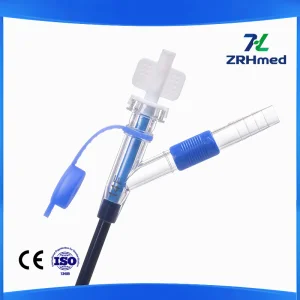
Polypectomy represents the cornerstone of colorectal cancer (CRC) prevention. The shift from reusable tungsten-steel loops to specialized, sterile, single-use polypectomy snares has redefined procedural safety, pathology specimen integrity, and mucosal margin precision.
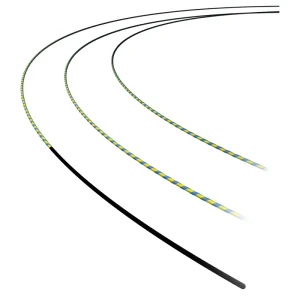
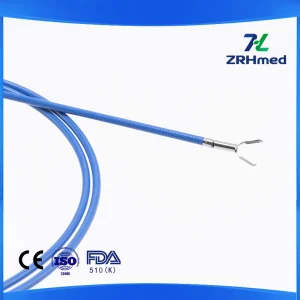
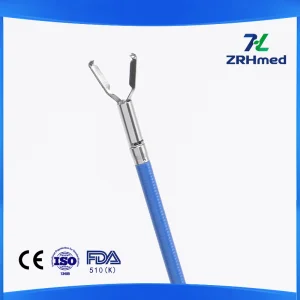
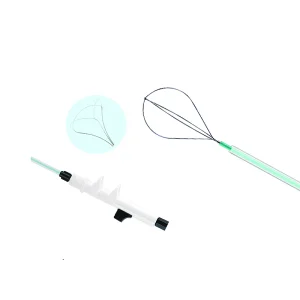
Modern disposable snares employ medical-grade superelastic Nitinol (NiTi) or micro-braided medical stainless steel (AISI 304V). Nitinol provides shape memory that ensures complete loop re-expansion even after navigating highly tortuous sigmoid colon loops, eliminating loop kinking and mechanical distortion.
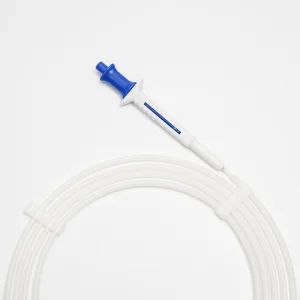
Extruded from ultra-dense polytetrafluoroethylene (PTFE) or fluorinated ethylene propylene (FEP), the catheter sheath delivers superior dielectric breakdown resistance exceeding 3,500V. This prevents high-frequency electrosurgical current leakage into the endoscope working channel during hot snare polypectomy.
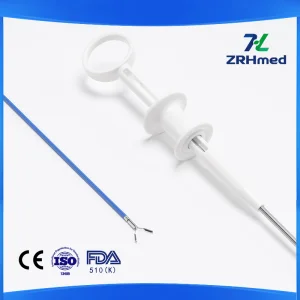
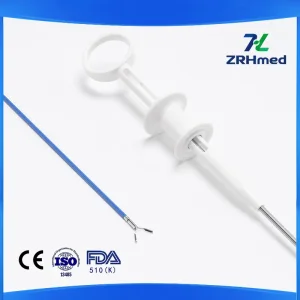
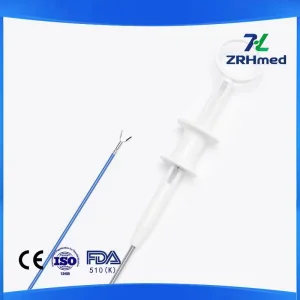
The 3-ring ergonomic slider system incorporates a reinforced core wire providing 1:1 torque transmission. Gastroenterologists can manipulate the snare loop orientation with sub-millimeter precision, achieving flat mucosal capture without slipping across pedunculated or sessile polyps.
International guidelines from the ESGE (European Society of Gastrointestinal Endoscopy) and ASGE have fundamentally shifted clinical practice toward Cold Snare Polypectomy (CSP) for all diminutive (<5 mm) and small (6–9 mm) colorectal polyps.
Traditional hot snare techniques introduce significant risks of post-polypectomy coagulation syndrome (PPCS), delayed bleeding, and muscularis propria perforation caused by lateral thermal spread. CSP utilizes purely mechanical guillotine resection:
For pedunculated and large flat polyps (≥10 mm), electrocautery remains essential for vascular coagulation. Leading factory developments center on braided wire geometry and synchronized current transfer:
| Snare Category | Wire Structure | Wire Diameter | Loop Diameter Range | Primary Clinical Indications | Thermal Risk |
|---|---|---|---|---|---|
| Dedicated Cold Snare | Monofilament Nitinol / SS | 0.24 mm – 0.30 mm | 10 mm, 15 mm | Diminutive (<5mm) & Small (6-9mm) Sessile Polyps | Zero (Pure Mechanical) |
| Standard Hot Snare | Braided Multi-Strand SS | 0.40 mm – 0.48 mm | 15 mm, 25 mm, 32 mm | Pedunculated Polyps, Large Adenomas (≥10mm) | Controlled Thermal Zone |
| Hybrid Snare | Precision Micro-Braided | 0.32 mm – 0.38 mm | 12 mm, 20 mm | Cold EMR, Flat Polyps, Undifferentiated Lesions | Dual Modality (Hot/Cold) |
| Hexagonal / Serrated Snare | Serrated Profile / Nitinol | 0.30 mm – 0.35 mm | 15 mm, 22 mm | Sessile Serrated Lesions (SSL), Difficult Flat Adenomas | Minimal / Optional HF |
China's medical consumable industrial clusters (centered in Jiangxi, Jiangsu, and Zhejiang) provide unprecedented manufacturing synergy, blending precision metallurgy, cleanroom robotics, and comprehensive regulatory traceability.
Chinese factories like ZhuoRuiHua Medical manage raw material drawing, micro-laser welding, catheter extrusion, and handle molding in-house. This eliminates subcontractor markups and delivers 30% to 50% cost reductions compared to Western European production while guaranteeing consistent raw material heat lots.
Production utilizes optical coordinate measuring machines (CMM) and digital tensile load testers. Every batch undergoes mandatory 100% loop deployment cycling (50 consecutive passes through a 90° tortuous test track) and sheath dielectric breakdown verification to prevent clinical channel friction.
With fully staffed internal tooling and R&D engineering departments, custom loop geometries, wire braiding pitch alterations, and tailored working lengths (1,600 mm for gastroscopy; 2,300 mm for enteroscopy/colonoscopy) can progress from CAD blueprint to physical sample in under 15 business days.
Polypectomy snares do not operate in isolation. They form part of an interventional system alongside injection needles, hemoclips, and electrosurgical generators.
High-volume screening suites prioritize procedure speed and zero post-op complications. Dedicated 15mm cold snares allow rapid en bloc resection of small adenomas without requiring grounding pads, electrocautery set-up, or post-resection observation stays, maximizing room turnover and patient throughput.
For complex flat lesions (>20 mm) in the cecum or ascending colon, snares must pair with submucosal injection needles to create high fluid cushions. Hexagonal braided snares grasp elevated margins without slippage, enabling controlled piecemeal or en bloc excision with minimal muscularis propria exposure.
Standard snares require a 2.8 mm channel. Our specialized ultra-low-profile snares utilize a 1.8 mm outer diameter PTFE sheath compatible with 2.0 mm pediatric and slim diagnostic gastroscopes, providing full mucosal resection capability in delicate anatomic tracts.
Procuring single-use endoscopic instruments requires meticulous scrutiny of quality management systems, sterilizer validation dossiers, and post-market clinical surveillance.
Global hospital tenders and ministry registries require unassailable documentation. Importers must confirm factory compliance across four mandatory pillars:
Evaluating factory partnerships on unit cost alone creates severe tender delivery risk. Professional procurement frameworks weigh comprehensive logistics factors:
Clear, direct answers for biomedical procurement specialists, clinical hospital buyers, and international medical device distributors.
Enhance institutional supply resilience by consolidating procurement across biopsy, mechanical hemostasis clips, EMR needles, and endourological extraction devices.
Connect directly with our biomedical engineering and regulatory compliance department in Jiangxi, China. Request full technical data sheets (TDS), sterilization validation files, and customized evaluation sample kits for your clinical team.
