Direct-from-factory single-use consumables engineered for advanced therapeutic endoscopy, ERCP, and endoscopic mucosal interventions.
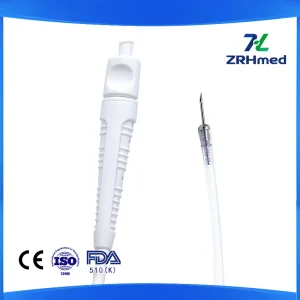
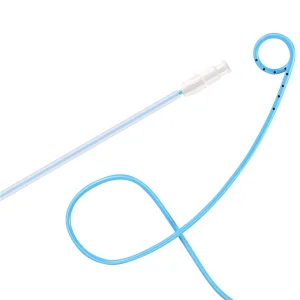
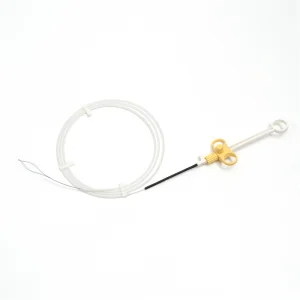
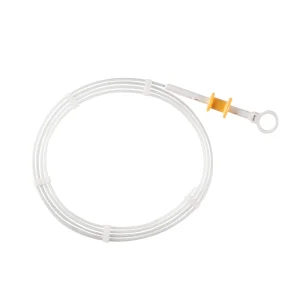
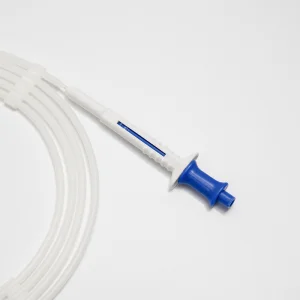
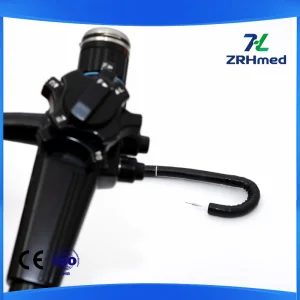
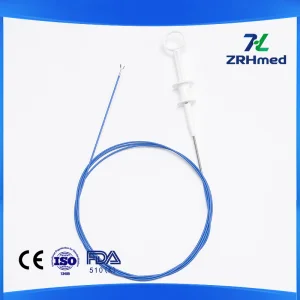
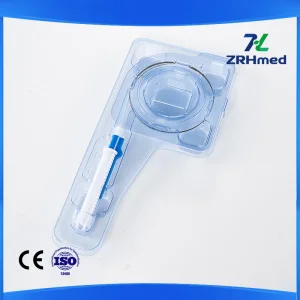
Understanding the transition from early mechanical hemoclips to bidirectional 360-degree rotatable clip appliers in minimally invasive gastrointestinal surgery.
The global endoscopic hemostasis market is experiencing rapid acceleration driven by rising incidences of colorectal cancer, peptic ulcer bleeding, and prophylactic interventions following Endoscopic Submucosal Dissection (ESD) and Endoscopic Mucosal Resection (EMR).
Healthcare institutions worldwide prioritize mechanical clipping over thermal coagulative therapies because hemoclips effectively eliminate thermal transmural tissue injury and mitigate delayed perforation risks.
Infection prevention protocols and strict ISO guidelines have led hospitals to replace early reusable clip applier systems with pre-loaded, single-use, sterile units. Reusable systems carry cross-contamination risks and experience mechanical cable stretching over multiple autoclave cycles.
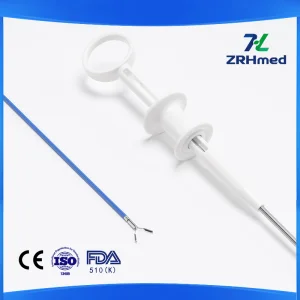
Pre-assembled single-use endoscopic hemoclips guarantee full clamping force and smooth catheter navigation across all endoscopic orientations.
Modern clinical guidelines emphasize specific jaw widths (9mm, 11mm, 13mm, and 16mm) and retention stability. High-retention alloys ensure the clip remains securely anchored to tissue for 14 to 28 days until re-epithelialization is complete.
Tactile feedback mechanisms allow endoscopists to clearly feel clip release during final deployment, preventing premature dislodgement.
Combining vertically integrated medical-grade metal stamping, automated optical inspection, and lean assembly lines to maximize procurement efficiency.
By producing wire-wound flexible sheaths, control handles, and surgical-grade stainless steel jaw components on-site, our factory maintains rigorous mechanical tolerances (±0.02mm).
This closed-loop manufacturing model avoids third-party assembly bottlenecks, lowers tooling overhead, and provides distributors with pricing margins that remain competitive in government healthcare tenders.
Our quality assurance framework implements three distinct testing gates:
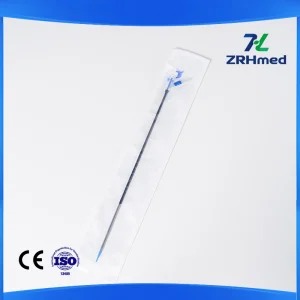
We support global medical device brands and hospital distributors through end-to-end contract manufacturing. From laser-marking brand identifiers onto catheter handles to custom pouch sealing, sterile barcoding, and regional IFU translations.
Our regulatory engineering team assists clients with full technical dossiers (510k, CE MDR, and ANVISA documentation).
Engineered for secure mechanical tissue apposition in demanding upper and lower gastrointestinal environments.
Immediate mechanical clamping of non-variceal arterial spurting and oozing lesions (Forrest Class Ia and Ib). The strong closing force stops blood flow quickly without relying on the patient's coagulation cascade.
Prophylactic closure of wide mucosal defects after cold or hot snare resection. Firmly re-approximates mucosal margins to guard against delayed post-procedure hemorrhages caused by peristalsis.
Radiopaque, MRI-conditional metallic clips serve as precise fluoroscopic and visual landmarks, highlighting early neoplastic lesions, lesion margins, or strictures ahead of planned surgical resections.
Emergency transluminal closure of iatrogenic micro-perforations following complicated EMR or ESD procedures. Seals the visceral wall mechanically to prevent peritonitis and avoid emergency laparotomy.
Comprehensive technical specifications for our single-use rotatable endoscopic hemostatic clips.
| Feature Parameter | Standard Opening (9-11mm) | Wide Opening (13-16mm) | Testing Protocol / Compliance Standard |
|---|---|---|---|
| Working Channel Compatibility | Minimum Ø 2.8 mm | Minimum Ø 2.8 mm / Ø 3.2 mm | ISO 8600 Endoscope Channel Passage Verified |
| Working Lengths | 1650 mm / 1950 mm / 2300 mm | 1950 mm / 2300 mm | Upper GI Gastroscope & Lower GI Colonoscope |
| Rotational Freedom | 360° Bidirectional Synchronous | 360° Bidirectional Synchronous | 1:1 Torque Transmission (Handle-to-Tip) |
| Repositionability | Multiple Open/Close Pre-Deployment | Multiple Open/Close Pre-Deployment | Tactile Catch & Release Feedback Mechanism |
| Sterilization Method | Ethylene Oxide (EO Gas) | Ethylene Oxide (EO Gas) | ISO 11135 Compliant (Residual < 10 µg/g) |
| MRI Safety Environment | MR Conditional (Up to 3.0 Tesla) | MR Conditional (Up to 3.0 Tesla) | ASTM F2503 Magnetic Displacement Tested |
Key technical criteria evaluated by hospital buying syndicates, distributors, and supply chain managers.
Clinicians expect immediate rotational response at the distal tip when rotating the handle. Any rotational lag or spring-back in retroflexed endoscopes can extend procedure times or result in suboptimal clip placement.
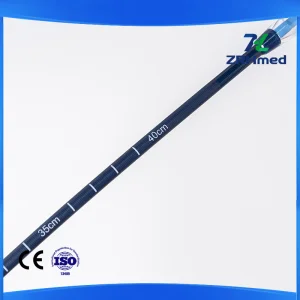
Our double-wound multi-strand braided sheath delivers accurate 1:1 torque transmission even in retroflexed colonoscopies.
Single-action clips that close permanently on first pull increase clinical risk and consumable waste. Modern tenders require clips with repeatable open-and-close capabilities prior to irreversible deployment.
This repositionability gives endoscopists the flexibility to confirm grasping angles, target tissue margins, and local perfusion before final deployment.
Strict post-market surveillance demands thorough regulatory documentation. Hospital tenders require documented ISO 10993 cytotoxicity, systemic toxicity, sensitization test reports, and validated ethylene oxide residual data.
Our OEM partners receive comprehensive quality dossiers, supporting faster registration pathways across destination markets.
Fully compliant, CE-certified endoscopic intervention and stone management devices manufactured in our Jiangxi cleanroom facilities.
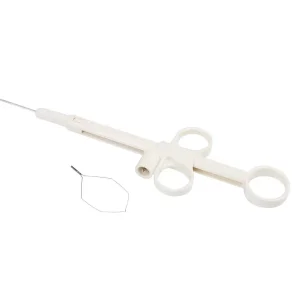
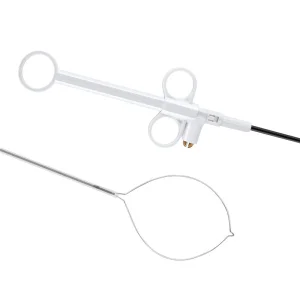
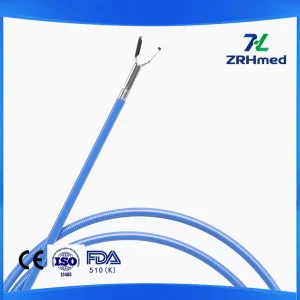
Detailed technical, regulatory, and supply chain insights for healthcare professionals and medical device procurement teams.