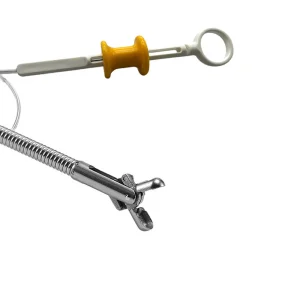
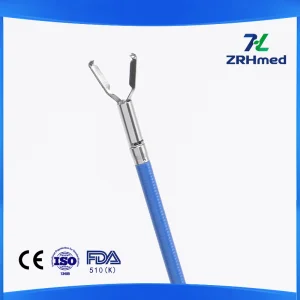
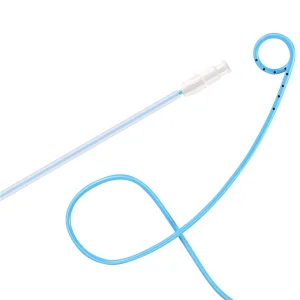
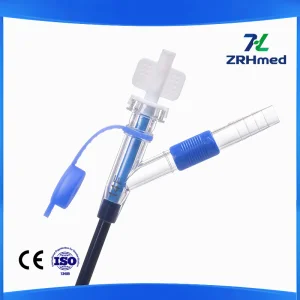
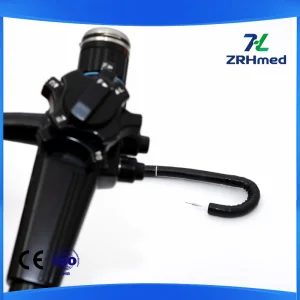
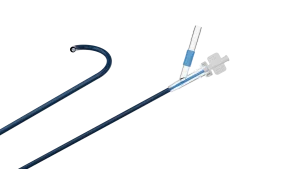
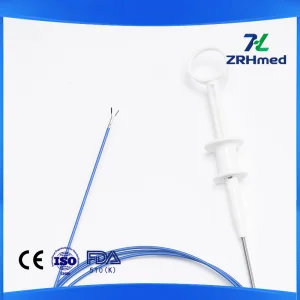
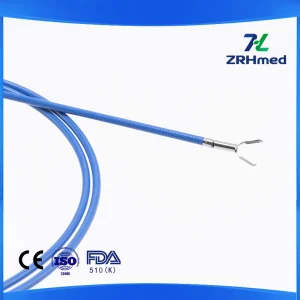
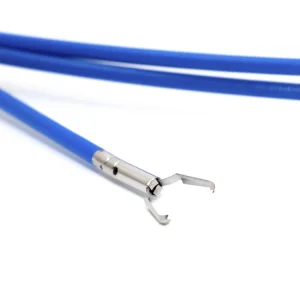
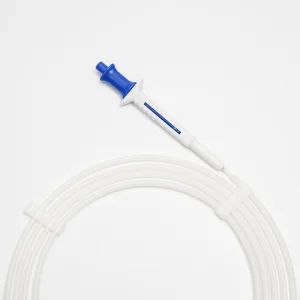
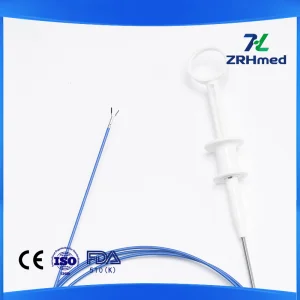
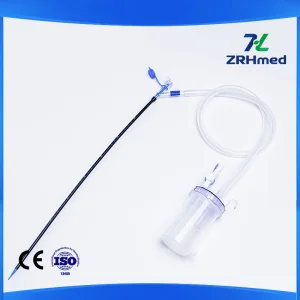
High-performance endoscopic consumables engineered in Class 100,000 cleanrooms to support GI resection, mucosal ablation, stone retrieval, and biliary drainage across worldwide hospital networks.
Colorectal cancer (CRC) remains the third most commonly diagnosed malignancy globally. Epidemiological evidence reinforces that early detection and complete endoscopic resection of precancerous polyps (adenomas and sessile serrated lesions) directly correlates with a reduction in patient mortality.
Cross-contamination hazards linked to complex multi-lumen reusable snares have driven hospital accreditation bodies (such as the CDC, ESG, and ESGE) to mandate single-use endoscopic instruments. Residual bioburden and charred tissue in the coil spring lumens of reprocessed snares carry fatal infection vectors. Single-use sterile units eliminate reprocessing bottlenecks and guarantee out-of-the-box structural integrity.
Clinical guidelines from the ESGE and ASGE strongly recommend Cold Snare Polypectomy (CSP) as the primary treatment for diminutive and small polyps (≤9 mm). CSP mitigates electrocautery-induced transmural thermal injury, late bleeding, and muscularis propria perforation. This shift necessitates dedicated thin-wire braided snares capable of mechanical guillotine-style shearing without thermal fusion.
For sessile lesions (>10 mm) and early-stage neoplastic mucosal elevations, Endoscopic Mucosal Resection (EMR) relies on synchronized diathermic electrocoagulation. Rotatable hot snares integrate electro-surgical active connectors designed to interface with high-frequency generators (e.g., Erbe VIO series), maintaining consistent high current density along the wire boundary while minimizing lateral thermal damage.
Achieving predictable, millimeter-accurate loop placement within a tortuous gastrointestinal tract demands high mechanical torque transmission. We break down the four key structural subsystems that separate premium medical-grade snares from low-cost commodities.
Constructed with a continuous high-torque braided core wire. Rotation applied at the proximal handle is transmitted instantaneously to the distal loop tip without rotational whiplash or lag, even through endoscopes locked in maximum retroflexion.
Utilizes vacuum-annealed multi-strand surgical grade stainless steel (304V/316LVM) or shape-memory Nitinol alloys. Delivers high radial opening force to anchor securely against mucosa without slipping during rapid snaring maneuvers.
Multi-layer fluoropolymer outer sheaths offer low surface friction coefficients (μ ≤ 0.04). Guarantees ultra-smooth insertion through 2.8mm & 3.2mm instrument channels while guarding against sheath kinking and dielectric breakdown.
Three-ring ambidextrous actuation control delivers direct sensory feedback upon complete tissue division. Equipped with standard HF electrosurgical pins and smooth rotatable collars for single-handed operation by endoscopists.
| Loop Morphology | Available Span (Ø) | Wire Construction | Sheath OD / Length | Clinical Intent | Channel Compatibility |
|---|---|---|---|---|---|
| Oval (Universal) | 10 mm, 15 mm, 25 mm | Braided multi-strand (0.35mm) | 2.3 mm / 2300 mm | Pedunculated & broad-based sessile polyps | ≥ 2.8 mm Channel |
| Hexagonal (Anti-Slip) | 15 mm, 22 mm, 30 mm | Textured braided wire | 2.3 mm / 2300 mm | Flat lesions, laterally spreading tumors (LST) | ≥ 2.8 mm Channel |
| Crescent (Targeted Hook) | 10 mm, 15 mm | High-tensile annealed wire | 1.8 mm / 2.3 mm | Polyps located on difficult mucosal folds/angles | ≥ 2.0 mm / 2.8 mm |
| Cold Mini-Diamond | 6 mm, 9 mm, 12 mm | Ultra-thin monofilament (0.24mm) | 2.3 mm / 1800 – 2300 mm | Diminutive adenomas (≤9mm), pure cold excision | ≥ 2.8 mm Channel |
China has transitioned from contract assembly into a global hub for high-end medical micro-mechanics. Modern Chinese medical device manufacturers utilize automated production, vertical component integration, and international quality management systems.
Utilizing Swiss-type CNC automatic lathes and multi-axis laser welding platforms, Chinese manufacturing lines join distal snare loops to pulling shafts with micron-level tolerance. Automated wire tensioners maintain uniform pitch and loop expansion symmetry over thousands of operational cycles.
Manufacturing takes place within certified Class 100,000 (ISO Class 8) and Class 10,000 (ISO Class 7) cleanrooms. Comprehensive bioburden monitoring, HEPA air filtration, continuous particle counting, and automated packaging lines ensure strict sterility barrier performance under ISO 11607.
From raw medical-grade polymer extrusion (PTFE/FEP) and wire drawing to custom injection molding and ethylene oxide (EtO) sterilization, fully integrated industrial parks in China bypass tiered outsourcing markups, offering predictable pricing and lead-time resilience.
Procurement teams at multinational distributors, group purchasing organizations (GPOs), and hospital chains face relentless margin pressures. OEM partnerships with high-tier Chinese manufacturers can reduce landed unit costs by 35% to 55% compared to Western legacy brands, without sacrificing clinical performance, tensile safety margins, or regulatory compliance (CE MDR / FDA 510k).
Endoscopists encounter anatomical hurdles during therapeutic procedures. 360° rotatability converts difficult clinical angles into straightforward, predictable resections.
In the cecum and ascending colon, the intestinal wall is thin (≤2 mm), and polyps often hide behind prominent haustral folds. Standard non-rotatable snares require torque to be applied through the entire endoscope shaft, risking mucosal shearing. A rotatable snare allows the physician to orient the loop parallel to the wall, capturing flat adenomas cleanly.
For laterally spreading tumors (LSTs) exceeding 20 mm, piecemeal EMR is the standard clinical technique. Success hinges on positioning consecutive snaring fields adjacent to prior resection margins without leaving residual islands. Independent rotational control lets clinicians adjust angles between cuts without shifting the distal endoscope tip.
Operating in the gastric fundus or duodenal bulb often requires acute scope inversion (J-maneuver or U-turn retroflexion). High channel friction within the bent endoscope typically binds standard core wires. Engineered torque cables ensure smooth opening and 360° rotation even at bending angles up to 210°.
Procuring medical devices requires technical and regulatory due diligence. Below is an engineering validation checklist that international distributor sourcing teams should apply when evaluating single-use snare manufacturers.
Verify test reports for distal tip weld strength (minimum pull tensile threshold ≥ 40 N). Request documentation of continuous rotational fatigue testing demonstrating 100+ complete 360° revolutions without cable binding, wire unbraiding, or sheath distortion.
For hot electrocautery-compatible models, confirm dielectric withstand voltage testing (up to 3000V peak HF voltage). The outer polymer sheath must show zero micro-pinhole leakage to protect the endoscope working channel from spark erosion.
Audit the manufacturer's Technical Documentation (EU MDR 2017/745 Class IIa compliant, US FDA 510(k) cleared). Verify that each sterile blister pack bears a unique device identifier (UDI) barcoding scheme compliant with GS1 international standards.
Direct engineering and commercial answers to frequent questions raised by clinical directors, regulatory specialists, and procurement leaders.
True 1:1 rotation depends on the torsional rigidity of the internal drive cable. Premium snares use multi-strand braided stainless steel wire with balanced clockwise and counter-clockwise winding. This architecture resists twisting backlash and delivers immediate loop rotation when the handle knob is turned.
While hybrid snares exist, purpose-designed instruments offer distinct advantages. Dedicated cold snares use ultra-thin monofilament wire (0.24mm – 0.30mm) designed to shear cleanly through tissue without thermal energy. Hot EMR snares feature heavier braided wire (0.35mm – 0.45mm) to optimize current density and achieve controlled electrocoagulation.
We support full OEM/ODM programs, including custom loop geometries (oval, crescent, hexagonal), variable sheath lengths (1800mm to 2600mm), specialized handle configurations, pad printing, and private-label blister and carton packaging ready for regional regulatory submissions.
Sterile packaging systems undergo real-time and accelerated aging validation in accordance with ISO 11607 and ASTM F1980 standards. Packaging integrity is verified through bubble emission testing (ASTM F2096), peel strength analysis (ASTM F88), and dye penetration leak testing (ASTM F1929).
Expand your medical distribution portfolio with our full range of CE/MDR and ISO-certified endoscopic instruments, designed to provide seamless compatibility and dependable clinical results.
Whether you are an established brand owner looking for reliable OEM manufacturing, a national distributor bidding on hospital tenders, or an endotherapy startup in need of precision contract assembly, our engineering team is ready to evaluate your technical specifications and provide evaluation sample kits.