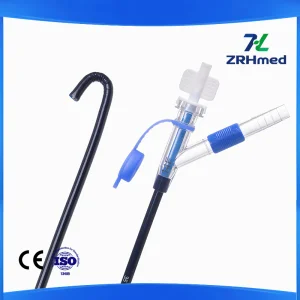
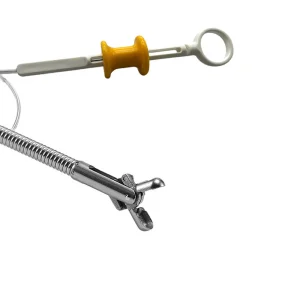
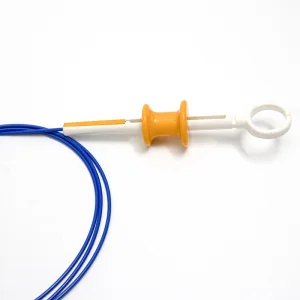
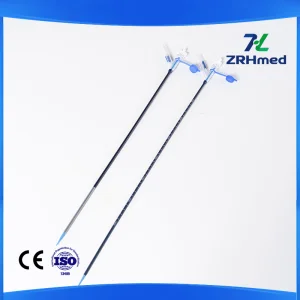
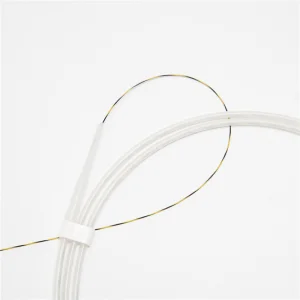
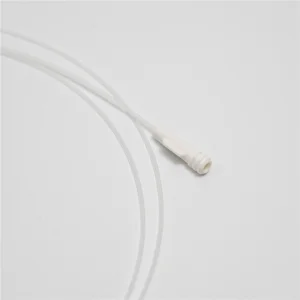
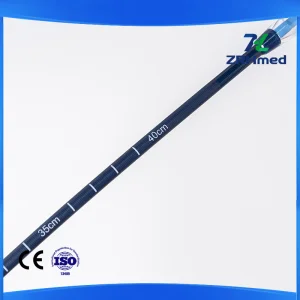
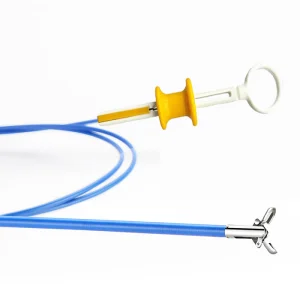
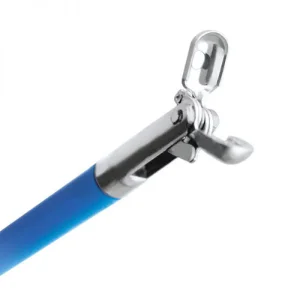
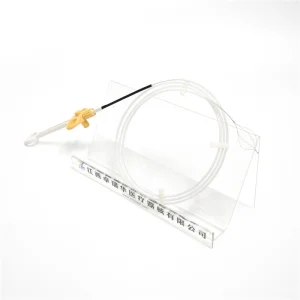
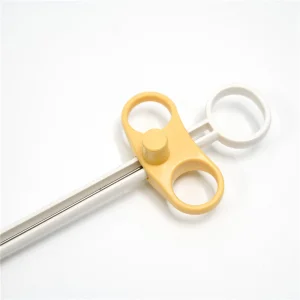
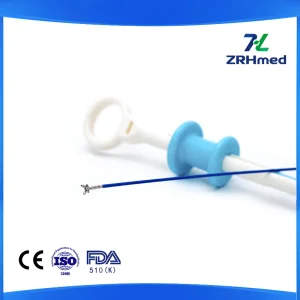
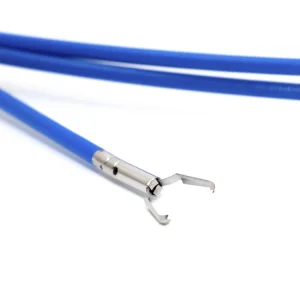
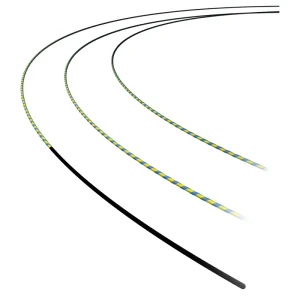
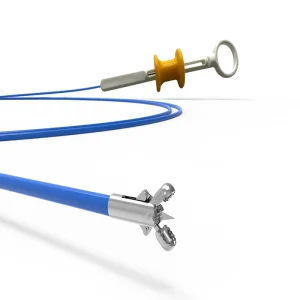
Verified class-II and class-III single-use accessories engineered for endoscopic mucosa resection, mechanical hemostasis, and tract access.
An exhaustive analysis of clinical demand vectors, supply chain risk management, and the industrial transition from legacy contract assembly to integrated ODM platforms.
In modern interventional gastroenterology, mechanical hemostasis represents the gold standard for managing acute non-variceal upper gastrointestinal bleeding (NVUGIB), arterial spurting (Forrest Ia/Ib lesions), Dieulafoy's ulcers, and post-polypectomy mucosal defects following Endoscopic Mucosal Resection (EMR) and Endoscopic Submucosal Dissection (ESD). Over the past decade, clinical reliance on endoscopic hemoclips (also termed endoclips) has grown exponentially. As global procedural volumes surpass tens of millions annually, multinational distributors, tender authorities, and regional private-label brands face a volatile procurement landscape dominated by patent cliffs, tightening regulatory frameworks (EU MDR 2017/745, US FDA 510(k)), and escalating pricing pressures under value-based healthcare paradigms.
Partnering with a specialized ODM Hemoclip manufacturer has shifted from a mere cost-arbitrage tactic to an essential strategic core competency. Global procurement directors no longer evaluate suppliers solely on unit FOB quotes. Modern technical audits probe deeply into metallurgical traceability, automated cleanroom assembly lines, in-process torque-to-rotate dynamics, finite element analysis (FEA) of jaw holding pressure, and continuous sterile barrier validation under ISO 11607 and ISO 11135 standards. A failure in distal clip release or an uncoordinated jaw rotation during an emergency arterial bleed not only jeopardizes patient survival but also exposes brand owners to catastrophic recall liabilities.
Key Strategic Takeaway for GPO & Brand Sourcing: The convergence of strict MDR post-market clinical follow-up (PMCF) requirements and regional price capping has made end-to-end ODM production—where tooling fabrication, high-speed micro-stamping, laser welding, and cleanroom packaging occur under a unified ISO 13485 QMS—the only commercially resilient supply pathway for high-volume endoscopic consumables.
The biomechanical efficacy of an endoclip is governed by its initial clamping force and residual tissue retention index over 7 to 14 days. Substandard clips exhibit premature mechanical relaxation, allowing arterial re-bleeding.
Modern endoscopists demand multi-reopening and closing capabilities to verify target mucosal capture prior to permanent deployment, reducing procedure time and wasteful misfires.
Navigating tortuous colonic flexures or retroflexed gastric funds creates heavy frictional drag. ODM torque-cable engineering ensures instant, 1:1 bidirectional transmission without whipping or lag.
A rigorous inspection of micro-machining tolerances, trigger load mechanics, and comparative kinematics separating clinical-grade devices from commercial copies.
At the microscopic scale of endoscopic micro-mechanics, an endoclip represents an extraordinary convergence of metallurgic science and mechanical kinematics. The device must pass through an endoscope insertion tube exceeding 1650 mm to 2300 mm in working length, maintain flexible trackability through severe tortuosity (e.g., retroflexed scopes in the gastric cardia), and yet reliably transmit distal axial forces exceeding 20 to 35 N during tissue closure and release.
Leading ODM factories utilize high-tensile medical grade 301 and 17-7PH precipitation-hardened martensitic stainless steel for clip arms, or superelastic nickel-titanium (Nitinol) alloys. The alloy must exhibit an optimized balance between elastic modulus (allowing wide jaw expansion up to 16 mm without permanent plastic deformity) and yield strength (preventing arm spreading when cinched down on thick, fibrotic mucosal tissue). The surface finish requires precision electrolytic polishing to eliminate micro-burrs and micro-cracks that could induce premature fatigue failure or micro-vascular shearing during tissue compression.
The transition from a repositionable clip to a permanently deployed implant hinges on the release mechanism. Historically, single-use hemoclips utilized sacrificial plastic sheer pins or mechanical hooks that were prone to unpredictable release forces. Modern ODM designs employ high-precision laser-welded release links or calibrated necked pins. When handle actuation reaches a defined threshold (typically 25 N to 35 N), the release hub undergoes ductile fracture or controlled disengagement, instantly releasing the locked clip while retaining zero sharp fragments within the patient.
| Performance Parameter | Legacy First-Gen Endoclips | Standard Commercial OEM | Advanced ODM Medical Platform |
|---|---|---|---|
| Jaw Opening Span | 6.0 mm – 9.0 mm | 9.0 mm – 11.0 mm | 9.0 mm, 12.0 mm, 16.0 mm (Ultra-Wide) |
| Repositionability | Non-repositionable (One-shot) | Limited (2 to 3 cycles) | >10 Smooth Open/Close Cycles |
| Rotational Torque Transmission | Unidirectional / High Whip Lag | Coaxial with 15°–30° hysteresis | 1:1 Synchronous Bidirectional (360°) |
| Deployment Actuation Force | >45 N (High user hand fatigue) | 30 N – 40 N (Variable) | 22 N – 28 N (Calibrated Crisp Release) |
| Working Channel Compatibility | ≥2.8 mm only | 2.8 mm (Snug fit in retroflexion) | 2.8 mm, 3.2 mm & 3.8 mm (Low Friction) |
| Tissue Retention Lifespan | 3 – 7 days average | 7 – 10 days average | 14 – 28 days (Optimized Mucosal Healing) |
| MRI Safety Profiling | Unlabeled / Unknown Artifacts | MR Conditional (1.5 T only) | ASTM F2503 Validated MR Conditional (3.0 T) |
How automated fabrication, ISO Class 7/8 cleanroom assembly, and multi-stage AOI visual inspection ensure zero-defect throughput at global volume.
Distal clip jaws are stamped and formed on high-speed precision presses operating at sub-micron tolerances (±0.005 mm). In-house die maintenance guarantees edge crispness and eliminates irregular micro-shearing across million-unit production runs.
Manual and semi-automated assembly occurs in validated controlled environments under ISO 14644-1 parameters. Airborne particulate counting, laminar flow hoods, and strict electrostatic discharge (ESD) mitigation protect sensitive micro-mechanisms.
Every single clip head and release junction passes through high-resolution telecentric lens stations equipped with machine learning defect detection models. Micro-welds, crimping concentricity, and jaw alignments are evaluated in milliseconds.
A strategic outlook on how bioresorbable alloys, smart sensor telemetry, and robotic-compatible endoscopic effectors are transforming the ODM product pipeline.
The mechanical hemoclip is undergoing rapid evolutionary shifts driven by clinical necessity and advanced materials science. As procedures become more invasive and prophylactic defect closure expands across complex endoscopic surgeries (such as Peroral Endoscopic Myotomy [POEM] and full-thickness transgastric resections), traditional stainless-steel clips encounter physiological limitations. Retained metal clips can impede subsequent therapeutic interventions, induce localized mucosal ulcerations, or migrate prematurely into abdominal viscera. Leading ODM manufacturers are actively developing next-generation architectures aligned with three transformational engineering pillars:
Pioneering R&D efforts are focused on high-strength Magnesium-Zinc (Mg-Zn) and Iron-Manganese (Fe-Mn) bioresorbable alloys. These engineered metals provide mechanical yield strengths comparable to surgical stainless steel for the crucial initial 10 to 14 days of wound healing, followed by predictable, biocompatible enzymatic erosion. The elimination of permanent metallic foreign bodies completely bypasses MRI safety restrictions, eliminates secondary clipping interference, and leaves an unblemished, fully healed muscularis propria.
Leveraging micro-electromechanical systems (MEMS), prototype intelligent endoclips incorporate passive impedance and optical micro-sensors capable of wireless telemetry. Embedded micro-antennas communicate through near-field RF signals to external monitoring units, alerting clinical care teams to sudden impedance changes indicative of mucosal re-bleeding or catastrophic arterial breach hours before hemodynamic shock manifests clinically.
As robotic flexible endoscopes gain commercial traction, ODM delivery systems are transitioning from manual ergonomic thumb-ring handles to automated electro-mechanical actuator interfaces. Standardized robotic coupling cassettes allow sub-millimeter motorized rotation, programmable tissue tactile feedback algorithms, and single-operator robotic firing without requiring an assistant at the endoscope biopsy port.
Navigating the complex maze of international medical device directives: MDR Class IIb technical files, FDA 510(k) substantiation, and ISO 13485 QMS governance.
Every operational node—from raw stainless-steel wire spool intake to cleanroom blister sealing—is audited under an unyielding Quality Management System certified by recognized European Notified Bodies.
Endoscopic hemoclips entering the European Union require comprehensive Technical Documentation Files (TDF), clinical evaluation reports (CER) following MEDDEV 2.7/1 Rev 4, and robust PMCF plans.
Seamless international customs clearance requires customized device labeling. Our ODM engineering team integrates global serialization standards directly onto secondary packaging.
Complete single-use gastrointestinal and pulmonary device suite available for OEM customization, bulk factory supply, and regional distributor branding.
Direct technical answers addressing critical queries posed by biomedical engineers, hospital procurement committees, and contract brand managers.
Accelerate your time-to-market with proven regulatory dossiers, reliable high-speed mass production, and tier-1 clinical engineering support. Request our master specification catalog, technical white papers, or an initial sample evaluation lot today.