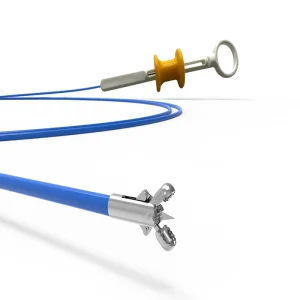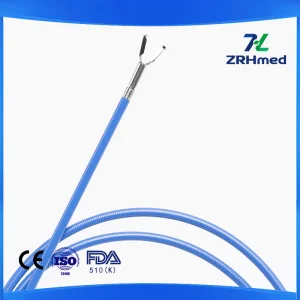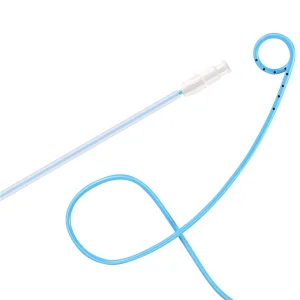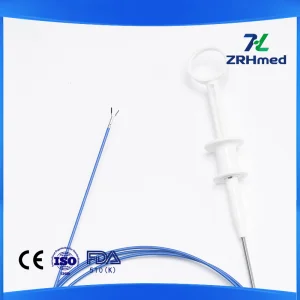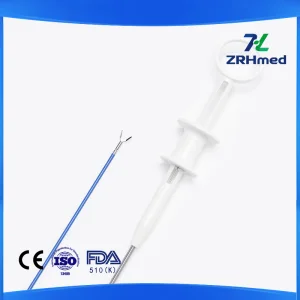
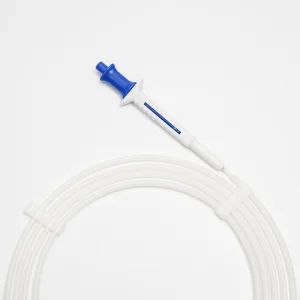
Explore high-turnover therapeutic devices, engineered for immediate channel compatibility, sterile single-use performance, and ISO 13485 regulatory precision.
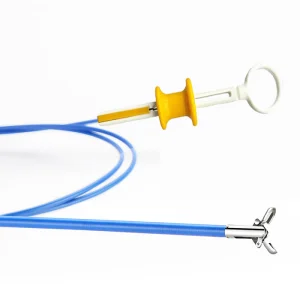
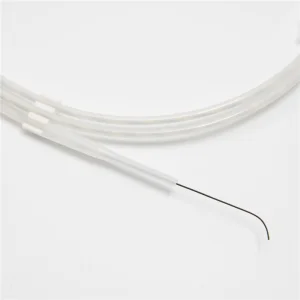
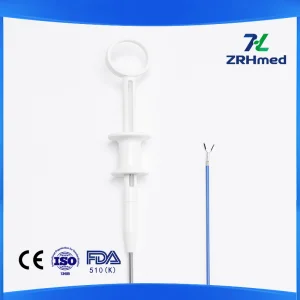
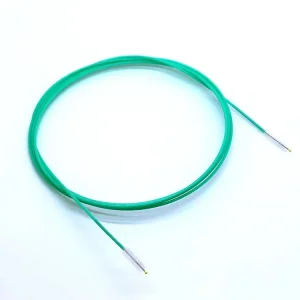
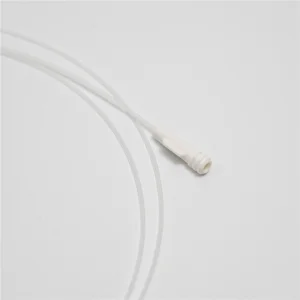
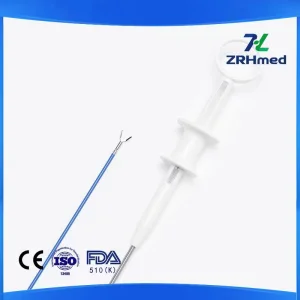
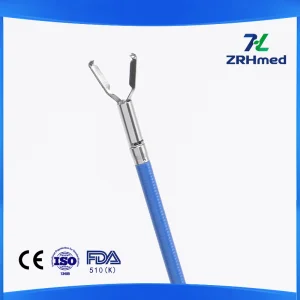
Analyzing the mechanical, metallurgical, and biomechanical transitions driving next-generation endourological stone retrieval systems.
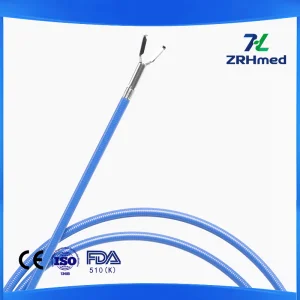
Traditional stone baskets relied on a protruding filiform wire tip (Dormia configuration) that routinely caused mucosal abrasion, calyceal puncture, and bleeding in narrow renal calyces. Modern zero-tip (tipless) geometry enables true flush contact against the calyx wall, permitting direct stone capture without blind-zone tissue trauma.
Utilizing high-purity medical binary Nickel-Titanium (Nitinol ASTM F2063) allows the retrieval wires to undergo reversible thermoelastic martensitic transformation. When deployed via micro-catheters as fine as 1.5 French, the zero tip basket snaps into an omni-directional retrieval cage with zero residual plastic deformation.
Modern flexible ureterorenoscopy (fURS) requires exceptional irrigation flow to maintain clear visualization. Downsizing basket sheaths from 3.0Fr to 1.5Fr - 1.8Fr reduces working channel occlusion by up to 64%, sustaining intrarenal irrigation pressure and eliminating optical distortion during high-frequency dusting.
How medical device brand owners, national distributors, and hospital group purchasing organizations (GPOs) qualify zero tip stone basket OEM/ODM suppliers.
Global tender boards across the European Union, the United Kingdom (NHS Supply Chain), and North America mandate comprehensive documentation under EU MDR (Regulation 2017/745) Class IIa and US FDA 510(k). Procurement directors look beyond basic CE marks to evaluate ISO 13485:2016 audited technical documentation, biocompatibility per ISO 10993, and validated ethylene oxide sterilization release (ISO 11135).
Ambulatory Surgery Centers (ASCs) are rapidly replacing reusable baskets with single-use sterile devices. Cross-contamination concerns, the high labor cost of micro-wire cleaning, and frequent wire kinking during reprocessing make disposables economically superior, eliminating hospital sterilization liabilities while guaranteeing 100% mechanical torque transmission for every case.
Intra-operative wire severance caused by stray laser firing represents a catastrophic surgical failure. OEM buyers demand nitinol baskets engineered with enhanced surface passivation and laser-resistant thermal characteristics. Our proprietary annealing protocols prevent wire snapping during co-axial laser fragment dusting, preserving basket integrity inside the renal basin.
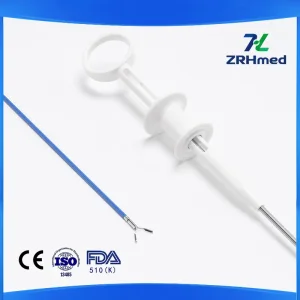
Tier-1 medical device brands partner with ODM suppliers that provide complete design-to-dock solutions: customized handle molding with thumb-lock controls, customizable sheath lengths (115cm to 130cm), French sizes (1.5Fr, 1.8Fr, 2.2Fr), individual Tyvek blister packaging, and local multi-language IFU (Instructions for Use) printing to expedite direct regulatory clearance.
Behind the manufacturing infrastructure of Jiangxi ZhuoRuiHua Medical Instrument Co., Ltd. (ZRH Med): High-yield precision manufacturing meeting global tolerances.
By controlling the entire process chain—from virgin Nitinol alloy ingot thermal shaping, multi-axis automated laser micro-welding, and automated PTFE/Pebax polymer extrusion—ZRH Med eliminates tier-2 supply vulnerabilities. This continuous in-house traceability delivers tight batch-to-batch consistency with sheath OD tolerances held strictly within ±0.01 mm.
Each basket undergoes three rigorous quality verification stages: 100% optical micro-inspection of distal tipless wire welds under 40x magnification, cyclic fatigue testing exceeding 50 deploy-retract sequences under acute 270° scope deflection, and sheath-to-handle tensile pull-testing well beyond ISO standard thresholds (guaranteeing >25 N joint strength).
Our ISO Class 7 and Class 8 certified cleanrooms feature automated ultrasonic cleaning, laser knot formation, and automated pouch-sealing stations. This Industry 4.0 layout guarantees scale advantages, allowing global B2B clients to secure multi-million unit tenders with predictable 30-day fulfillment cycles and zero compromise on sterility assurance levels (SAL 10⁻⁶).
A technical side-by-side analysis of key clinical performance metrics, mechanical tolerances, and operative parameters.
| Performance Metric | Legacy Stainless Dormia | Generic Flat-Wire Nitinol | ZRH ODM Zero Tip Basket |
|---|---|---|---|
| Distal Tip Geometry | Protruding metal hub (3.0 - 5.0 mm tip) | Short crimped cap (0.8 - 1.5 mm) | True 0.0 mm Tipless (Flush Calyx Contact) |
| Outer Sheath Caliber (Fr) | 2.4 Fr – 3.2 Fr | 1.9 Fr – 2.2 Fr | 1.5 Fr / 1.8 Fr / 2.2 Fr Ultra-Slim |
| Deflection Angle Preservation | Loss of up to 45° scope deflection | Loss of 15°–20° deflection | < 5° Deflection Loss at 270° Ureteroscope Flex |
| Irrigation Flow Preservation | Occludes > 70% of 3.6Fr channel | Occludes ~ 50% of channel | Preserves > 85% Free Irrigation Velocity |
| Radial Expansion Sizing | Rigid fixed expansion (high trauma) | Semi-elastic non-uniform basket | Custom 8mm, 11mm, 15mm Calibrated Diameters |
| Stone Release Capability | High entrapment risk during lithotripsy | Moderate release efficiency | Complete In-Situ Inversion for Immediate Release |
| Wire Tensile Joint Strength | Crimp joint < 15 N | Laser weld ~ 18 N | Micro-plasma weld > 25 N Tensile Integrity |
Engineered to resolve real-world operative bottlenecks across modern retrograde intrarenal surgery (RIRS) and ureterorenoscopy.
Navigating the acute infundibulopelvic angle (IPA < 30°) of the inferior pole poses extreme risk of scope damage and tissue laceration. The ZRH zero-tip basket’s 1.5Fr ultra-flexible sheath glides through fully deflected digital scopes without losing deflection angle. Its tipless crown opens flat against the bottom of the calyx, capturing lower-pole calculi directly from the parenchymal base.
Attempting laser lithotripsy inside a tight, dependent lower calyx can destroy scope optics and generate excessive thermal load. Clinicians deploy our tipless basket to capture the 8-12 mm calculus, securely transport it into the spacious upper pole or renal pelvis, and complete dusting without endangering delicate papillae.
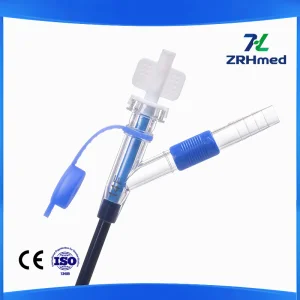
In conjunction with Negative Pressure Ureteral Access Sheaths (such as ZRH Med's suction access platform), the tipless basket sweeps medium fragments (2-4 mm) directly into the high-velocity suction vortex at the sheath mouth, preventing stone retropulsion into elusive calyces and drastically reducing overall operating room time.
Clear, direct answers for medical device purchasing managers, OEM engineers, and regulatory directors.
A true zero tip basket features distal wires that loop continuously back into the assembly without any forward-projecting solder hub, crimped metal collar, or filiform guide tip. This allows the basket wires to open in complete planar alignment against mucosal tissue, eliminating the blind puncture zone that causes calyx perforation and intrarenal hematoma.
ZRH Med supports full engineering flexibility. We manufacture 4-wire, 3-wire, helical, and multi-wire parallel configurations. Clients can define specific radial opening diameters (from 8 mm micro-baskets up to 15 mm macro-extractors), wire geometry (round drawn wire for atraumatic tissue slip vs. flat cold-rolled wire for aggressive mechanical stone grip), and custom sheath lengths.
Every commercial lot is accompanied by a Certificate of Analysis (CoA) containing dimensional inspection data, tensile pull-test certificates (>25 N), laser weld verification reports, and EO sterilization validation records complying with ISO 11135 (residual ethylene oxide < 4 µg/g and ethylene chlorohydrin < 9 µg/g, well below standard MDR maximums). Quality systems are ISO 13485:2016 certified.
Yes. Our handle incorporates an anti-trapping release mechanism. By fully advancing the slider handle, the sheath pushes the basket forward while allowing the superelastic nitinol wires to invert and expand beyond normal limits, safely discharging an oversized stone without necessitating surgical cutting or open intervention.
Standard white-box OEM orders start at 500 units per SKU. For custom printed Tyvek pouch blisters, branded outer boxes, and client-specific molded handles, the initial minimum run is typically 1,000 to 2,000 units. Prototyping lead times for custom wire configurations range from 14 to 21 business days, with mass production fulfillment within 30 to 40 days.
Our single-use tipless stone baskets have a validated 3-year sterile shelf life under accelerated and real-time aging protocols according to ASTM F1980. The packaging system comprises a medical-grade breathable Tyvek/PET-PE heat-sealed blister tray, enclosed within an aluminum foil barrier pouch for high-humidity tropical export destinations.
Complete your supply portfolio with advanced hemostatic clips, access sheaths, and drainage catheters engineered under rigorous cleanroom oversight.