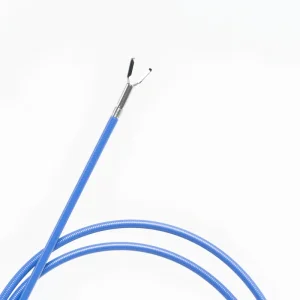
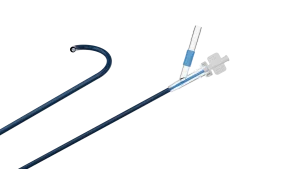
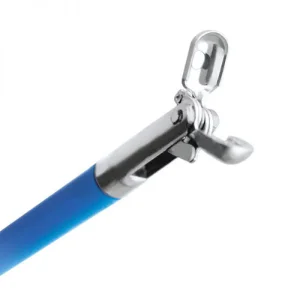
Integrated minimally invasive instrumentation designed for seamless working channel compatibility and strict clinical performance thresholds.
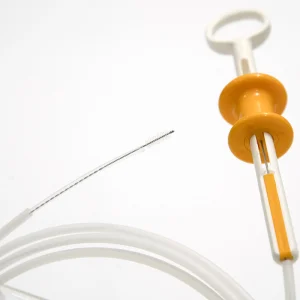
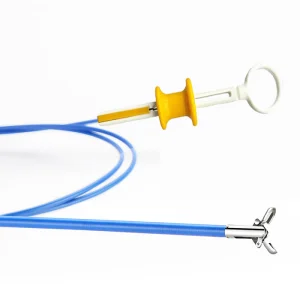
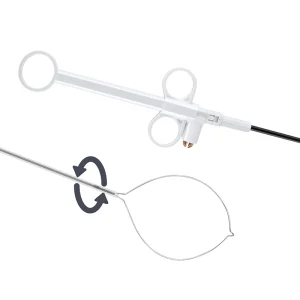
A rigorous industrial perspective on alloy core selection, fluoropolymer thermal bonding, and torque transmission dynamics.
The core wire dictates trackability and tactile feedback. Our facility supports both superelastic nickel-titanium (Nitinol) alloys and precision-drawn 304V high-tensile stainless steel. Nitinol delivers 8% recoverable strain without permanent deformation, vital for tortuous intrahepatic ducts, whereas 304V yields unmatched longitudinal pushability and column stability during tight stenosis dilation.
Unlike basic dip-coating lines, our proprietary heat-shrink and high-temperature thermal sintering achieves chemical molecular adhesion between the PTFE fluoropolymer sheath and the metallic core. This eliminates the catastrophic clinical risk of polymer flaking, shaving, or distal delamination inside working channels or anatomical conduits.
Precision guidance mandates optimal fluoroscopic visualization. We engineer atraumatic distal terminations, integrating platinum-tungsten or gold radiopaque markers under micro-plasma welding. The transition from the rigid main shaft to the flexible distal tip is calculated to prevent vessel dissection and tissue perforation during cannulation.
Addressing the stringent requirements of OEM medical device brands, hospital group purchasing organizations (GPOs), and contract distributors.
Multinational medtech brands require unyielding engineering traceability. Every OEM PTFE guidewire batch manufactured in our facility is mapped to a traceable DMR and Device History Record (DHR). From raw wire tensile tests to EO chamber residual charts, documentation meets FDA 21 CFR Part 820 and EU MDR Annex II stipulations.
Procurement teams demand robust shelf-life validation. We supply sterile bulk packaging, private-label peel pouches, and coiled hoop dispensers. Our processes are validated according to ISO 11135 (Ethylene Oxide) and ISO 11607 (Packaging for Terminally Sterilized Medical Devices), offering certified 3-to-5-year sterile shelf integrity.
Global healthcare systems are moving toward cost containment without efficacy loss. Our direct factory platform allows tier-1 distributors to compete effectively against dominant legacy brands in public hospital tenders by significantly lowering per-unit production costs while maintaining premium clinical-grade standards.
Capitalizing on industrial clustering, advanced metallurgical machining, and vertically integrated medical manufacturing.
From micro-drawing dies to proprietary automated PTFE sintering fixtures, our internal tool-and-die capabilities cut OEM prototyping cycles from months to just 14 business days.
Our Jiangxi production campus hosts parallel high-speed multi-axis grinding units, allowing continuous batch production capacity exceeding 500,000 guidewire units monthly.
Proximity to certified high-purity Nitinol ingots and medical fluoropolymer suppliers insulates our production pipeline from international logistics bottlenecks and tariff shocks.
Every lot undergoes 100% optical micrometer dimensional auditing, particulate testing via light obscuration, and destructive tensile testing on tip-to-core weld interfaces.
Engineering customized physical attributes optimized for specific anatomical interventions.
| Clinical Specialty | Primary Application | Guidewire OD (Inch) | Length (cm) | Core Construction & Tip Profile |
|---|---|---|---|---|
| ERCP & Biliary | Papillary cannulation, selective intrahepatic duct access, biliary drainage stent positioning. | 0.025", 0.035" | 260cm, 450cm | Superelastic Nitinol core, yellow/black Zebra PTFE jacket, highly flexible radiopaque distal tip. |
| Endourology (PCNL/URS) | Ureteral access sheath placement, stricture navigation, stone basket tractor guidance. | 0.032", 0.038" | 145cm, 150cm | 304V Stainless Steel core for high pushability, straight or J-tip, low-friction PTFE green jacket. |
| Gastrointestinal (EMR/ESD) | Accessory channel passage, luminal stricture dilation, guidewire-assisted feeding tube placement. | 0.018", 0.021" | 180cm, 220cm | Graduated transition core, non-conductive PTFE surface for safe electrosurgical tool interaction. |
| Bronchoscopy | Peripheral pulmonary lesion targeting, bronchial stent deployment under fluoroscopy. | 0.021", 0.025" | 180cm, 200cm | Micro-diameter atraumatic tip design minimizing parenchymal puncturing hazards. |
Expediting distributor market access across European, American, Asian, and Latin American health authorities.
We supply end-to-end Technical Documentation for EU MDR (Regulation 2017/745), FDA 510(k) submissions, and NMPA filings. Complete biocompatibility dossiers per ISO 10993 (cytotoxicity, sensitization, irritation, systemic toxicity, and hemocompatibility) are provided as turnkey packages.
Navigating ANVISA (Brazil), COFEPRIS (Mexico), MFDS (South Korea), or PMDA (Japan) can be challenging. Our specialized regulatory affairs department provides distributor partners with legalized Certificates of Free Sale (CFS), ISO declarations, risk analysis summaries (ISO 14971), and accelerated aging stability data.
We facilitate complete localization of medical labels, Instructions for Use (IFUs), barcodes (GS1 / UDI compliance), and packaging artwork across 24 languages. Brand owners can launch private-label guidewire portfolios without dedicating internal overhead to graphics and print compliance.
Anticipating next-generation interventional needs through material science and micro-manufacturing breakthroughs.
Clinicians are moving toward hybrid guidewire architectures. The future centers on designs that incorporate a robust PTFE jacket along the proximal and middle shaft to facilitate smooth device exchange and tactile control, paired seamlessly with a cross-linked hydrophilic polymeric distal tip for negotiating tortuous strictures without tissue resistance.
With the expansion of digital interventional suites, R&D is active in integrating micro-fiberoptic pressure sensors and electromagnetic tracking arrays inside the core architecture of 0.035" wires, enabling real-time intra-luminal pressure gradient evaluations and navigation beyond conventional fluoroscopy.
As global regulations tighten on Per- and Polyfluoroalkyl Substances (PFAS), our metallurgical and chemical engineering labs are pioneering eco-compliant fluoropolymer application methods that reduce thermal emissions during sintering while maintaining low particulate generation and reliable biocompatibility.
Detailed technical, regulatory, and commercial answers for original equipment manufacturers and medtech importers.
PTFE (polytetrafluoroethylene) provides a stable, dry lubricious layer that does not require pre-activation via saline immersion, making it immediately deployable. Furthermore, PTFE-coated guidewires exhibit superior electrical insulation, preventing unintended RF dissipation during electrosurgical procedures like endoscopic sphincterotomy. They also eliminate the risk of coating 'tackiness' during prolonged, complex accessory exchanges inside standard catheters.
Delamination typically occurs from inadequate surface preparation or uncontrolled thermal curing. We utilize a multi-stage process: micro-grit sandblasting or chemical etching of the core wire, followed by precision automated extrusion of high-density PTFE, finished by high-temperature sintering inside controlled infrared convection chambers. Bond adhesion is verified via 180-degree peel tests and ISO 11070 catheter friction simulation runs.
We provide full engineering configurability: Core wire substrate (Nitinol or 304V), overall length (80cm to 450cm), outer diameter (from micro 0.014" up to 0.038"), core profile taper configurations, distal tip shape (Straight or J-curve with selectable radiuses), jacket pigmentation (monochrome green, white, or alternating high-contrast visual Zebra patterns), and radiopaque tip markers (welded gold, platinum bands, or tungsten coils).
Every production lot must pass rigorous acceptance criteria before entering quarantine: dimensional inspection using laser micrometers, tensile strength testing of tip weld joints (exceeding standard ISO 11070 pull force values), kink resistance tests across defined mandrels, particulate contamination evaluation under liquid particle counters, and sterile EO residual validation (Ethylene Oxide and Ethylene Chlorohydrin levels below ISO 10993-7 thresholds).
Yes. We support overseas medical device manufacturing facilities that maintain their own packaging and sterilization suites. We can provide guidewires in cleanroom-packed bulk packaging (Class 10,000 / ISO Class 7 cleanroom environment), coiled inside protective polyethylene dispensing hoops or interleaved within clean bags, accompanied by certificates of analysis (CoA) and raw material declarations.
Clinically validated instruments engineered to pair with access guidewires for safe tract access, suction, and defect intervention.