
Hemostasis Core
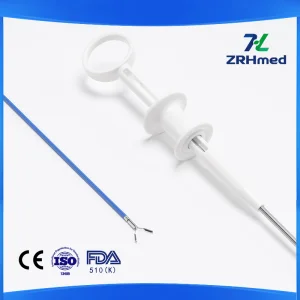
Precision single-use solutions deployed across endoscopy suites and operating rooms in Rome, Milan, Bologna, and international gastroenterology centers.
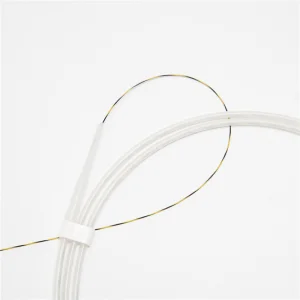
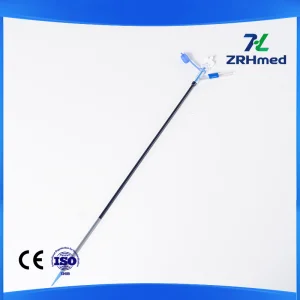
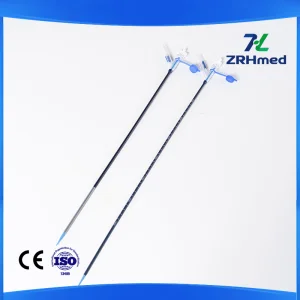
Italy's National Health Service (Servizio Sanitario Nazionale - SSN) operates under a decentralized healthcare model structured across 20 distinct regions. From high-throughput university polyclinics in Lombardy (Milan), Veneto (Padua/Verona), and Lazio (Rome) to southern healthcare hubs in Campania and Sicily, purchasing authority balances between regional health agencies (Aziende Sanitarie Locali - ASL) and national centralized procurement platforms like Consip.
In Italian digestive endoscopy units (Gastroenterologia ed Endoscopia Digestiva), hemoclips represent one of the highest turnover sterile single-use surgical consumables. Hospital units perform hundreds of thousands of diagnostic and operative colonoscopies and esophagogastroduodenoscopies (EGDS) annually under Italy’s active national colorectal cancer screening programs (Programmi di Screening Oncologico per il Tumore del Colon-Retto).
With the aging demographic in Italy and the pervasive clinical management of patients on antiplatelet and direct oral anticoagulant (DOAC) regimens, post-polypectomy bleeding (PPB) and acute non-variceal upper gastrointestinal bleeding (NVUGIB) present significant clinical urgency. Sourcing hemoclips with reliable tensile retention, repeatable reopening mechanics, and precise rotational torque is paramount for Italian clinical risk managers and biomedical engineering departments (Ingegneria Clinica).
| Procurement Factor | Italian Market Expectation | Our Factory Capability |
|---|---|---|
| Regulatory System | CE MDR (EU 2017/745), CND Code, RDM Registration | Full Technical Documentation & Notified Body MDR Class IIb Certification |
| Public Tendering | Consip, SINTEL, ARIA, So.Re.Sa platform tenders | Complete tender dossiers, lot certificates, ISO 13485:2016 audit reports |
| Clip Repositionability | Minimum 5–10 reopenings prior to final locking | Smooth multi-cycle opening/closing with audible tactile feedback |
| Rotational Torque | 1:1 bi-directional control via tortuous anatomical scopes | High-tensile braided stainless steel transmission shaft |
| Delivery Lead Time | Consigned buffer stocks or <14 business days | Automated warehouse inventory with priority European air freight |
Modern interventional endoscopy requires hemoclips to function simultaneously as mechanical clamps, tissue approximation anchors, and perforation barriers.
Ulcer bleeding classified as Forrest Ia, Ib, or IIa demands immediate mechanical coaptation to arrest spurting or oozing vessels resistant to injection monotherapy.
Widespread adoption of Endoscopic Submucosal Dissection (ESD) across Italian tertiary hospitals creates mucosal defects prone to delayed perforation and micro-ischemia.
Immediate endoscopic closure of accidental duodenal, gastric, or colonic micro-perforations prevents emergency surgical conversion and peritonitis.
Bridging metallurgy, robotic micro-assembly, and patient-tailored bioresorbability to redefine interventional safety across European healthcare institutions.
Early generation hemoclips suffered from torque lag—where handle rotation failed to translate into jaw orientation when the endoscope was looped inside the sigmoid colon or duodenal bulb. Our latest production lines integrate multi-strand wire-wound braided catheter sleeves with super-elastic Nitinol-stabilized drive wires. This ensures immediate 360° rotational responsiveness without wrist strain or scope whipping.
When deploying multiple clips sequentially during complex mucosal reconstructions, conventional long post-deployment clips often tangle with subsequent devices or inadvertently damage endoscope working channels during retroflexion. Our low-profile retaining anchor reduces the post-release stem length by 45%, preventing accidental dislodgement caused by gastrointestinal peristalsis.
Our active collaborative research explores bioresorbable magnesium-alloy clip jaws designed to maintain clamping integrity throughout the re-epithelialization phase (14–21 days) before gradual physiological degradation. This eliminates retained foreign bodies in younger demographics while facilitating follow-up imaging without MRI artifacts.
Navigating the stringent requirements of the European Medical Device Regulation (EU 2017/745) to ensure frictionless market clearance for Italian distributors.
Registration within the Italian Ministry of Health’s Repertorio Dispositivi Medici (RDM) is mandatory for hospital distribution.
Continuous clinical evaluation under strict Notified Body surveillance guarantees batch-to-batch biocompatibility and functional safety.
Automated supply chain logistics require item-level traceability to safeguard patient safety and streamline warehouse management.
Whether you are supplying university hospitals via regional tenders or expanding your medical device private-label portfolio across the Italian market, our engineering and regulatory teams stand ready to support your technical tender specifications.
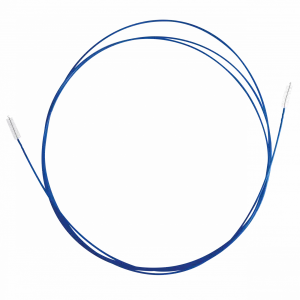
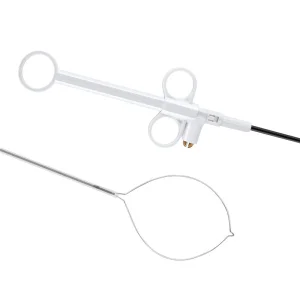
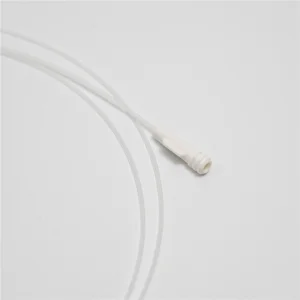
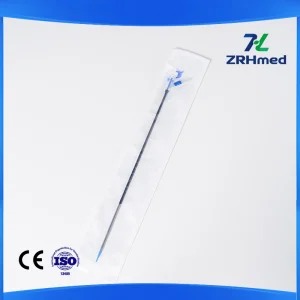
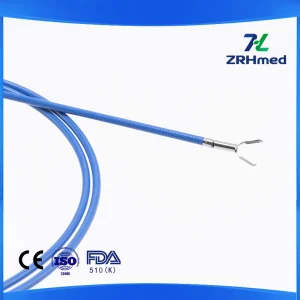
Send Inquiry NowComplete suite of diagnostic, tissue retrieval, and channel hygiene instruments manufactured under rigorous cleanroom standards for international OEM and distribution partners.
Technical, regulatory, and commercial insights for biomedical directors, supply chain managers, and authorized medical device distributors.
Under EU MDR 2017/745 Rule 8 (surgically invasive devices intended for transient or short-term mucosal approximation and hemostasis), our endoscopic hemoclips are certified under Class IIb. Complete technical documentation including clinical evaluation reports (CER), risk analysis per ISO 14971, and ISO 13485 QMS audits are accessible for hospital tender submissions.
Yes. We coordinate directly with European Authorized Representatives (EC REP) and Italian regulatory partners to register each SKU with assigned CND (Classificazione Nazionale dei Dispositivi Medici) codes, ensuring full eligibility for regional tenders across Consip, ARIA (Lombardy), and So.Re.Sa (Campania).
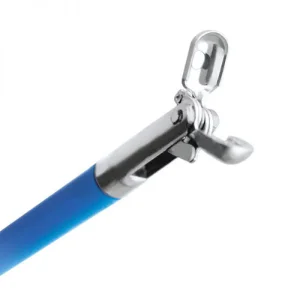
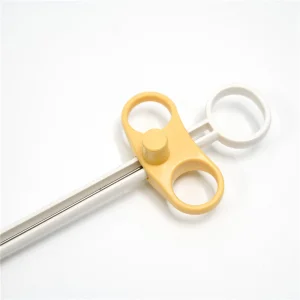
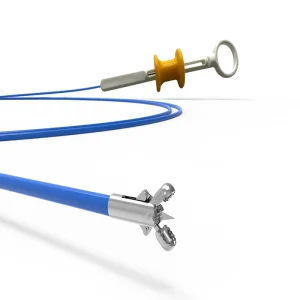
Our dual-stage release control features an engineered tactile resistance threshold before final lock initiation. The clip can be freely opened, closed, rotated, and repositioned multiple times. Irreversible deployment only occurs when deliberate tensile force exceeding 35 N is exerted on the ergonomic thumb-ring handle.
The outer catheter diameter measures 2.6 mm, making it universally compatible with all standard GI endoscope working channels of 2.8 mm and greater (including Olympus, Pentax, and Fujifilm platforms). Available working lengths include 1650 mm for gastroscopes, 1950 mm for standard colonoscopes, and 2300 mm for enteroscopes.
Yes. We provide comprehensive OEM/ODM solutions including customized pouch artwork, Italian language Instruction for Use (IFU) translations conforming to EN ISO 20417, customized outer carton typography, and localized barcode formats (GS1 / EAN-13 / HIBC).
Standard catalog references maintain continuous buffer inventory with sample shipments dispatched within 48 hours and commercial consignments fulfilled in 2–3 weeks. OEM private-label runs are calibrated to distributor forecasts with flexible initial minimum commitments.
Direct from the manufacturer: eliminate supply chain bottlenecks, protect dealer margins, and supply Italian endoscopy suites with instruments validated for mechanical excellence.