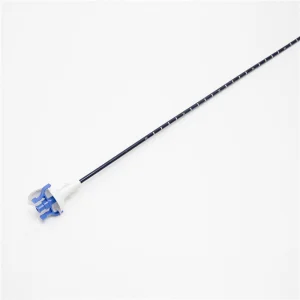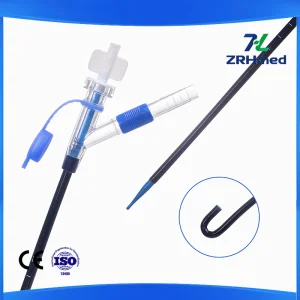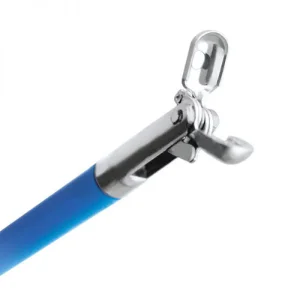
High-Quality Disposable Endoscopic Resection Polypectomy Snare for Gastroenterology Manufacturers, Factory (Ghana Clinical Spec)
Request Spec Sheet
Engineered to deliver clean histological cuts, minimal thermal damage, and effortless working channel navigation through complex anatomical flexures.
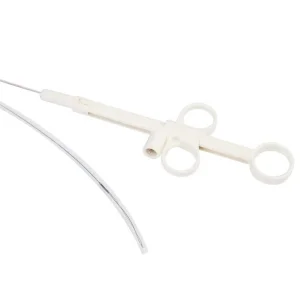
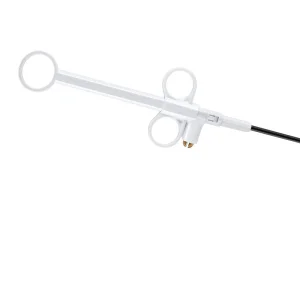
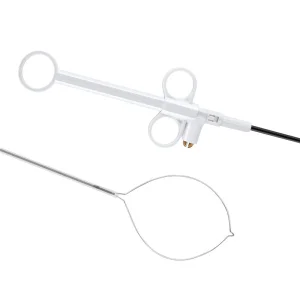
Strategic analysis of gastrointestinal intervention trends across Greater Accra, Ashanti, and regional teaching healthcare institutions.
The healthcare infrastructure within Ghana is undergoing a critical transition. With the rising prevalence of colorectal polyps, early-stage adenocarcinomas, and lower gastrointestinal bleeding disorders documented across major tertiary health centres—including the Korle-Bu Teaching Hospital (KBTH) in Accra, the Komfo Anokye Teaching Hospital (KATH) in Kumasi, and Tamale Teaching Hospital—the clinical demand for reliable endoscopic intervention consumables has increased exponentially. Routine diagnostic endoscopies are progressively transitioning into interventional procedures requiring immediate therapeutic action, chief among which is polypectomy.
Historically, sub-Saharan medical centers faced supply chain friction characterized by volatile distributor markups from Western European intermediaries and inconsistent batch deliveries. This created an operational vulnerability: medical centers occasionally experienced acute shortages of sterile accessories or relied on complex chemical reprocessing of devices that were fundamentally intended for single use. As Ghana FDA guidelines strictly harmonize with international patient safety doctrines, the Ghanaian health sector is aggressively phasing out refurbished consumables in favor of high-yield, ISO 13485-certified single-use polypectomy snares that mitigate cross-contamination risks entirely.
Recent studies in regional medical centers indicate that non-pedunculated adenomas below 10 mm account for nearly 72% of detected polyps in Ghanaian urban diagnostic centers. The shift toward cold snare polypectomy (CSP) without electrocautery minimizes post-polypectomy electrocoagulation syndrome, eliminates delayed thermal bleeding, and removes the dependency on erratic electrical grounding units in emergent outpatient settings.
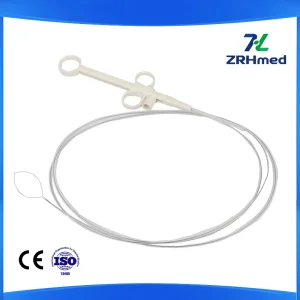
Clinical endoscopy units in private surgical hospitals across urban Accra (e.g., Airport Residential Area, Cantonments, Ridge) and regional mission hospitals (such as those under the Christian Health Association of Ghana - CHAG) utilize a diverse variety of endoscope platforms ranging from Olympus EVIS EXERA systems to Pentax and Fujifilm platforms. For a manufacturer, delivering a universal polypectomy snare to Ghana requires strict dimensional tolerances: catheter outer diameters must not exceed 2.3 mm to glide seamlessly through standard 2.8 mm instrumentation channels, even when the endoscope is fully retroflexed in the cecum or fundus.
Furthermore, Ghana’s tropical maritime climate—distinguished by elevated ambient relative humidity and high temperatures—demands advanced medical device primary packaging. Our Tyvek-to-film blister seals maintain absolute microbiological integrity and barrier sterility against humidity ingress, guaranteeing a validated 3-year shelf life under West African climactic storage parameters.
Advanced mechanical kinematics designed for 1:1 torque transmission, ensnaring stability, and precision micro-resection.
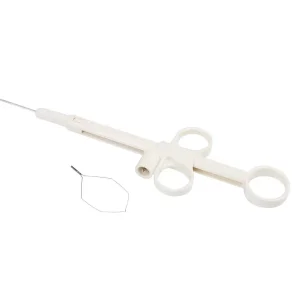
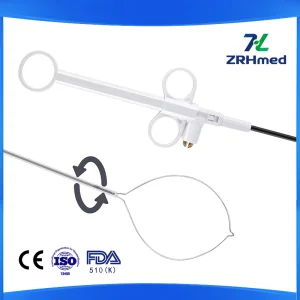
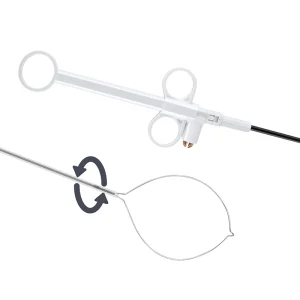
Eliminates looping latency. The snare's inner multi-strand core transmits rotatable wrist maneuvers directly from the ergonomic three-ring handle to the distal wire loop with zero angular backlash.
Engineered using nickel-titanium (Nitinol) alloys that retain their nominal geometrical contour even after multiple actuations through tortuous sigmoid anatomy.
For hot resection applications, wire gauge configurations concentrate radiofrequency energy at the tissue interface, facilitating clean resections with controlled hemostasis.
| Snare Category | Loop Geometry | Loop Width (mm) | Catheter OD / Working Length | Primary Clinical Indication |
|---|---|---|---|---|
| Cold Snare Mini | Diamond / Hexagonal | 10 mm / 15 mm | 2.3 mm / 2300 mm | Diminutive polyps (<6 mm), sessile serrated lesions without cautery |
| Cold Snare Standard | Oval / Crescent | 15 mm / 20 mm | 2.3 mm / 2300 mm | Small polyps (6–9 mm), immediate mechanical transection |
| Hot Snare Monofilament | Oval / Hexagonal | 25 mm / 30 mm | 2.3 mm / 2300 mm | Pedunculated polyps, thick-stalk lesions requiring coagulative current |
| Hot Snare Braided Multi-Filament | Crescent / Oval | 20 mm / 35 mm | 2.3 mm / 1800 mm – 2300 mm | Gastric antral polyps, piecemeal EMR resections (>15 mm) |
Ensuring frictionless institutional clearance at Tema Port and Kotoka International Airport through exhaustive technical dossier verification.
Navigating Ghana FDA registration (Part 7 of the Public Health Act, 2012, Act 851) requires meticulous device documentation. ZhuoRuiHua Medical provides distributor partners in Accra with comprehensive regulatory submission dossiers:
We work synergistically with medical supply houses in Accra and Kumasi to ensure seamless customs navigation through the Integrated Customs Management System (ICUMS):
Eliminate unnecessary European intermediary margins while gaining direct engineering oversight and institutional economies of scale.
For decades, healthcare institutions across West Africa were burdened by inflated medical device procurement costs. Consumables manufactured in Asia were regularly routed through European clearinghouses, accumulating double-handling logistics costs, currency exchange penalties, and multi-tier distributor markups. By establishing a direct OEM partnership with Jiangxi ZhuoRuiHua Medical Instrument Co., Ltd., Ghanaian healthcare networks bypass intermediary channels entirely.
Operating out of state-of-the-art cleanroom manufacturing hubs in Jiangxi, China, ZhuoRuiHua integrates end-to-end device realization: from micromechanical tooling and laser welding of wire baskets to cleanroom catheter assembly, EO sterilization, and pouch heat-sealing. This vertical integration provides distinct operational advantages to procurement directors:
Achieve up to a 40% unit cost reduction relative to Western branded counterparts without compromising metallurgical tolerances, opening hospital margins for high-volume screening programs.
Every single snare lot undergoes 100% actuation testing, high-voltage tensile load testing, and electrical continuity verification, ensuring zero failures inside active patient lumens.
Tailor catheter lengths, braided loop diameters, packaging typography, and dual-language labeling (English/French for ECOWAS cross-border distribution) within short lead cycles.
Optimizing procedural outcomes across routine diagnostic colonoscopies, outpatient clinics, and complex tertiary interventions.
Clinical Focus: High-throughput detection and removal of diminutive sessile adenomas (2–8 mm) during routine health screenings in metropolitan Accra.
Clinical Focus: Removal of large, vascular stalks (>15 mm) presenting with ongoing intermittent hematochezia at regional referral hospitals.
Clinical Focus: Piecemeal endoscopic mucosal resection of flat right-sided colonic lesions in elderly or anticoagulated patients.
Addressing technical compatibility, shipping logistics, private labeling, and regional regulatory compliance.
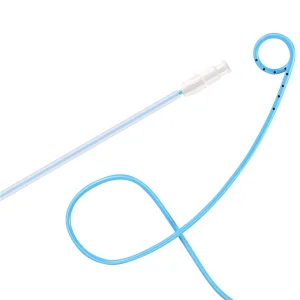
Comprehensive therapeutic instruments designed to meet institutional tender requirements across GI and urological pathways.