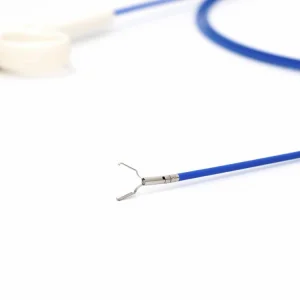
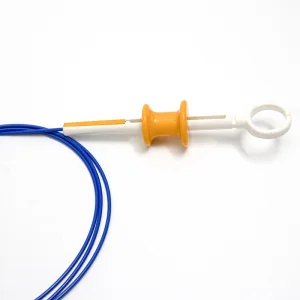
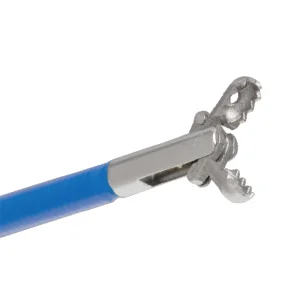
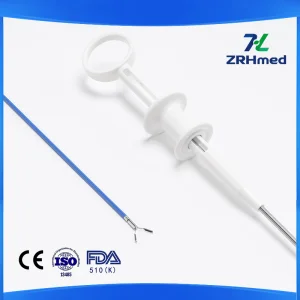
Direct-from-factory CE-marked consumables engineered for working-channel compatibility, immediate deployment, and hospital tender compliance across Europe, Latin America, and Southeast Asia.
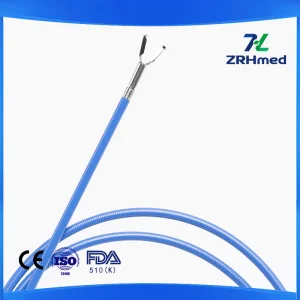
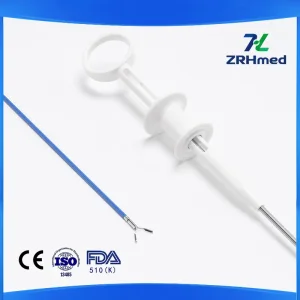
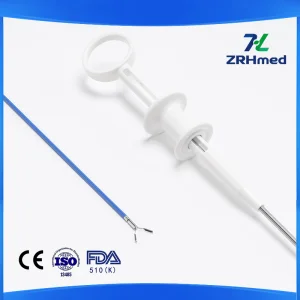
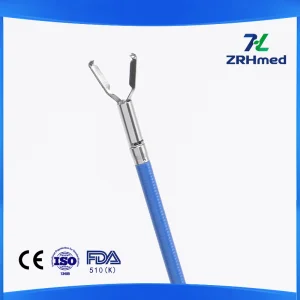
An authoritative examination of supply chain consolidation, vertical tooling integration, and the commercial shift from low-cost manual assembly to automated medical device engineering.
The global flexible endoscopy market is witnessing an unprecedented transition from capital-intensive scope investments toward single-use diagnostic and therapeutic consumables. As international healthcare systems—particularly across the European Union, the United Kingdom, and the Americas—confront elevated post-procedure cross-contamination risks and escalating sterilization costs, the single-use gastrointestinal (GI) and endourology accessory market has expanded at a compound annual growth rate (CAGR) exceeding 8.4%.
Historically, global original equipment manufacturers (OEMs) relied on fragmented subcontracting chains across Western Europe and Japan for precision micro-machining, while outsourcing labor-heavy secondary steps elsewhere. Over the last decade, however, China’s medical device manufacturing centers—predominantly clustered in Jiangxi, Jiangsu, and the Greater Bay Area—have executed an aggressive technological leap. Through multi-axis computer numerical control (CNC) micro-milling, automated micro-laser seam welding, and localized medical-grade superelastic Nitinol drawing, premier Chinese OEMs have evolved into full-cycle Contract Development and Manufacturing Organizations (CDMOs).
Complete control over medical-grade 304V/316L stainless steel drawing, ultra-thin PTFE extrusion, and laser micro-cutting reduces component tolerances to ±0.005mm, eliminating channel friction during acute retroflexion.
Cleanroom Class 100,000 (ISO Class 8) environments equipped with high-speed automated winding, precision robotic wire braiding, and computer-vision micro-defect verification ensure reproducible lot-to-lot reliability.
Turnkey OEM/ODM partners now furnish comprehensive Technical Documentation Files (TDF) mapped precisely to EU MDR 2017/745, mitigating audit delays for European importers, Authorized Representatives (EC REP), and brand distributors.
Today, tier-one hospital networks and private label brands no longer evaluate Chinese endoscopy factories solely on unit cost (Total Cost of Acquisition). Instead, the procurement metric has shifted decisively toward Total Cost of Ownership (TCO) and Regulatory Defensibility. A world-class Chinese manufacturer must substantiate consistent jaw tensile strength, zero premature clip release, strict biocompatibility compliance (ISO 10993), and full traceability from virgin medical polymers to final sterile barrier pouch sealing.
Deconstructing the technical dossier architecture, clinical evaluation requirements, and biological safety validations required for Class IIa and Class IIb sterile endoscopic devices.
The enforcement of the European Medical Device Regulation (MDR EU 2017/745), which fully superseded the Medical Device Directive (MDD 93/42/EEC), represents the most rigorous regulatory transformation in modern medical technology. Under MDR, endoscopic consumables such as rotatable hemoclips, sclerotherapy injection needles, and suction ureteral access sheaths are subject to heightened classification rules, unannounced Notified Body audits (e.g., TÜV SÜD, DEKRA, BSI), and continuous Post-Market Clinical Follow-up (PMCF).
| Evaluation Parameter | Legacy MDD (93/42/EEC) Baseline | Current EU MDR (2017/745) Requirement | OEM Engineering & Factory Compliance Response |
|---|---|---|---|
| Classification Rigor | Class IIa general surgical classification based on transient mucosal contact. | Rule 6 / Rule 8 elevation: Class IIa/IIb based on invasive vascular risk & active pressure control. | Full Annex IX Conformity Assessment routes with designated Notified Body Technical File reviews. |
| Clinical Evaluation (CER) | Equivalence claims accepted based on historical literature of predicate devices. | Stringent clinical equivalence rules; mandatory Post-Market Clinical Follow-up (PMCF) registries. | OEM-sponsored multi-center prospective registry data & validated simulation benchtop testing. |
| Biocompatibility (ISO 10993) | Basic cytotoxicity, irritation, and systemic toxicity testing summaries. | Chemical characterization (ISO 10993-18) + toxicological risk assessment (ISO 10993-17) + extractables/leachables. | Complete GLP-certified lab extraction profiles on high-purity medical PTFE, Nitinol, and medical adhesives. |
| Sterilization Validation | Standard ISO 11135 Overkill cycle verification once per product family. | Fractional cycle validations, Bioburden profiling (ISO 11737), tight EO/ECH residue limits (≤ 4.0 mg). | Continuous parametric release protocols, automated aeration chambers, and validated 3-5 year real-time aging. |
| Traceability (UDI System) | Batch/lot number printed on corrugated shipping cartons. | Basic UDI-DI and UDI-PI barcodes required on primary blister packs, boxes, and EUDAMED database. | High-resolution laser printing and inline 2D DataMatrix scanning integrated into cleanroom packaging lines. |
For international buyers, sourcing from a manufacturer that holds true MDR CE certification via an accredited EU Notified Body is the single most critical risk mitigation factor. It guarantees that the factory's Quality Management System (ISO 13485:2016) withstands unannounced audits, raw material supplier verification audits, and process validation checks (IQ/OQ/PQ) across all active production tooling.
Engineering biomechanical consumables to withstand extreme anatomical tortuosity across gastrointestinal, biliary, and urological interventions.
Non-variceal upper GI bleeding, peptic ulcer hemorrhage (Forrest Ia/Ib), and post-polypectomy mucosal defects demand instant mechanical occlusion.
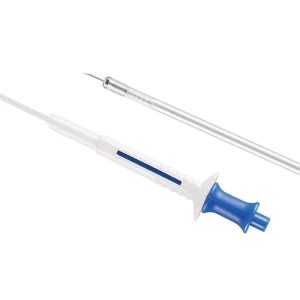
Submucosal injection and tissue resection demand absolute fluid-delivery velocity, rigid needle extension, and zero sheath buckling.
Flexible ureteroscopy (fURS) and Retrograde Intrarenal Surgery (RIRS) require strict intrapelvic pressure management to prevent urosepsis.
Obtaining intact mucosal architecture for oncological staging without crushing or tearing tissue artifacts.
Strategic overview of next-generation technological milestones governing micro-component manufacturing, biocompatible polymers, and sustainable medical packaging.
The next decade of interventional endoscopy will belong to manufacturers who pioneer micro-engineering breakthroughs, AI-integrated cleanroom quality inspection, and bioresorbable implantable alloys. As a forward-thinking CDMO partner, ZhuoRuiHua Medical directs more than 8.5% of annual revenues into dedicated tooling R&D, metallurgical testing, and next-generation endoscopic product evolution.
Implementing 0.03mm fiber-laser micro-welding and high-speed multi-axis automated assembly lines, lowering manual assembly variability to near zero.
Development of magnesium-zinc bio-absorbable alloy hemoclips that provide temporary hemostasis before dissolving naturally in the GI tract within 60 days.
Micro-MEMS fiber-optic pressure sensors integrated directly onto the distal tip of ureteral access sheaths for real-time digital intrarenal pressure feedback.
Adoption of mono-material recyclable medical polymers and low-temperature NO2 sterilization alternatives to slash lifecycle healthcare carbon emissions.
From initial design inputs and finite element analysis (FEA) to pilot molds, bioburden profiling, and private-label packaging.
Collaborative engineering reviews align client custom dimensional requests with injection mold gating, metal stamping tooling, and finite element stress analysis for moving jaw joints.
Exhaustive benchtop evaluation simulating severe anatomical tortuosity: simulated channel passage, fatigue cycle actuation, burst pressure testing, and tensile clamp release confirmation.
Preparation of technical files matching target health authorities: CE Technical Documentation (MDR Annex II/III), US FDA 510(k) Premarket Notifications, and Latin American ANVISA dossiers.
Formal installation, operational, and performance qualification of ultrasonic washing, automated blister forming, Tyvek heat sealing, and computerized EO gas sterilization chambers.
Dedicated high-volume production in Class 100,000 cleanrooms with continuous lot traceability, automated optical inspection, and tailored private-label commercial cartoning.
Clear, unvarnished insights into certification validity, minimum order quantities (MOQs), cleanroom audits, sterilization documentation, and technical customization.
Our core portfolio—including sterile endoscopic hemoclips, sclerotherapy needles, and ureteral access sheaths—is developed and certified under EU MDR 2017/745 through accredited European Notified Bodies. We furnish comprehensive Technical Documentation Files (TDF), including Clinical Evaluation Reports (CER) compliant with MEDDEV 2.7/1 Rev. 4 / MDCG guidance, ISO 10993 biological evaluation portfolios, and verified ISO 11135 sterilization validation records. Importers receive full access to our Declarations of Conformity (DoC) and Notified Body certificate numbers for verification on the European EUDAMED portal.
For standard catalog configurations utilizing custom client private-label packaging (branded primary Tyvek pouches, inner dispenser boxes, and IFUs), our typical Minimum Order Quantity (MOQ) is 500 to 1,000 units per SKU, with production lead times of 3 to 4 weeks upon artwork sign-off. For bespoke physical OEM/ODM developments requiring custom injection mold tooling (e.g., custom jaw spans, unique handle grips, or proprietary sheath lumen calibers), prototyping cycles take 4 to 6 weeks, followed by 60 days for formal pilot-run tool validation and IQ/OQ/PQ documentation.
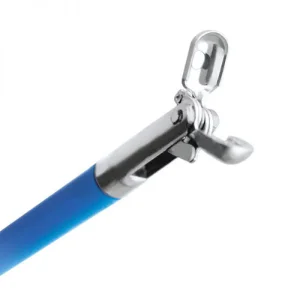
Our rotatable hemoclips utilize a proprietary stranded, high-tensile stainless steel inner core coupled to an outer spiral-wound torque sheath. This delivers a 1:1 true synchronous rotational ratio even when navigated through a 180-degree retroflexed endoscope channel. Premature deployment is physically prevented by our patented three-stage tactile handle lock: the operator feels distinct resistance during opening, clear tactile feedback during reopening, and an unmistakable audible "click" that occurs exclusively when intentional locking tension exceeds 20 Newtons at final deployment.
All single-use accessories undergo industrial Ethylene Oxide (EO) sterilization in strict compliance with ISO 11135:2014 standards. We utilize biological indicators (Bacillus atrophaeus spores) across half-cycle overkill validation routines. Following gas exposure, automated forced-air heated aeration chambers reduce chemical residues well below international safety thresholds: Ethylene Oxide (EO) ≤ 4.0 mg per device and Ethylene Chlorohydrin (ECH) ≤ 9.0 mg per device. Every shipment is accompanied by a certified Batch Sterilization Certificate verifying parameters and residual release test data.
Yes. We routinely support our global distribution partners during regional, national, and private hospital tender bidding. Our regulatory department provides authorized Authorization Letters (LoA), validated technical specification compliance matrices, certificates of free sale (CFS / FSC), environmental statement sheets, biocompatibility summaries, and accelerated/real-time shelf-life aging test reports (ASTM F1980) demonstrating 3-year or 5-year sterile barrier stability.
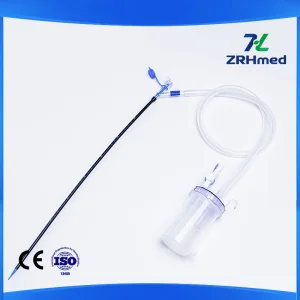
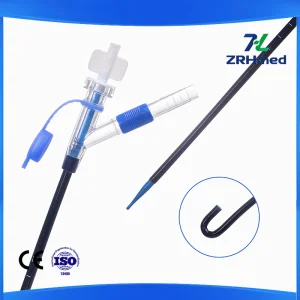
Our negative pressure suction ureteral sheath incorporates an oblique drainage interface configured to connect directly with standard operating theater vacuum regulators. By establishing a continuous, controlled fluid vortex along the working channel, irrigation saline and holmium laser stone particulate are actively evacuated simultaneously. This hydrodynamic design maintains intrapelvic pressure safely below 25–30 mmHg throughout prolonged RIRS lithotripsy, effectively eliminating the risk of pyelovenous backflow, calyceal fornix rupture, and postoperative sepsis.
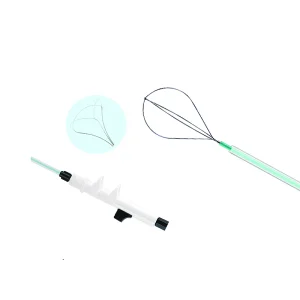
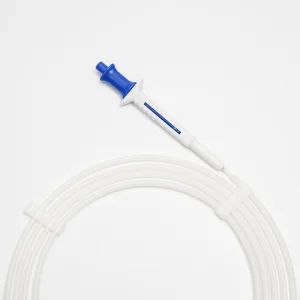
Complete your tender catalog with MDR-compliant hot biopsy forceps, hydrophilic Nitinol guidewires, stone retrieval baskets, and multi-angle injection systems.