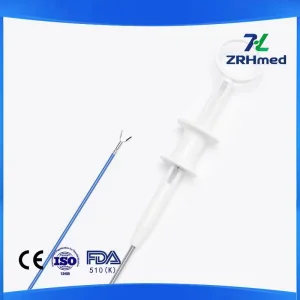
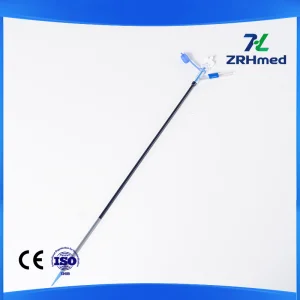
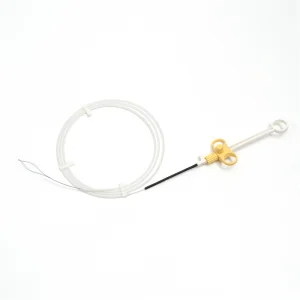
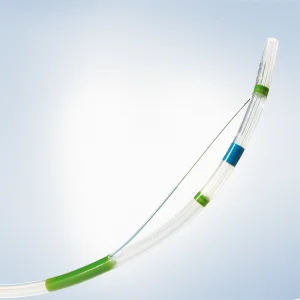
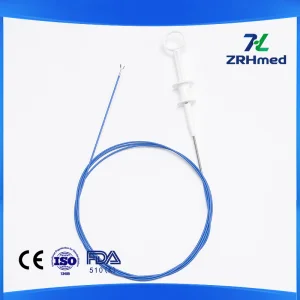
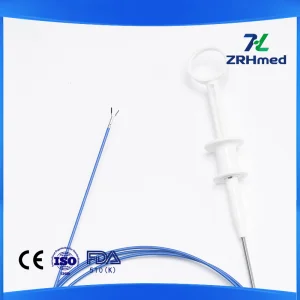
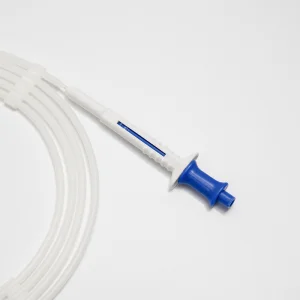
Engineered for absolute fidelity, high tissue retrieval yield, and zero cross-contamination risk. Standardized for international hospital distribution networks.
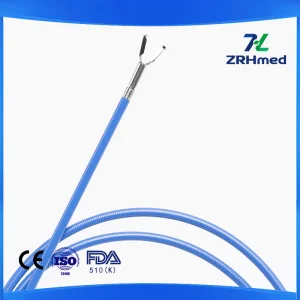
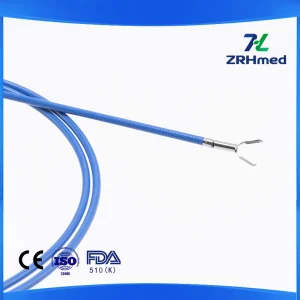
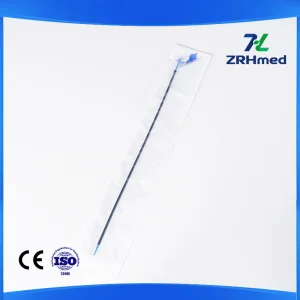
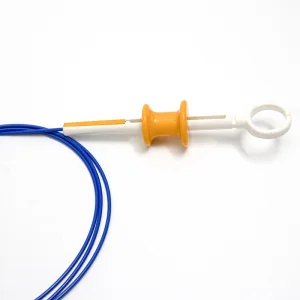
Evaluating epidemiological safety mandates, cross-contamination avoidance, and Total Cost of Ownership (TCO) in modern gastrointestinal endoscopy suites.
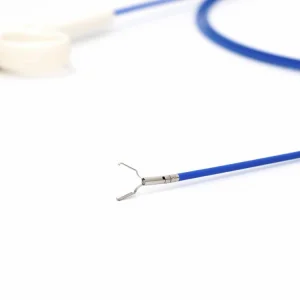
Multi-use biopsy forceps historically represented an insidious vector for nosocomial transmissions, notably multidrug-resistant organisms (MDRO) like CRE and Pseudomonas aeruginosa. The tortuous spiral wire sheath of multi-use instruments harbors protein bio-burden and cellular residue resistant to ultrasonic cleaning and high-level disinfection (HLD). Transitioning to single-use, sterile-packaged Class IIa biopsy forceps completely removes the reprocessing vulnerability while dramatically shortening endoscopy turnaround intervals.
Hospitals are re-evaluating consumables expenditures through the lens of comprehensive TCO. Reusable forceps involve hidden operational outlays: autoclaving energy, dedicated Central Sterile Supply Department (CSSD) labor hours, enzymatic detergent consumables, and routine maintenance.
Propelled by national screening initiatives for upper gastrointestinal cancers (gastric adenocarcinoma, esophageal squamous cell carcinoma), endoscopic diagnostic procedural volumes are surging across North America, Europe, and Asia-Pacific.
International medical device distributors are systematically divesting from fragmented boutique providers, prioritizing integrated manufacturers capable of sustaining large-scale, automated production and compliant global documentation.
Navigating the rigorous transition from MDD 93/42/EEC to European Medical Device Regulation 2017/745 for Class IIa single-use invasive endoscopic accessories.
Securing and maintaining CE Mark credentials under MDR 2017/745 demands comprehensive technical dossiers validated by EU Notified Bodies (e.g., TÜV SÜD, BSI, DNV). Sourcing directors must verify critical structural elements:
Single-use gastroscopy biopsy instruments demand zero cytotoxic or immunogenic responses when interacting with mucosal breaches. Our production ecosystem enforces rigid international testing protocols:
Analyzing the metallurgical balance, cup geometries, actuation linkages, and low-friction sheath coatings that differentiate premium Chinese manufacturing.
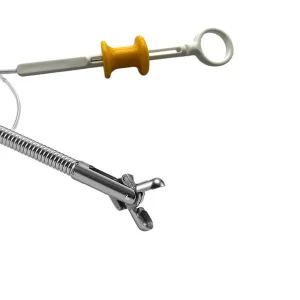
The forceps head requires exceptional hardness to maintain a razor-sharp cutting edge throughout repeated mucosal bites, avoiding the crushing or tearing artifacts that compromise histological evaluation.
Tissue acquisition varies by pathological indication and anatomical location within the gastric vault. Factory tooling accommodates diverse specialized geometries:
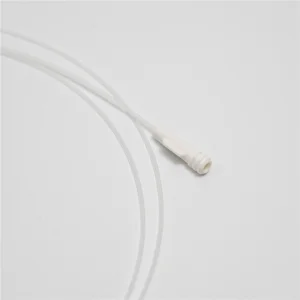
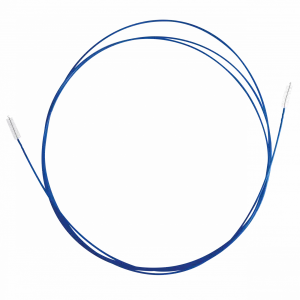
Sheath dynamics dictate how effortlessly the device traverses an endoscope working channel locked in extreme deflection (up to 210° gastric retroflexion).
Detailed clinical mapping: How precision single-use biopsy instruments interface with localized diagnostic criteria and therapeutic intervention protocols worldwide.
In high-prevalence screening regions (Japan, Korea, China, and Eastern Europe), early detection of mucosal neoplasia relies on strict systematic biopsying under Narrow Band Imaging (NBI) and linked-color imaging (LCI).
Western clinical guidelines (ACG and BSG) mandate rigorous four-quadrant biopsies every 1 to 2 cm along the columnar-lined esophagus in patients undergoing Barrett’s surveillance.
Unpacking the structural manufacturing efficiencies, industrial clustering, automated cleanrooms, and cost-containment frameworks powering Jiangxi ZhuoRuiHua Medical.
Our localized industrial ecosystem in Jiangxi and adjacent specialized precision hubs yields unmatched component access times, mitigating single-source vulnerability.
Automated optical sorting, laser micro-welding stations, and continuous robotic sealing eliminate human assembly variances while preserving razor-thin tolerances.
By eliminating multiple intermediary trading houses and consolidating direct factory-to-distributor supply chains, overseas partners preserve exceptional tender margins.
Forecasting future advancements in endoscopic biopsy instrumentation, smart robotic interfaces, micro-spectroscopy integration, and medical decarbonization.
Ultra-sharp 17-4PH cups, PTFE low-friction sheaths, 360° rotational control, high yield single-use tissue retention without mechanical binding.
Integration with computer-aided lesion characterization software, micro-calibrated target markers, and motorized handle actuators for standardizing biopsy depth.
Development of single-use hybrid forceps featuring contact diffuse reflectance spectroscopy (DRS) and confocal laser endomicroscopy micro-fiber probes.
Decarbonized manufacturing using post-consumer recyclable shaft polymers, bio-degradable blister pack films, and reduced-plastic handle configurations.
How we empower international medical device distributors, tender bidding consortia, and hospital chains with localized turn-key compliance documentation.
Navigating ministries of health across Latin America (ANVISA, COFEPRIS), Middle East (SFDA), Southeast Asia, and the EU requires rigorous technical document support.
Accelerate your private brand's clinical footprint. We provide extensive end-to-end design, tooling, assembly, and custom labeling solutions for high-volume brand owners.
Ensure seamless supply continuity without delivery shocks. Our manufacturing facility in Jiangxi operates transparent production access for global partners.
In-depth technical answers addressing regulatory compliance, channel dimensions, material safety, and OEM private-label contracting.
Expanding clinical versatility across the entire endoscopy department: From biliary drainage to micro-vascular endoscopic hemostasis.