
Direct manufacturer supply for surgical centers, clinical trials, and multinational distribution brands.
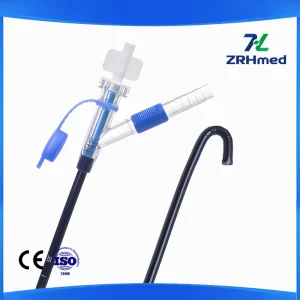
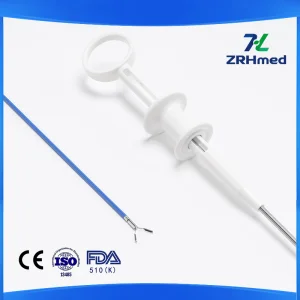
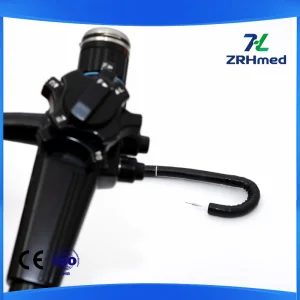
Analyzing clinical volume growth, shifting screening guidelines, and the regulatory pivot toward single-use instrumentation across premier healthcare markets.
Global gastroenterology guidelines have systematically lowered the baseline colorectal cancer screening age from 50 to 45 years. This epidemiological recalibration has generated an estimated 28% surge in annual diagnostic colonoscopies across North America, Europe, and the Asia-Pacific region, precipitating unprecedented recurring demand for precision cold and hot biopsy tools.
Nosocomial cross-contamination risks associated with multi-lumen reusable endoscopic accessories have propelled strict regulatory alerts from the US FDA, EMA, and NMPA. Reusable biopsy forceps present high micro-debris retention risks within internal pull-wires, cementing 100% single-use, sterile-packaged devices as the mandatory hospital tender standard.
The global migration of routine endoscopic tissue sampling to Ambulatory Surgical Centers (ASCs) has intensified price-to-performance sensitivity under bundled DRG reimbursements. Facilities require Tier-1 biopsy forceps that eliminate sample tearing and repeat bites while maintaining an aggressive unit cost structure obtainable only through direct factory partnerships.
Integrated supply ecosystems, automated laser micro-welding, and comprehensive cleanroom capacities driving unmatched production velocity.
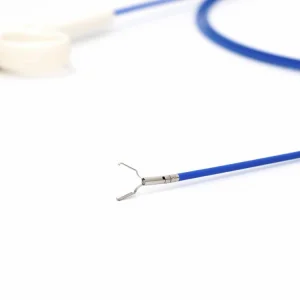
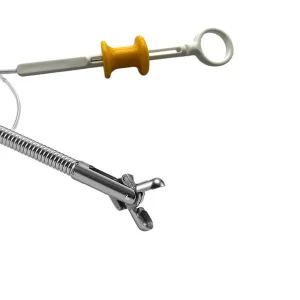
Direct injection mold fabrication and ultra-fast wire electrical discharge machining (EDM) empower Chinese production plants to achieve razor-sharp stainless steel (medical-grade 304/316L) alligator and oval jaws that eliminate mechanical play and micro-tearing during mucosal specimen harvest.
From initial catheter extrusion, PTFE outer-sheath heat shrinking, and inner core-wire braiding down to sterile pouch blister packaging and ethylene oxide (EO) sterilization validation, localizing the entire supply chain mitigates offshore transit bottlenecks and insulates procurement from supply shocks.
Modern Chinese OEM/ODM facilities supply comprehensive technical documentation: biocompatibility verification per ISO 10993 (cytotoxicity, sensitization, systemic toxicity), EO residual tracking per ISO 11135, and clinical evaluation reports matching EU MDR 2017/745 Class IIa demands.
Matching instrument mechanical profiles with diagnostic anatomy, lesion morphologies, and working channels.
| Jaw Architecture | Channel Diameter (Ø) | Working Length | Needle / Spike Option | Target Clinical Pathology |
|---|---|---|---|---|
| Standard Oval Cup | ≥ 2.8 mm | 1600 mm – 2300 mm | Without Needle | Routine screening, mucosal inflammatory profiling, and diffuse colitis biopsies. |
| Oval Cup with Needle | ≥ 2.8 mm | 1800 mm – 2300 mm | Central Fixation Spike | Tangential sampling of mobile folds; anchors to tissue to prevent cup slippage. |
| Alligator Jawed | ≥ 2.8 mm / 3.2 mm | 1600 mm – 2300 mm | Optional Spike | Fibrotic lesions, indurated mucosal margins, and hard neoplastic tissue resection. |
| Pediatric / Slim Profile | ≥ 2.0 mm | 1200 mm – 1800 mm | Without Needle | Pediatric colonoscopy, tortuous sigmoid strictures, and ultra-thin flexible scopes. |
| Hot Biopsy Electrocoagulation | ≥ 2.8 mm | 2300 mm | Active HF Connector | Simultaneous dimpled tissue harvest and immediate electrocautery hemostasis. |
Longitudinal monitoring of Ulcerative Colitis and Crohn’s Disease demands non-traumatic repeated bites across the ascending, transverse, descending, and sigmoid colon. Ultra-sharp cutting cups preserve intact architectural histology without crushing the lamina propria, critical for identifying low-grade dysplasia.
Prior to high-risk endoscopic mucosal resection or submucosal dissection, accurate histology of subtle Paris Classification Type IIa/IIb flat lesions is vital. Biopsy needles secure tangential tissue grasp on flexed angles (e.g., hepatic flexure and cecal base) where normal cups drift.
Advanced low-friction PTFE-coated or coil-sheathed catheter shafts ensure zero handle torque loss during extreme colonoscope retroflexion within the rectal vault, ensuring cups open smoothly without kink-induced instrument jamming.
How automation, advanced coatings, and single-use economics are reshaping colon biopsy manufacturing for the next decade.
As Computer-Aided Detection (CADe) and Diagnosis (CADx) algorithms become standard in endoscopy suites, the role of physical biopsy shifts toward molecular marker validation. Factories are developing micro-volume precision cups designed specifically to retrieve targeted biopsies with zero collateral mucosal bleeding.
Friction reduction is paramount in extended procedures. Innovations in specialized fluoropolymer jacket crosslinking allow the catheter to slide through contaminated or mucus-lined scope channels with near-zero force, safeguarding delicate endoscopic elevator mechanisms and channel linings.
Global procurement teams increasingly weigh the ESG impact of single-use disposables. R&D efforts are actively engineering monomaterial handle assemblies and bio-degradable sterile packaging polymers to diminish environmental footprints while preserving absolute barrier sterility.
Essential quality, regulatory, and supply audits required by procurement officers before signing long-term OEM contracts.
Verify that the factory guarantees SAL 10⁻⁶ via validated Ethylene Oxide cycles (ISO 11135), providing certified residual testing (EO and ECH levels) well below international clinical limits.
Check minimum tensile breaking point data (> 40 N) on the internal control wire and jaw crimps to ensure zero in-vivo mechanical detachments during high-angle sampling maneuvers.
Audit whether the supplier provides turn-key branding, custom barcode printing (UDI compliant per FDA/GS1 rules), multilingual IFU manuals, and tailored blister card inner-pack configurations.
Ascertain lot-by-lot batch record availability detailing raw metal melt certificates, extruded tube dimensional logs, laser welding parameters, and bioburden inspection sign-offs.
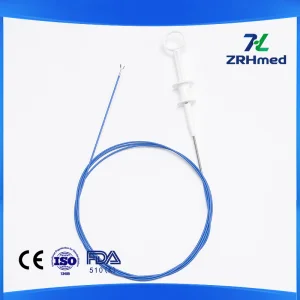
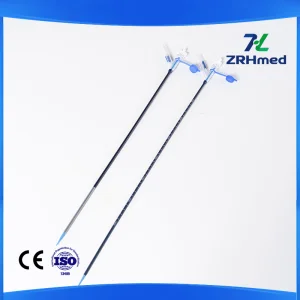
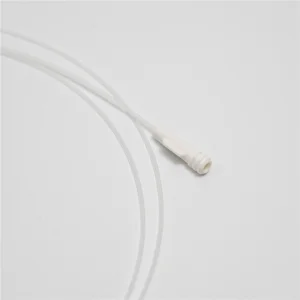
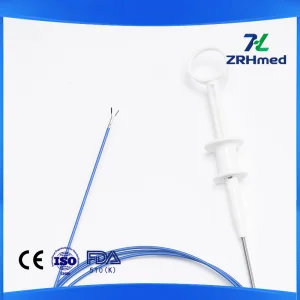
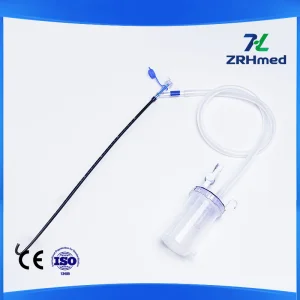
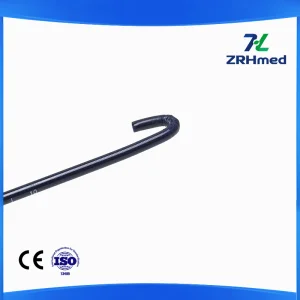
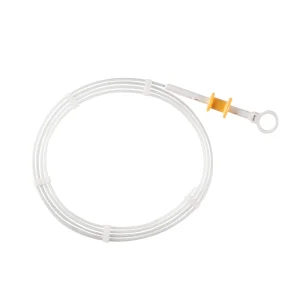
Complementary class-leading consumables built under certified quality control for global hospitals.
Direct technical and commercial answers regarding minimum order quantities, regulatory certification, and customized private-label manufacturing.