
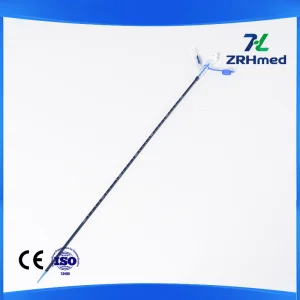
Direct OEM & ODM production for access sheaths, stone extractors, rotatable hemoclips, and advanced procedural kits.
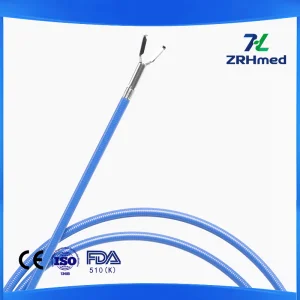
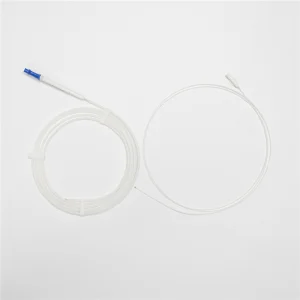
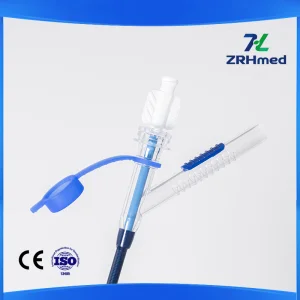
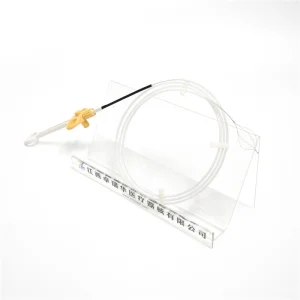
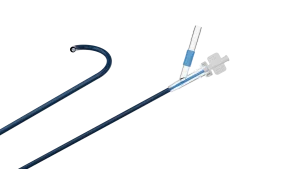
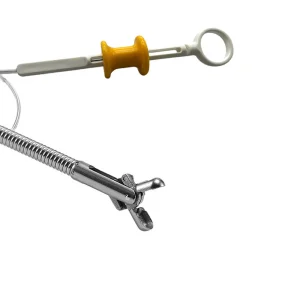
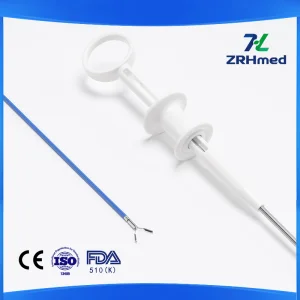
How atomic phase transformation, micro-grinding precision, and hydrophilic polymers resolve navigation failure in extreme micro-anatomy.
Conventional stainless steel cores suffer from irreversible plastic deformation when traversing tortuous loops. Our high-grade superelastic nickel-titanium core platforms utilize thermal treatment that aligns the austenite finish (Af) temperature strictly between 15°C and 25°C. At physiological body temperatures (37°C), stress-induced martensitic transformation provides 100% kink resistance and rapid elastic recovery.
Transitions between pushability at the proximal shaft and extreme flexibility at the distal tip require sub-micron precision. Utilizing automated multi-axis CNC electrochemical micro-grinders, our factory crafts parabolically tapered and stepped core geometries down to 0.005” tip diameters without introducing micro-fractures, notch stress concentrators, or mechanical fatigue zones.
Surface cross-linked Polyvinylpyrrolidone (PVP) coatings dramatically reduce dynamic friction coefficients (down to μ < 0.02). By introducing atmospheric plasma pre-treatments, our coating bonds covalently to the outer polyurethane or PTFE jacket, eradicating particulate shedding, flaking, or coating delamination during tight access-sheath friction cycles.
Analyzing critical tender metrics across North America, the European Union, Latin America, and emerging markets.
Navigating EU MDR (2017/745) Class IIa/IIb transitions demands exhaustive biocompatibility test matrices, biological evaluation plans (ISO 10993-1), and clinical evaluation reports (CER). Buyers avoid factories that cannot supply full technical files immediately.
Reimbursement caps and DRG-based hospital funding structures demand competitive pricing without quality degradation. By purchasing directly from a vertically integrated Nitinol drawing and coating factory, distributors cut intermediary markups by 35%–50%.
Global brands require bespoke combinations of shaft stiffness (Standard, Stiff, Extra-Stiff), outer jackets (PTFE, zebra polyurethane stripes), radio-opaque markers (Platinum-Iridium, Gold, Tungsten), and tips (Angled, Straight, J-shape).
Zero tolerance for microbial ingress or packaging seals compromised during shipping. Every lot undergoes validation per ISO 11135 (Ethylene Oxide) with residual limits strictly below 4mg/device, backed by accelerated aging testing for 3- to 5-year shelf-life stability.
How Jiangxi ZhuoRuiHua combines Industry 4.0 cleanroom automation with end-to-end supply chain integration.
Using diamond-die drawing lines monitored with real-time laser interferometers, raw Nitinol ingots are cold-drawn into continuous wire coils with diameter variances constrained to within ±0.002 mm. Digital thermal annealers ensure consistent crystal orientation across hundreds of kilometers of production runs.
Manual coating dipping introduces human variability, coating drips, and inconsistent meniscus formation. Our class 100,000 cleanroom features closed-loop robotic dipping stations with programmable vertical draw speeds and temperature-controlled UV photocuring chambers for 100% coating uniformity.
Every individual Nitinol guidewire is assigned a serialized barcoded identifier tied to its raw ingot batch, drawing temperature log, grinding profile, coating bath chemistry, and EO sterilization chamber run. Importers receive full compliance archives with a single click.
Configuring Nitinol guidewire mechanical properties for distinct anatomical challenges across four major disciplines.
In retrograde intrarenal surgery (RIRS), the guidewire must pass acute ureteropelvic junctions and calyceal infundibula without kinking, maintaining a safe track for ureteral access sheaths. High-stiff Nitinol cores prevent sheath bucking and mucosal trauma.
Cannulating the ampulla of Vater during endoscopic retrograde cholangiopancreatography demands high tactile feedback and high-contrast radiopacity. Guidewires with alternating tungsten-doped spiral jackets provide real-time fluoroscopic depth positioning.
Traversing chronic total occlusions (CTO) and bifurcated iliac vessels requires guidewires with calibrated gram-load tip stiffness (from 1g up to 30g). Our tapered Nitinol cores offer pushability without sacrificing microvascular safety.
Navigating subsegmental bronchial branches during bronchoscopic biopsy or fiducial marker placement demands flexible, short-length guidewires that glide effortlessly through narrow 2.0mm bronchoscope working channels without snagging.
Direct production parameters available for OEM white-labeling, custom branding, and hospital contract bids.
| Outer Diameter (inch) | Available Lengths (cm) | Core Material | Tip Configurations | Coating Architecture | Radiopaque Jacket | Primary Clinical Route |
|---|---|---|---|---|---|---|
| 0.035" (0.89 mm) | 150, 180, 260, 450 | Superelastic Nitinol | Straight / Angled Floppy (3–5cm) | UV Hydrophilic / PTFE Proximal | Tungsten / Platinum Ring | Urology (RIRS/PCNL), ERCP |
| 0.038" (0.97 mm) | 150, 180, 260 | High-Tensile Nitinol | J-Tip (3mm/6mm) / Straight | Dual-layer Hydrophilic Bond | Full Distal Gold/Pt Plated Coil | Percutaneous Access, Dilatation |
| 0.025" (0.64 mm) | 260, 450 | Shape-Memory Nitinol | Angled 3cm Soft Taper | Hydrophilic Cross-Linked PVP | High-Contrast Zebra Striping | Selective Biliary Cannulation |
| 0.018" (0.46 mm) | 180, 260, 300 | Micro-Ground Nitinol Core | Straight Atraumatic / Micro-J | Ultra-Low Friction Silicone/Hydro | Platinum Distal 30mm Marker | Peripheral Vascular, Bronchoscopy |
| 0.014" (0.36 mm) | 180, 300 | Graded Stiffness Nitinol | Polymer Sleeve Floppy Tip | Durable Hydrophilic Covalent | Direct Radiopaque Core Micro-coil | Micro-Catheter Delivery, CTO |
Complete single-use procedural consumables for digestive health, endourology clinics, and sterile processing.
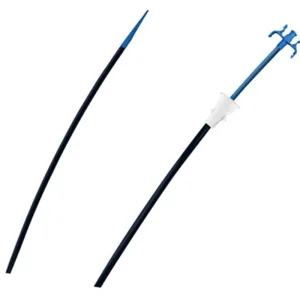
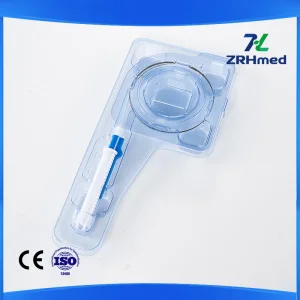
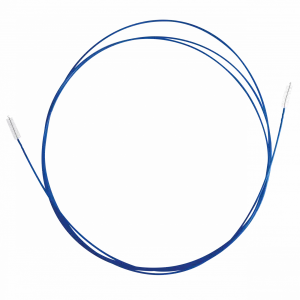
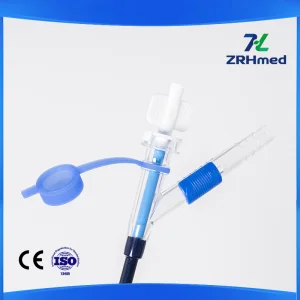
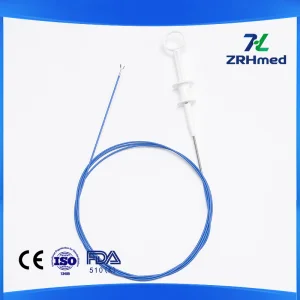
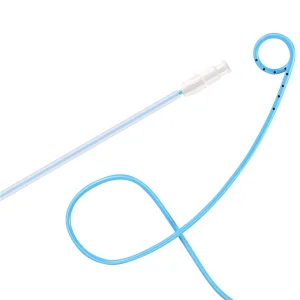
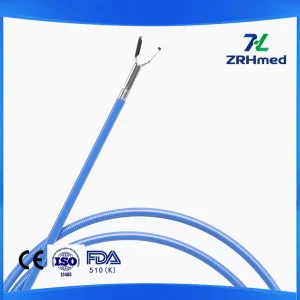
In-depth responses covering mechanical specifications, testing protocols, OEM capabilities, and international compliance.
Nitinol (nickel-titanium alloy) exhibits superelasticity and shape-memory properties derived from a reversible solid-state phase transformation between Austenite and Martensite. Unlike stainless steel, which undergoes permanent deformation when bent beyond 1–2% strain, superelastic Nitinol withstands elastic strains up to 8% without permanent kinking, retaining 1:1 torque transmission across tortuous anatomical passages such as the ureter or pancreatic duct.
Every manufacturing lot follows ISO 11070 and ASTM F2063 standards. Our quality inspection gates evaluate tip-to-core tensile bond strength (minimum 5N or 10N based on diameter), 360-degree rotational torqueability under 90-degree tortuosity without whipping, lubricity cycle friction testing, hydrophilic coating particulate evaluation under USP <788>, and sterile package seal peel-strength testing per ASTM F88.
Yes. As a direct OEM factory, we adjust the continuous taper-grinding program to deliver Standard, Stiff, and Ultra-Stiff configurations. For visualization, we produce high-visibility bi-color helical stripes ("Zebra" patterns) in black/white or blue/white polyurethane, alongside radio-opaque platinum coils, gold plating, or tungsten-impregnated jackets tailored to client specifications.
We supply complete Technical Construction Files (TCF), including ISO 13485 QMS certifications, ISO 10993 cytotoxicity, sensitization, and hemocompatibility reports, accelerated and real-time stability verification, EO sterilization validation per ISO 11135, and clinical risk evaluation reports per ISO 14971 to expedite national regulatory submissions.
Our cleanroom employs an atmospheric corona/plasma pre-treatment that activates the surface energy of the polymer jacket. The hydrophilic PVP matrix is then cross-linked covalently via controlled-wavelength ultraviolet (UV) photoreactors. This creates an interpenetrating polymer network that bonds firmly, preventing peeling or microscopic particulate shedding during repeated device exchanges.
For standard catalog configurations (e.g., 0.035" 150cm/260cm with zebra jacket), our standard minimum order quantity (MOQ) starts at 500 units per specification with lead times around 2 to 3 weeks. For bespoke core grindings or custom private-label packaging with branded dispenser hoops, production runs usually require 4 to 6 weeks following prototype sign-off.
Access high-capacity cleanroom production, rigorous ISO 13485 & MDR quality infrastructure, and factory-direct pricing to strengthen your medical device portfolio.