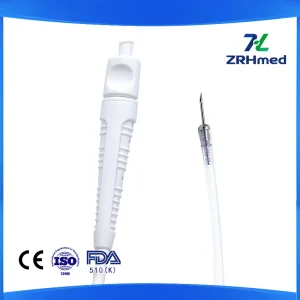
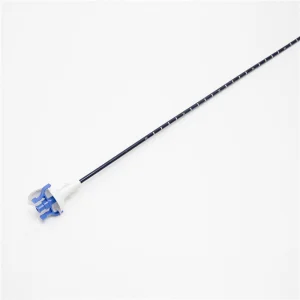
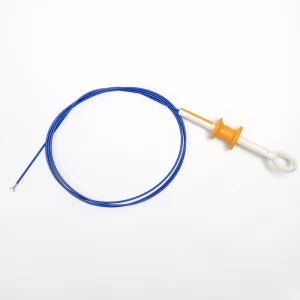
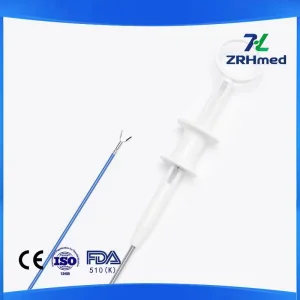
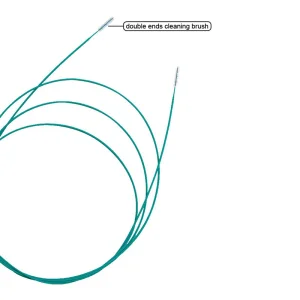
Direct supply of OEM/ODM stone management accessories, negative-pressure ureteral access sheaths, and flexible channel instrumentation engineered to clinical tolerances.
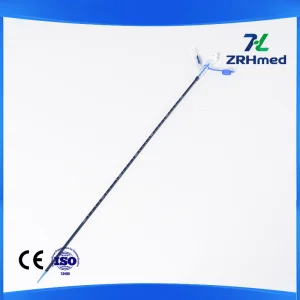
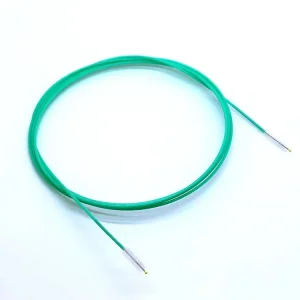
How superelastic nickel-titanium metallurgy and micro-caliber design are reshaping stone-free rates (SFR) across retrograde intrarenal surgery (RIRS) and endoscopic retrograde cholangiopancreatography (ERCP).
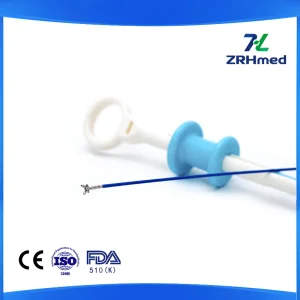
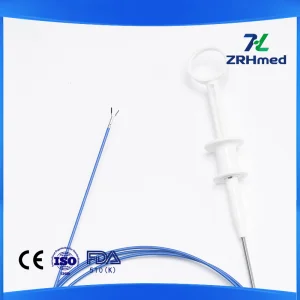
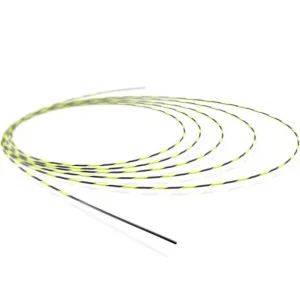
Traditional stainless steel stone retrieval baskets are rapidly becoming obsolete in modern endourology. Modern clinical protocols require medical-grade Nitinol (NiTi) engineered with pseudoelastic properties. Operating in its stress-induced martensitic phase transformation, Nitinol enables baskets to collapse within sub-2.2Fr flexible sheaths and automatically expand back into exact wire geometry without structural fatigue.
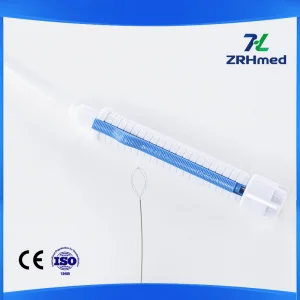
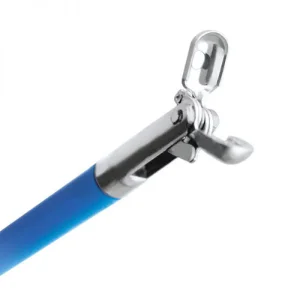
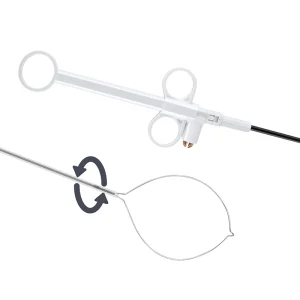
The transition toward tipless Nitinol stone extractors eliminates the conventional distal wire stub that historically caused urothelial mucosal trauma, puncturing, or caliceal bleeding. A tipless profile allows the basket configuration to sit flush against the bottom of renal calyces, safely engulfing lower-pole calyceal calculi that were previously deemed inaccessible.
With flexible ureteroscopes featuring working channels as narrow as 3.6Fr, stone extractors must minimize lumen obstruction. Transitioning down to 1.5Fr to 1.8Fr outer diameters preserves active scope deflection above 270 degrees and maximizes saline irrigation flow, directly maintaining low intrarenal pressure (IRP) to protect against postoperative sepsis.
Medical device distributors, group purchasing organizations (GPOs), and private label OEMs encounter stringent logistical, mechanical, and regulatory hurdles during global sourcing.
B2B hospital buyers prioritize tactile responsive feedback. A stone extractor must demonstrate zero lag between proximal handle rotation and distal wire cage response. Poor torque control results in basket whipping, calculus displacement, and prolonged anesthesia time.
Stone entrapment remains one of the greatest intraoperative risks during stone extraction. Enterprise procurement demands extractors engineered with controlled release mechanisms, permitting the clinician to disassemble the sheath and release an oversized trapped calculus for in-situ laser lithotripsy.
Procurement teams require complete Device Master Record (DMR) transparency, lot-level traceability, and documented biocompatibility according to ISO 10993 standards (cytotoxicity, sensitization, and systemic toxicity), alongside certified ethylene oxide (EO) residual validations under ISO 11135.
For distributors managing extensive hospital supply tenders, supplier capacity stability is paramount. ZhuoRuiHua Medical provides end-to-end cleanroom wire braiding, automated laser micromachining, sheath extrusion, sterile blister packaging, and full technical documentation support tailored to local national health authorities.
Comparing clinical parameters and structural configurations across typical endourological lithiasis interventions.
| Clinical Procedure | Optimal Wire Profile | Sheath Diameter (Fr) | Mechanical Advantage | Key Clinical Benefit |
|---|---|---|---|---|
| Lower Pole RIRS | Tipless 4-Wire Helical Nitinol | 1.5 Fr - 1.8 Fr | Zero distal tip; high caliceal compliance | Prevents mucosal perforations; 270° scope deflection intact |
| Mid / Upper Ureteroscopy | Flat-Wire 4-Wire Basket | 1.8 Fr - 2.2 Fr | Enhanced radial expansion force | Secure stone immobilization during intracorporeal lithotripsy |
| ERCP Choledocholithiasis | 8-Wire Helical Dual-Basket | 2.4 Fr - 3.0 Fr | High wire density for fragment sweeping | Complete clearance of biliary sludge and multiple micro-calculi |
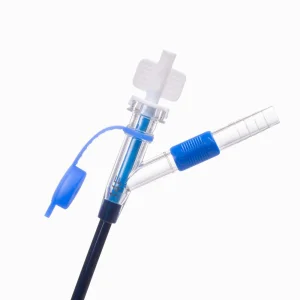
| Negative-Pressure UAS Lithotripsy | 3-Wire / Multi-Filament Hybrid | 1.5 Fr | Minimal working channel cross-section | Optimizes continuous vortex suction clearance of gravel |
Navigating global healthcare registrations requires transparent engineering validation and synchronized localized compliance.
Certified Quality Management System covering the complete lifecycle from R&D tooling, extrusion, and wire assembly to final release inspection.
Comprehensive technical documentation compliant with European Union Medical Device Regulation (MDR 2017/745) Class IIa standards.
Full support for distributors submitting FDA 510(k) equivalence dossiers, including predicate device matching and bench performance testing.
Customized technical files for ANVISA (Brazil), NMPA (China), COFEPRIS (Mexico), and SFDA (Saudi Arabia) registration processes.
Anticipating clinical evolutions toward intelligent, sensorized, and ultra-miniaturized stone intervention instruments.
Developing ultra-fine multi-core nitinol braided geometries engineered explicitly for ultra-thin single-use digital ureteroscopes, ensuring unobstructed active irrigation and crystal-clear visualization.
Integrating chemical vapor deposition (CVD) ceramic nanocomposite coatings onto individual basket wires to prevent unintended accidental laser fiber transection during holmium or thulium fiber laser (TFL) activation.
Embedding micro-strain piezoelectric sensors into the control handle to measure real-time stone grasping force, preventing excessive traction on impacted calculi and alerting clinicians to release calculus to protect the ureter.
Key queries evaluated by hospital clinical boards, biomedical engineers, and medical supply procurement directors.
Nitinol provides true pseudoelastic shape memory, allowing it to withstand strains up to 8-10% without permanent deformation, compared to less than 1% for stainless steel. This elasticity ensures the basket repeatedly deploys to its manufactured geometry without kinking, even after severe tortuous passage through a deflected flexible ureteroscope.
According to Poiseuille’s Law, fluid resistance within the working channel correlates inversely with the fourth power of radius. Utilizing a 1.5Fr nitinol extractor rather than a 2.2Fr instrument preserves over 60% higher saline irrigation clearance, maintaining visual clarity and significantly lowering intrarenal pressure to mitigate pyelovenous backflow.
Yes. As an end-to-end manufacturer, ZhuoRuiHua Medical provides full OEM/ODM support, including customized ergonomic thumb-ring handles, distinctive multi-color branding, specialized sheath lengths (from 65cm to 140cm), calibrated markings, and private-label sterile barrier pouch packaging.
Our instruments incorporate dual-action safety features. The superelastic wire properties allow mechanical radial deformation under extreme pull force. Furthermore, our rapid-release sheath release handle allows the outer catheter to withdraw independently, freeing the trapped stone for immediate in-situ lithotripsy.
Comprehensive consumables engineered for diagnostic gastroenterology, pulmonology, and interventional urology suites.