Engineered for high procedural fidelity, sterile single-use assurance, and strict compatibility with standard working channels (1.8mm, 2.8mm, 3.2mm, and 3.7mm flexible endoscopes).
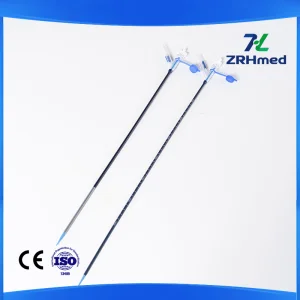
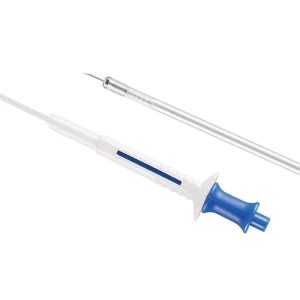
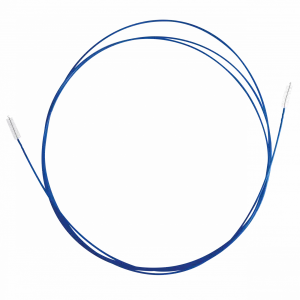
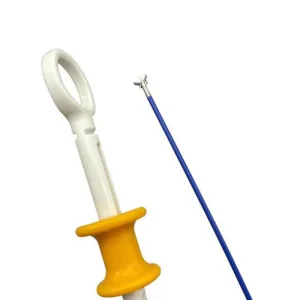
Under the rigorous mandates of European Union Medical Device Regulation (EU MDR 2017/745), sourcing endoscopic instruments requires more than superficial declarations. It demands verifiable technical documentation, comprehensive clinical evaluations, and impenetrable supply chain traceability.
Our instruments operate under audited Technical Files encompassing design verification, comprehensive risk management per ISO 14971:2019, electrical safety testing (IEC 60601-1, IEC 60601-2-18 for electrosurgical hot biopsy forceps and snares), and validated shelf-life aging studies.
Endoscopic accessories fall into distinct risk tiers under Rule 6 and Rule 9 of MDR Annex VIII. Sclerotherapy needles, hemoclips, and ureteral access sheaths (Class IIa/IIb) demand Notified Body audits (e.g., TÜV SÜD, BSI), whereas channel cleaning brushes (Class I) follow Class I self-declaration workflows.
Every product batch is systematically integrated into the Global UDI Database (GUDID) and EUDAMED requirements. From primary sterile blister to master shipper, GS1-compliant 2D DataMatrix barcodes track lot, manufacturing date, and sterilization cycles.
Jiangxi ZhuoRuiHua Medical Instrument Co., Ltd. (ZRH Med) exemplifies modern medical manufacturing. By integrating core tooling, precision component fabrication, and cleanroom assembly under one roof, we eliminate intermediate supply chain margins and deliver uncompromised consistency.
Unlike trading companies, our facility houses multi-axis Swiss longitudinal turning centers and high-speed electrical discharge machining (EDM). We produce medical-grade 304/316L stainless steel biopsy cups and nitinol shape-memory loops with micron-level tolerances, reducing tissue shredding during mucosal resection.
Critical mechanical joints—such as the link wires in rotatable hemoclips and endoscopic snare loop junctions—are bonded utilizing automated fiber laser welders. Controlled beam spots eliminate micro-burrs and weld embrittlement, ensuring 100% tensile yield retention under tortuous endoscopic retroflexion.
By sourcing raw fluoropolymers (PTFE, FEP, Pebax) and biocompatible alloys directly from certified metallurgical foundries, our industrial infrastructure drives down the unit acquisition cost for hospital tender contractors while maintaining strict conformity to Western regulatory standards.
Modern endoscopy suites demand complete procedure-specific portfolios rather than piecemeal hardware. Our ODM manufacturing infrastructure supplies cohesive device ecosystems across gastroenterology, pulmonology, and endourology.
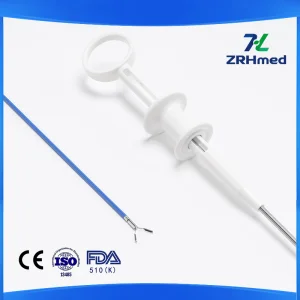
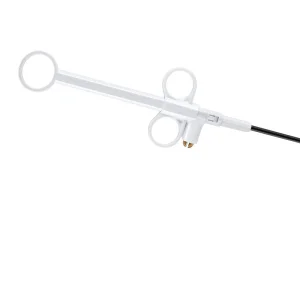
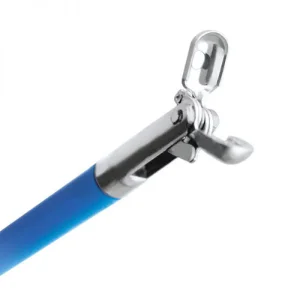
Accurate histological diagnosis depends on pristine, uncrushed specimen architecture. We engineer disposable biopsy forceps with laser-sharpened fenestrated cups and optional central spiked needles. Coated with super-lubricious PTFE, our flexible catheter sheaths protect scope channels from premature lining abrasion.
Acute gastrointestinal bleeding necessitates definitive, rapid mechanical closure. Our CE marked hemoclip range features 360-degree synchronized bidirectional rotation, wide arm spans (9mm to 16mm), and true repositionability prior to permanent deployment.
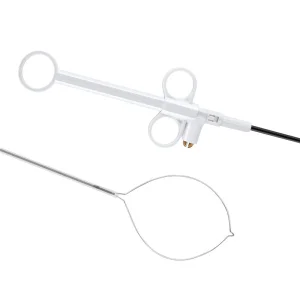
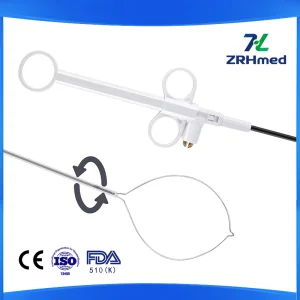
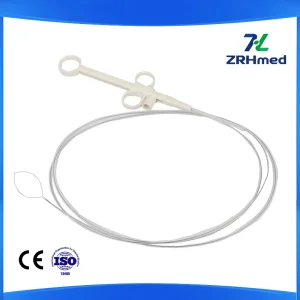
From cold snares for diminutive polyps (<5mm) to braided stiff snares for en bloc mucosal resections, our loops incorporate premium German spring-tempered stainless wire. Combined with ergonomic injection needles, clinical users achieve clean cutting margins with diminished perforation risk.
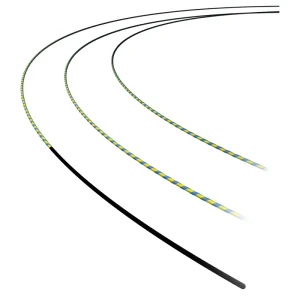
Endoscopic Retrograde Cholangiopancreatography demands high tactile feedback and guidewire trackability. Our hydrophilic zebra guidewires feature superelastic nitinol cores with radiopaque tungsten jackets, allowing cannulation past tight biliary strictures.
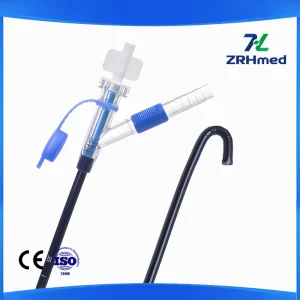
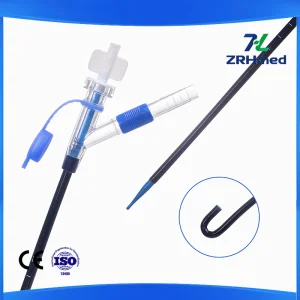
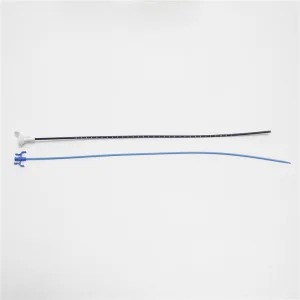
Addressing Retrograde Intrarenal Surgery (RIRS), our Y-shaped suction ureteral access sheaths regulate intrarenal pressure (IRP) in real time. Continuous irrigation suction expels dust particles without stone retropulsion, reducing post-operative sepsis and procedure duration.
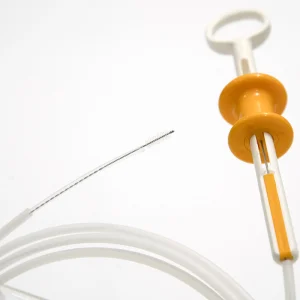
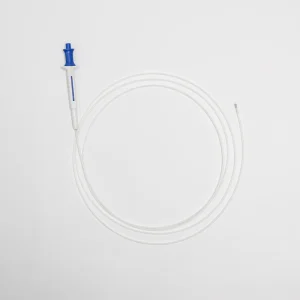
Preventing cross-contamination is paramount in flexible endoscopy reprocessing. Our disposable dual-ended channel cleaning brushes and valve brushes utilize medical-grade nylon bristles configured to sweep biofilm without scratching working channel fluoropolymer linings.
Procurement executives and clinical distributors face intense margin pressure alongside escalating liability risks under new vigilance frameworks. Direct collaboration with an established primary manufacturing source delivers tangible competitive benefits.
| Evaluation Parameter | Direct ODM Supplier (ZRH Med) | Intermediary / Trading Entity | Western Tier-1 OEM Brand |
|---|---|---|---|
| Price Structure (FOB/CIF) | Direct factory baseline; eliminates broker margins (30–45% savings) | Marked up 20–35% with hidden brokerage handling fees | High brand premium; 300–600% markup over production cost |
| Quality System Audits | ISO 13485:2016 direct on-site facility audits and visual inspection | Third-party access restricted; relies on secondary paperwork | Proprietary; customers rarely permitted into manufacturing areas |
| Regulatory Document Directness | Primary MDR Technical Files, biocompatibility & EO residual reports | Slow documentation chain; relies on factory liaison response | Standardized declarations provided; bespoke local filings restricted |
| Customization / Engineering | Custom working lengths, loop wire stiffness, private label blister packaging | Extremely limited; cannot modify factory tooling or molds | Rigid catalog configurations; custom OEM runs require millions in tooling |
| Supply Continuity | Guaranteed production slots, raw material inventory buffers | Vulnerable to supplier substitution and priority deprioritization | Global allocation bottlenecks during raw material shortages |
Endoscopy is transitioning from passive manual manipulation toward intelligent, sensorized, and robotic-compatible instrumentation. Our R&D team actively advances engineering solutions aligned with emerging surgical paradigms.
Designing micro-instrumentation compatible with single-port and flexible robotic platforms (e.g., intuitive surgical endoluminal arms). Focusing on multi-degree-of-freedom micro-wrist articulation and zero-backlash torque transmission cables.
Pioneering magnesium-alloy and poly-L-lactic acid (PLLA) bio-absorbable endoscopic clips. Designed to sustain vascular occlusive pressure for 4–6 weeks until mucosal re-epithelialization completes, subsequently degrading harmlessly without leaving permanent metallic foreign bodies.
Integrating fiber optic Fabry-Perot micro-pressure sensors and thermal impedance feedback directly into urology access sheaths and RF ablation needles, providing clinicians with instant warnings of hazardous pressure spikes or tissue overheating.
Addressing hospital carbon footprint directives by validating circular medical-grade polyolefins and bio-based PEBAX resins. Retaining identical mechanical tensile limits and biocompatibility while drastically curbing carbon emissions during incineration disposal.
Exporting medical devices requires more than freight forwarding; it demands airtight regulatory synchronization across regional authorities including ANVISA (Brazil), MFDS (South Korea), PMDA (Japan), and US FDA (510k pathways).
We provide our distribution partners with Common Technical Document (CTD) structured dossiers. Our regulatory department rapidly generates stability data, aging simulation reports (ASTM F1980), biocompatibility master files, and sterilization validation dossiers (ISO 11135).
Sterile barrier integrity can degrade when exposed to uncontrolled oceanic moisture or temperature extremes. We package devices utilizing medical Tyvek® and reinforced multi-wall export cartons lined with desiccants and moisture-barrier foils, guaranteeing sterility on arrival.
Our established partnerships with leading European Authorized Representatives ensure regulatory continuity throughout the European Union. Incident reporting, post-market vigilance, and Notified Body communications are managed transparently and expeditiously.
Essential technical, regulatory, and commercial insights for medical device procurement directors, hospital tender coordinators, and OEM brand portfolio managers.
Our devices either possess active MDR CE certificates issued by accredited European Notified Bodies or maintain fully compliant transitional documentation under Article 120 extensions where applicable. All Class I sterile, Class IIa, and Class IIb products adhere to verified Annex II/III Technical Documentation with comprehensive Post-Market Clinical Follow-up (PMCF) plans.
We provide full turnkey private-label services. This includes custom pad-printing on handles, bespoke French/German/Spanish IFU translations, customer-branded Tyvek® blister packaging, and modified mechanical specifications (e.g., specific snare loop diameters, specialized catheter lengths from 1200mm to 2300mm, and custom jaw micro-serrations).
Every production batch undergoes destructive and non-destructive evaluations: 360-degree rotation torque testing inside simulated tortuous anatomical glass models, minimum jaw clamping retention force verification (>8 Newtons), release threshold activation limits, and fatigue testing up to 20 opening/closing cycles prior to release.
Instruments are sterilized via Ethylene Oxide (EO) gas in accordance with ISO 11135:2014 standards, achieving a Sterility Assurance Level (SAL) of 10^-6. Residual EO and ethylene chlorohydrin (ECH) levels are confirmed below ISO 10993-7 thresholds. Standard accelerated and real-time aging data support a validated 3-year shelf life.
The integrated Y-arm connects directly to standard operating theater negative-pressure suction systems with a manual regulation vent. This creates continuous fluid outflow alongside flexible ureteroscopes, actively aspirating calculi dust while maintaining intrarenal pressure below the critical 30 mmHg threshold associated with pyelovenous backflow and sepsis.
For standard catalog items under our factory brand, MOQs start from 100 units per SKU to accommodate hospital trials. For OEM bespoke private labeling, typical MOQs are 1,000–3,000 units depending on packaging customization. Standard air-freight delivery is 15–25 working days; ocean container loads are scheduled within 30–40 days.
Expand your surgical line with high-turnover consumables engineered for optimal resection ergonomics, smooth channel traversal, and consistent clinical efficacy.
Connect directly with Jiangxi ZhuoRuiHua Medical Instrument Co., Ltd. engineering specialists. Receive SKU dimension sheets, regulatory conformance declarations, sample test kits, and factory-direct volume pricing within 24 hours.