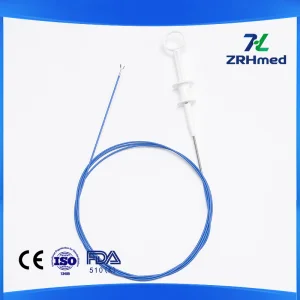
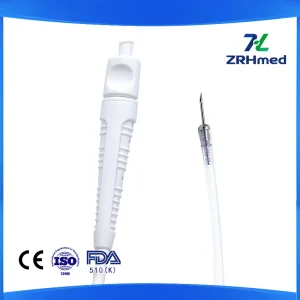
Pre-sterilized, hospital-validated consumables manufactured with medical-grade biocompatible metallurgy, high-torque braided sheaths, and strict batch traceability.
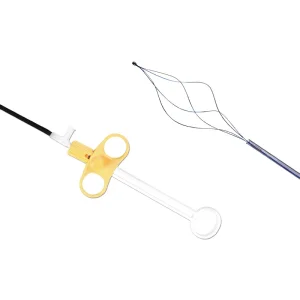
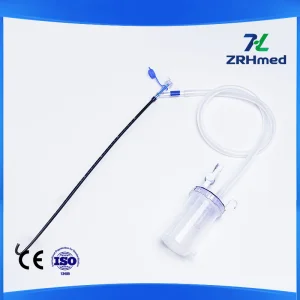
Mitigating Delayed Post-Polypectomy Hemorrhage (DPPH) and procedural perforations with high-retention mechanical tissue apposition.
In modern interventional gastrointestinal endoscopy, colonoscopic polypectomy, Endoscopic Mucosal Resection (EMR), and Endoscopic Submucosal Dissection (ESD) represent the primary clinical bulwarks against colorectal adenocarcinoma. However, post-polypectomy complications—predominantly Delayed Post-Polypectomy Hemorrhage (DPPH) and iatrogenic luminal micro-perforations—pose critical risks. Clinical data indicate that DPPH occurs in 1.2% to 6.8% of high-risk resections, particularly when removing polyps larger than 20 mm in the right hemi-colon where the cecal wall thickness rarely exceeds 2 to 3 mm.
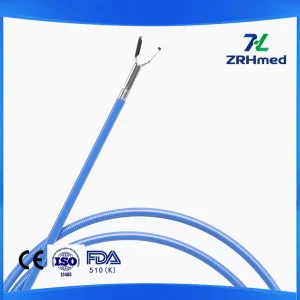
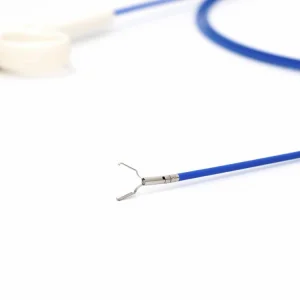
As a leading ODM colonoscopy clips for polyps supplier manufacturer, our engineering paradigm addresses these microvascular and mechanical failure points. Through-The-Scope (TTS) hemoclips function by exerting constant, atraumatic mechanical compression across the severed arteriolar bundles in the submucosa, isolating vascular flow without inducing early ischemic tissue necrosis. The mechanical efficacy of our endoscopic clips relies on three coupled engineering metrics: peak jaw span width, clamping holding force, and true 360-degree bidirectional rotational torque response.
Our spring-actuated latch design allows the endoscopist to open, grasp, release, and reposition the clip jaws multiple times prior to final mechanical release, ensuring optimal closure alignment across wide submucosal resection beds.
Constructed with dual-layer cross-braided stainless steel, the catheter eliminates torque lag and whip even within acutely flexed colonoscope retroflexion in the ascending colon, delivering tactile 1:1 physician hand-to-tip transmission.
Post-deployment residual stem length is minimized to under 4.5 mm, substantially reducing inadvertent mechanical interference during secondary clip deployments when executing consecutive closure zipper maneuvers.
How state-of-the-art cleanroom automation, micro-machining precision, and complete vertical supply chain integration yield unrivaled procurement advantages.
In the landscape of international medical technology sourcing, transitioning to a qualified China-based OEM/ODM partner is no longer merely a cost-reduction exercise; it is a strategic maneuver to secure supply chain resilience, accelerated design iteration, and high-volume scalability. At our Jiangxi production facility, we operate an integrated manufacturing ecosystem specialized in minimally invasive endosurgical consumables.
Precision micro-wire EDM and 7-axis Swiss CNC turning stations mill internal cam-tracks and arm pivot teeth with repeatability tolerances under ±3 microns, ensuring jam-free mechanical release.
Automated ultrasonic cleaning line and laminar flow assembly modules maintain bioburden controls compliant with ISO 14644-1, ensuring bio-cleanliness prior to validated EtO sterilization cycles.
Full technical documentation support for EU MDR (Class IIb), US FDA 510(k), Brazil ANVISA, and UKCA, including biocompatibility reports executed per ISO 10993 standards.
Our high-throughput production lines absorb fixed tooling and automated testing costs, providing global distributors with 30-45% cost advantages over domestic European and American alternatives.
By establishing tooling design, raw wire flattening, catheter braiding, laser welding, and medical blister Tyvek sealing in-house, we eliminate sub-tier subcontractor markups. This consolidated operational footprint guarantees that international tenders can be won at attractive margins without compromising device mechanical safety.
Emerging procedural challenges, advanced closure methodologies, and macro-healthcare cost optimization strategies.
The global endoscopic hemoclip sector is undergoing a profound technological transformation driven by the rapid expansion of screening colonoscopy programs worldwide and the rapid adoption of minimally invasive organ-sparing endoscopic resections. As clinicians excise larger lesions endoscopically, three primary clinical and macro trends define the future of the device category:
Groundbreaking multicenter randomized trials have proven that routine prophylactic clipping of mucosal defects ≥20 mm in the proximal colon reduces post-EMR delayed bleeding rates from 9.8% to under 2.1%. This evidence is institutionalizing high-volume prophylactic clip usage worldwide.
Endoscopists are increasingly utilizing specialized hemoclips paired with silk suture or elastic silicon rings for clip-with-line traction in colorectal ESD. This elevates the submucosal dissection field, accelerating operative duration by 35% while slashing perforation incidence.
Next-generation R&D pipelines focus on bioresorbable magnesium-alloy and poly-L-lactic acid clip jaws that retain tensile holding integrity for 10-14 days—spanning the critical post-op hemorrhage window—before degrading harmlessly without foreign-body residue.
From a macro-health economic perspective, emergency hospital readmission for post-polypectomy bleeding imposes an estimated direct cost of $8,500 to $14,000 per patient event in Western healthcare frameworks. Furthermore, emergency night-shift colonoscopies increase staff burnout and hospital liability. By deploying reliable, cost-effective prophylactic clips supplied directly through scalable ODM partnerships, ambulatory surgery centers (ASCs) and acute hospital trusts substantially reduce net episode-of-care costs, generating immediate return on investment for healthcare payers.
Comprehensive tissue management protocols: from small polyp bleed control to advanced full-thickness defect repair.
Immediate mechanical clamping of spurting or oozing arterial pedicles following hot or cold snare resection, instantly achieving visible hemostasis without thermal damage to deep muscularis layers.
Immediate tension-free apposition of iatrogenic mucosal rents (Sydney Type III/IV/V injuries), averting laparoscopic conversion, peritoneal contamination, and emergency colectomy.
Direct mechanical ligation of bleeding stigmata located at the dome or margin of deep colonic diverticula, assisted by the low-profile jaw profile that enters narrow diverticular necks.
Fluoroscopic and radiographic spatial localization of non-lifting neoplastic lesions or anastomotic sites, ensuring precise anatomical mapping for secondary surgical resections.
Comprehensive parameter specifications, regulatory standards, and private-label customization architectures for medical device importers.
Procurement directors and B2B brand owners evaluate medical devices based on technical precision, compliance maturity, and packaging versatility. Below is the technical specification roadmap across our core ODM colonoscopy hemoclip lines:
| Product Model / Series | Jaw Span Opening | Working Length | Catheter OD | Rotation System | Tissue Retention Time | Sterilization Mode |
|---|---|---|---|---|---|---|
| ZRH-HC-09 Standard | 9.0 mm | 1650 / 1950 / 2300 mm | 2.6 mm | 360° Continuous Bidirectional | 14 – 28 Days | EtO (ISO 11135 Validated) |
| ZRH-HC-11 Wide-Grasp | 11.0 mm | 1650 / 1950 / 2300 mm | 2.6 mm | 360° Continuous Bidirectional | 14 – 28 Days | EtO (ISO 11135 Validated) |
| ZRH-HC-13 Macro-Span | 13.5 mm | 1950 / 2300 mm | 2.6 mm | 360° Synchronous 1:1 | 14 – 35 Days | EtO (ISO 11135 Validated) |
| ZRH-HC-16 Ultra-Closure | 16.0 mm | 1950 / 2300 mm | 2.6 mm / 2.8 mm | 360° Synchronous 1:1 | 14 – 35 Days | EtO (ISO 11135 Validated) |
We provide full-spectrum engineering support to private label partners, from white-box delivery to complete turn-key OEM branded kits. Our engineering team assists with:
Broaden your medical distribution portfolio with complementary gastrointestinal, ERCP, and endoscopic intervention instruments.
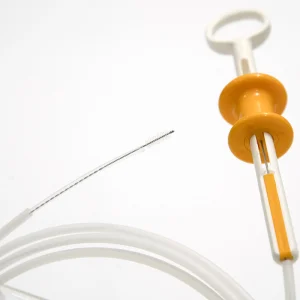
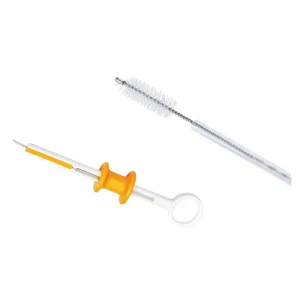
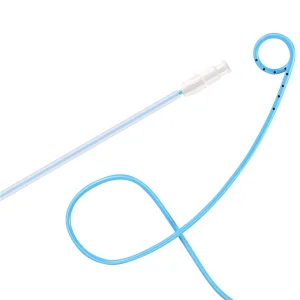
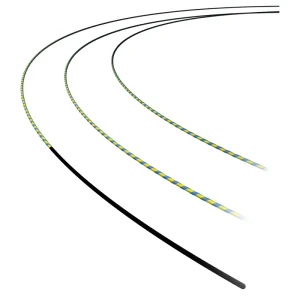
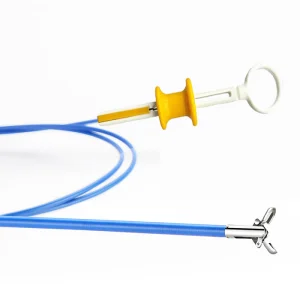
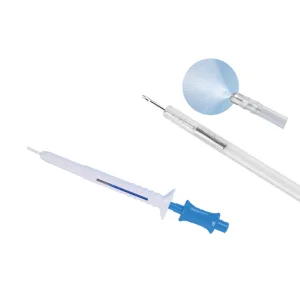
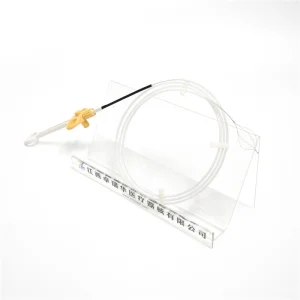
Detailed technical, clinical, and logistical clarifications for medical procurement officers and clinical department heads.