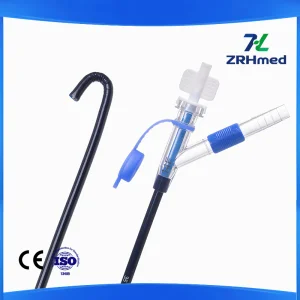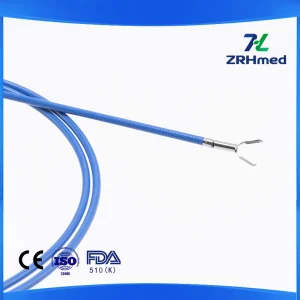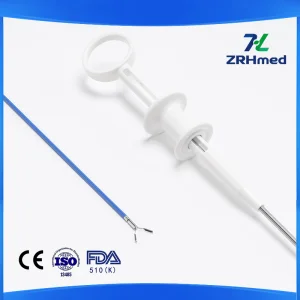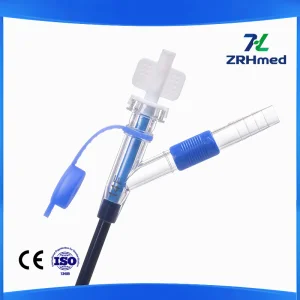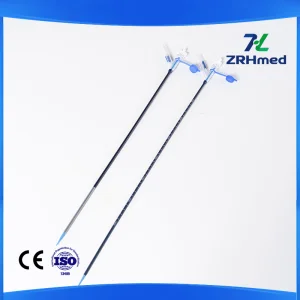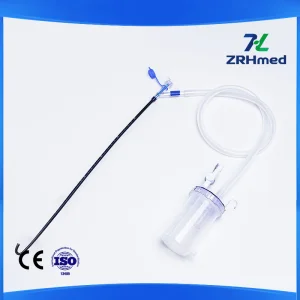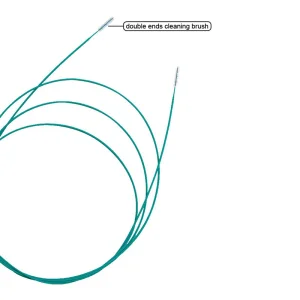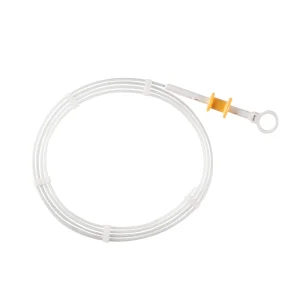
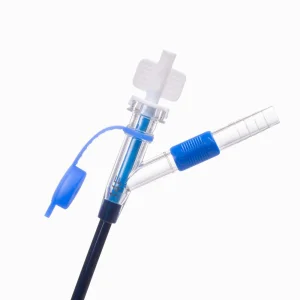
Manufactured under ISO 13485 quality systems, offering dimensional consistency and channel safety across global endoscopic applications.
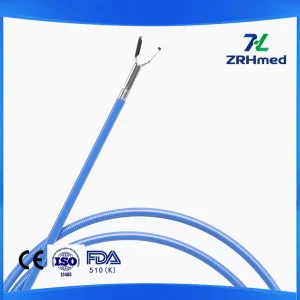
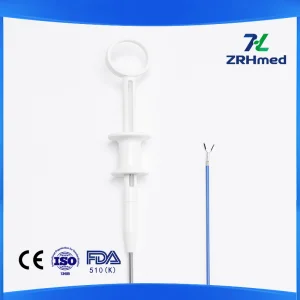
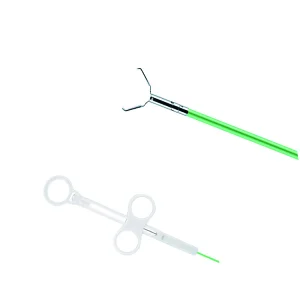
How polymer chemistry, nitinol metallurgy, and precision coating engineering intersect to minimize track friction and eliminate device failure in tortuous anatomical pathways.
Utilizing high-purity nickel-titanium alloy cores with shape-memory characteristics. The atomic lattice prevents kink deformation during acute angle cannulation, guaranteeing 1:1 torque transmission from operator handle to catheter tip.
Covalently bonded hydrophilic polymers activate instantly upon contact with saline or bile, dropping coefficient of friction to <0.01. Advanced UV crosslinking protects against flaking, preventing particulate embolization risks.
Heat-shrunk polytetrafluoroethylene jackets ensure dielectric insulation and shaft lubricity. Striped dual-color patterns (zebra) provide fluoroscopic and endoscopic confirmation of guidewire movement and rotation.
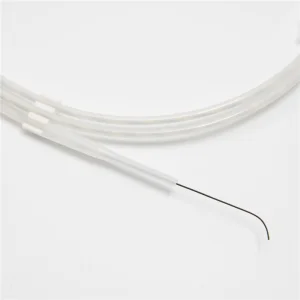
Tapered distally with options for straight, angled (J-shape), or hyper-flexible platinum-tungsten coils. Provides high radiopacity under X-ray imaging while protecting fragile mucosal structures from perforation.
| Parameter | ERCP Guidewires | Endourology Guidewires | Peripheral Intervention |
|---|---|---|---|
| Outer Diameters (OD) | 0.025", 0.035" | 0.032", 0.035", 0.038" | 0.014", 0.018", 0.035" |
| Standard Lengths | 2600mm, 4500mm (Exchange) | 1500mm, 1800mm | 1800mm, 2600mm |
| Core Construction | Solid Nitinol Alloy | Kink-Resistant Nitinol Wire | Nitinol / Stainless Hybrid |
| Coating Technology | Selective Hydrophilic Tip (5-10cm) | Full-Length Hydrophilic Gel | PVP Low-Particulate Matrix |
| Dynamic Friction (ASTM F2394) | ≤ 0.02 N | ≤ 0.015 N | ≤ 0.018 N |
| Sterilization Compatibility | Ethylene Oxide (EO), Gamma | Ethylene Oxide (EO) | Ethylene Oxide (EO) |
Leveraging integrated domestic raw material clusters, precision tooling, cleanroom automation, and continuous cost optimization for scalable B2B partnerships.
From centerless wire grinding to precision jacket extrusion and automated hydrophilic curing dip lines, 92% of guidewire fabrication processes are maintained within our Jiangxi manufacturing compound, securing cost parity and strict batch reproducibility.
Continuous tensile testing, tip-flex fatigue cycling (>1000 repetitions at 90°), coating adhesion cross-hatch tests, and particulate residue counting confirm total conformity with stringent international requirements for interventional guidewire systems.
Custom dispenser coils, spiral hoops with flush ports, Tyvek/film sterile pouching, and regional multi-language label artwork designed in strict accordance with FDA UDI and EU MDR 2017/745 trace regulations.
Bridging endoscopic diagnostics and interventional therapies through engineered access instruments.
Navigating through difficult papilla of Vater configurations. Guidewires provide stable rails for sphincterotomes, stone retrieval balloons, and biliary stents, reducing cannulation trauma and post-ERCP pancreatitis incidents.
Serving as safety and working guidewires for retrograde intrarenal surgery. Passing ureteral strictures to guide flexible ureteral access sheaths (UAS) and stone baskets safely into the renal calyces under combined direct and fluoroscopic visualization.
Precision crossing of vascular stenoses and chronic total occlusions (CTO). Ultra-responsive hydrophilic tips pass through microcatheters without binding, guaranteeing tracking stability during angioplasty and stenting procedures.
We provide complete Design Dossiers, ISO 10993 cytotoxicity and hemocompatibility biological evaluations, ISO 11135 EO sterilization residual validations, and accelerated 3-to-5-year shelf-life stability data to accelerate national import registrations across the EU, Latin America, Southeast Asia, and the Middle East.
Analysis of market forces driving regional medical distributors to switch to specialized contract manufacturing partners.
Cross-contamination concerns and stringent CSSD reprocessing audits have accelerated the global conversion from reusable wires to 100% single-use, sterile-packaged guidewires across ambulatory surgical centers and academic medical centers.
Mid-tier distributors are moving away from multinational brands to introduce private-label accessories. OEM/ODM cooperation offers higher bidding margins in government hospital tenders while securing brand equity in local markets.
Procurement directors mitigate geopolitical and single-origin risks by qualifying verified Chinese facilities with established export credentials, transparent quality systems, and stable lead times for high-volume consumables.
In-depth responses covering engineering specifications, customization allowances, regulatory approvals, and sample evaluations.
For standard product configurations, initial sample batches ship within 7 to 10 days. Commercial bulk orders (5,000–50,000 units) require 25 to 35 calendar days, including validated ethylene oxide (EO) sterilization and biological aeration cycles.
Yes. As an authentic ODM developer, we adjust the distal taper geometry (from floppy to extra-stiff support cores) and tailor the hydrophilic polymer coating length (from 3cm to 50cm, or full length) based on your clinical end-use requirements.
Every guidewire production lot undergoes particulate testing in compliance with USP <788> and FDA guidances for intravascular devices. Hydrophilic adherence is verified using dye staining and scanning electron microscopy (SEM) after friction cycles.
Our regulatory affairs department provides ready-to-submit technical files, encompassing biocompatibility certifications (ISO 10993), aging validation studies, risk analysis documentation (ISO 14971), and manufacturing flows to support your health authority submissions.
Our standard private-label branding program starts at 500 units per specification for sterile Tyvek pouch labeling, and 1,000 units for fully customized four-color exterior distributor packaging cartons.
Yes. Our 0.025", 0.032", and 0.035" systems are precision-calibrated to ensure safe clearance through standard 2.8mm, 3.2mm, and 3.7mm duodenoscope, gastroscope, and ureteroscope biopsy channels without polymer strip damage.
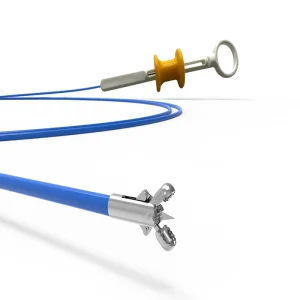
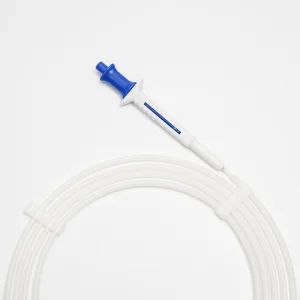
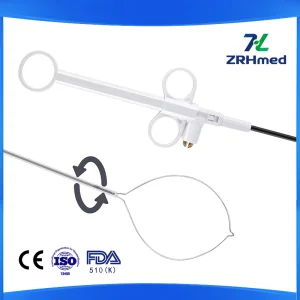
Complementary procedural devices engineered for high-demand clinical applications in gastroenterology and minimally invasive endourology.