Precision single-use consumables engineered for tissue sampling, mechanical hemostasis, and complex endoscopic resection workflows.
Examining fluid dynamic containment, cellular architecture protection, and engineering tolerances required for enterprise polyp trap manufacturing.
Standard colonoscopy aspirators operate between -40 kPa and -60 kPa. Our precision ODM injection toolings utilize thermoplastic elastomer (TPE) double-flange gaskets that prevent micro-leak vacuum drops, ensuring that gastrointestinal aspirate moves instantaneously without requiring repeated, traumatic suction pulses.
Specimen maceration is an acute clinical risk during electrocautery resection. Our mesh design incorporates ultrasonic-welded polypropylene screens with dynamic drainage grids (pore diameters balanced at 200–300 microns), completely eliminating specimen crush artifacts and ensuring undisturbed margins for histopathological dysplasia staging.
Designed with multi-port rotatable indexing dials, our multipath polyp collectors allow endoscopists and surgical nurses to isolate polyps from the ascending colon, transverse colon, descending colon, and rectum into segregated numbered chambers without breaking the vacuum circuit, minimizing biohazard exposure risks.
Transitioning procurement organizations from variable-quality catalog traders to single-source, direct-line contract manufacturers.
Traditional polyp recovery techniques risk aerosolization and manual handling mistakes. Institutional buyers worldwide mandate closed-system pathology preservation. Our factory integrates leak-tested, pre-fillable formalin wells and detachable transport capsules, slashing specimen turnaround duration by 35% across ambulatory endoscopy suites.
With reimbursement frameworks penalizing missing biopsies, healthcare systems cannot afford defective collection traps. Through centralized cleanroom tooling and automated sub-assembly, our factory lowers per-unit acquisition overhead while upholding ISO 11135 ethylene oxide sterilization tolerances for uncompromised patient safety.
Supply chain fragmentations often cause mismatch errors between suction tubing diameters and suction cannulas. Our ODM engineering establishes a stepped, universal elastomeric barb interface matching 1/4" and 3/16" internal tubing diameters, eliminating hospital floor inventory mismatch and stocking redundancies.
Meeting medical-grade polymer standards under continuous clinical suction conditions.
| Engineering Parameter | ZRH Cleanroom Foundry Standards | Conventional Commercial Baselines | Clinical Safety Verification |
|---|---|---|---|
| Housing Material | Ultra-Clear Medical Grade Polycarbonate (USP Class VI) | Recycled Polystyrene or Low-flow SAN | Zero crack propagation under impact; complete visual clarity |
| Seal Integrity Test | Hermetic vacuum holding at -80 kPa for > 120s | Casual slip fit; leak rate unspecified | Eliminates ambient odor and aerosol pathogen escape |
| Screen Filter Mesh Size | Precision calibrated 250 µm monofilament screen | Uneven 500–800 µm stamped sheet | Captures micro-adenomas (<2mm) without cellular shear |
| Biocompatibility Profile | ISO 10993 cytotoxicity, sensitization, irritation cleared | Basic material compliance declarations | Non-reactive with tissue, formalin, and saline irrigation |
| Sterilization Level | SAL 10⁻⁶ via ISO 11135 validated EtO chamber | Non-sterile or non-validated gamma irradiation | Single-use sterility for infection-critical endosurgery units |
Finite element computation modeling internal vortex turbulence to stop specimen fragmentation.
Multi-cavity hardened steel tools ensuring sub-0.02mm runout tolerances for positive locking seals.
Automated filter chamber bonding preventing particle shedding or glue leaching during clinical use.
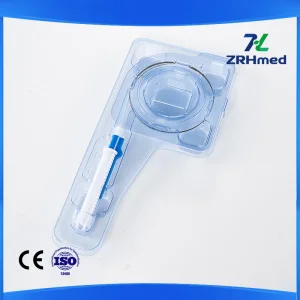
Tyvek thermoformed blister packaging guaranteeing 3-year shelf-life stability and lot traceability.
Enabling regional distributor brands to clear MDR, FDA 510(k), and ANVISA entry barriers smoothly.
Our regulatory affairs division supplies comprehensive Design History Files (DHF), Biocompatibility Summary Reports (ISO 10993-1/-5/-10), and accelerated aging stability validations ready for local Ministry of Health submissions.
Full private-label customization: custom pad-printed chamber numbering, localized instructional inserts in 18 languages, bespoke vacuum connection diameters, and customized outer carton packaging suited for regional logistics networks.
Equipped with fully automated high-speed multi-cavity injection machines and cleanroom facilities, our factory delivers scalable production runs exceeding 500,000 units monthly, shielding our global partners against international supply crunches.
Clear, direct insights addressing technical compatibility, regulatory certifications, and factory customizations.
Single-screen in-line filters force successive tissue samples to rest in the continuous path of suctioned GI fluids, bile, and blood, precipitating mechanical compression and chemical breakdown. An indexed multi-chamber polyp trap enables the operator to isolate individual resected polyps into numbered, separate containment areas immediately following aspiration, shielding delicate epithelial cell architecture for definitive margin analysis.
We use exclusively virgin, medical-grade Polycarbonate (PC) for trap housings, delivering optical clarity under bright surgical illumination while maintaining shatter resistance up to -80 kPa of negative vacuum suction. Internal screens are manufactured using chemically inert monofilament polypropylene (PP) mesh that eliminates tissue sticking and preserves sample integrity during preservation fluid addition.
Yes. Through our ODM manufacturing workflow, we supply custom tiered barb configurations compatible with global endoscopic tubing standards (ranging from 5.0mm to 7.0mm internal diameter). In addition, we configure quick-click adapters suited for direct dockings into proprietary hospital suction canisters and endoscopy management towers.
Each factory shipment is backed by a full regulatory dossier, including ISO 13485:2016 factory audit records, CE declaration of conformity documents, ISO 11135 ethylene oxide sterilization certificates, ISO 10993 biocompatibility testing records, shelf-life verification reports, and standardized technical files customized for fast domestic clearance.
Standard white-label/OEM configurations maintain a minimum order volume of 5,000 units with typical lead times of 3 to 4 weeks. Custom injection toolings (e.g., customized chamber configurations, branded company logos engraved on the housing, or dedicated blister geometries) run on a 45-day turnaround cycle from initial CAD approval to pilot batch sterilization.
Explore our complete ecosystem of minimally invasive surgical accessories produced under certified medical cleanroom controls.