Engineered for absolute dimensional stability, biocompatibility, and fluid dynamic performance across endoscopic retrograde cholangiopancreatography (ERCP), gastroscopy, and endourology.
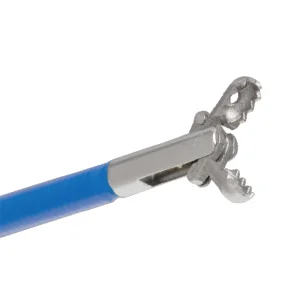
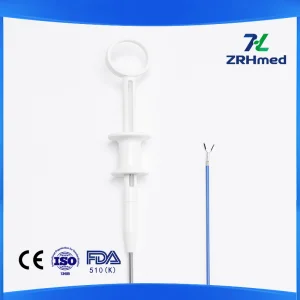
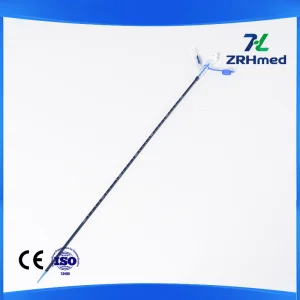
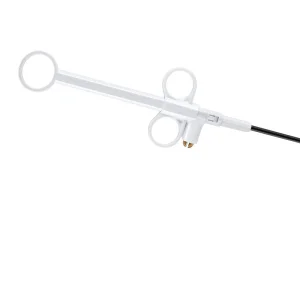
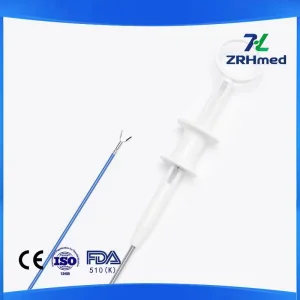
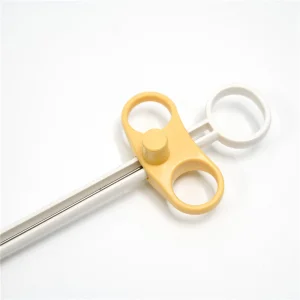
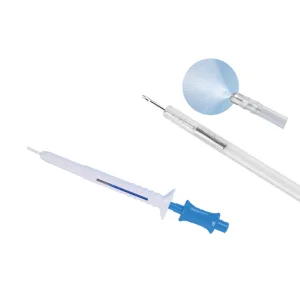
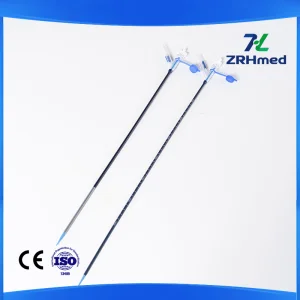
Evaluating the hydrodynamic, biomechanical, and material criteria defining modern single-use stone extraction baskets across complex pancreatobiliary endoscopy and flexible ureterorenoscopy.
In modern interventional endoscopy, stone extraction devices represent one of the most mechanically demanding classes of therapeutic instruments. Historically fabricated from braided stainless steel wires, traditional Dormia baskets presented persistent clinical complications: permanent deformation under tortuous anatomical deflection, wire unbraiding under rotational torque, and the catastrophic risk of basket entrapment during common bile duct (CBD) stone capture. As a premier ODM retrieval basket endoscopy manufacturer and global medical device supplier, our engineering focus addresses these failure modes through advanced Nickel-Titanium (Nitinol) superelastic metallurgical platforms.
Nitinol exhibits thermoelastic martensitic transformation characteristics, yielding an extraordinarily high recoverable strain limit of up to 8% to 10%, compared to less than 1% for standard medical-grade 304V stainless steel. This superelasticity allows our retrieval baskets to maintain 100% radial shape memory even after complete collapse through working channels as small as 1.2 French (0.40 mm) or 1.8 French (0.60 mm). When deployed inside biliary infundibula, intrahepatic strictures, or distorted renal calyces, the pre-set memory cage expands reliably, creating the exact radial outward force necessary to mobilize impacted calculi without tearing delicate epithelial layers.
The biomechanics of stone retrieval differ markedly between pancreatobiliary intervention and upper urinary tract endourology. In endoscopic retrograde cholangiopancreatography (ERCP), stones frequently exceed 10 mm to 15 mm in diameter, demanding high hoop strength, mechanical lithotripsy compatibility, and exceptional rotational tracking through a side-viewing duodenoscope with a raised elevator. The extraction basket must resist wire crossover failure when trapped under high hoop stress, while the outer sheath must provide sufficient column strength to prevent accordion buckling during aggressive traction against the papilla of Vater.
Conversely, in retrograde intrarenal surgery (RIRS) and flexible ureteroscopy (fURS), the design mandate centers on maintaining endoscope deflection and high irrigation inflow. A standard ureteroscopic retrieval basket with a bulky distal tip can cause caliceal perforation or mucosal stripping when manipulated within the lower renal pole. Our tipless Nitinol micro-wire configurations eliminate the rigid distal bullet tip, allowing the basket wires to open directly against the mucosal floor of the calyx, effortlessly scooping up fragmented stones without mucosal snagging.
Multi-geometry cage systems engineered with proprietary micro-laser welding, custom braid patterns, and multi-lumen co-extruded shafts for private-label brands and medical distributors.
| Device Category | Basket Geometry | Outer Diameter (Fr) | Working Length | Wire Alloy / Profile | Key Clinical Target |
|---|---|---|---|---|---|
| ERCP Biliary Extraction | 4-Wire Helical / Dormia / Hexagonal | 2.7 Fr – 4.2 Fr | 1950 mm – 2200 mm | Pre-shaped Superelastic Nitinol | Choledocholithiasis, Common Bile Duct Calculi |
| Emergency Crushing Basket | Reinforced 4-Wire Hexagonal Cage | 4.5 Fr – 6.0 Fr | 1800 mm – 2000 mm | High-Tensile Braided Steel / Nitinol | Large Impacted Biliary Stones (Mechanical Lithotripsy) |
| Endourology Caliceal Basket | Tipless Flat-Wire 4-Wire / 6-Wire | 1.2 Fr – 1.9 Fr | 950 mm – 1200 mm | Micro-Nitinol (Zero-Distal-Tip) | Lower Pole Renal Stones, Flexible Ureteroscopy |
| Foreign Body Retrieval | 3-Wire / 4-Wire Grasping Prong Basket | 2.3 Fr – 3.0 Fr | 1600 mm – 2300 mm | High-Radial Nitinol Wire | Ingested Foreign Objects, Stent Fragments, Food Bolus |
| Single-Operator Cholangioscopy | Micro-Tipless Basket-in-Basket | 1.5 Fr – 1.8 Fr | 2600 mm – 3100 mm | Sub-millimeter Micro-braided NiTi | Direct Visualization Intrahepatic Stone Retrieval |
High-torque inner drive wires ensure every degree of rotation on the ergonomic handle translates to exact 1:1 rotation at the distal basket tip, preventing angular latency and sudden whip.
Engineered release thresholds prevent catastrophic stone impaction. If an encapsulated calculus cannot clear the papilla or ureter, the sheath interface can engage lithotripsy crushing or detach cleanly.
Precision-crimped Platinum-Iridium (Pt/Ir) radiopaque markers at the distal tip and proximal basket collar guarantee crisp visualization under C-arm fluoroscopy, even with heavy contrast pooling.
Where medical metallurgical engineering converges with robotic navigation, smart sensors, and advanced surface science.
Advancing micro-wire drawing techniques to produce Nitinol wires with diameters below 35 microns. This enables next-generation 1.0 Fr and 1.2 Fr baskets that preserve 100% deflection in ultra-thin digital ureteroscopes.
Co-axial multi-lumen architecture integrating Holmium or Thulium Fiber Laser (TFL) delivery channels directly into the basket core, enabling simultaneous stone immobilization and fragment dusting without instrument exchanges.
Covalently bonded low-friction polymer surfaces engineered for extended catheter tracking. Dramatically minimizes coefficient of friction against ureteroscopic working channel liners, preventing inner lumen abrasion.
Development of tactile feedback handles embedded with micro-force limiters that prevent traction beyond safe clinical thresholds, reducing the risk of tissue avulsion during biliary ductal passage.
Bridging advanced high-precision tooling, high-capacity automated production, and uncompromising medical QMS oversight for international OEM and ODM clients.
From proprietary Nitinol heat-setting furnaces and CNC wire EDM to in-house catheter extrusion and precision laser micro-welding, our integrated facility controls 100% of the manufacturing critical path.
All final ultrasonic washing, microscopic wire alignment, handle assembly, and sterile barrier packaging take place in certified ISO Class 7/8 (Class 100,000) cleanroom environments with automated environmental monitoring.
Our engineering team accelerates the product development lifecycle from initial 3D CAD modeling and DFM analysis to functional prototype delivery within 14 working days, supporting custom colors, branding, and lengths.
Full alignment with stringent global medical regulatory standards ensures frictionless registration, import compliance, and patient safety across Europe, the Americas, Asia-Pacific, and the Middle East.
Fully audited Quality Management Systems complying with ISO 13485:2016. Technical Documentation Files (TDF) are structured in strict accordance with the European Medical Device Regulation (EU MDR 2017/745) for Class IIa active/invasive therapeutic accessories.
All patient-contacting materials—including Nitinol wire cages, radiopaque markers, extruded PTFE/PEEK sheaths, and UV-cured optical adhesives—undergo comprehensive biocompatibility testing (cytotoxicity, systemic toxicity, sensitization, irritation, and hemocompatibility).
Validated Ethylene Oxide (EO) sterilization cycle processes following ISO 11135 with proven residual limits (Ethylene Oxide < 4 mg/device and Ethylene Chlorohydrin < 9 mg/device). Verified accelerated and real-time aging studies guaranteeing a 3-year sterile shelf-life.
Tailored device architectures configured to mitigate procedural risk, reduce fluoroscopy and operative time, and optimize hospital workflow efficiencies.
Optimized for rapid cannulation, selective intrahepatic duct access, and controlled stone traction. Helical and hexagonal 4-wire geometries provide positive tactile feedback when entrapping smooth or faceted common bile duct stones, minimizing fragmentation slip.
Tipless Nitinol baskets engineered with sub-1.8 Fr outer sheaths. Engineered to permit full deflection of flexible ureteroscopes while preserving saline continuous irrigation flow rates, preventing intrapelvic pressure elevation during stone dusting and retrieval.
High-retention 3-prong and 4-wire modified baskets designed for the rapid grasp and stabilization of sharp ingested objects, dental prostheses, battery packs, and impacted food masses in the esophagus, gastric fundus, and duodenum.
A structured operational matrix outlining key technical benchmarks, quality gate validations, and commercial metrics required when establishing multi-year supply chain partnerships.
For international healthcare brands, group purchasing organizations (GPOs), and regional distributors, transitioning or onboarding an ODM retrieval basket partner requires balancing clinical safety, pricing leverage, and supply chain continuity. Medical device procurement officers prioritize three fundamental pillars:
Explore our complementary suite of single-use biopsy forceps, hemostatic clips, injection needles, and access sheaths designed for modern therapeutic units.
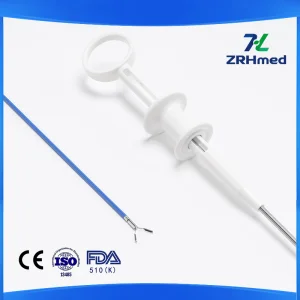
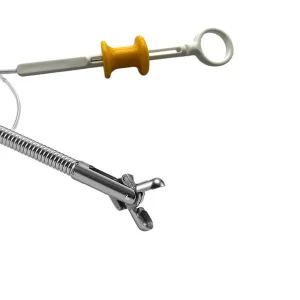
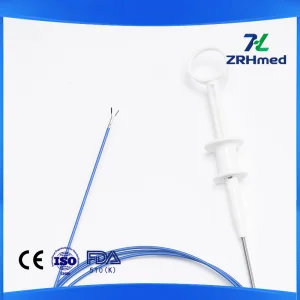
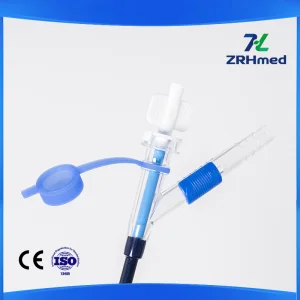
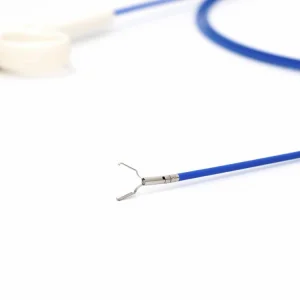
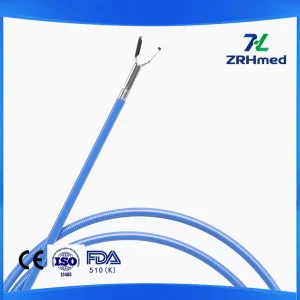
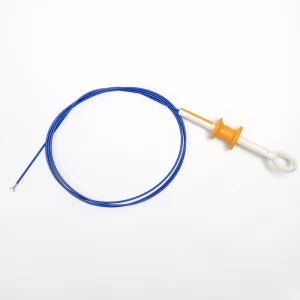
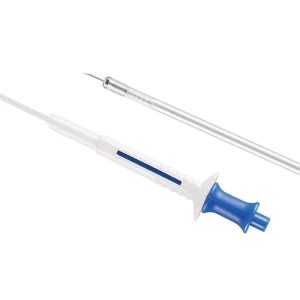
In-depth technical answers addressing clinical channel compatibility, Nitinol metallurgy, regulatory filings, and private label customization.
Accelerate your product launch with verified ISO 13485 manufacturing, scalable cleanroom capacity, and world-class Nitinol engineering. Request technical drawings, specification sheets, and trial evaluation samples today.