Explore our high-demand OEM portfolio spanning endoscopy, ERCP, and endourology—manufactured under certified cleanroom parameters and available for custom configuration and private-label contract manufacturing.
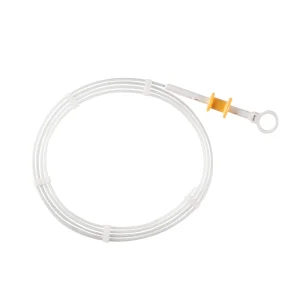
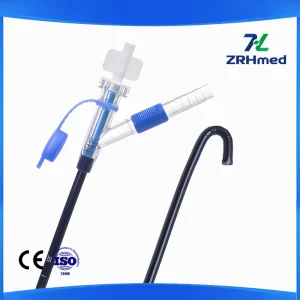
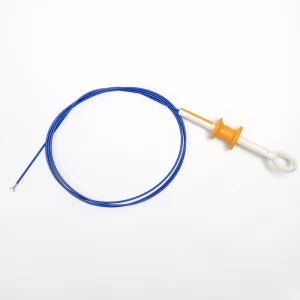
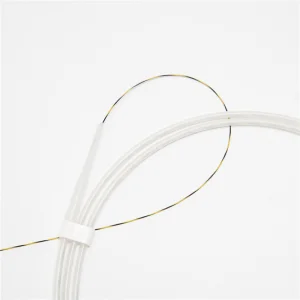
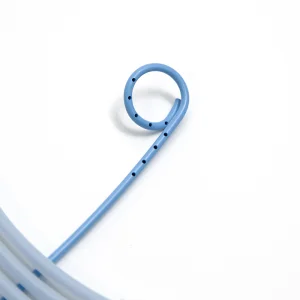
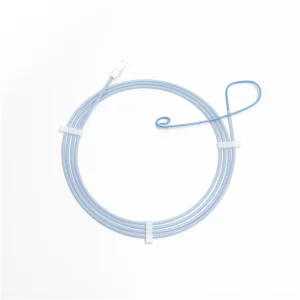
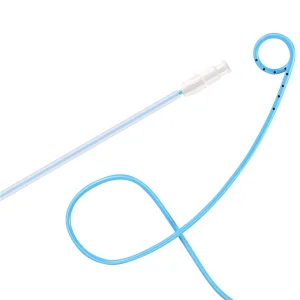
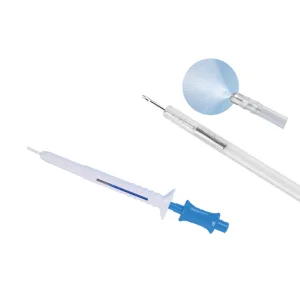
A technical examination of cellular capture dynamics, tissue trauma reduction, and systemic infection control in modern flexible endoscopy.
While standard biopsy forceps offer macroscopic structural tissue for architectural histopathology, rigid bite cups struggle to navigate acute anatomical flexures, narrow bile duct strictures, and peripheral bronchial sub-segments. OEM cytology brushes overcome this mechanical barrier by entering micro-lumens down to 1.8mm working channels. Engineered with flexible multi-strand core wires and optimized filament arrays, they abrade mucosal epithelial surfaces uniformly, providing vital cellular density where traditional forceps cause excessive bleeding, perforation, or procedural failure.
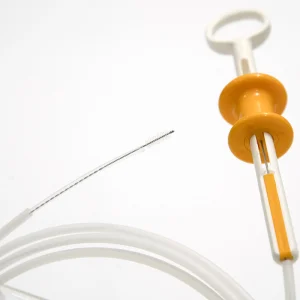
Cellular yield is directly dictated by filament surface energy, bristle density, and catheter fluidics. Our advanced OEM brushes utilize medical-grade Nylon 612 and specialized polymer filaments processed with abrasive micro-texturing. During procedural brushing, exfoliated cells adhere to the interstitial bristle matrix via capillary action and mechanical entanglement. Upon retraction into the protective PTFE/FEP sheath, a precision distal seal prevents diagnostic sample washout by procedural suction or endoscope channel fluids, increasing smear viability and liquid-based cytology (LBC) sensitivity.
Reprocessing reusable channel instruments represents one of the highest risk factors for carbapenem-resistant Enterobacteriaceae (CRE) transmission. Microscopic tissue fragments trapped within the spiral core of reusable brushes defy enzymatic cleaning and standard autoclaving. Transitioning hospital systems to single-use, sterile-packaged OEM cytology brushes eliminates 100% of accessory-associated nosocomial transmission vectors while standardizing physical performance across every clinical case.
How Tier-1 OEM/ODM medical device manufacturers empower international brands to meet strict regulatory deadlines, tender pressures, and hospital cost-per-procedure metrics.
Global medical brand holders are transitioning away from single-region dependence toward highly audited, vertically integrated contract manufacturers. By controlling drawing-to-wire processing, cleanroom injection molding, automated bristle twisting, and in-house ethylene oxide sterilization, our Jiangxi facilities ensure steady supply predictability, eliminating supply shocks caused by logistics volatility or raw material shortages.
The regulatory burden for Class IIa and Class IIb endosurgical accessories has surged under EU MDR, requiring robust clinical evaluation reports (CER), post-market surveillance (PMS), and validated biocompatibility testing. As an export-oriented OEM powerhouse, our Jiangxi ZhuoRuiHua facility maintains comprehensive Design Dossiers and Risk Assessment files (ISO 14971), allowing overseas OEM partners to shorten their regulatory clearance timelines by up to 60%.
With diagnostic DRG bundling and centralized regional procurement dictating healthcare budgets worldwide, hospital value analysis committees demand consumables that guarantee zero failure rates at sustainable unit economics. Direct-from-factory OEM scaling enables regional distributors to win high-volume tenders with premium margins while providing clinicians with instrumentation rivaling legacy European and Japanese brands.
Every component is engineered to eliminate tortuous path buckling, channel scuffing, bristle detachment, and premature diagnostic loss.
| Anatomical Specialty | Catheter OD (mm / Fr) | Working Length (mm) | Channel Minimum | Bristle Matrix / Geometry | Distal Tip Design | Core Wire Architecture |
|---|---|---|---|---|---|---|
| Bronchial / Pulmonology | 1.8 mm / 5.4 Fr | 1050 – 1200 mm | 2.0 mm | Spiral-cut Nylon 612 (OD 2.5–3.0 mm) | Atraumatic Spherical Bead (Gold/SS) | High-Tensile 304V Stainless Steel |
| Upper GI / Gastroscopy | 2.3 mm / 7.0 Fr | 1600 – 1800 mm | 2.8 mm | Helical High-Density Radial Tufts (OD 5.0 mm) | Fluoropolymer Coated Protective Cap | Torque-Stable Twisted Multi-Strand |
| Colorectal / Colonoscopy | 2.3 mm / 7.0 Fr | 2300 mm | 2.8 mm | Bi-Directional Staggered Filaments | Smooth Radiopaque Polymer Tip | PTFE-Coated Low-Friction Core |
| ERCP / Biliary Stricture | 2.5 mm / 7.5 Fr | 1950 – 2100 mm | 3.2 mm (Duodenoscope) | Graded Stiffness Micro-Bristle Array | Dual Radiopaque Platinum Marker Bands | 0.035" Guidewire Compatible Coaxial Wire |
| Ultra-Thin Peripheral (Custom) | 1.2 – 1.5 mm | 1400 mm | 1.5 mm | Micro-Fine PEEK / Medical Polymer | Micro-Welded Smooth Bullet Tip | Superelastic Nitinol (NiTi) Core |
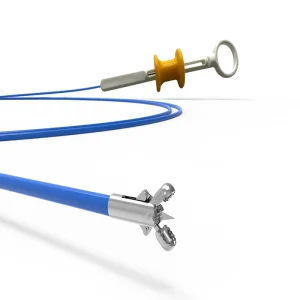
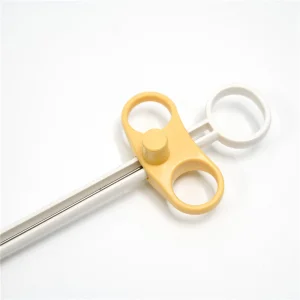
Navigating acute curves inside an retroflexed gastroscope or duodenoscope elevator demands exceptional torsional rigidity. Our multi-strand 304V stainless steel and proprietary nitinol mandrels deliver immediate tactile feedback from the ergonomic thumb ring handle directly to the distal brush head, preventing looping inside the channel.
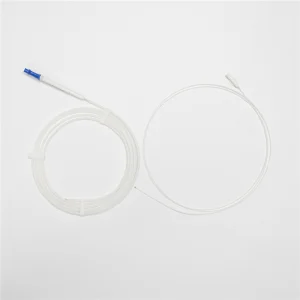
Catheter sheaths are co-extruded in-house using high-molecular PTFE and fluorinated ethylene propylene (FEP). This guarantees ultra-low surface friction coefficients, preventing abrasion damage to expensive scope working channel linings while maximizing fluid seal integrity.
Medical safety mandates uncompromising mechanical retention. Each filament tuft is anchored via precision twisted helical wires followed by laser micro-welding at the distal atraumatic tip. In-line pulling tests continuously verify retention values exceeding 15 Newtons—far outperforming ISO standard benchmarks.
Engineered to adapt seamlessly to the anatomic constraints and diagnostic protocols of specialized endoscopy suites.
Designed for transbronchial cytologic evaluation of endobronchial lesions, submucosal infiltrates, and peripheral lung nodules under navigational or radial EBUS guidance. The atraumatic ball tip glides safely over fragile bronchial mucosa, collecting shed neoplastic cells from secondary and tertiary bronchi without inducing airway hemorrhage that obscures endoscopic visualization.
Indeterminate biliary strictures represent a severe diagnostic challenge. Our long-shaft (2000mm+) ERCP cytology brushes feature dual radiopaque gold/platinum marker bands for exact fluoroscopic positioning across stenosis sites. Coaxial wire-guided configurations permit rapid exchange over 0.035" and 0.025" biliary guidewires through duodenoscope elevators, harvesting diagnostic intraductal cholangiocarcinoma cells with superior cellular yield.
Specialized for longitudinal monitoring of Barrett’s esophagus dysplastic transformation, esophageal candidiasis, and mucosal evaluation of tight peptic or anastomotic strictures. Large-diameter brush models maximize mucosal contact area over broader geographic segments, drastically lowering false-negative sampling margins in routine screening.
Built upon validated cleanroom infrastructure, complete product traceability, and end-to-end documentation packages tailored for global health authorities.
Jiangxi ZhuoRuiHua Medical operates strictly controlled ISO 13485 certified quality management workflows. Every batch undergoes rigorous 3-tier inspection gates: raw material spectral confirmation, real-time in-line dimensional verification, and lot release tensile/integrity testing. Full DHF (Design History File) and DMR (Device Master Record) support are provided for OEM auditing.
All single-use brushes are sterilized according to ISO 11135 requirements, achieving a verified Sterility Assurance Level (SAL) of 10⁻⁶. In-house gas chromatography measures residual Ethylene Oxide (EO) and Ethylene Chlorohydrin (ECH) levels strictly below the demanding thresholds of ISO 10993-7, eliminating any tissue irritation risks.
We supply turnkey OEM private labeling options including sterile medical Tyvek/film heat-seal peel pouches, barcode serialization (UDI compliant), branded IFUs, and shelf cartons customized for target regional languages and healthcare distributors in Europe, the Americas, Asia-Pacific, and the Middle East.
Translating cutting-edge molecular oncology, digital pathology, and micro-robotics into our forward-looking OEM product lifecycle.
Refining surface roughness on single polymer filaments to optimize abrasive cell detachment without causing submucosal micro-lacerations or excess blood contamination in liquid-based cytology.
Development of chemically inert, nucleic-acid-friendly bristle matrices designed to preserve cellular DNA/RNA integrity for downstream Next-Generation Sequencing (NGS) and FISH (Fluorescence In Situ Hybridization) cancer diagnostics.
Engineering multi-modal sampling devices that combine fine-gauge micro-aspiration lumen channels directly within the brush hub, enabling simultaneous exfoliative brushing and cytologic flush-aspiration in a single scope passage.
Standardizing catheter dimensions, torque transmission tolerances, and distal sensor interfaces for seamless integration with AI-assisted flexible robotic endoscopic platforms.
Essential technical, commercial, and regulatory guidance for procurement directors evaluating new endoscopy contract manufacturing partnerships.
Complete your supply tender with certified, single-use endoscopic instruments manufactured under synchronized lot control and consolidated shipment schedules.
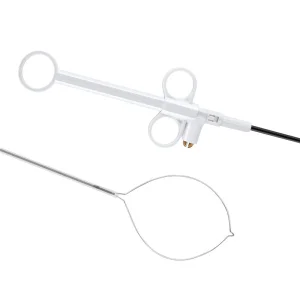
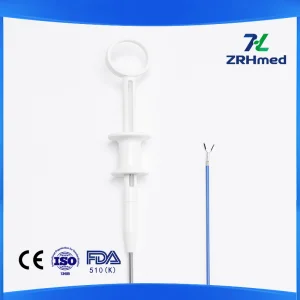
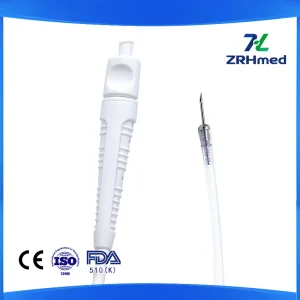
Access certified cleanroom production capacity, direct factory volume tier pricing, full technical documentation for local registration, and dedicated engineering support for your custom cytology brush requirements.