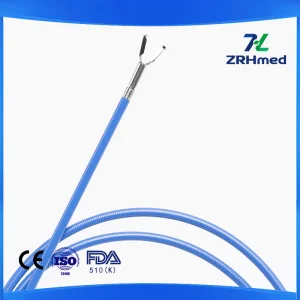
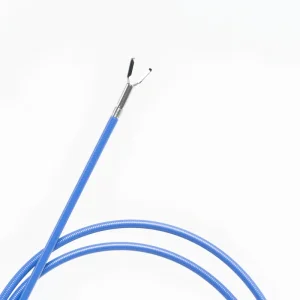
Engineered for high mechanical reliability, tactile feedback, and channel compatibility with Olympus, Pentax, and Fujifilm endoscopy architectures.
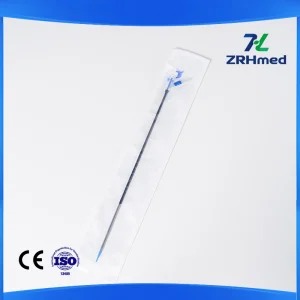
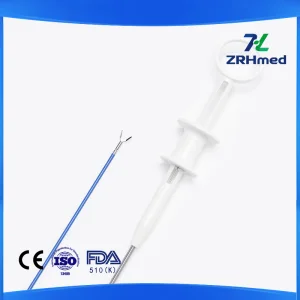
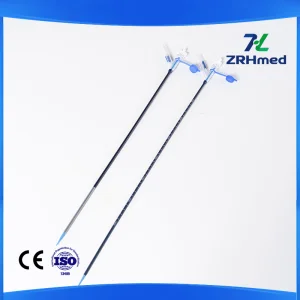
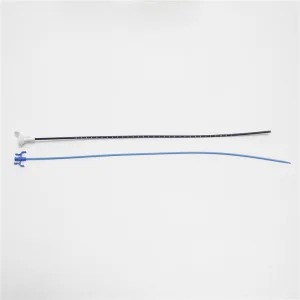
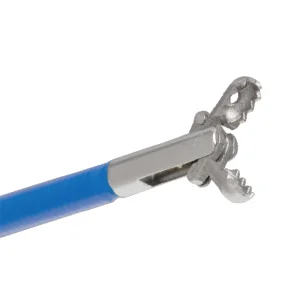
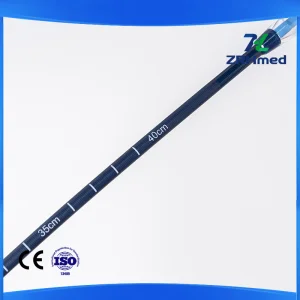
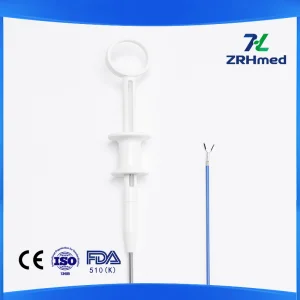
The transition toward single-use endosurgical devices has redefined therapeutic endoscopy, driven by non-variceal upper GI bleeding management, ambulatory surgical expansion, and stringent biocompatibility standards.
Acute Gastrointestinal Bleeding (GIB) remains one of the highest-volume emergency gastroenterological admissions worldwide, accounting for over 150 presentations per 100,000 adults annually. The aggressive global adoption of therapeutic antithrombotic and anticoagulant therapies has exacerbated peptic ulcer hemorrhage risks. Mechanical hemostasis using through-the-scope (TTS) endoscopic hemoclips is recognized by ESGE (European Society of Gastrointestinal Endoscopy) and ACG (American College of Gastroenterology) guidelines as the gold standard over thermal coagulation and injection monotherapy, securing a sustained compound annual growth rate (CAGR) of 6.8% across global medical device markets.
Global health regulatory authorities, including the US FDA, European EMA (under EU MDR 2017/745), and the Chinese NMPA, have systematically escalated inspection standards for reusable endoscope accessory re-sterilization due to persistent biofilm formation and cross-contamination risks. The single-use, sterile-packaged disposable hemoclip has virtually eliminated nosocomial pathogen transmission in tertiary centers. Concurrently, strict MDR technical documentation rules demand OEM factories to demonstrate unyielding lot-to-lot consistency, biological evaluation per ISO 10993, and rigorous mechanical cycle validation.
The production of endoscopic hemoclips has matured from fragmented manual micro-assembly to vertically integrated, precision-automated manufacturing hubs. Tier-1 medical brands increasingly subcontract core device fabrication to specialized OEM/ODM contract manufacturers situated in specialized medtech clusters. These certified facilities feature multi-axis wire electrical discharge machining (EDM), automated microscopic laser welding, and automated tensile stress testing benches, lowering total landed production costs while elevating component yield rates.
The clinical efficacy of an endoscopic clip hinges on micro-mechanical tolerances, tactile haptic transmission through tortuous lumens, and reliable tissue retention dynamics.
| Functional Parameter | Engineering Specification | Clinical Rationale & Safety Threshold | Manufacturing Verification Standard |
|---|---|---|---|
| Rotational Torque Transmission | 1:1 Synchronous Bidirectional 360° | Enables the endoscopist to orient clip jaws parallel or perpendicular to bleeding vessels in retroflexed gastroscope positions. | Torque Bench 1.2 N·cm |
| Jaw Opening Span | 9.0 mm / 11.0 mm / 13.5 mm / 16.0 mm | Accommodates both focal micro-vascular lesions (9-11mm) and large post-ESD/EMR mucosal defect re-approximation (13-16mm). | Optical Micro-CMM |
| Pre-Clamping Re-positioning | Multiple Open/Close Cycles (≥10 times) | Allows the clinician to repeatedly grab, evaluate tissue perfusion, and re-release prior to final non-reversible lock deployment. | Fatigue Cycle Rigor |
| Stem Release Resistance | Precision Calibrated (22 N ± 3 N) | Prevents premature dislodgment during navigation while ensuring tactile, predictable release without scope kick-back. | ISO 594 Destructive Pull |
| MR Compatibility Status | MR Conditional (Up to 3.0 Tesla) | Ensures non-ferromagnetic stainless steel / nitinol composition will not generate thermal induction or magnetic deflection in vivo. | ASTM F2052 / F2182 |
Minimizing the residual stem height after clip detachment is a crucial factor in avoiding endoscopic interference. Traditional long-stem clips leave protruding hardware inside the gastrointestinal lumen that frequently collides with subsequent clip placements, catches on the distal scope hood, or causes mechanical ulceration of opposing healthy mucosa. Our OEM engineering utilizes a high-density, low-profile latching hub that reduces protruding foreign body mass by up to 35%, facilitating smooth multi-clip cluster closure for high-tension ESD defects.
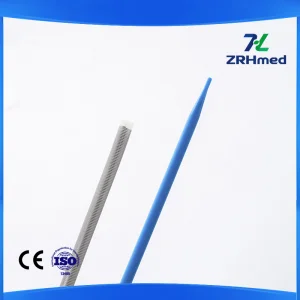
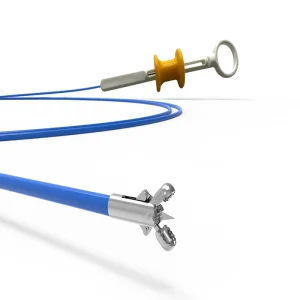
Navigating severe anatomic retroflexion—such as within the gastric fundus or the duodenal bulb—exerts extreme lateral shearing on the delivery catheter. Our insertion tubes feature high-tensile, wound flat-wire stainless steel coils enveloped in an ultra-low friction hydrophilic PTFE/FEP composite. This reduces insertion friction within the endoscope working channel (2.8mm to 3.7mm), safeguarding scope channel liners against scoring while guaranteeing that rotational torque applied at the operating handle transfers instantaneously to the distal clip head without lag.
From critical acute vascular hemostasis to planned endoscopic tissue apposition, OEM clip configurations are customized to match diverse procedural anatomies.
Spurting arterial hemorrhage (Forrest Ia) and oozing lesions (Forrest Ib) require rapid mechanical compression with clamping forces capable of sealing submucosal vessels up to 2.0 mm in diameter. The responsive tactile feedback of our rotatable clip allows clinicians to orient the jaws across the bleeding axis, clamping both the arterial core and adjacent fibrotic tissue, preventing immediate re-bleeding and reducing surgical conversion rates.
Following widespread endoscopic mucosal resection (EMR) or endoscopic submucosal dissection (ESD) in the colon, closing large mucosal gaps shields the exposed muscularis propria from intraluminal digestive enzymes and fecal bacteria. This prophylactic full-thickness mucosal apposition reduces delayed post-polypectomy bleeding (DPPB) and delayed perforations from 8.5% down to less than 1.2%, particularly in high-risk patients on antiplatelet therapy.
Accidental micro-perforations occurring during challenging therapeutic colonoscopies or deep submucosal dissections demand immediate, airtight luminal closure to avert peritonitis. High-retention force TTS clips grip deep submucosal and muscularis layers, approximating torn serosal margins. When deployed in conjunction with endoloops or negative pressure suction devices, full mechanical closure replaces urgent open surgical laparotomies.
Our manufacturing complex bridges biomedical conceptualization with mass cleanroom scalability, empowering global distributors and multinational brands to launch proprietary endoscopic portfolios.
Equipped with ultra-precision CNC micro-machining centers, Japanese Sodick wire EDM, and automated Swiss turn-lathes, our tooling division manufactures stamping dies with sub-micron tolerances (±0.002 mm). We support custom jaw serration profiles, asymmetrical teeth designs, specialized clip opening widths, and customized actuation handles engineered for ergonomic grip friction and trigger comfort.
Hemoclip latch mechanisms, nitinol link pins, and transmission cables are assembled under ISO Class 8 (Class 100,000) cleanroom conditions. Continuous environmental monitoring of airborne particulate counts, relative humidity, and microbial bioburden prevents particulate contamination. Automated vision inspection systems verify jaw alignment, locking tooth engagement, and sheath crimp integrity at 100% duty cycles.
We supply more than bare hardware. Our regulatory affairs department delivers complete technical documentation packages satisfying EU MDR 2017/745, US FDA 510(k), Health Canada, and Brazilian ANVISA requirements. Private-label OEM packaging options include custom peelable Tyvek medical pouches, sterile barrier blister packs, branded carton printing, multi-language Instructions for Use (IFU), and comprehensive sterilization validation certificates.
Anticipating next-generation clinical workflows, robotic-assisted endoscopy, and advanced materials science in endoscopic closure technology.
Standardization of 360-degree true continuous rotation without tip torque backlash. Integration of high-yield surgical stainless steels (316LVM) and superelastic nitinol core-pins for consistent 16 mm spans within 2.8 mm scope working channels.
R&D engineering focusing on magnesium alloy (Mg-Zn-Ca) and high-strength polylactic acid (PLLA/PLGA) composite clip arms. Designed to provide high initial retention strength for 10-14 days before undergoing benign resorption, mitigating mucosal ulceration and retained metal hazards.
Smart mechanical deployment architectures combining dual-action opposing claws and integrated elastic silastic traction bands. Enables counter-traction tissue exposure during deep submucosal tunneling (POEM, STER, EFTR) to halve resection procedural times.
Miniaturized electromagnetic and tendon-driven hemoclips tailored for autonomous endoluminal robotic platforms. Features ultra-low activation friction profiles and embedded RFID identification tags for automated surgical logging.
Critical answers for hospital procurement specialists, brand managers, and medical distributors evaluating hemoclip OEM partnerships.
Our standard hemoclip devices are engineered with an outer catheter sheath diameter of 2.6 mm, making them 100% compatible with standard gastrointestinal endoscopes possessing a minimum instrument channel diameter of 2.8 mm. For pediatric gastroscopes and ultra-thin bronchoscopes, custom OEM slim-sheaths with 1.8 mm to 2.2 mm catheter diameters are available via custom ODM manufacturing runs.
Accidental release is prevented through our dual-stage tactile actuation safety lock. The operating handle requires a deliberate, calibrated secondary tensile pull exceeding 22 N to fracture the release break-ring. Prior to crossing this distinct tactile resistance threshold, the clip can be opened, closed, and rotated freely more than ten consecutive cycles without risk of premature structural release.
All finished devices are sterilized via industrial Ethylene Oxide (EtO) in accordance with ISO 11135. Every production batch undergoes parametric release testing, including biological indicator (Bacillus atrophaeus) verification and gas chromatography residue testing (confirming EtO & ECH levels remain strictly below 4.0 mg/device per ISO 10993-7). Full sterilization certificates accompany each lot.
Yes. We provide complete turnkey OEM private-label personalization. This encompasses custom pantone color matching for plastic handle moldings, laser engraving of client logos and model numbers onto the metal clip collar, customized peelable medical Tyvek pouches, localized language packaging (IFU inserts), and customized outer cartons with compliant GS1-128 and UDI (Unique Device Identification) 2D DataMatrix barcodes.
Our standard sterile barrier packaging utilizes medical-grade DuPont Tyvek heat-sealed to thermoformed PETG/peelable film trays. The packaging has undergone accelerated aging tests equivalent to a 3-year sterility shelf life under ASTM F1980 protocols, validated by bubble emission leak testing (ASTM F2096), seal peel strength testing (ASTM F88), and dye penetration inspection (ASTM F1929).
For standard off-the-shelf catalog configurations under our factory branding, our MOQ starts at 100 units with an dispatch window of 7 to 10 working days. For custom OEM/ODM branded runs requiring specialized handle colors, bespoke packaging, or custom working lengths (e.g., 1650 mm for upper GI, 2300 mm for colonoscopy), typical MOQs start at 1,000 units with an initial tooling and mass production cycle of 4 to 6 weeks.
Explore our extended series of sterile endoscopic hemostats, ERCP sphincterotomes, and negative pressure endourology access systems.