
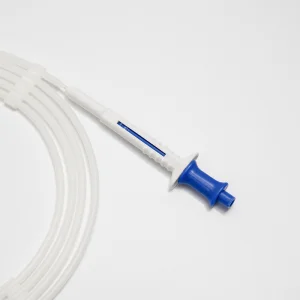
Verified single-use endoscopic instruments engineered for compatibility across standard working channels (2.8mm & 3.2mm) with global regulatory compliance.
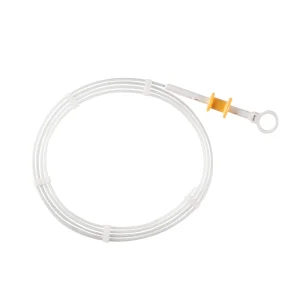
A rigorous examination of clinical mechanical hemostasis dynamics, shift from reusable applicators to single-use micro-assemblies, and international regulatory shifts.
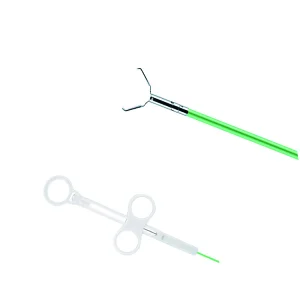
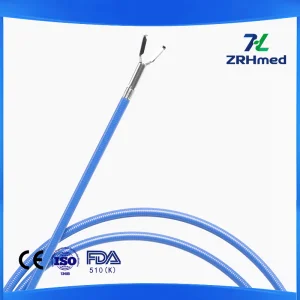
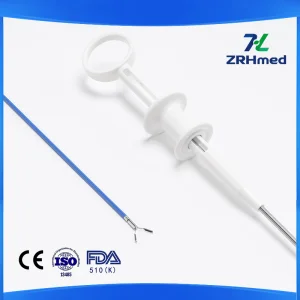
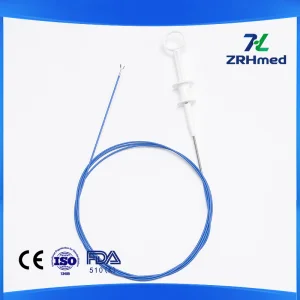
Over the past decade, the global gastroenterology landscape transitioned decisively away from manual-reloadable hemoclip systems toward sterile, factory-assembled, single-use endoscopic hemoclips. Historically, reprocessing clip applicators posed immense bioburden risks, cross-contamination vectors, and micro-fatigue failures mid-procedure. Modern single-use endoclips integrate the delivering catenary, control cable, and deployable jaw in a hermetically sealed blister, ensuring calibrated clamping force and instantaneous clinical deployment without intraoperative friction.
The regulatory barrier to entry has escalated worldwide. With the full enforcement of EU MDR 2017/745, endoscopic hemoclips are classified under Class IIb implantable/invasive instruments due to mucosal retention duration exceeding 30 days in cases of post-EMR defect closure. Global distributors face acute margin compression and supplier attrition if OEM manufacturers lack ISO 13485:2016 infrastructure, clinical evaluation reports (CER), finite element analysis (FEA) on jaw shear stresses, and validated residual EO (Ethylene Oxide) degassing data.
Driven by early colorectal cancer screening guidelines and the rapid global uptake of Endoscopic Submucosal Dissection (ESD) and Endoscopic Mucosal Resection (EMR), the consumption density of hemoclips per therapeutic procedure has increased from 1.2 units to 4.8 units. Immediate prophylaxis against delayed post-polypectomy bleeding (PPB) in high-risk patients receiving anticoagulants necessitates clips with exceptional tactile feedback, 360-degree bidirectional rotational torqueability, and repeatedly openable mechanisms.
How Jiangxi ZhuoRuiHua Medical leverages integrated manufacturing clusters to provide Tier-1 multinationals with verifiable precision and competitive pricing structures.
Endoscopic hemoclips demand ultra-pure surgical stainless steel (e.g., 17-7PH precipitation hardening alloy or 304V spring temper) and shape-memory Nitinol components. Chinese precision micro-machining centers utilize multi-axis Swiss-type CNC micro-lathes and electrical discharge machining (EDM) capable of achieving tolerances within ±0.005mm. This guarantees that each clip jaw maintains sufficient plastic deformation threshold to avoid premature fatigue fracture during forceful tissue compression.
From injection molding of ergonomic control handles to catheter extrusion and final ultrasonic washing, operations are concentrated in automated, localized clusters. Microscopic assembly takes place in Class 100,000 (ISO 8) cleanrooms with automated optical inspection (AOI) evaluating jaw symmetry, burr-free surfaces, and cable retention tensile loads exceeding 35 Newtons. This end-to-end integration eradicates multi-vendor markups and slashes OEM production cycles by 40%.
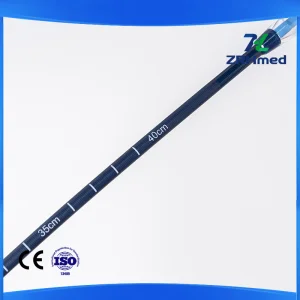
Global medical brands leverage our customizable platforms: from custom sheath lengths (1650mm, 1950mm, 2300mm for enteroscopy), hydrophilic coatings, laser-etched depth banding, custom jaw profiles (serrated alligator jaws, wide-span 11mm/16mm configurations) to localized packaging in blister trays, Tyvek sterilization pouches, and custom-branded IFUs compliant with EU MDR and US FDA 21 CFR Part 820 requirements.
| Technical Specification | Standard GI Hemoclip | Wide-Jaw Hemoclip (ZRH Specification) | Clinical Clinical Value |
|---|---|---|---|
| Jaw Opening Span | 9.0 mm – 11.0 mm | 12.0 mm – 16.5 mm | Secure closure of expansive EMR/ESD mucosal defects |
| Working Length Options | 1650 mm / 1950 mm | 1950 mm / 2300 mm | Optimized for upper endoscopy, colonoscopy, & enteroscopy |
| Repositionability | Single-lock closure | Multi-cycle reopenable prior to final lock | Allows repositioning for accurate target vessel targeting |
| Working Channel Min. | 2.8 mm | 2.8 mm | Frictionless passage even in retroflexed endoscope positions |
| Torque Transmission | Approximate 1:0.7 | True Synchronous 1:1 Bidirectional 360° | Precise anatomical alignment without catheter loop resistance |
In-depth procedural analysis of how mechanical clips ensure tissue apposition, prevent delayed hemorrhage, and seal luminal micro-perforations.
Peptic ulcer bleeding (Forrest Class Ia spurting, Ib oozing, and IIa non-bleeding visible vessels) demands instantaneous coaptive compression. In emergency gastrointestinal triage, thermal coagulation carries perforation risks on thin duodenal walls. Hemoclips deploy mechanical force directly over the bleeding vessel lumen, inducing immediate hemostasis without inducing transmural thermal tissue necrosis, significantly reducing 30-day rebleeding rates.
Large colorectal lesions (≥20 mm) resected via piecemeal EMR present elevated hazards of delayed post-polypectomy bleeding (DPPB) and post-polypectomy syndrome. Complete mucosal defect approximation utilizing wide-span rotatable hemoclips isolates underlying exposed muscularis propria and vascular stumps from digestive enzymes and bacterial load, achieving a clinical risk reduction of delayed hemorrhage by over 70%.
Accidental full-thickness transmural defects occurring during complex endoscopic dissections (ESD or POEM) require rapid closure to avert tension pneumoperitoneum and emergency surgical intervention. Preloaded, rotatable endoscopic hemoclips function as non-surgical mechanical sutures, enabling endoscopists to bridge mucosal margins and grasp submucosal layers to seal the defect air-tight under negative suction control.
Essential guidance for procurement directors, distributors, and supply-chain officers navigating product life cycles and tender parameters.
Next-generation R&D is focused on zinc and magnesium-based bioresorbable metallic alloys that degrade safely following tissue re-epithelialization, eliminating long-term foreign-body retention risks while preserving magnetic resonance imaging (MRI) conditional safety profiles.
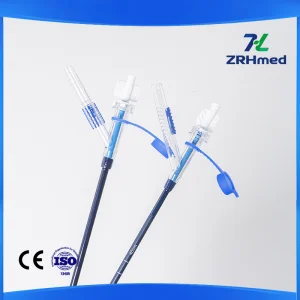
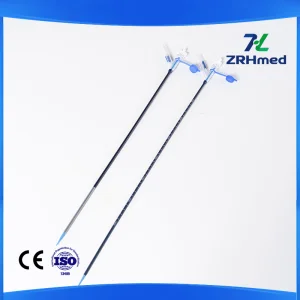
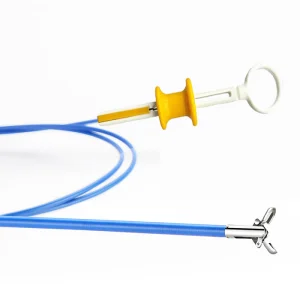
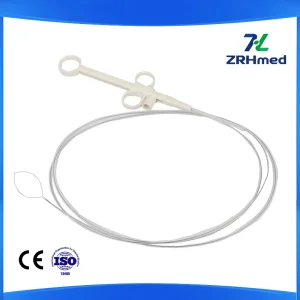
Hospital chains and regional procurement bodies are actively consolidating SKUs. Sourcing teams prioritize single-source suppliers capable of supplying biopsy forceps, injection needles, polypectomy snares, and hemoclips simultaneously to optimize shipping logistics and customs compliance.
Procurement dossiers must present validated test verification data: Accelerated Ageing Studies (ASTM F1980), Seal Integrity Verification (ASTM F88), Bioburden Bio-compatibility tests (ISO 10993 series), and validated EO gas sterilant extraction reports under ISO 11135.
Clinicians demand devices that minimize intraoperative failure rates. A clip that fails to release or prematurely disengages inflates procedural time, scope wear, and instrument waste. Procurement departments increasingly prioritize procedural success rates over pure unit FOB price.
Direct answers addressing manufacturing validation, operational parameters, and private-label customization inquiries.
Complete single-use gastrointestinal and endourology systems engineered to meet international clinical standards and tender requirements.
Connect with our OEM technical team to evaluate batch samples, audit testing documentation, and configure private-label specifications.