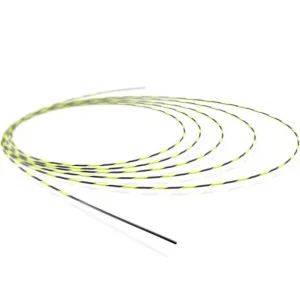
Manufactured under cleanroom standards for GI interventional diagnostics and safe operative oncology.
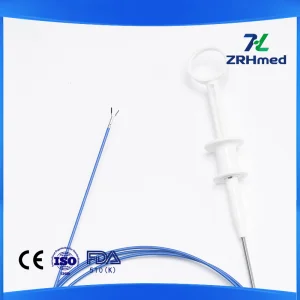
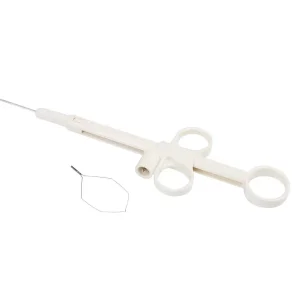
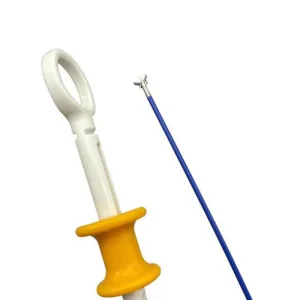
Navigating the shift toward ambulatory colorectal cancer screening, value-based healthcare, and rigid ISO 13485 cleanroom validation.
Global incidence of early gastrointestinal neoplasia and widespread adoption of preventative colonoscopy programs have transformed EMR snares from basic interventional tools to mission-critical single-use consumables. Healthcare systems demand tools that reliably eliminate the risk of micro-perforation while keeping secondary hemorrhage rates below target clinical thresholds.
Global medical brand holders are pivoting toward OEM and private-label contract manufacturing partnerships in Asia that guarantee multi-source raw material redundancy. Medical-grade 304V drawn stainless wire, high-tensile braided nitinol cores, and medical fluoropolymer sheathing are strictly validated to overcome geopolitical and regional distribution risks.
The roll-out of the European MDR (EU 2017/745), alongside the stringent FDA 510(k) review parameters and MDSAP protocols, requires OEM factories to provide SKU-level biological safety verifications under ISO 10993, residual EO evaluation under ISO 11135, and documented tactile deployment force tests.
From thin-wire cold snaring to intelligent electrocautery synchronization, endoscopic devices are rapidly iterating to maximize tissue yield and preserve histological margins.
Traditional hot polypectomy snares (typically 0.40mm - 0.47mm braided wire) carry substantial risks of post-polypectomy electrocoagulation syndrome. State-of-the-art cold EMR procedures utilize dedicated drawn 0.23mm - 0.30mm micro-wires that execute a clean guillotine-style mechanical shearing through the submucosal plane without applying thermal energy, preserving clear specimen lateral margins for histopathology.
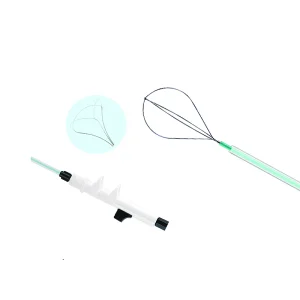
Combining braided strands with high-elasticity nitinol pre-curved frame elements allows modern EMR snares to open reliably even when the endoscope tip is fully retroflexed in the right colon or gastric fundus. The dynamic opening resistance prevents slippage off flat, sessile, or laterally spreading tumors (LST-G / LST-NG) under 20mm.
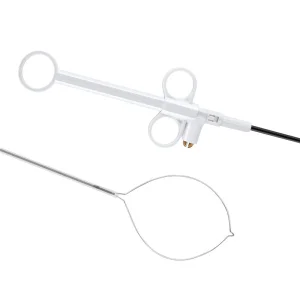
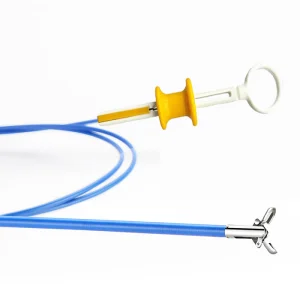
Catheter friction reduction represents a primary engineering objective. Co-extruded fluoropolymer (PTFE/FEP) sheaths maintain ultra-low kinetic friction coefficients when traversing multi-loop flexed scopes, ensuring tactile feel is translated from the surgeon's three-ring handle directly to the distal tip.
Specific snare geometries tailored to variable anatomical zones, lesion mortologies, and procedural protocols.
In the ascending colon and cecum, where the muscularis propria is thin and perforation dangers peak, thin-wire oval snares (10mm - 15mm) allow precise mucosal grasping without entrapping the deeper muscular wall layers, enabling safe piecemeal or en bloc cold resection.
The rich vascularization and bile/pancreatic enzyme exposure of the duodenum require specialized electrocautery snares with reinforced hexagonal shapes. These provide steady lateral anchoring against folds, combining coagulation with cutting cycles to prevent delayed bleed complications.
Submucosal injection lift followed by cap-assisted or standard EMR demands a snare with exceptional radial elasticity and anti-slip surface properties, delivering stable entrapment of raised dysplastic lesions across esophageal squamous-columnar junctions.
Anticipating industrial transformations across precision robotics, micro-sensors, and biocompatible material science.
Integration of miniature impedance and thermal sensors within the snare catheter interface to communicate with surgical RF generators, modulating cut-vs-coag energy instantaneously based on tissue thickness and resistance profiles.
Advanced low-surface-energy coatings preventing coagulum adherence to the cutting wire during repeat resection cycles, eliminating device exchange pauses and optimizing operating room time economy during extensive multilesion procedures.
Micro-actuated distal articulators providing multi-axis deflection directly at the catheter tip, allowing independent snare loop rotation and pitch alignment unconstrained by the endoscopic working channel line of sight.
How our vertically integrated facility resolves common supply chain vulnerabilities: regulatory audits, batch dimensional drift, and packaging failure modes.
Essential manufacturing, design, and regulatory information for OEM medical accessory importers.
Hot EMR snares feature heavier braided wire (usually 0.40–0.48mm) optimized for conducting high-frequency electrosurgical current without rapid wire thermal degradation, balancing cutting and coagulation to prevent immediate bleeding on larger polyps. Cold snares utilize ultra-fine monofilament or special compact braided wire (0.20–0.30mm) engineered for sharp mechanical resection of polyps <10mm without electrical heating, reducing post-procedure delayed bleeding and thermal transmural perforation risks.
Our OEM EMR snares utilize multi-filar braided stainless steel or nitinol torque-transmitting internal drive wires encased within an axially stiff, radial-compliant PTFE/PE outer catheter. This architecture provides near 1:1 torque transmission, allowing the clinician to orient the resection loop over flat lesions even when the colonoscope shaft undergoes multiple tight bends or retroflex maneuvers.
We provide full configuration flexibility: working length (typically 1800mm to 2300mm), outer catheter diameter (1.8mm to 2.4mm), loop geometries (oval, crescent, hexagonal, diamond), loop width (6mm to 35mm), wire cross-section profiles (flat-wire, thin-round, micro-braided), handle styling (ergonomic 3-ring, power-assisted slider), and sterile pouch branding according to regional regulatory specifications.
Shipments can be provided with full Certificates of Analysis (CoA), ethylene oxide (EO) residual sterilization reports under ISO 11135, ISO 13485 quality system certificates, particulate inspection logs, and raw material biocompatibility documentation under ISO 10993 (cytotoxicity, systemic toxicity, sensitization, irritation).
Standard white-label products feature an initial test MOQ starting from 500 units per specification. Custom private-label packaging and specific wire dimension OEM projects generally have a baseline run of 1,000 to 2,000 units. Standard manufacturing turnaround ranges between 3 to 5 weeks from tooling sign-off, supported by safety inventory agreements for long-term contract partners.
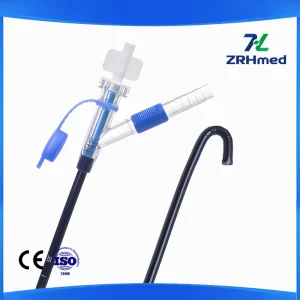
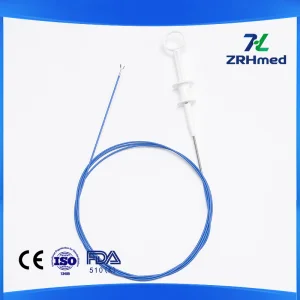
Explore complementary devices for endoscopic retrieval, hemostatic closure, and urological access.