Explore high-volume OEM/ODM consumables manufactured to exacting tolerances for gastroenterology, pulmonology, and endourological interventions worldwide.
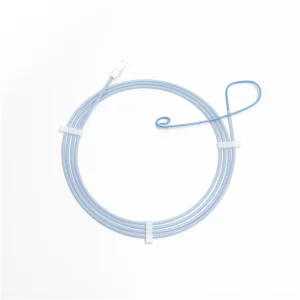
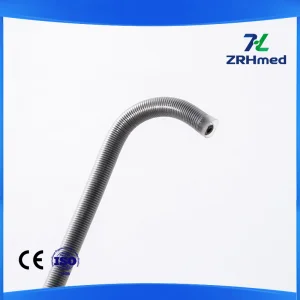
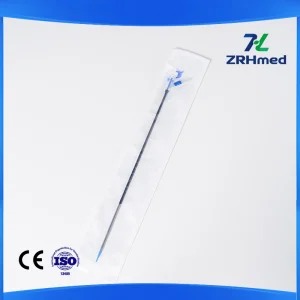
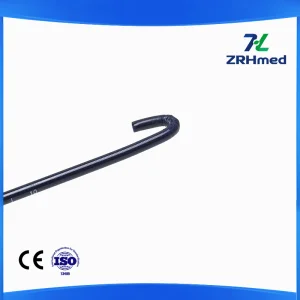
In interventional gastroenterology, endoscopic hemoclips represent the definitive frontline therapy for upper and lower gastrointestinal hemostasis, mucosal defect reconstruction post-EMR/ESD, and perforations. As medical device brands and hospital distributors transition away from high-overhead European and American contract fabricators, the modern Chinese OEM medical device cluster has evolved into an agile, highly automated manufacturing center capable of sub-micron precision stamping, 100% torque transmission fidelity, and full MDR compliance.
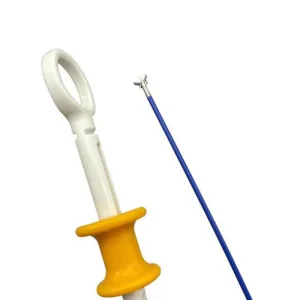
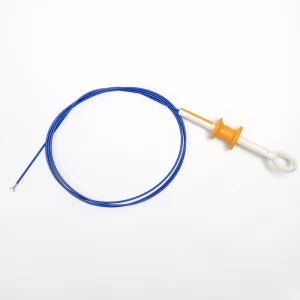
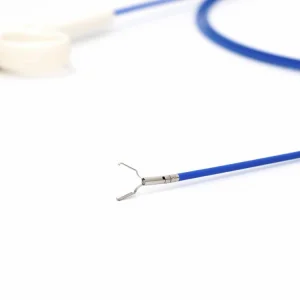
The biomechanical success of a hemoclip relies on tensile integrity and metallurgical resilience under persistent physiological peristalsis. Our OEM hemoclip production uses medical-grade SUS304V and custom precipitation-hardened Ph17-7 stainless steel alloys, paired with laser-micromachined jaw prongs.
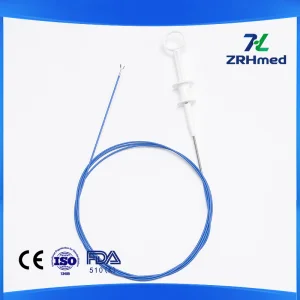
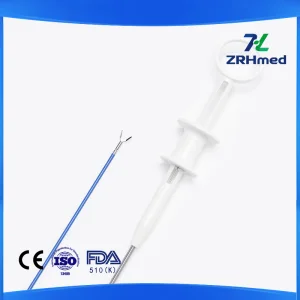
Clinicians encounter tortuous anatomical challenges such as retroflexed fundus ulcers or hidden lesions along the lesser curvature. Our applier sheath integrates a multilayer, high-density braided flat-wire drive cable that eliminates rotational lag, tactile backlash, and unwanted whipping.
Traditional hemoclip factories often rely on manual assembly, risking variations in wire crimping, release resistance, and release forces. Our Industry 4.0 infrastructure utilizes Swiss CNC multiaxis turning centers and automated vision-guided robotic micro-assembly cells.
Mechanical hemostasis using endoscopic clips has surpassed chemical sclerotherapy and thermal coagulation as the first-line therapeutic standard in upper and lower gastrointestinal acute emergencies. Discover how our customizable OEM hemoclip portfolio aligns with complex diagnostic and surgical interventions.
For spurting arterial hemorrhage (Forrest Ia) and oozing lesions (Forrest Ib) associated with severe peptic ulcer disease or Dieulafoy's lesions, our wide-span clips (11mm–16mm) deliver immediate mechanical vessel compression. By isolating and sealing the underlying feeder vessel against muscularis propria, hemostasis occurs instantaneously without causing deep wall necrosis.
Endoscopic mucosal resection and endoscopic submucosal dissection often leave broad mucosal defects vulnerable to delayed perforation and secondary bleeding up to 14 days post-op. Our long-arm, high-opening clips enable full-thickness mucosal opposition across broad post-resection margins, drastically lowering post-polypectomy complication rates.
Inadvertent colonic or esophageal transmural perforations require immediate, air-tight defect closure to avert emergency laparatomy, peritoneal sepsis, or mediastinitis. The rotatable design and reliable repositioning capability enable endoscopists to bridge mucosal tears and approximate serosa with high clinical confidence.
In addition to active hemostasis, our hemoclips serve as bio-inert radiopaque markers. They demarcate the distal or proximal margins of dysplastic gastrointestinal tumors prior to targeted laparoscopic resection or stereotactic body radiation therapy (SBRT), providing fluoroscopic and visual landmarks.
Our OEM cleanroom facilities deliver comprehensive variations tailored to clinical application, scope channel diameter, and procedural anatomy. Review our core mechanical specifications below.
| Clip Series Model | Jaw Opening Span | Working Length | Channel Outer Ø | Rotational Freedom | Target Clinical Indications | OEM Customization Scope |
|---|---|---|---|---|---|---|
| ZRH-HC-090S (Standard) | 9.0 mm | 1650 mm / 1950 mm | ≥ 2.6 mm | 360° Continuous Sync | Duodenal Ulcers, Gastric Varices, Pediatric GI | Handle Ergonomics, Sheath Color Marking |
| ZRH-HC-110M (High-Span) | 11.0 mm | 1950 mm / 2300 mm | ≥ 2.8 mm | 360° Bi-Directional | Colonic Polypectomy, Dieulafoy Lesions, Mallory-Weiss | Sheath Lubricity, Laser-Etched Lot Codes |
| ZRH-HC-135L (Deep Margin) | 13.5 mm | 1950 mm / 2300 mm | ≥ 2.8 mm | 360° High Torque 1:1 | Broad ESD Mucosal Defect Closures, Stricture Marking | Jaw Teeth Texture, Spring Wire Modulus |
| ZRH-HC-160X (Macro-Closure) | 16.0 mm | 2300 mm / 2700 mm | ≥ 3.2 mm / 3.7 mm | Synchronous Torque Drive | Transmural Perforations, Diverticular Hemorrhage | Packaging Blister Configuration, OEM Labeling |
* Custom lengths up to 3000 mm available for enteroscopy and deep bowel interventions. Clip retention lifetime ranges from 1 to 4 weeks before spontaneous trans-anal excretion.
Modern B2B medical supply procurement demands more than just low labor costs. Global medical brands, government procurement agencies, and specialized distributor networks require absolute delivery predictability, uninterrupted raw material supply, and rigorous quality tracking.
Unlike assembly-only contractors that outsource component fabrication, our Jiangxi production facility operates localized deep drawing, coil-spring winding, micro-laser welding, injection molding, and catheter extrusion in-house. This prevents supply shocks from external metal suppliers and stabilizes batch costs.
Every single OEM hemoclip lot passes three distinct verification stages to guarantee zero clinical failure: Incoming Quality Control (IQC) with optical spectrometers; In-Process QC (IPQC) checking clamping force and 360-degree rotation under 180° tortuosity; and Final QC (FQC) validating seal integrity and sterile packaging.
Spanning multiple 10,000-square-meter Class 100,000 (ISO Class 8) cleanrooms, our manufacturing base outputs more than 500,000 single-use endoscopic assemblies every month. This industrial volume accommodates multinational brand tenders, emergency hospital re-stocks, and seasonal order surges without lead-time disruption.
Expanding into strictly regulated territories demands complete, transparent, and auditable regulatory documentation. We support B2B clients with comprehensive Technical Documentation files, biological evaluation reports, and QMS certificates.
Certified Medical Device Quality Management System covering full design & manufacturing lifecycle.
Class IIb Annex IX conformity assessments, complete with clinical evaluation reports (CER) & post-market surveillance plans.
Substantial equivalence testing against predicate hemoclips, bio-compatibility files, and FDA device master files.
Fully validated Ethylene Oxide (EtO) sterilization processes, ensuring bio-burden clearance with <4µg/g residual limits.
Complete cytotoxicity, sensitization, systemic toxicity, and hemocompatibility testing verification.
Whether you need private-label contract manufacturing, bespoke ergonomic handle designs, or direct regional hospital tender support, our engineering team manages the complete device transition lifecycle.
Complete brand localization options tailored to target regions. We manage multi-language Tyvek pouch designs, customized carton artwork, IFUs (Instructions for Use), and localized barcodes compliant with GS1 and UDI requirements.
Participating in regional Ministry of Health or large hospital network procurement tenders requires granular documentation. We supply full technical comparison sheets, testing protocols, factory audit access, and formal authorization letters.
Bring proprietary concepts to life through our Design for Manufacturability (DFM) engineering group. Our team refines clip mechanics, adjusts catheter durometers, and customizes jaw teeth geometries to match your clinical team's vision.
The interventional endoscopy landscape is rapidly advancing toward scarless natural orifice transluminal endoscopic surgery (NOTES), full-thickness resection closure, and intelligent hemostasis. Our R&D center actively pioneers next-generation mechanical closure technology.
To eliminate long-term foreign-body retention risks and unwanted clip sloughing artifacts during subsequent follow-up scans, our metallurgical labs are formulating bioresorbable magnesium-zinc alloys and degradable poly-L-lactic acid (PLLA) retention clips that degrade safely post-epithelialization.
Addressing large perforations (>20mm) and bariatric sleeve endoscopic revisions, our future line expands to through-the-scope continuous helicoidal anchors and over-the-scope multi-clip platforms that bridge tissue margins under significant mechanical tension.
Integrating micro-pressure feedback within ergonomic actuation handles to give clinicians quantitative tactile metrics of tissue thickness, preventing accidental arterial shearing during premature firing in friable, inflamed mucosal tissue beds.
Get immediate, transparent answers to technical, commercial, and regulatory inquiries commonly raised by procurement directors and OEM brand partners.
Our hemoclips are fabricated utilizing high-grade surgical stainless steel alloys (SUS304V and custom precipitation-hardened Ph17-7), processed through progressive multi-stage cold stamping dies. This specialized metallurgical formulation produces high yield tensile strength, ensuring that once the clip jaws close and lock across vascular or mucosal tissue, they consistently sustain a mechanical clamping force exceeding 8.5 Newtons. The prong tips feature micro-serrated teeth that secure mucosal traction without cutting through friable tissue, preventing premature displacement or delayed hemorrhage.
Rotational lag and whipping are typically caused by torsional elasticity in low-cost coiled wire cables. Our applier drive shaft utilizes an advanced, multi-layer braided flat-wire drive core housed inside an extruded low-friction PTFE/fluoropolymer outer sheath. This design delivers a 1:1 torque transmission ratio, meaning a 90-degree twist at the operator's handle produces a precise 90-degree rotation at the clip tip, even when navigated through a gastroscope retroflexed to 180 degrees.
Yes. Our multi-action repositionable clip mechanism allows endoscopists to advance, open, close, and re-open the clip jaws multiple times to verify exact tissue positioning and mucosal bite size prior to final deployment. The final deployment requires an intentional, distinct pull-stroke past a tactile resistance threshold that gives the clinician clear physical and audible feedback that the clip has detached securely.
We provide full B2B regulatory dossier packages. For clients registering under the European Medical Device Regulation (EU MDR 2017/745), we provide Class IIb Technical Documentation files, including ISO 10993 biocompatibility reports (cytotoxicity, sensitization, irritation, systemic toxicity), ISO 11135 sterilization validation files (demonstrating EtO residuals below 4 μg/g), packaging transit validation (ASTM D4169), and full Clinical Evaluation Reports (CER). For US FDA 510(k) applicants, we supply substantial equivalence bench test matrices, predicate comparison files, and device risk analyses per ISO 14971.
Standard OEM private-label production runs for established SKUs are typically delivered within 25 to 35 business days from final artwork confirmation. For new custom tooling or DFM mechanical modifications, prototyping takes approximately 14 business days, with production mold qualification taking 30 days. Our standard private-label MOQ starts at 500 to 1,000 units per SKU, packaged in medical-grade Tyvek peel pouches and ethylene-oxide sterilized with an accredited 3-year shelf-life validation (accelerated and real-time aging data available).
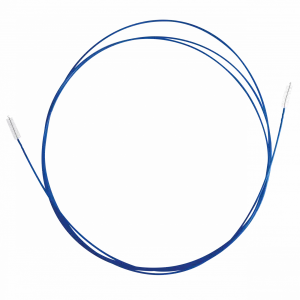
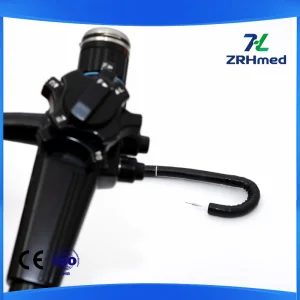
Complete your supply portfolio by pairing our rotatable hemoclips with matched diagnostic, retrieval, and reprocessing accessories from our integrated production lines.