Explore our core portfolio of CE-certified single-use consumables engineered for gastroenterology, ERCP, and endourology procedures worldwide.
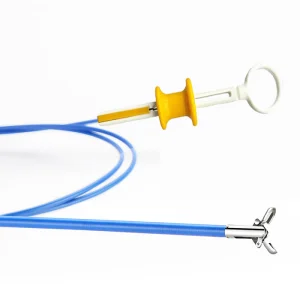
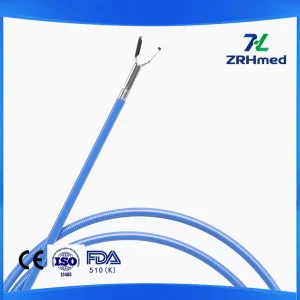
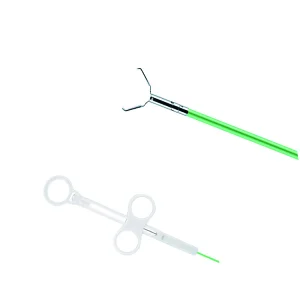
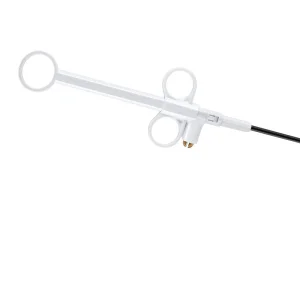
Navigating the transition from reusable clipping apparatuses to advanced, pre-loaded repositionable mechanical clips in international gastroenterology and endoscopic surgery.
Acute Gastrointestinal (GI) hemorrhage remains one of the most critical medical emergencies encountered in gastroenterology, presenting high morbidity rates and substantial clinical costs. Historically managed through thermal coagulation or injection therapy (such as diluted epinephrine), clinical consensus has decisively shifted toward mechanical hemostatic clips (hemoclips) as primary therapy. Hemoclips achieve immediate vessel tamponade without inducing thermal tissue necrosis, significantly mitigating the hazard of secondary transmural perforation.
The global endoscopic hemoclip market is experiencing a profound expansion, projected to surpass USD 750 million by 2030, driven by the escalating prevalence of peptic ulcer disease (PUD), colonic diverticular bleeding, and the universal adoption of advanced therapeutic procedures such as Endoscopic Mucosal Resection (EMR) and Endoscopic Submucosal Dissection (ESD). As complex resections expand into deeper mucosal planes, prophylactic clipping of extensive mucosal defects has proven indispensable for precluding delayed hemorrhage.
Early-generation clips were notoriously hindered by rigid mechanical constraints: once opened, they could not be re-closed or rotated inside a tortuous colon, leading to premature misfiring, clip wastage, and extended operative duration. Modern endoscopic clinical standards demand 360-degree synchronized bidirectional rotation and multi-cycle reopen/reposition capabilities. Clinicians must possess the tactile autonomy to trial-clamp target lesions, confirm definitive microvascular capture under direct visualization, and redeploy if alignment is suboptimal.
Simultaneously, heightened global vigilance surrounding cross-contamination and the onerous reprocessing logistics of reusable clip delivery systems have catalyzed an irreversible transition to pre-mounted, single-use sterile hemoclips. Hospital purchasing consortia and ambulatory surgical centers (ASCs) throughout North America, Europe, Latin America, and the Asia-Pacific region now prioritize validated single-use solutions that completely eliminate autoclave cycle dependencies and guarantee out-of-the-box mechanical reliability.
Uncompromising micro-machining tolerances, vertical supply-chain integration, and stringent ISO 13485 cleanroom manufacturing delivering unmatched efficiency.
Hemoclip arms and release cams require dimensional tolerances tighter than ±0.005mm. Our in-house multi-axis Swiss longitudinal lathes and ultra-precision stamping dies fabricate miniature interlocking clip components from surgical-grade 17-7 PH stainless steel and shape-memory Nitinol alloys.
By unifying spring tube coiling, PTFE/FEP sheath extrusion, cam manufacturing, cleanroom packaging, and ethylene oxide (EO) sterilization under a single manufacturing perimeter in Jiangxi, we eliminate intermediate markup layers and accelerate tooling iteration cycles by up to 65%.
Zero-defect philosophy governed by full-lot traceability from raw ingot spectroscopy to automated visual inspection. Every hemoclip batch undergoes stringent mechanical stress testing simulating retroflexed endoscope tortuosity within calibrated test channels.
From non-variceal upper gastrointestinal bleeding to prophylactic lower GI defect repair, hemoclip engineering must align with specific tissue density and access channel tortuosity.
In peptic ulcers exhibiting spurting or oozing arterial hemorrhage, rapid clip deployment is paramount. The clip jaws must exhibit elevated initial closing pressure (>5.0 N) to penetrate fibrotic ulcer bases and securely compress the bleeding vessel against the muscularis propria without shearing friable margins.
Large mucosal defects (>20mm) following wide-field endoscopic resections in the ascending colon require wide-opening hemoclips to approximate mucosal edges. Clips must maintain mechanical retention for 14 to 28 days until complete granulation tissue re-epithelialization occurs.
Iatrogenic perforations during complex colonoscopies require immediate, airtight mechanical closure. Utilizing repositionable hemoclips in conjunction with endoloops or dual-channel scopes enables tension-free zipper-closure techniques across broad defect gaps.
| Performance Parameter | Conventional Legacy Clips | ZRH Med Next-Gen Repositionable Hemoclip | Clinical / Procurement Significance |
|---|---|---|---|
| Axial Rotation Mechanism | Unidirectional or high-friction rotation (>45° lag) | Synchronous 360° Bidirectional Rotation (1:1 torque) | Allows precise alignment with longitudinal bleeding fissures in retroflexed stomach/colon positions. |
| Repositioning / Re-opening | Irreversible single actuation; cannot re-open | Multi-Cycle Re-openable (>10 full open/close cycles) | Eliminates misplaced clip disposal; reduces hospital consumables expenditure by up to 30%. |
| Jaw Opening Span | Fixed 7.5mm – 9.0mm | Modular 9mm, 11mm, 13mm, and 16mm Spans | Enables complete cross-spectrum coverage from micro-ulcers to large-diameter ESD mucosal defects. |
| Residual Clip Head Length | Extended rigid head (>12.5mm inside lumen) | Ultra-Short Compact Footprint (<7.8mm) | Minimizes lumen obstruction and avoids accidental dislodgement when deploying subsequent clips nearby. |
| MRI Compatibility | Uncertified or potential ferromagnetic displacement | MR Conditional Validated (1.5T and 3.0T Static Fields) | Patient safety assurance for subsequent oncologic or neurological magnetic resonance diagnostics. |
| Working Channel Flexibility | High insertion resistance when endoscope is looped | Ultra-Flexible Flat-Wire Braided Outer Sheath | Smooth passage through severely angulated duodenal and cecal positions without channel scraping. |
Essential validation documentation, international audit readiness, and customizable OEM/ODM specifications required by premier hospital distributor networks.
Under the European Medical Device Regulation (EU MDR 2017/745), endoscopic hemoclips are classified as Class IIb implantable devices if retained beyond 30 days, or Class IIa surgically invasive single-use devices. This regulatory rigor mandates exhaustive technical documentation, comprehensive Post-Market Clinical Follow-up (PMCF) plans, and uncompromised risk assessments per ISO 14971.
Jiangxi ZhuoRuiHua Medical supplies our international distribution partners with comprehensive SKU-level technical dossiers, complete biocompatibility test batteries (cytotoxicity, sensitization, intracutaneous reactivity per ISO 10993-1), and residual ethylene oxide dissipation verification curves (ISO 10993-7), expediting fast-track national importation clearances across North America, the European Union, Southeast Asia, and South America.
To empower brand owners to maintain competitive differentiation in regional hospital tenders, our engineering department provides tailored configuration options:
Anticipating the technological disruptions shaping endoscopic surgical intervention over the forthcoming decade.
While current stainless steel clips spontaneously detach and pass harmlessly through the gastrointestinal tract within weeks, occasional premature detachment or delayed retention poses clinical dilemmas. Next-generation R&D explores bioresorbable magnesium-calcium alloy matrices that provide required clamping integrity during critical healing phases, followed by controlled enzymatic dissolution.
Currently, closing multiple defects requires withdrawing and reloading individual catheter sheaths for each clip. Engineering efforts focus on multi-fire endoscopic clippers capable of delivering 3 to 5 successive hemoclips through a single device introduction, dramatically curtailing total procedural time during complex endoscopic resection cases.
Integrating nanoscale therapeutic coatings (such as anti-fibrinolytic or accelerated tissue-repair agents) directly onto the inner clamping jaw surfaces offers localized pharmacologic reinforcement. Concurrently, micro-sensor integration capable of measuring tissue impedance offers real-time feedback on vessel occlusion adequacy.
Direct, technical answers addressing OEM specifications, regulatory transfers, minimum order volumes, and clinical batch validation.
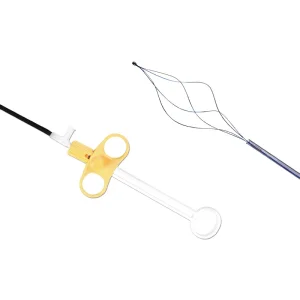
Expand your hospital supply tenders with our complementary, single-use biopsy, retrieval, and lithotripsy access instruments.
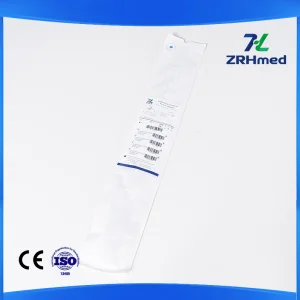
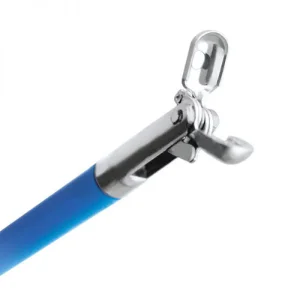
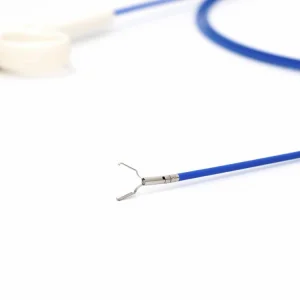
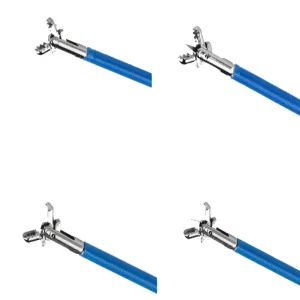
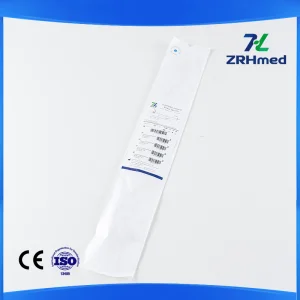
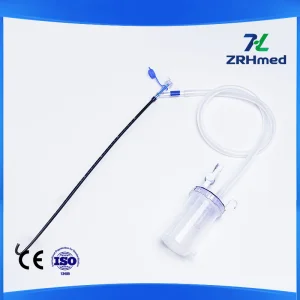
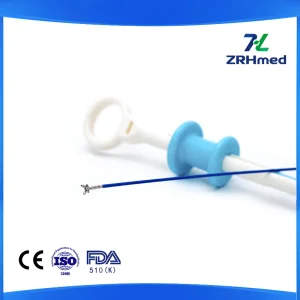
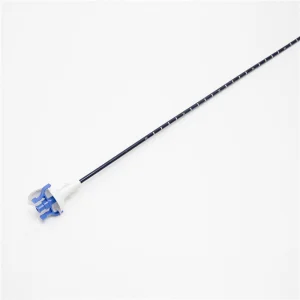
Upgrade your endoscopic consumable margins with verified ISO 13485 and CE MDR production. Receive comprehensive device technical files, custom OEM sample kits, and factory-direct volume tier pricing within 24 hours.
