
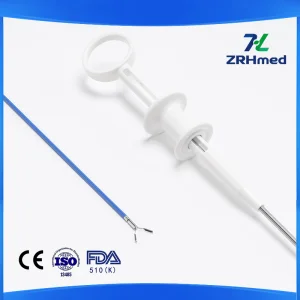
Explore our core single-use endoscopic instruments engineered in-house under ISO 13485:2016 governance for gastroenterology, pulmonology, and urological interventions.
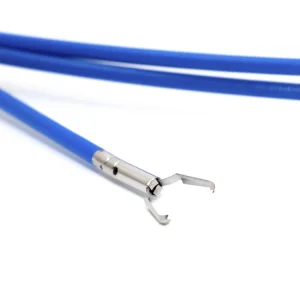
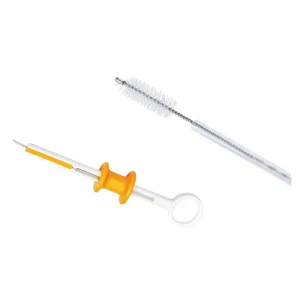
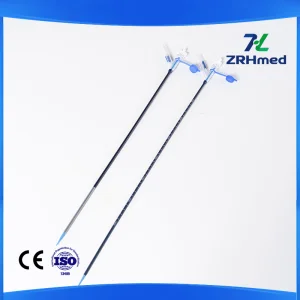
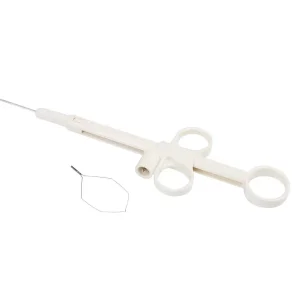
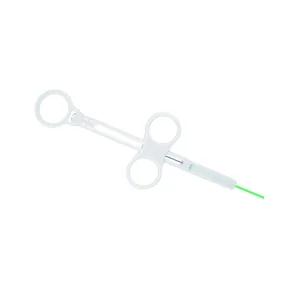
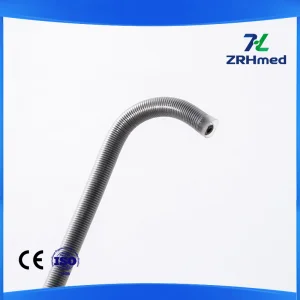
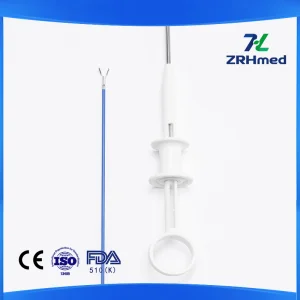
Comprehensive market analysis on why gastroenterology departments, group purchasing organizations (GPOs), and private-label medical suppliers are consolidating their supply chain around specialized Chinese precision factories.
In modern interventional endoscopy, gastrointestinal (GI) bleeding management represents one of the highest-stakes clinical challenges. Acute non-variceal upper gastrointestinal bleeding (NVUGIB), peptic ulcer perforations, mucosal defects post-endoscopic mucosal resection (EMR), and full-thickness defects following endoscopic submucosal dissection (ESD) necessitate absolute mechanical closure reliability. For decades, Western tier-1 multinational corporations commanded over 85% of the global market for disposable hemoclips, endoclips, and mechanical closure devices, commanding premium pricing that placed unsustainable pressure on healthcare reimbursement schemes and hospital operating margins.
However, over the last seven years, the global sourcing matrix has undergone a structural transformation. Medical device brand owners, regional distributors across Europe, North America, Latin America, and Southeast Asia are increasingly partnering directly with specialized OEM hemoclip factory china suppliers. This transition is not merely rooted in cost optimization; it is driven by dramatic advances in micro-mechanical engineering, metallurgical automation, and rigorous adherence to international regulatory frameworks such as EU MDR (2017/745) and US FDA 510(k) clearances.
Healthcare providers globally face shrinking DRG tariffs. Distributors require high-performance, cost-effective hemoclips that match OEM precision without prohibitive tier-1 branded pricing structures.
Direct Chinese manufacturing houses manage progressive stamping, laser micro-welding, catheter extrusion, and automated cleanroom packing in a unified compound, shortening lead cycles by 60%.
Chinese OEM suppliers now provide end-to-end technical dossier support, biocompatibility studies (ISO 10993), packaging stability (ISO 11607), and residual EO analysis (ISO 11135).
As single-use devices eliminate cross-contamination concerns and eradicate the expensive, labor-intensive reprocessing associated with legacy reusable systems, the demand for single-use endoscopic hemoclips has surged. Modern surgical endoscopy requires devices that provide exceptional tactile responsiveness, smooth channel advancement through complex retrograde flexions, and unfailing tissue retention throughout the natural wound-healing cascade.
A deep examination into micro-machining tolerances, torque transmission mechanics, repeat repositionability, and release lock dynamics.
One of the primary frustrations reported by endoscopists during critical bleeding management is catheter whipping and delayed rotational torque. When working inside an acutely flexed endoscope (e.g., retroflexion in the gastric fundus or duodenal bulb), frictional resistance along the working channel can cause traditional control wires to bind.
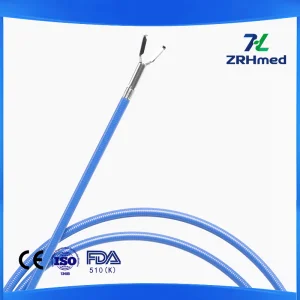
Our OEM hemoclip engineering utilizes a multi-strand, high-tensile 304V stainless steel braided torque-cable jacketed in ultra-low friction fluoropolymer (PTFE/FEP). This proprietary transmission core ensures a verified 1:1 torque ratio. When the clinician rotates the ergonomic proximal handle, the distal clip jaws respond with instantaneous, sub-degree angular fidelity, preventing sudden stored-energy releases that can lacerate delicate submucosal layers or dislodge blood clots.
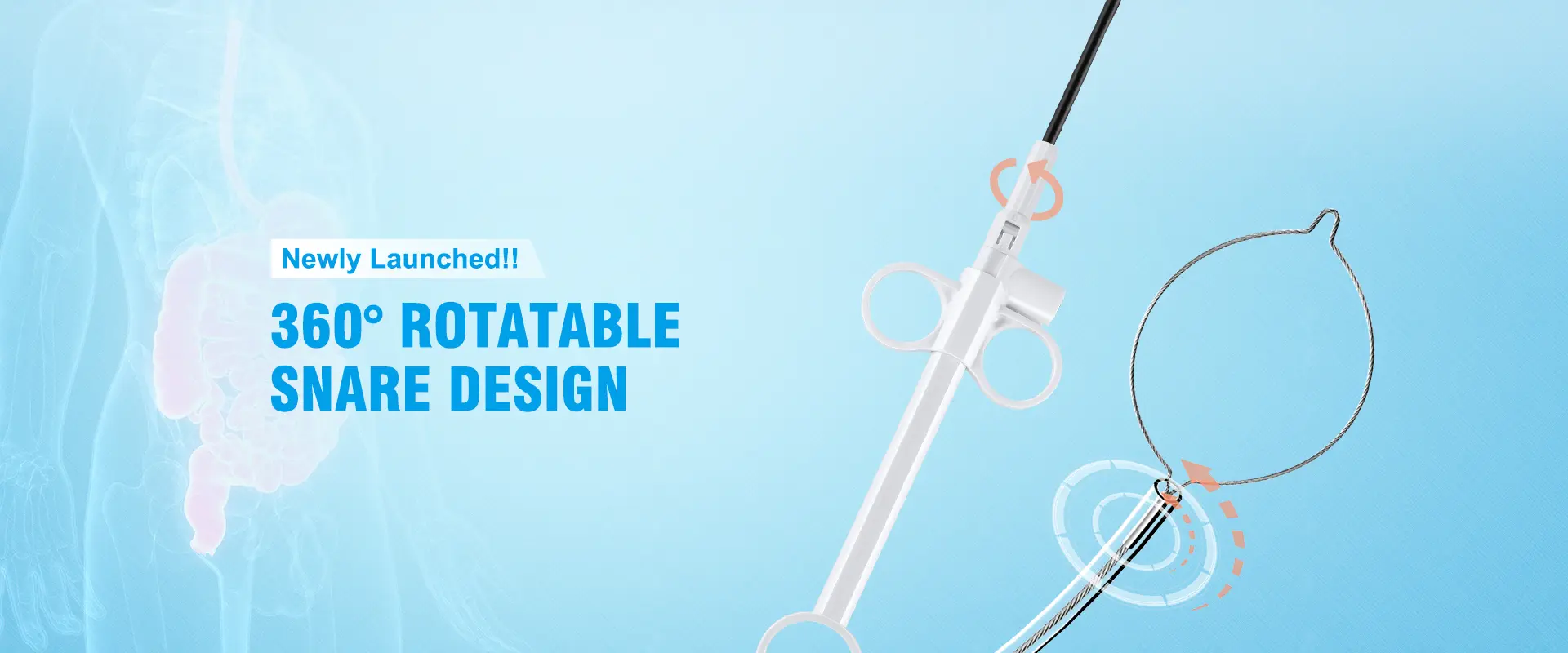
Our OEM/ODM hemoclip production lines follow a strict triple-stage mechanical framework engineered to deliver foolproof tactile feedback to the interventionist:
Global procurement teams must match device specifications directly to the procedure type and endoscope channel constraints. Below is the operational baseline manufactured by our Jiangxi factory:
| Clip Specification Parameter | Standard GI Hemoclip (9-11mm) | Wide-Opening Macro Clip (13-16mm) | Rotatable Pediatric / Slim Scope Clip |
|---|---|---|---|
| Target Scope Channel (Ø) | ≥ 2.8 mm | ≥ 2.8 mm / 3.2 mm | ≥ 2.0 mm / 2.2 mm |
| Working Length (mm) | 1650 mm / 1950 mm / 2300 mm | 1950 mm / 2300 mm | 1650 mm / 1950 mm |
| Jaw Opening Width | 9.0 mm – 11.5 mm | 13.0 mm – 16.0 mm | 8.0 mm – 9.5 mm |
| Claw Arm Angle | 90° / 135° | 135° / 160° | 90° / 120° |
| Repositionability | Yes (Unlimited before release) | Yes (Full lock prevention) | Yes (Low-friction drive) |
| Rotation Mechanism | 360° Synchronous Continuous | 360° Synchronous Continuous | 360° Indexed Rotation |
| MRI Safety Profile | MR Conditional (3.0 Tesla verified) | MR Conditional (3.0 Tesla verified) | MR Conditional (3.0 Tesla verified) |
| Sterilization Method | Ethylene Oxide (EO, ISO 11135) | Ethylene Oxide (EO, ISO 11135) | Ethylene Oxide (EO, ISO 11135) |
Strategic frameworks for medical device importers, brand licensors, and national distributors looking to replace tier-1 monopolies with certified Chinese OEM manufacturers.
Procuring medical disposables from overseas manufacturers carries innate operational, legal, and clinical responsibilities. For high-volume consumables like hemostasis clips, a single lot failure in a hospital ICU or endoscopy suite can inflict catastrophic reputational damage on a distributor. Professional B2B procurement teams must look past attractive ex-factory unit pricing and rigorously audit the quality assurance architecture, metallurgical traceability, and regulatory readiness of their chosen Chinese manufacturing partner.
Every clip arm must utilize high-grade surgical stainless steel (ASTM F138 / ISO 5832-1) or medical Nitinol. Our factory subjects every raw coil to spectrometer alloy validation, tensile yield analysis, and cytotoxicity profiling under ISO 10993-5.
Manual microscopy alone cannot guarantee zero-defect release across multi-million clip volumes. Our assembly incorporates high-speed CCD vision systems that inspect clip claw symmetry, deburring smoothness, and pin crimping tolerances to ±5 microns.
Consumables feature medical-grade DuPont Tyvek® thermoformed blister packaging. Every lot is subjected to dye penetration leak testing (ASTM F1929), seal peel strength analysis (ASTM F88), and 3-year accelerated aging stability testing.
At Jiangxi ZhuoRuiHua Medical Instrument Co., Ltd., we recognize that our distribution partners possess distinct commercial identities in their target territories. Our OEM/ODM program accommodates extensive bespoke engineering and branding configurations:
Why modern medical purchasing directors prefer an integrated end-to-end consumables manufacturer over fragmented component brokers.
A major systemic risk for medical distributors is supplier fragmentation. Managing separate vendor relationships, quality audits, shipping manifests, and customs clearances for biopsy forceps, polypectomy snares, cytology brushes, and hemostatic clips dramatically drives up landing costs and complicates MDR vigilance traceability. ZhuoRuiHua Medical provides a unified, coherent endotherapy ecosystem that covers six primary clinical pathways:
Single-use cold biopsy forceps, oval and alligator cup geometries, with or without centering needles, alongside hot biopsy forceps and high-cell-yield mucosal cytology brushes.
Disposable rotatable hemoclips with variable claw openings (9mm to 16mm), sclerotherapy endoscopic injection needles, and mechanical endoclips for emergency arterial bleeding control.
Braided and monofilament polypectomy cold snares, crescent and hexagonal snares for precise polyp transection, and submucosal lift injection needles engineered for viscous solutions.
Triple-lumen disposable sphincterotomes, superelastic hydrophilic guidewires with radiopaque distal tips, and multi-side-hole biliary drainage catheters for stenting procedures.
Negative-pressure suction ureteral access sheaths (Y-shaped and bendable designs) preventing intrarenal pressure spikes, paired with tipless nitinol stone extraction baskets.
Dual-ended endoscopic channel cleaning brushes, valve brushes, and custom high-impact polycarbonate bite blocks designed for patient safety and scope shaft protection.
Eliminating market access barriers under rigorous global medical device regulatory frameworks.
The regulatory landscape for medical devices is facing unprecedented scrutiny. The transition from MDD to EU MDR (Regulation EU 2017/745) in Europe has raised the technical bar for Class IIa and Class IIb implantable and transient surgical tools. Similarly, national authorities including the US FDA, ANVISA (Brazil), NMPA (China), and SFDA (Saudi Arabia) enforce exhaustive clinical evaluation, post-market surveillance (PMS), and process validation demands.
As a seasoned Chinese medical device manufacturer, ZhuoRuiHua Medical provides global partners with complete regulatory file readiness, dramatically reducing the time-to-market for registration dossiers:
Fully certified quality management system audited by international notified bodies, covering design, manufacturing, inspection, and post-market tracking.
Comprehensive Clinical Evaluation Reports (CER) and Notified Body-cleared technical documentation structured according to MDR 2017/745 guidelines.
Strict ethylene oxide sterilization cycle validation guaranteeing residual EO and ECH levels fall well beneath the 4 mg/device safety threshold.
Dedicated documentation teams providing direct support for local Ministry of Health registrations, certificates of free sale (CFS), and apostille notarizations.
Pioneering mechanical closure systems: From bioresorbable magnesium clipping arms to multi-fire continuous reload engines and AI-assisted endoluminal robotic delivery.
The field of gastrointestinal surgery and endoluminal therapeutic endoscopy is progressing rapidly toward minimally invasive, organ-preserving procedures. Conventional hemoclips, while highly effective for mechanical tissue compression, retain certain technical limitations: they remain as permanent metallic foreign bodies until spontaneous sloughing occurs (typically 2 to 8 weeks post-implantation), occasionally interfering with subsequent diagnostic MRI evaluations or post-resection histological assessments.
ZhuoRuiHua Medical’s advanced R&D engineering division is actively pursuing three milestone innovations set to redefine the global hemoclip landscape:
Developing bioabsorbable metallic clip arms engineered from biocompatible magnesium-zinc matrices. The clip delivers rigid mechanical clamping for 14 days, followed by controlled enzymatic resorption that leaves a cleanly healed, foreign-body-free mucosal scar.
Engineering a micro-magazine distal applier capable of discharging 3 to 5 independent hemoclips without catheter withdrawal. This reduces operative time during large-area ESD defect closures by more than 45%, significantly lowering anesthesia duration.
Designing digital haptic feedback linkages and ultra-flexible micro-articulation shafts tailored for integration with robotic flexible endoscopy platforms (such as the Monarch or Ion systems), expanding clinician reach in deep bariatric and endoluminal procedures.
Comprehensive technical and commercial answers addressing key criteria raised by medical device buyers, regulatory consultants, and private label importers.
Complete your tender and distribution range with our verified clinical instruments designed for seamless compatibility with all flexible endoscopy systems.
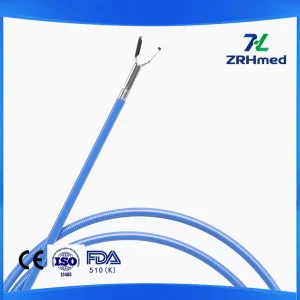
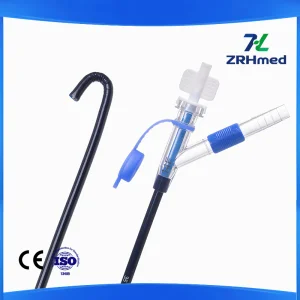
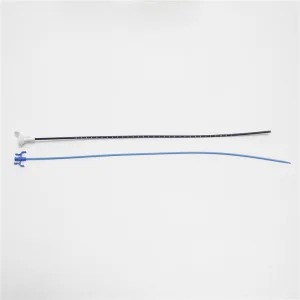
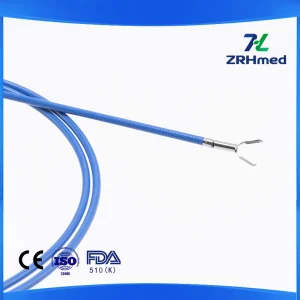
Partner directly with Jiangxi ZhuoRuiHua Medical Instrument Co., Ltd. Request engineering drawing reviews, confidential non-disclosure agreements (NDAs), sterile evaluation sample packs, or comprehensive CE MDR registration dossiers.