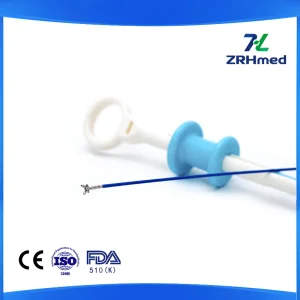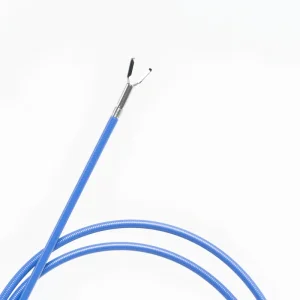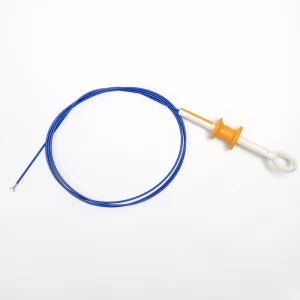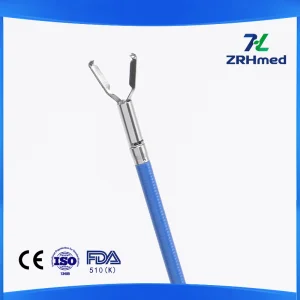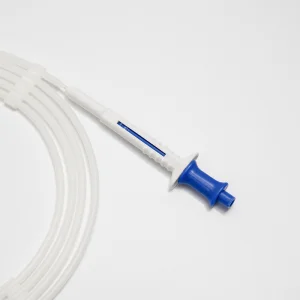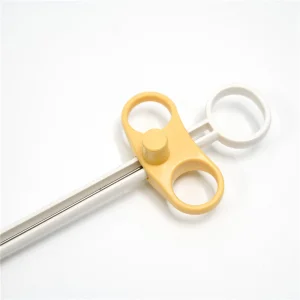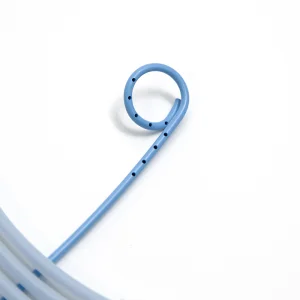
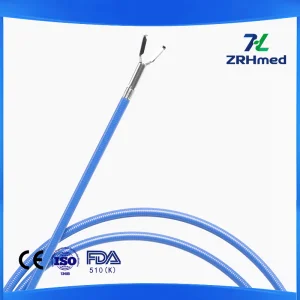
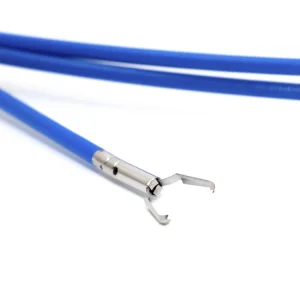
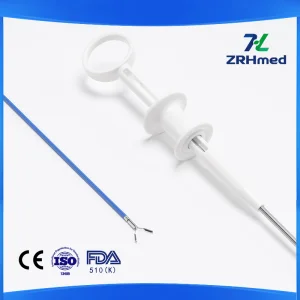
Endoscopic Rotatable Disposable Hemoclip (MDR CE)
View Specifications
Explore standard OEM/ODM configurations ready for hospital tenders, distributor partnerships, and proprietary branded packaging.
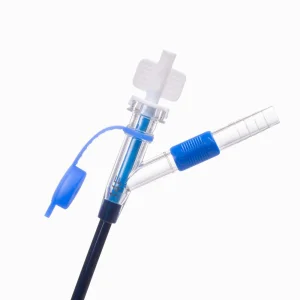
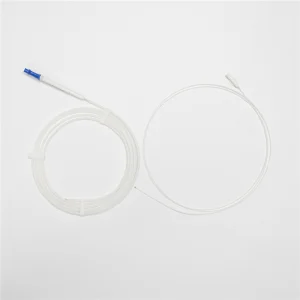
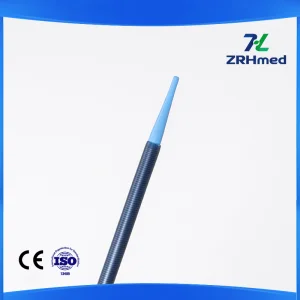
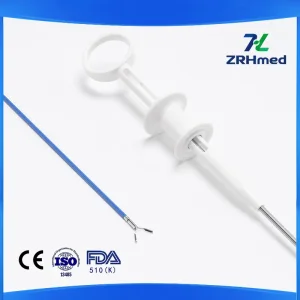
Endoscopic Retrograde Cholangiopancreatography (ERCP) remains one of the technically most demanding interventional endoscopic disciplines. Zebra guidewires represent the foundational link between successful cannulation and rapid therapeutic delivery. Our facility engineers OEM solutions balancing elastic nitinol core dynamics with bonded fluoropolymer striped sheaths.
Strategic shift toward single-use biliary access platforms to eliminate hospital-acquired cross-infections and streamline procurement pipelines.
The post-reprocessing era demands absolute sterile integrity. Single-use guidewires completely eliminate the bioburden risks associated with complex multi-lumen reprocessed catheters, aligning with strict FDA and EU safety alerts.
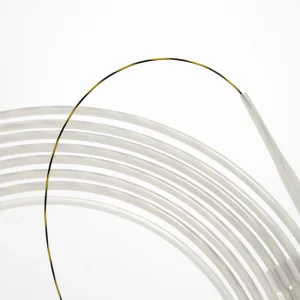
Prolonged cannulation attempts directly increase the risk of Post-ERCP Pancreatitis (PEP). Zebra guidewires engineered with high-contrast dual-color helical jackets allow rapid visual tracking of wire motion, rotational velocity, and depth.
Global medical brands face ongoing margin pressure from single-source tier-1 conglomerates. Partnering with an autonomous OEM cleanroom facility delivers significant bill-of-materials rationalization without compromising metallurgical integrity.
A rigorous examination of wire architecture: core metallurgy, outer polymer extrusion, hydrophilic chemistry, and radiopaque distal tipping.
Constructed using advanced medical-grade nickel-titanium alloy, precision centerless-ground to maintain continuous 1:1 torque responsiveness and kink resistance during steep bile duct navigation.
Biocompatible, heat-shrink PTFE / polyurethane jacket displaying clear black-and-white (or blue-and-white) alternating bands for endoscopic visualization of wire translation and rotational behavior.
Photo-cured or thermally-bonded lubricious hydrophilic coating on the distal 5 cm to 10 cm tip segment drastically diminishes insertion force while traversing tortuous biliary strictures and stones.
Tungsten-doped polymeric tip or platinum distal marker coil ensures high-definition visibility under continuous C-arm fluoroscopy, eliminating positioning guesswork.
Configured to meet the rigorous physical requirements of both basic biliary decompression and complex salvage interventions.
In cases of surgically altered anatomy or periampullary diverticulum, the straight or angled soft hydrophilic tip enables atraumatic cannulation without inducing submucosal false routing.
When negotiating high-grade cholangiocarcinoma or pancreatic head masses, the combination of columnar stiffness and low surface friction facilitates easy balloon dilation catheter exchange.
Smooth surface properties prevent device sticking during repetitive exchanges of sphincterotomes, stone retrieval baskets, lithotripsy balloons, and plastic/metal biliary stents.
Streamlined technical files, audit-ready facilities, and full qualification testing to fast-track your domestic registrations.
Complete Design History Files, biocompatibility reports (ISO 10993), aging studies (ASTM F1980), and EO sterilization validation records (ISO 11135) readily available for rapid dossier compilation.
From peel pouches and protective wire dispensers to fully custom branded carton artworks, barcodes (UDI/GS1 compliant), and multilingual instructions for use (IFU).
State-of-the-art production in Jiangxi, China, backed by a comprehensive ISO 13485 quality management framework with total batch traceability from raw nitinol wire to finished product.
Continuous evolution in surface engineering, non-destructive optical inspection, and digitalized guidewire interaction.
Migrating from standard dip-coating to UV-cured nano-covalent crosslinking. This eliminates particulate generation during tortuous cannulation, substantially lowering foreign body micro-embolism concerns.
Integrating micro-welded transition zones between stiff nitinol mid-shafts and ultra-soft distal tips, maximizing pushability without sacrificing distal atraumatic characteristics in high-risk patients.
Exploratory R&D on distal micro-sensors providing real-time tactile force feedback and bile duct mucosal pressure monitoring to prevent iatrogenic perforation.
Essential answers regarding dimensions, coatings, sterilization cycles, and regulatory timelines.
Our standard ERCP zebra guidewires are manufactured in 0.025-inch and 0.035-inch outer diameters, with working lengths typically configured at 260 cm, 450 cm, and 480 cm to support both short-wire and long-wire exchange platforms. Custom lengths and outer profiles can be engineered based on customer DHF specifications.
We execute standard simulated-use cycle testing across tortuous glass anatomical models in accordance with FDA guidance and ISO 11070. Particulate matter testing is performed via light obscuration and microscope counting to ensure particulate counts remain well below established pharmacopeial and regulatory threshold limits.
Yes. While black-and-white is industry standard, we offer customized color extrusions including high-contrast endoscopic surgical blue/white combinations, as well as distinct distal tip pitch lengths to optimize visual speed markers during high-framerate video endoscopy.
Our standard single-use zebra guidewires undergo Ethylene Oxide (EO) sterilization under strict ISO 11135 validation, achieving a Sterility Assurance Level (SAL) of 10^-6. Accelerated and real-time aging studies support a validated shelf life of 3 to 5 years in sterile Tyvek/film heat-sealed pouches.
Pre-production evaluation samples are typically dispatched within 7–10 business days. For customized private-label brand production (including tooling for custom packaging ring dispensers and box printing), mass production timelines range from 4 to 6 weeks following design freeze.
Combine your guidewire procurement with our comprehensive range of high-performance endoscopic accessories.