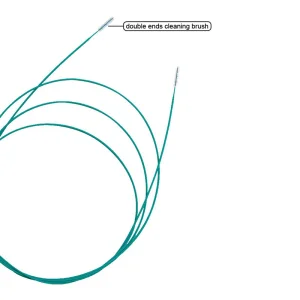
Engineered to satisfy stringent EU MDR 2017/745 biocompatibility standards and clinical protocols practiced across Paris digestive oncology centers.
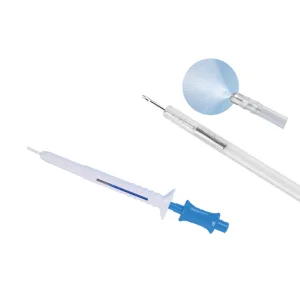
Paris Digestive Diagnostic OEM Single Use Medical Endoscopic Spray Catheter Pipe
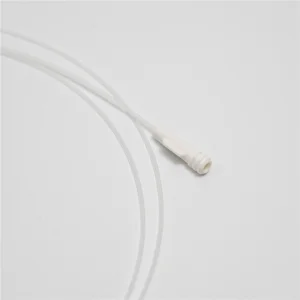
CE Certified Disposable Endoscopic Spray Catheter for Digestive Chromoendoscopy (Paris Clinical Grade)
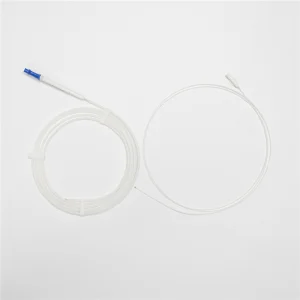
ODM Endoscopic Interventional Bronchoscopy Disposable Spray Pipe Catheter for French Pulmonology Hubs
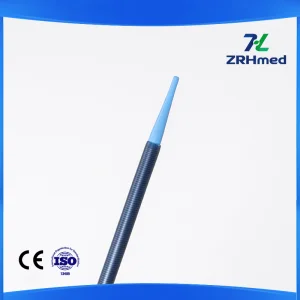
CE Certified Negative-Pressure Disposable Suction Ureteral Access Sheath (Advanced Endourology)
A comprehensive examination of how academic medical centers, centralized purchasing groups (GHT), and evolving diagnostic paradigms shape catheter demand in France’s metropolitan capital.
The Assistance Publique – Hôpitaux de Paris (AP-HP), incorporating over 38 public hospitals including Cochin, Saint-Louis, and Pitié-Salpêtrière, constitutes the largest university hospital trust in Europe. Paris clinicians handle significant caseloads of early gastrointestinal neoplasia, requiring high-resolution chromoendoscopy for pit-pattern analysis (Kudo classification) and Paris classification lesion staging.
Disposable spray catheters are essential consumables in these suites to disperse contrast stains like indigo carmine (0.1% to 0.4%) and acetic acid across early Barrett’s esophagus and high-risk colorectal mucosal surfaces.
Hospital purchasing across Paris has migrated into integrated GHT frameworks and central buying agencies like UniHA and Resah. French biomedical engineers and central sterilisation managers prioritize single-use instruments that eliminate cross-contamination risk, validated to ISO 11135 EO sterilization standards.
B2B suppliers must provide standardized documentation, technical passports, and audited class 100,000 cleanroom packaging to clear public tender qualification matrices.
With the Agence Nationale de Sécurité du Médicament (ANSM) enforcing strict compliance with the Medical Device Regulation (EU MDR), Paris clinics reject unverified supply lines. Every spray catheter exported to the French market requires rigorous biocompatibility under ISO 10993 (cytotoxicity, systemic toxicity, and hemocompatibility).
Suppliers must demonstrate precise batch traceability, burst pressure thresholds over 40 PSI, and documented particle migration metrics.
Analyzing the international market expansion, shift from reusables to single-use disposables, and technological convergence across interventional oncology.
The global endoscopic consumables sector is experiencing steady growth, projected at a CAGR of 6.8% through 2032. Chromoendoscopy and local aerosolized delivery catheters account for a growing portion of diagnostic accessories due to worldwide population aging and proactive national colorectal cancer screening initiatives across the European Union.
While electronic narrow-band imaging (NBI) and optical chromoendoscopy have advanced, physical spray chromoendoscopy remains the clinical gold standard across European gastrointestinal associations (ESGE) for evaluating subtle serrated adenomas and defining lateral margins before endoscopic mucosal resection (EMR) and endoscopic submucosal dissection (ESD).
Global production ecosystems have evolved from rudimentary manual tubing cuts to automated medical micro-extrusion lines. Modern spray catheters utilize high-grade PTFE (polytetrafluoroethylene), FEP (fluorinated ethylene propylene), or multi-durometer PEBAX blends. These polymers yield critical physical traits: superior column strength (pushability), minimal kink radius inside tortuous retroflexed endoscopes, and ultra-smooth lubricious surfaces that will not scour endoscope biopsy channels.
At the distal nozzle, picosecond laser micromachining crafts complex spiral and swirl micro-orifices (40 µm to 120 µm) capable of transforming low manual syringe injection pressure into a controlled 360-degree radial mist without macro-droplet pooling.
| Parameter | Traditional Spray Tubing | Advanced Micro-Machined Spray Catheter |
|---|---|---|
| Spray Pattern | Linear jet stream / coarse droplets | Conical 360° micro-atomized mist |
| Internal Lumen Uniformity | ± 0.05 mm variance | ± 0.008 mm precision extrusion |
| Channel Friction Coeff. | > 0.15 (uncoated plastic) | < 0.04 (PTFE / FEP low friction) |
| Hydrostatic Burst Rating | < 2.5 Bar | ≥ 6.0 Bar validated burst resistance |
How endoscopists and interventional pulmonologists in Paris deploy spray catheters across routine and advanced diagnostic algorithms.
At centers like Institut Gustave Roussy and Hôpital Cochin, gastroenterologists screen high-risk gastroesophageal reflux patients for Barrett’s esophagus dysplastic transformation. Using a 2.3 mm spray catheter via a high-definition endoscope, clinicians mist 1.5% to 2.0% acetic acid directly onto the columnar epithelium.
The spray catheter provides rapid, homogeneous coverage without mechanically injuring the delicate mucosal layer, allowing immediate visualization of mucosal aceto-whitening patterns to target precise biopsies.
Long-standing inflammatory bowel disease (IBD) patients undergoing surveillance colonoscopy across Saint-Antoine and Bichat hospitals require thorough evaluation to detect flat, non-polypoid dysplastic lesions. Spray catheters enable uniform chromoendoscopy using 0.2% indigo carmine across all four colon quadrants.
The catheter’s flexible sheath allows smooth navigation through haustral folds, eliminating blind spots and assisting in identifying subtle mucosal elevations before malignant progression.
In Parisian thoracic units (e.g., Hôpital Tenon), flexible bronchoscopy demands targeted application of 2% lidocaine solutions onto vocal cords and tracheobronchial bifurcations. Spray catheters designed for 2.0 mm working channels deliver an aerosolized plume, minimizing coughing reflexes and procedural trauma.
In cases of diffuse capillary oozing following endobronchial biopsy, these catheters are also utilized to deliver diluted cold saline, epinephrine, or liquid hemostatic compounds directly to the lesion bed.
Inside the manufacturing processes of our Jiangxi cleanroom facilities, supporting Paris distributors with consistent dimensional stability and verified lot-by-lot quality.
The manufacturing process begins with medical-grade PTFE resin extruded into micro-sheaths under closed-loop laser gauge monitoring. This guarantees a concentricity metric exceeding 95% and wall thickness tolerance within ± 0.015 mm. For French clinicians, uniform wall construction prevents elongation or ovalization under intense tortuosity.
The distal tip integrates a proprietary micro-dispersion head ultrasonically welded or thermal-bonded to eliminate tip detachment risk under injection pressure. Every SKU is hydrostatically pressure-tested to ensure zero joint breakdown during procedural handling.
In full adherence to ISO 13485:2016 quality management systems, devices progress through three automated QC gates: raw resin spectrometry inspection, in-process concentricity and burst pressure verification, and final optical inspection for particulate contamination.
Sterilization is executed via Ethylene Oxide (EO) under validated cycles complying with ISO 11135:2014, securing an assured Sterility Assurance Level (SAL) of 10-6. Residual ethylene oxide and ethylene chlorohydrin concentrations are verified well below 1.0 µg/g, fully satisfying French ANSM environmental and patient health mandates.
Overcoming supply disruptions, volatile air freight, and private-label packaging requirements for medical device distributors across the European Union.
Direct weekly air cargo channels connect our central manufacturing facilities with Paris Charles de Gaulle (CDG) and Paris-Orly logistics hubs. Importers benefit from expedited customs clearance via authorized European logistics representatives, keeping typical port-to-door transit times within 5 to 7 business days.
For high-volume routine replenishment tenders, containerized sea freight to Le Havre maritime port offers maximum cost optimization for bulk hospital reserves.
We provide full OEM turnkey branding services for French and Benelux medical brands. All primary tyvek pouches, inner dispenser boxes, and outer export cartons are produced with verified bilingual French and English labeling conforming to European Medical Device nomenclature (GMDN / EMDN).
We integrate complete technical documentation, including Directions for Use (IFU) printed in French according to European Article 10 directives.
Participating in regional French hospital tenders (Appels d’Offres) requires stable price commitments and dedicated territorial protection. We partner with established distributors across France, granting exclusive SKU bidding rights and guaranteeing multi-year price locks for prolonged hospital supply contracts.
Tiered Minimum Order Quantities (MOQs) allow distributors to trial initial clinical acceptance before committing to high-volume carton batches.
Clear, transparent answers addressing regulatory compliance, biocompatibility data, logistics timelines, and hospital tender support for French medical suppliers.
Expand your sourcing coverage beyond spray catheters with our CE-certified hemostasis clips, EMR/ESD injection needles, stone extractors, and cleaning devices.
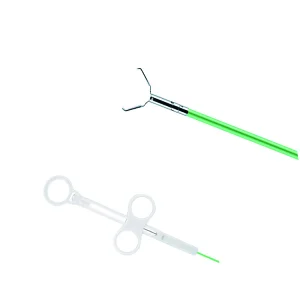
CE Certified Endo Therapy Reopen Rotatable Hemostasis Clip (Paris Standard Endoclip)
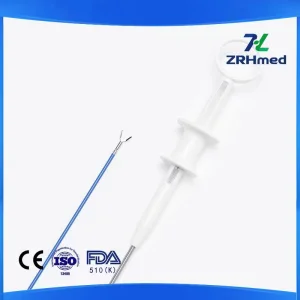
CE Certified Disposable Endoscopic Flexible Rotatable Hemoclip for Acute Upper GI Bleeding
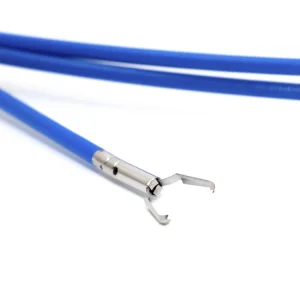
High-Quality Disposable Gastric Repeated Opening & Closing Hemoclip (French Clinical Grade)
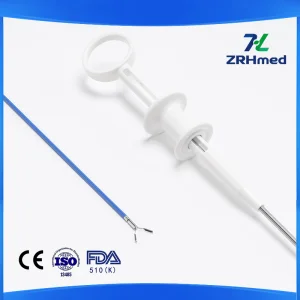
ODM Endoscopic Hemoclip – Reliable Mucosal Closure for Paris Endoscopy Centers
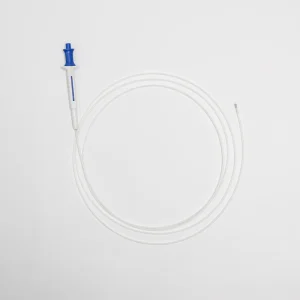
ODM EMR Endoscopic Sclerotherapy & Injection Needle for Bronchoscope & Gastroscope
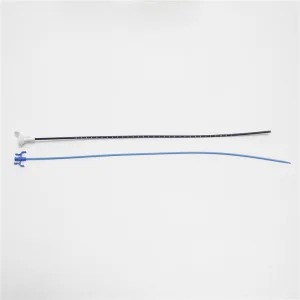
CE Certified Urology Smooth Hydrophilic Coating Ureteral Access Sheath (ISO Verified)
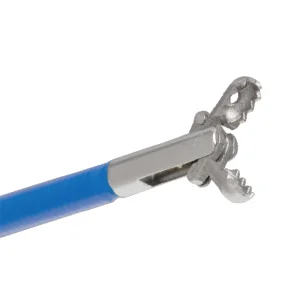
High-Quality Disposable Endoscopic Hot Biopsy Forceps for Gastroscope, Colonoscope & Bronchoscope
Request comprehensive specification sheets, CE certificates, sterilization validation packets, and tiered OEM quotations customized for French hospital tenders.