Direct-from-manufacturer pricing, micro-meter manufacturing tolerances, and full regulatory dossiers for international brand partners and medical tenders.
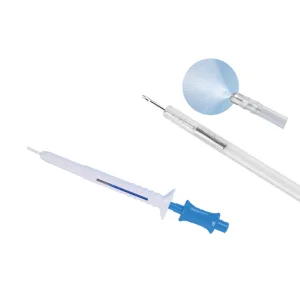
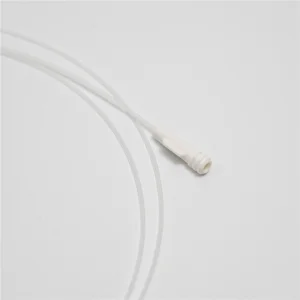
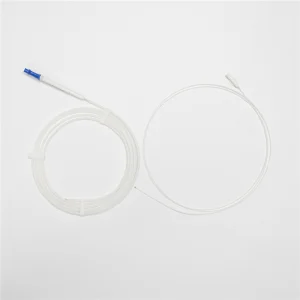
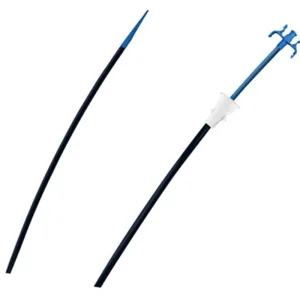
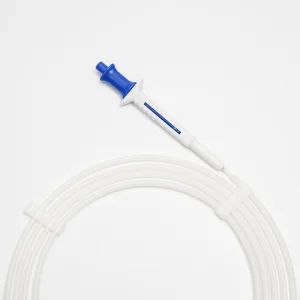
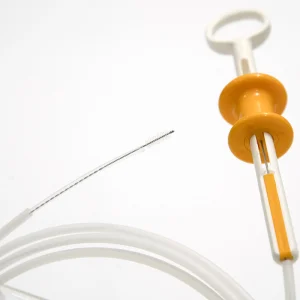
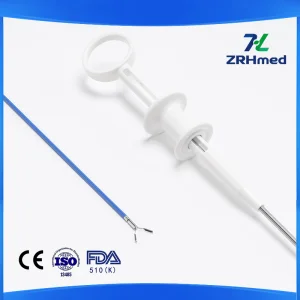
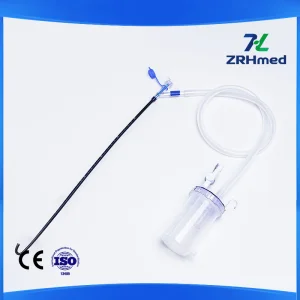
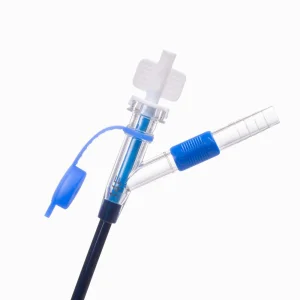
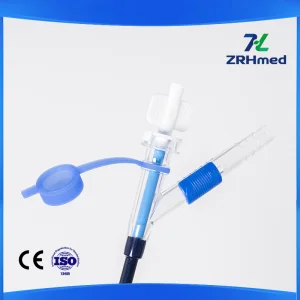
In contemporary diagnostic and interventional endoscopy, visual differentiation between non-neoplastic tissue, low-grade dysplasia, and early gastrointestinal carcinomas defines clinical outcomes. The medical spray catheter (staining tube) has evolved from a basic accessory into a high-precision diagnostic and therapeutic conduit used globally across gastroenterology, pulmonology, and endoscopic surgical disciplines.
Historically, global medical institutions utilized reusable spray pipes that required aggressive manual brushing, enzymatic reprocessing, and low-temperature gas sterilization. However, studies highlight significant micro-channel residual debris, bio-film accumulation, and nozzle occlusion within reusable polymer lumens. Consequently, regulatory bodies like the FDA, EMA, and NMPA have driven a massive, irreversible transition toward single-use sterile spray catheters.
Worldwide healthcare expenditure trends, specifically within ambulatory surgical centers (ASCs) and tertiary teaching hospitals, require standardized micro-droplet dispersion to reduce stain volumes (e.g., Lugol's iodine, Indigo carmine, Methylene blue), shorten procedural duration, and prevent aerosol splatter that impedes endoscopic camera illumination.
How Jiangxi ZhuoRuiHua Medical pairs vertical raw-material integration with micro-laser nozzle drilling to deliver OEM-grade catheters at unmatched manufacturing speed.
Our in-house multi-layer tubing extrusion utilizes medical-grade fluoropolymers (PTFE, FEP) and high-elasticity polyurethane (TPU). This achieves ultra-low surface friction coefficients (μ ≤ 0.04), ensuring zero-friction passage through fully tortuous, retroflexed gastroscope and bronchoscope channels without scuffing channel linings.
Unlike mechanical piercing which causes burrs and irregular flow turbulence, our manufacturing line deploys automated cold femtosecond laser drill stations. This creates conical, hydrodynamically balanced multi-orifice nozzles with diameter tolerances kept within ± 0.005 mm, enabling high atomization velocity at manual syringe pressures.
Operating under an audited ISO 13485 quality management framework, every batch is verified across three strict milestones: 100% burst-pressure safety validation (> 0.6 MPa), lumen flow consistency, and tensile bond strength of the proximal Luer connector and distal nozzle tip exceeding international standard thresholds.
Engineered to adapt to digestive tracts, pulmonary trees, and endoscopic surgery—matching fluid viscosity and diagnostic objectives.
Precision spraying of 0.2%–0.4% Indigo Carmine or Lugol’s Iodine. Enables pit-pattern delineation (Kudo classification) for identifying early squamous cell carcinoma in the esophagus, Barrett’s mucosa, and flat colorectal adenomas.
Aerosolized administration of topical hemostatic agents, thrombin solutions, and mucosal barrier gels onto diffuse mucosal bleeding, oozing peptic ulcers, and post-polypectomy or post-ESD vascular beds.
Navigates flexible bronchoscopes (≥ 2.0 mm channel) into segmental bronchi. Delivers uniform anesthetic mist (e.g., Lidocaine) for cough suppression or targeted antibiotic delivery during severe localized airway infections.
Quick jet conversion capability for dislodging adherent mucus clots, bile pigments, and food remnants covering mucosal lesions, restoring crisp optical visualization without having to swap endoscopic accessories.
Where material science, micro-mechanics, and bio-engineering converge over the 2026–2030 regulatory and sourcing cycle.
Traditional spray catheters rely purely on hydrodynamic liquid pressure from a manual syringe. Future R&D models feature dual-lumen extrusion that introduces sterile carbon dioxide (CO2) alongside the liquid dye. This micro-vortex creates microscopic droplet diameters under 45 μm, eliminating dripping and delivering complete 360-degree gastrointestinal coverage with 60% less reagent consumption.
Catheter surface engineering is transitioning toward photo-cured hydrophilic polymers combined with non-leaching antimicrobial coatings. This reduces push-force within endoscope working channels by over 40% and preserves lumen sterility throughout long complex surgical procedures such as Peroral Endoscopic Myotomy (POEM) and multi-hour ESD resections.
Global ESG regulations (including EU REACH and RoHS medical updates) favor halogen-free, bio-stable polyolefin elastomers (TPE) replacing conventional plasticized PVC. ZhuoRuiHua Medical has pioneered recyclable medical tubing lines that maintain flexural modulus without plasticizer phthalate leaching, ensuring patient biocompatibility.
A side-by-side technical evaluation checklist for hospital supply officers, medical device brand managers, and B2B tender bidders.
| Evaluation Parameter | ZhuoRuiHua Medical (Factory Direct) | Generic Sourcing Middlemen | Legacy Reusable Catheters |
|---|---|---|---|
| Outer Diameter (OD) & Tolerances | ✓ 1.8mm – 2.4mm (±0.03mm) | Variable (±0.08mm, risk of sticking) | Prone to lumen collapse & ovalization |
| Working Channel Compatibility | ✓ Matches 2.0mm, 2.8mm & 3.2mm channels | Limited size variants available | Degrades with repeated autoclaving |
| Working Lengths Offered | ✓ 1050mm, 1600mm, 1800mm, 2300mm | Standard lengths only (no customization) | Fixed length, prone to distal kinking |
| Tip Spray Pattern | ✓ Conical 360° mist (Femtosecond Laser) | Mechanical punched holes (uneven jet) | Repeated clogging from calcified debris |
| Burst Pressure Safety | ✓ Tested > 0.60 MPa (No blowout) | Untested or ~0.30 MPa limit | High rupture risk at joint sleeve |
| Regulatory Certification | ✓ ISO 13485, CE MDR, US FDA Pathway | Missing complete design dossier | Complex hospital re-validation mandates |
| OEM / ODM Customization | ✓ Custom colors, printing, sterile pouching | Strict MOQ, no tooling engineering | Not applicable |
Before issuing purchase orders for endoscopic spray tubes, international buyers should insist on verifying:
Operating out of our advanced high-volume manufacturing center in Jiangxi, China, our automated extrusion and cleanroom packaging facilities maintain an annual production capacity exceeding 3.5 million endoscopic consumable SKUs. We provide:
Essential insights into endoscopic spray catheter manufacturing, channel matching, OEM customization, and certification.
Linear jet catheters feature an open single lumen end-port designed to produce a focused, high-velocity liquid column—primarily used for high-impact washing of blood clots or flushing debris. In contrast, an endoscopic mist spray catheter incorporates a specially engineered micro-nozzle tip (frequently involving multi-angled radial micro-holes or swirl-inducing geometries). This creates a circumferential conical aerosol mist with droplet sizes typically below 80 micrometers, allowing complete, uniform surface coverage of mucosa without pooling, wash-off, or mechanical tissue trauma.
Kinking typically stems from substandard extrusion materials or poor flexural modulus balance. At ZhuoRuiHua Medical, we co-extrude virgin fluoropolymers (PTFE/FEP) with calibrated high-recovery medical polyurethane. This ensures high column strength (1:1 pushability) paired with a self-lubricating outer sheath that boasts an ultra-low friction coefficient. During final QC, catheters must pass through a full 210-degree curved simulated endoscope channel jig while maintaining unobstructed fluid spray dynamics.
Yes. As an authentic source factory, our precision extrusion tooling and automated laser machining lines allow comprehensive OEM/ODM customization. We routinely produce working lengths ranging from 1050 mm (bronchoscopy), 1600 mm–1800 mm (gastroscopy), up to 2300 mm (colonoscopy and enteroscopy), with outer tube diameters engineered to match 1.2 mm, 2.0 mm, 2.8 mm, and 3.2 mm accessory channels. Custom color codes, centimeter depth markings, and private-label packaging are available for qualified order volumes.
We provide full regulatory dossier support under our TÜV / ISO 13485 quality management systems. Sourcing partners receive CE Declarations of Conformity, full ISO 10993 biological safety reports (cytotoxicity, irritation, toxicity), ISO 11135 ethylene oxide sterilization validation data, accelerated 3-to-5-year aging and shelf-life verification reports, packaging integrity burst test certificates, and factory batch-release Certificates of Analysis (CoA).
Our inert fluoropolymer catheter lumens are chemically resistant to all standard endoscopic diagnostic and therapeutic agents, including: Indigo Carmine (0.1%–0.5%), Lugol's Iodine solution (1.0%–2.5%), Methylene Blue, Acetic Acid (1.5%–2.0% for Barrett's esophagus examination), Lidocaine / Tetracaine anesthetic solutions, Thrombin solutions, and sterile physiological saline for clean field irrigation.
Tip detachment inside a patient's gastrointestinal tract or airway is a critical clinical hazard. ZhuoRuiHua Medical uses integrated thermal fusion welding or seamless monolithic thermo-formed nozzle designs rather than surface gluing. Every catheter design is subjected to destructive hydrostatic pressure testing up to 1.0 MPa (far exceeding manual syringe injection limits) and axial tensile pull tests exceeding 20 Newtons to guarantee absolute physical integrity.
Standard production is individually packed in medical-grade dialyzing paper (Tyvek) peel pouches, EO sterilized, and packed 10 units per dispenser inner carton, 100 or 200 units per heavy-duty export shipper carton. For standard unbranded catalog items, our minimum order quantity starts as low as 100 units. For full OEM private-label branding, customized lengths, and specific box design, typical MOQs start at 1,000 to 2,000 units per specification.
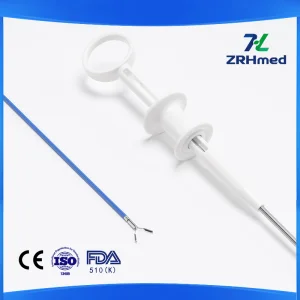
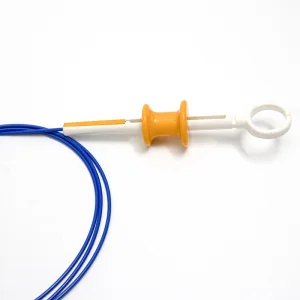
Optimize your container shipments by consolidating spray catheters with our clinically proven hemostasis clips, ureteral access sheaths, and resection snares.