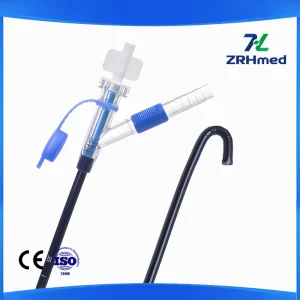
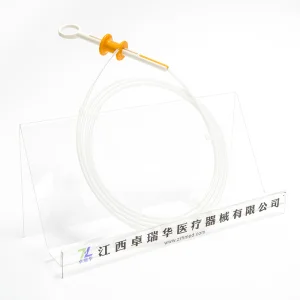
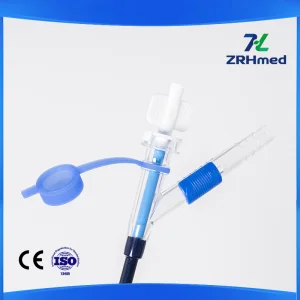
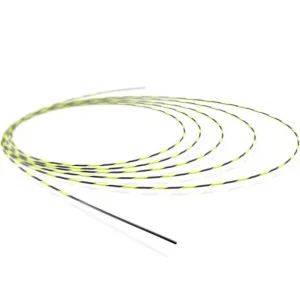
Direct-from-factory diagnostic and intervention assemblies engineered to match stringent international clinical protocols across GI endoscopy, bronchoscopy, and endourology suites.
An authoritative evaluation of current market dynamics, shift toward single-use hemoclips, and the tightening of medical device certifications across the European Union, Americas, and Asia-Pacific.
Strategic Market Intelligence: The global gastrointestinal endoscopic clips market is experiencing compound annual growth driven by escalating incidences of upper and lower GI hemorrhages, expanding colorectal cancer screening programs, and the clinical shift toward minimally invasive endoscopic mucosal resection (EMR) and endoscopic submucosal dissection (ESD). Modern surgical suites demand single-use hemoclips that combine reliable rotatability, high clamping retention, and rapid deployment to minimize procedural time and post-operative bleeding risks.
The implementation of Regulation (EU) 2017/745 (MDR) has elevated barrier-to-entry standards for medical device manufacturers. European notified bodies require comprehensive Clinical Evaluation Reports (CER), verified biocompatibility under ISO 10993-1, and validated sterilization records adhering to ISO 11135.
Recent gastroenterology guidelines (ESGE and ASGE) strongly advocate for prophylactic clip closure on mucosal defects following wide-field EMR or ESD in the colon. Clinical evidence confirms that immediate defect closure slashes delayed post-polypectomy bleeding (DPPB) from 9.8% to under 1.2% in high-risk patients.
Hospital groups and medical distributors are shifting away from costly Western monopolistic OEM contracts toward qualified ISO 13485-certified direct manufacturers in China. This transition delivers 35% to 50% procurement cost containment without sacrificing structural integrity, tactile feel, or clinical efficacy.
From acute spurting peptic ulcers to challenging anatomical retroflexion in the ascending colon, mechanical clip systems must perform flawlessly under variable tissue resistance.
Immediate mechanical closure of Dieulafoy lesions, Forrest Ia arterial spurting ulcers, and Forrest Ib oozing vessels. Clamping of exposed feeding vessels prevents hemodynamic collapse and circumvents urgent transcatheter arterial embolization or surgical intervention.
Immediate full-thickness defect closure following unexpected luminal micro-perforations during complex colonoscopy, EMR, or ESD. High-clamping clips approximate mucosal and submucosal margins, establishing an impermeable barrier against peritonitis and sepsis.
Marking suspicious early gastric and colorectal neoplasias prior to laparoscopic oncologic resection. The biocompatible radiopaque surgical-grade stainless steel clips provide unambiguous fluoroscopic and visual landmarks for general surgeons during hybrid interventions.
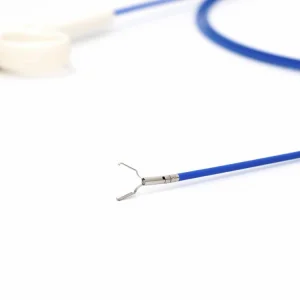
Preventative mucosal approximation on large sessile or flat polyps (>20mm) in the cecum and ascending colon. High jaw opening spans (11mm to 16mm) bridge broad resected tissue margins under tight flexure angles without triggering premature clip release.
| Performance Parameter | Legacy Clip Systems | Our CE-Marked Rotatable Clips | Clinical Advantage for Endoscopists |
|---|---|---|---|
| Torque Transmission | 1:0.6 ratio with tactile lag | 1:1 Synchronous Bidirectional 360° | Precise jaw alignment against tangentially located lesions |
| Repositionability | Single-lock mechanism (irreversible) | Multi-cycle Open/Close Capability | Allows endoscopist to verify tissue grasp before permanent firing |
| Clamping Force | 8.0 N – 12.0 N variable | >18.0 N Sustained Force | Prevents slippage on thickened, fibrotic, or edematous peptic tissue |
| Channel Passage | High friction in retroflexed scopes | PTFE Composite Low-Friction Sheath | Smooth deployment even when the endoscope tip is tightly angled (180°+) |
| MR Conditional Safety | Unrated or ferromagnetically active | ASTM F2503 Validated up to 3.0 Tesla | Safe for post-procedure diagnostic MRI without displacement risk |
How localized manufacturing ecosystems, vertical integration, and advanced cleanroom automation give our hospital partners an unassailable pricing and fulfillment edge.
By internalizing micro-machining, CNC Swiss-type wire processing, plastic injection molding, and EO sterilization cycles under a single ISO 13485 cleanroom infrastructure, our facility eliminates external subcontractor markups and bottleneck dependencies.
Positioned within Jiangxi's specialized medical device industrial cluster, we harness regional logistical networks, metallurgical supply lines, and deep engineering pools. This structural density yields a direct unit cost advantage that distributors convert into winning hospital bids.
Every lot passes rigorous testing protocols: incoming raw material spectrometry, 100% automated optical dimensional inspection, dynamic fatigue testing, and destructive pull-force verification exceeding clinical requirements.
Our ongoing R&D pipelines anticipate future gastrointestinal intervention milestones, driving innovations from bioabsorbable polymers to smart feedback closure mechanisms.
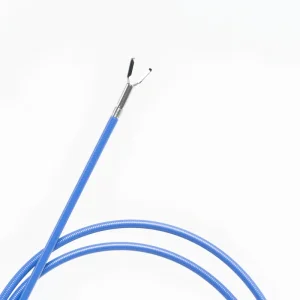
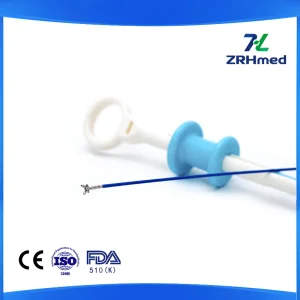
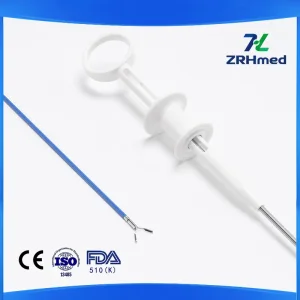
Optimized dual-arm stainless steel clips featuring ultra-low operating friction, multi-cycle repositioning, and one-click tactile release handles for immediate clinical deployment.
Expanded 18mm to 22mm jaw opening capabilities tailored for full-thickness closure of extensive ESD mucosal defects without requiring auxiliary traction suturing devices.
Degradable clip components that provide robust temporary hemostatic closure for 14-28 days before dissolving safely, leaving a healed lumen free of retained foreign bodies.
Micro-piezoelectric force-sensing jaw tips providing real-time tactile and visual impedance feedback, confirming optimal tissue perfusion preservation while guaranteeing vessel seal.
Navigating complex international medical device compliance requires seasoned regulatory affairs specialists, certified documentation dossiers, and continuous post-market vigilance.
We provide turnkey Technical Documentation Dossiers (STED format) aligned with EU MDR, US FDA 510(k), Brazil ANVISA, and Saudi FDA requirements. We partner with your regulatory teams to ensure seamless local import license approvals.
Distributors can leverage our manufacturing scale to build regional private labels. We support custom outer box branding, multi-language IFU (Instructions for Use) localization, tailored UDI barcode labeling, and sterile blister sealing.
Direct communication channels with experienced biomedical engineers and bilingual supply chain managers ensure real-time answers to tender RFQs, clinical evaluation inquiries, and logistics scheduling.
Clear, evidence-backed answers addressing the technical, regulatory, and logistical parameters crucial to hospital contract decisions.
Our endoscopic hemoclips comply with Regulation (EU) 2017/745 (MDR) as Class IIa or IIb sterile invasively transient devices under Annex VIII. The manufacturing quality management system is fully certified under EN ISO 13485:2016 by a European accredited Notified Body. All sterilization validation processes strictly conform to ISO 11135 for Ethylene Oxide (EO) sterilization, ensuring zero microbiological bioburden and EO residual levels below 4 mg/device, well within the safety parameters specified by ISO 10993-7.
Synchronous 1:1 torque transmission is achieved using a specialized high-tensile braided stainless steel torque wire encased in a low-friction PTFE-lined composite coil sheath. This construction minimizes rotational play and prevents "whip" or torsional lag, even when the flexible endoscope is navigating complex retroflexion angles in the cecum or duodenal sweep. As a result, the endoscopist can align the clip jaw precisely against tangentially oriented bleeding vessels with minimal wrist effort.
Yes. Our rotatable hemoclips feature a precision dual-stage internal locking mechanism. The operating handle enables multiple open-and-close cycles, allowing the clinician to evaluate tissue bite, ensure adequate vessel inclusion, and verify positioning prior to final tactile firing. Permanent lock and detachment occur only when the surgeon deliberately draws the handle past the tactile resistance threshold, triggering clean clip release and detachment from the control wire.
Our hemoclips are engineered with an outer catheter diameter of 2.6mm, making them universally compatible with standard gastrointestinal flexible endoscopes featuring working channel diameters of 2.8mm or larger. We manufacture three primary effective working lengths: 1650mm (standard gastroscopes), 1950mm (colonoscopes), and 2300mm (enteroscopes and long colonoscopes). Custom lengths can also be configured under OEM agreements to match unique clinical specifications.
Our endoscopic clips are designated as MR Conditional in accordance with ASTM F2503 standards. Non-clinical testing demonstrates that a patient with one or multiple deployed clips can be safely scanned immediately after the procedure in static magnetic fields up to 3.0 Tesla, with a maximum MR system-reported whole-body averaged specific absorption rate (SAR) of 2.0 W/kg for 15 minutes of continuous scanning. The specialized surgical stainless steel composition minimizes RF-induced heating and magnetic displacement artifacts.
We supply full registration dossiers, including ISO 13485 QMS Certificates, Notified Body CE Declarations of Conformity, Free Sales Certificates (FSC / CFS), Biocompatibility Reports (ISO 10993 series), Packaging Integrity & Accelerated Aging Test Reports (ISO 11607), Sterilization Validation Reports (ISO 11135), Risk Management Files (ISO 14971), and Clinical Evaluation Reports (CER). Our regulatory team assists partners directly throughout the local ministry submission process.
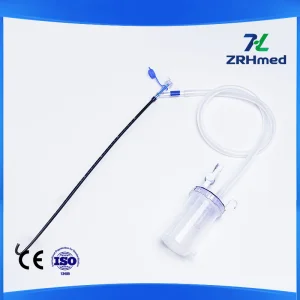
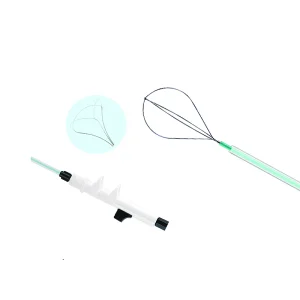
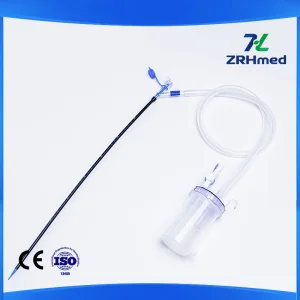
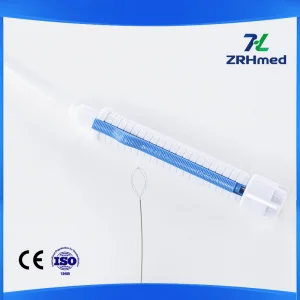
Expanding clinical versatility across operating theaters with verified stone extraction, cytology, and negative-pressure ureteral access technologies.