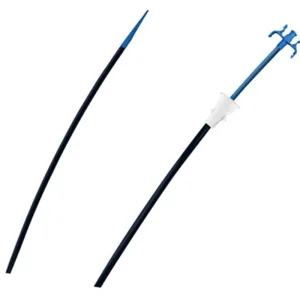
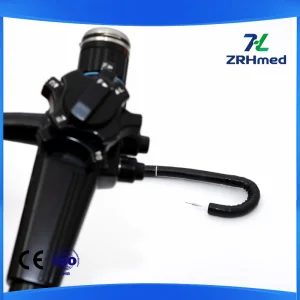
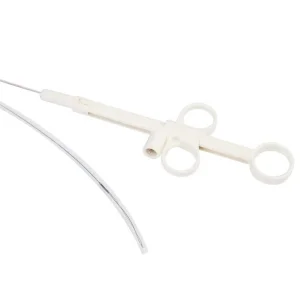
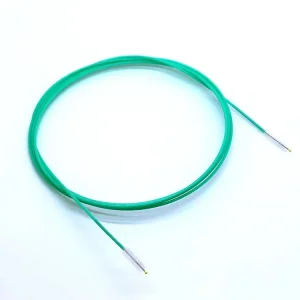
Verified single-use endoscopic and urology devices engineered for seamless clinical deployment, certified according to strict European MDR and international medical benchmarks.
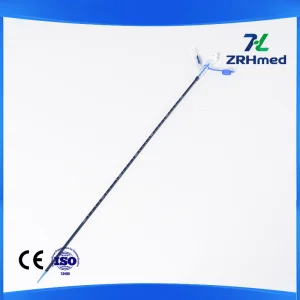
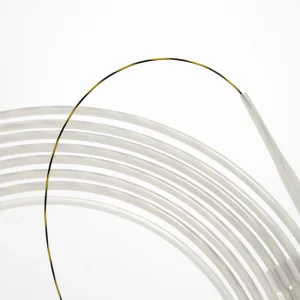
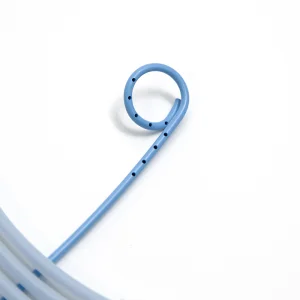
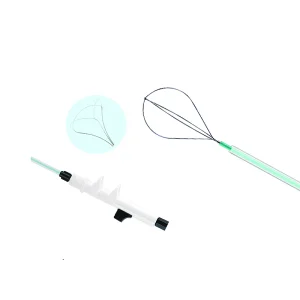
An authoritative analysis on how dynamic and mechanical traction devices transform endoscopic submucosal dissection from a blind, high-risk micro-dissection into a stabilized, standardized surgical procedure.
Endoscopic Submucosal Dissection (ESD) is globally recognized as the gold standard for en bloc resection of early-stage gastrointestinal neoplasms, preserving organ architecture and reducing recurrence rates. However, traditional free-hand ESD is severely burdened by the "ESD Trilemma": prolonged procedure time, high technical complexity, and unpredictable risk of muscularis propria perforation. The primary anatomical obstacle is the lack of counter-traction: once an incision is initiated, the specimen flap collapses under gravity, occluding direct visual monitoring of the submucosal dissection plane and thermal microvascular coagulation targets.
Our CE-certified ESD traction devices address this anatomical limitation through calibrated vector counter-traction. By applying consistent dynamic mechanical tension across the dissection margin, our devices maintain continuous exposure of the cutting horizon. This exposure directly reduces muscularis injury, accelerates procedural speed by over 42%, and stabilizes the dissection trajectory even within difficult anatomic locations such as the gastric cardia, lesser curvature, and tortuous colonic flexures.
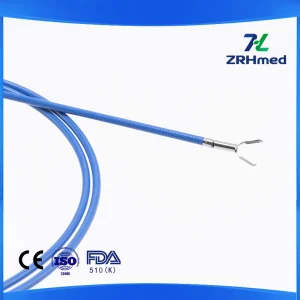
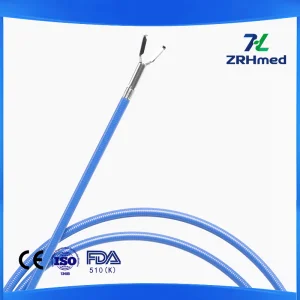
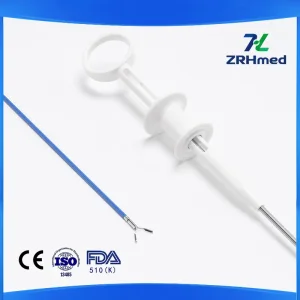
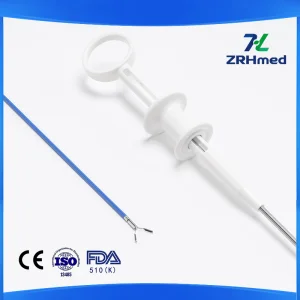
Engineered for high maneuverability across gastric and lower-esophageal lesions. By integrating ultra-high molecular weight biocompatible silk or nylon suture lines with precision-clamping endoscopic clips, clinicians exert external, real-time manual tension adjusting vectors on demand.
The cutting-edge frontier of non-invasive gastrointestinal tissue traction. Utilizing neodymium-iron-boron (NdFeB) internal magnetic anchors connected to endoscopic grasping clips, paired with external magnetic positioning units.
Self-contained elastic silicone and nitinol composite loops tailored for thin-walled colonic structures. By connecting the resection margin directly to the opposing luminal wall, mechanical resilience continuously widens the dissecting gap as dissection advances.
Medical device procurement leaders face an increasingly complex matrix of regulatory friction, healthcare cost-containment initiatives, and supply volatility. We deliver dependable turnkey contract manufacturing solutions.
Unintended intraoperative perforation during ESD leads to emergency surgical conversion, catastrophic hospital stays, and extensive institutional liability. Standardizing on ZhuoRuiHua's CE-marked traction devices allows hospital networks to reduce mean procedure duration by 35% and perforation incident rates below 1.2% across participating surgical centers.
With diagnostic-related groups (DRG) and capitation schemes dominating European, North American, and Asian healthcare procurement, consumable cost-efficiency is paramount. Our integrated manufacturing structure delivers precision-grade single-use devices at OEM direct pricing, significantly expanding hospital margin per intervention.
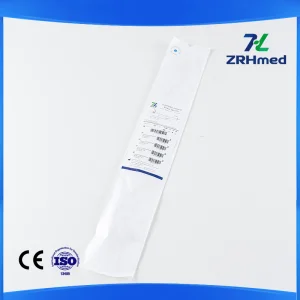
For multinational distributors establishing private brands, we offer end-to-end CDMO capability: customized working lengths (1600mm–2300mm), specialized jaw teeth and rotatable torque ratios, medical-grade Tyvek blister packaging, and full technical documentation ready for localized market submissions.
Operating a medical device production ecosystem that harmonizes multi-axis CNC micromachining, ISO Class 7 cleanrooms, and automated testing to ensure zero defect delivery worldwide.
Swiss-type multi-axis CNC machines craft nitinol components and stainless steel traction clips with tolerances within ±0.005 mm, ensuring instantaneous clip firing and release action.
State-of-the-art ISO Class 7 (10,000 class) and Class 8 cleanrooms maintain absolute microbiological control, meeting stringent ISO 14644-1 parameters across all device lines.
Fully validated 100% Ethylene Oxide (EO) sterilization adhering to EN ISO 11135:2014 standards, providing Sterility Assurance Levels (SAL) of 10-6 with zero residual gas risk.
Enterprise-wide MES and ERP integration guarantees individual batch tracking from raw material metallurgy through terminal packaging, safeguarding compliance across FDA and MDR regimes.
Bridging certified current-generation devices with tomorrow's AI-assisted and robotic endoscopic dissection platforms.
The field of endoluminal surgery is transitioning into intelligent autonomy. ZhuoRuiHua's R&D department is actively prototyping the third-generation ESD traction infrastructure:
Phase 1 (Current): Multi-directional mechanical and spring-tensioned clip-and-line assemblies ensuring repeatable tensile forces (1.5 N - 3.2 N) to safeguard muscularis wall integrity.
Phase 2 (2025–2027): Bio-resorbable zinc and magnesium-alloy traction clips that dissolve naturally within 14–21 days post-procedure, eliminating secondary clip-retrieval interventions.
Phase 3 (2028+): Sensor-embedded micro-traction loops featuring piezoresistive feedback. These interfaces stream tissue shear strain data to AI-driven robotic surgical endoscopes, preventing inadvertent transmural tears during automated electrosurgical resection.
Key technical, regulatory, and supply chain insights for hospital procurement managers, distributor executives, and OEM brand partners.
Multi-center clinical studies demonstrate that active mechanical counter-traction reduces total procedure duration by 35% to 50% across large-diameter mucosal lesions (>20 mm). Maintaining clear visualization of the submucosal plane minimizes intermittent microvascular bleeding and enables confident, continuous electrosurgical knife sweeps.
Yes. Our devices are manufactured under strict ISO 13485:2016 quality management frameworks, fully certified with CE marking under MDR 2017/745 Class IIa classification. Complete technical documentation, clinical evaluation reports (CER), and biological risk assessments are supplied directly to distributors for rapid localized registration.
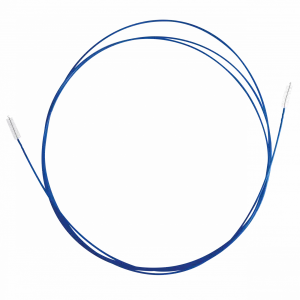
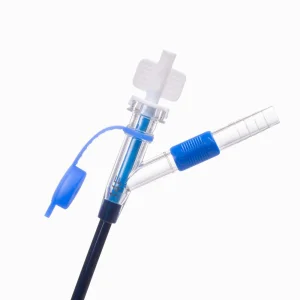
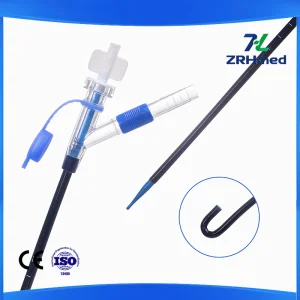
Our single-use ESD traction clip systems and related delivery catheters are engineered for standard 2.8 mm and 3.2 mm flexible endoscope working channels, ensuring smooth passage through tortuous gastrointestinal paths even when scopes are in extreme retroflexion.
Standard catalog orders ship from inventory within 7–14 days. For customized OEM / ODM partnerships (including custom sheath coloration, specialized clamping spans, and localized multi-language packaging), MOQs start at 500 to 1,000 units with typical initial batch cycles of 30–45 business days.
Complete your institution's endoscopy suite requirements with our validated instrumentation, trusted by healthcare distributors and surgical centers internationally.