Precision accessories engineered for high-volume gastroenterology, pulmonology, and urological endoscopic interventions, fully certified to European CE and ISO quality directives.
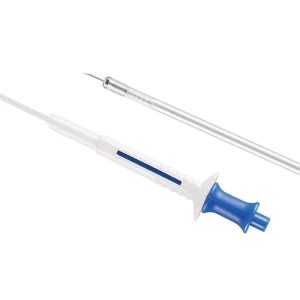
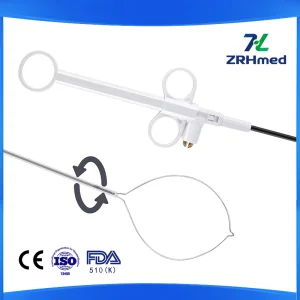
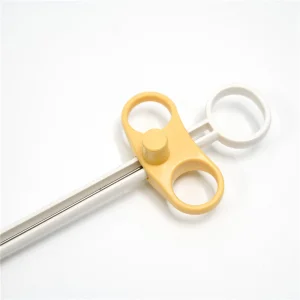
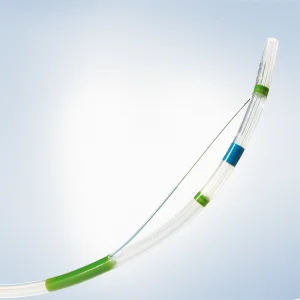
An authoritative analysis of tactile feedback loop fidelity, 1:1 torque transmission, and physiological tissue approximation standards under European Union MDR (EU 2017/745).
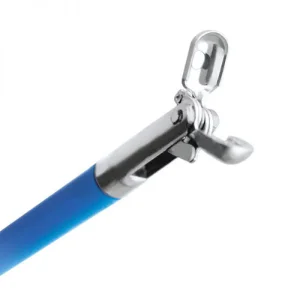
In anatomical tortuosities such as the duodenal bulb or retroflexed gastric fundus, conventional clips suffer from torque lag. Our CE-marked system incorporates a double-wound braided torque wire sheath, delivering seamless bidirectional rotation with zero dead-band backlash, ensuring exact alignment with the mucosal defect margins prior to deployment.
Premature firing is a catastrophic failure mode in acute hemorrhage. Our high-tensile spring-steel jaw architecture allows clinicians to open, close, and re-open the clip multiple times before final locking. This mechanical reversibility empowers endoscopists to assess tissue encompassment and verify vessel tamponade safely.
Post-release clip profile height is critical to prevent secondary ulceration and spontaneous premature detachment. Featuring a miniaturized internal anchor collar, the left-in-situ profile is reduced by 35% compared to legacy predicates, facilitating rapid epithelialization and significantly minimizing mechanical shear from peristalsis.
Clinical literature demonstrates that mechanical hemoclips present significant advantages over monopolar or bipolar electrocoagulation in patients undergoing anticoagulant or antiplatelet therapy. Thermal modalities introduce transmural coagulation necrosis risks, potentially leading to delayed perforation in thin-walled visceral structures such as the cecum or ascending colon. A certified mechanical GI clip application system establishes immediate localized microvascular compression (>8.5 N clamping pressure) without thermal damage, preserving histologic margins and lowering recurrent bleeding rates below 2.4%.
Tailored mechanical profiles responding to distinct anatomical challenges across upper and lower digestive pathways.
Engineered for Forrest Class Ia (spurting hemorrhage) and Class Ib (oozing hemorrhage) peptic ulcers. High-torque rotation allows access behind angulated gastric folds and the posterior duodenal wall, compressing pumping vessels up to 2.0mm in diameter instantaneously.
Following broad mucosal resection in the colon or stomach, large mucosal defects carry high risks of delayed perforation and bleeding. Wide-opening clip arm geometries (11mm, 13mm, and 16mm spans) bridge opposing margins, closing extensive defects tension-free.
Acute transmural breaches during complex therapeutic endoscopies require prompt mechanical closure to avoid emergency laparotomy. The rapid lock and high retention strength enable hermetic mucosal-submucosal apposition, preventing peritoneal contamination.
Diverticular bleed management demands micro-precision due to thin herniated colonic walls. Atraumatic jaw edges and controllable opening profiles permit safe clip positioning directly at the neck or base of the bleeding diverticulum without causing secondary transmural tearing.
Pushing the boundaries of material science, sensor integration, and intelligent robotic compatibility.
To eliminate the clinical uncertainty of chronic in-situ foreign bodies, our metallurgical R&D laboratory is perfecting ultra-high-purity magnesium-zinc (Mg-Zn) bioresorbable alloys. These next-generation arms provide therapeutic tissue retention for 14 to 28 days before dissolving into benign physiological ions, preventing long-term foreign body reactions and secondary mucosal erosion.
Integrating miniature piezoresistive sensors within the proximal control handle allows our future applicator systems to quantify real-time grasping pressure (N/mm²). By communicating with an external digital display or audio tone, endoscopists receive objective data confirming adequate vascular compression before irreversible lock deployment.
As autonomous and tele-operated flexible endoscopes transition from academic centers to frontline surgical suites, we are standardizing digital shaft coupling and robotic drive interfaces. The applicator handle allows rapid docking into multi-axis robotic end-effectors with sub-millimeter axial push-pull and rotational control.
Unpacking the structural cost, velocity, and quality control advantages built into our vertically integrated Jiangxi manufacturing facility.
Unlike regional assemblers reliant on tiered subcontracting, our cleanroom facility in Jiangxi integrates raw wire drawing, multi-axis Swiss CNC turning, laser micro-welding, and cleanroom packaging under one unified Quality Management System (QMS). Tolerances for clip jaw hinges and locking pins are maintained within ±0.005mm, preventing mechanical jam rates during complex endoscopic procedures.
| Manufacturing Phase | Standard Contract Assembler | ZhuoRuiHua Factory Ecosystem |
|---|---|---|
| Shaft Coiling | Outsourced; variable spring pitch | In-house multi-wire continuous wind |
| Jaw Punching | Standard progressive stamping | High-precision Wire EDM + Laser Micro-beveling |
| Batch Traceability | Paper-based, decentralized lots | Full MES Digital Serialization by SKU |
| Lead Time (50k units) | 12–16 Weeks | 3–4 Weeks (Continuous Supply Ready) |
Navigating healthcare tender constraints, the transition to single-use endoscopy, and regulatory harmonization across primary markets.
European and Latin American public hospitals operate under tight Diagnosis-Related Group (DRG) reimbursement caps. High-cost legacy brands squeeze hospital operating margins. Our CE-certified GI clip systems offer direct-from-factory pricing, giving distribution partners the commercial headroom to win centralized tenders without compromising clinical efficacy.
The enforcement of Regulation (EU) 2017/745 (MDR) led many smaller manufacturers to withdraw SKUs due to heightened clinical evaluation and notified body scrutiny. ZhuoRuiHua Medical invested heavily in prospective clinical data, rigorous PMS systems, and biocompatibility dossiers, ensuring our distributors maintain uninterrupted commercial access to the European Single Market.
We provide full turn-key contract manufacturing services for international brand owners, including customized working lengths (1650mm, 1950mm, 2300mm), tailored handle ergonomics, branded IFUs, and localized blister packaging compliant with destination country labeling regulations (UDI, GS1 Datamatrix).
Ensuring complete legal compliance and zero import clearance friction across global regulatory jurisdictions.
| Compliance Domain | Standard / Harmonized Framework | Documentary Evidence Available to Importers |
|---|---|---|
| Quality Management System | EN ISO 13485:2016 / MDSAP | Audited Quality Manual, Full Stage 1/Stage 2 Audit Reports |
| European Conformity | Regulation (EU) 2017/745 (MDR) Annex IX | Class IIb EC Certificate, Declaration of Conformity (DoC) |
| Sterilization Assurance | EN ISO 11135 (Ethylene Oxide) | Sterilization Validation Reports, EO Residual Data (<4mg/device) |
| Biological Evaluation | ISO 10993 Series (Cytotoxicity, Hemocompatibility) | Complete GLP Biocompatibility Testing Dossiers |
| Packaging Integrity & Shelf Life | ISO 11607-1 & ASTM F1980 | Accelerated & Real-time 3-Year Shelf Life Aging Reports |
Authoritative answers to technical, commercial, and regulatory inquiries from international hospital distributors and OEM clients.
Under the European Medical Device Regulation (EU 2017/745), our endoscopic hemoclip systems are classified as Class IIb implantable/surgically invasive devices intended for transient tissue occlusion or long-term mucosal apposition. Full Annex IX technical documentation, clinical evaluation reports (CER), and notified body certification are available for distributor verification.
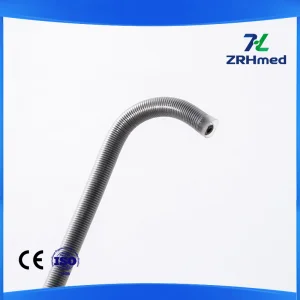
We utilize a specialized dual-layer, counter-wound stainless steel torque coil surrounding an inner high-tensile core wire. This design maintains torsional stiffness without sacrificing flexibility, providing effortless 360° rotational control with ±2° precision even when the endoscope is fully retroflexed in the stomach or duodenal sweep.
Our standard production spans include 9mm, 11mm, 13mm, and 16mm jaw opening widths, with sheath outer diameters of 2.6mm (fitting standard 2.8mm working channels) and working lengths of 1650mm (upper GI gastroscopy), 1950mm, and 2300mm (lower GI colonoscopy). Custom lengths can be produced via our OEM manufacturing line.
Yes. We offer end-to-end OEM and private-label manufacturing. We provide custom-designed medical-grade Tyvek blister packs, outer boxes, and localized multilingual Instructions for Use (IFU). All packaging includes compliant Unique Device Identification (UDI) barcoding and GS1 Datamatrix codes tailored to regional regulatory requirements.
Our disposable hemoclip application systems carry a validated 3-year shelf life under ISO 11607 and ASTM F1980 standards. Sterilization is performed using 100% Ethylene Oxide (EO) validated to ISO 11135, achieving a Sterility Assurance Level (SAL) of 10⁻⁶. Detailed EO residual analysis reports (<4.0 mg/device) are supplied with each export shipment.
Expanded device portfolio providing global distributors with an integrated single-source catalog for all primary endoscopic interventions.
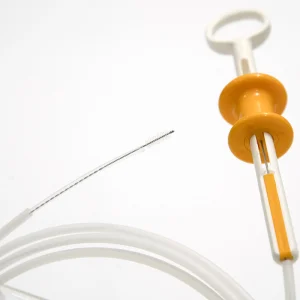
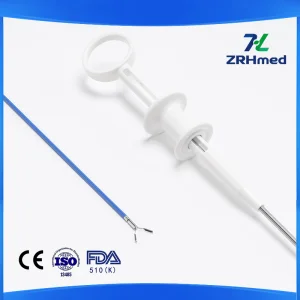
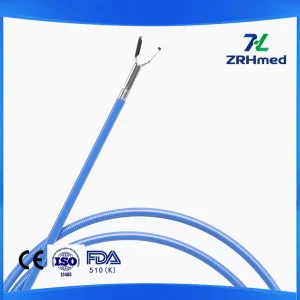
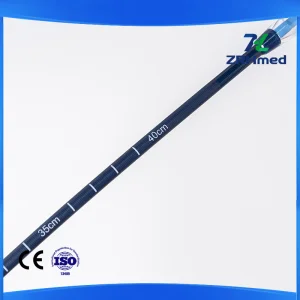
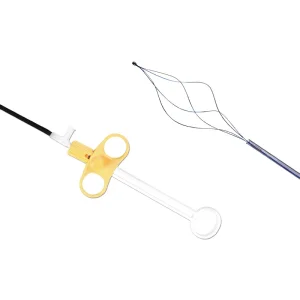
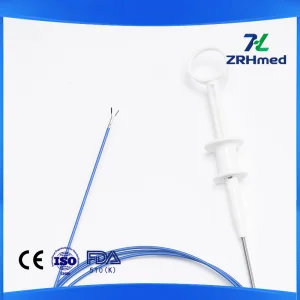
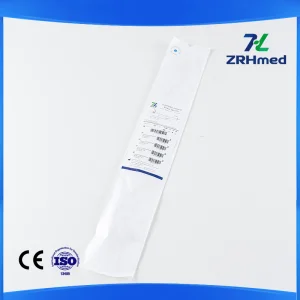
Partner with an established Chinese original equipment manufacturer. From custom jaw designs and MDR regulatory technical documentation to continuous tender fulfillment, our engineering and regulatory teams protect your brand reputation and market share.