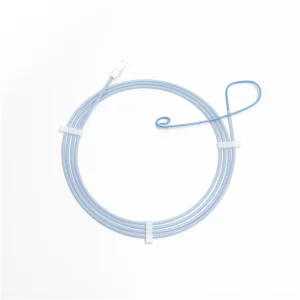
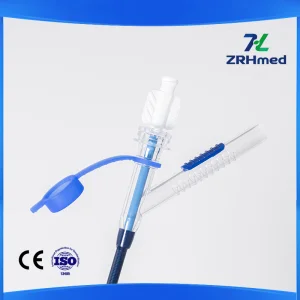
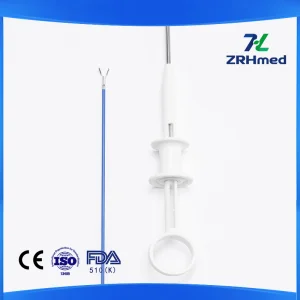
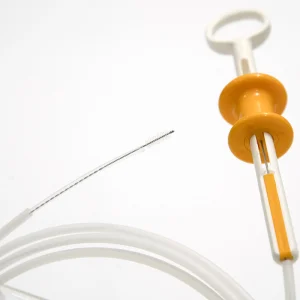
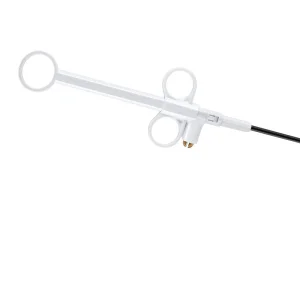
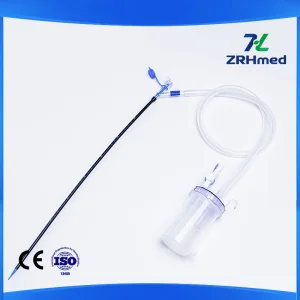
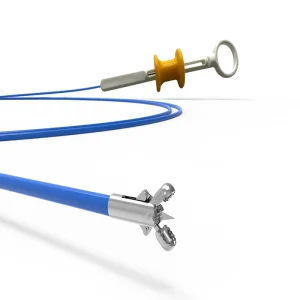
Explore our flagship OEM/ODM clinical devices engineered for gastroenterology, ERCP, and endourology applications.
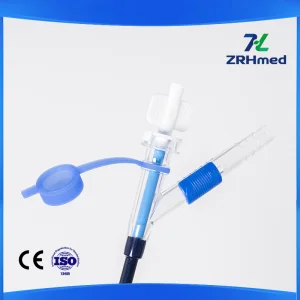
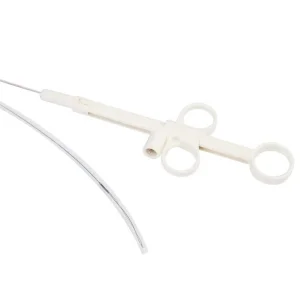
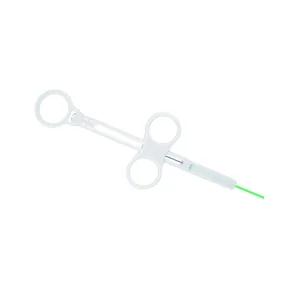
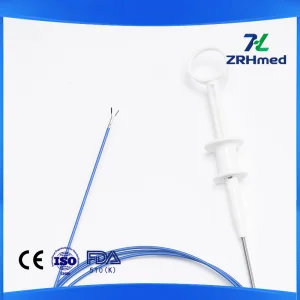
Understanding the critical mechanical standards, tissue dynamics, and manufacturing precision required for modern colonoscopy hemoclips.
In modern therapeutic gastroenterology, endoscopic hemostasis clips (hemoclips) have evolved from simple bleeding control devices into sophisticated mucosal closure instruments. As colorectal cancer screening programs expand worldwide, the volume of advanced procedures—such as Endoscopic Mucosal Resection (EMR) and Endoscopic Submucosal Dissection (ESD)—has increased exponentially. Consequently, clinical reliance on high-performance clips used in colonoscopy has reached an all-time high.
For medical device procurement managers, OEM brand holders, and hospital supply distributors, evaluating a high-quality clips used in colonoscopy manufacturer requires looking far beyond basic price-per-unit metrics. A premier manufacturer must demonstrate rigorous mechanical engineering, biocompatible metallurgy, structural stability under tortuous anatomical deflection, and consistent release mechanisms that prevent premature firing or incomplete tactile feedback during critical procedures.
Key Takeaway for B2B Sourcing Directors: High-grade colonoscopy clips must balance high tactile holding force with smooth, low-friction catheter transmission. A manufacturing partner capable of maintaining consistent tension tolerances (+/- 0.15N) across mass production significantly reduces post-procedure complications such as delayed arterial bleeding or micro-perforations.
Analyzing the four core engineering pillars that dictate clip efficacy inside the human lower gastrointestinal tract.
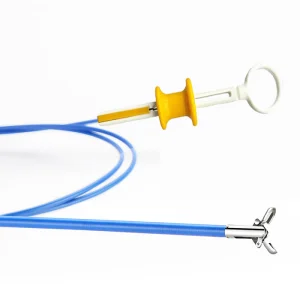
Navigating the complex flexures of the colon—specifically the hepatic and splenic flexures—requires precise orientation control. High-quality clips feature a 1:1 tactile rotation handle connected to a multi-strand high-tensile inner core wire. This ensures that a 90-degree turn at the handle translates into an exact 90-degree turn at the distal tip without energy lag or spring-back effect.
Sub-optimal clip placement can lead to tissue misapproximation or vascular tear. Leading OEM designs incorporate a specialized multi-stage latching hook that allows gastroenterologists to open, close, and re-open the clip jaws up to 10+ times prior to final deployment, granting physicians total freedom to readjust the clip span over target lesions.
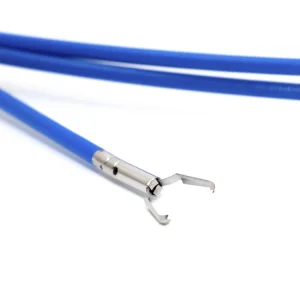
Modern mucosal defects resulting from large polyp resections demand expansive jaw spans (ranging from 11mm to 16mm) with claw angles up to 135 degrees. The mechanical arms are micro-machined from surgical-grade stainless steel (e.g., 17-7 PH) or Nitinol shape-memory alloys, providing high mechanical retention forces exceeding 4.5 N to secure deep submucosal layers.
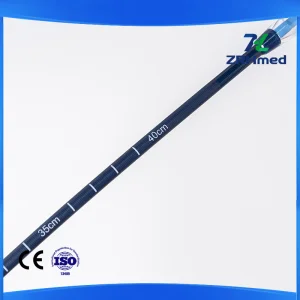
The insertion sheath must balance kink resistance with axial flexibility. Utilizing a smooth PTFE-coated stainless steel coil outer jacket, the catheter glides effortlessly through standard 2.8mm or 3.2mm scope working channels even when the endoscope is locked in a severe 180-degree loop within the cecum.
| Specification Parameter | Standard Commercial Grade | High-Precision Factory Standard (ZRH Medical) | Clinical Impact |
|---|---|---|---|
| Jaw Opening Span | 9mm – 12mm | 11mm – 16mm (135° angle) | Enables single-clip closure of larger EMR mucosal defects. |
| Rotation Fidelity | Unidirectional / Delayed hysteresis | 360° Bi-Directional Synchronous (1:1) | Exact alignment with bleeding vessels across intestinal folds. |
| Re-Opening Capability | Single-use deployment / No reopening | Multi-stage repeated open & close | Allows precise repositioning before permanent release. |
| Sheath Coating | Bare Stainless Steel Coil | Hydrophilic / PTFE Polymer Encapsulated | Reduces channel friction, preventing scope channel scoring. |
| Retention Duration | Variable (3 to 7 Days) | Optimized Structural Anchor (14+ Days) | Ensures full re-epithelialization of post-ESD resection sites. |
How cutting-edge materials science and smart endoscopy integration are redefining the next generation of colonoscopy clips.
Current titanium and stainless steel clips remain attached to the GI mucosa until spontaneous sloughing occurs. R&D pipelines are actively perfecting Magnesium-Zinc (Mg-Zn) bioabsorbable alloys engineered to maintain mechanical tensile strength for 14 days before degrading safely into biocompatible byproducts, eliminating long-term foreign body retainment risks.
Next-generation diagnostic scopes integrated with AI image classification work in tandem with pressure-sensing handle controls. Future clip delivery systems will incorporate calibrated haptic feedback release thresholds that automatically alert the operator when optimal tissue compression pressure (measured in Megapascals) has been achieved.
As pediatric gastroenterology and ultra-thin diagnostic colonoscopy procedures advance, manufacturing focus is shifting toward 1.8mm working channel compatibility without sacrificing the 11mm+ jaw opening span. Advanced micro-laser machining permits smaller locking hubs while keeping structural rigidity intact.
How specialized hemoclips address complex clinical challenges in modern interventional endoscopy units.
Diverticula in the ascending colon frequently present with arterial spurting located deep within the diverticular dome. Precise 360-degree rotation and an ultra-slim clip head allow clinicians to apply direct mechanical compression at the neck or base of the diverticulum without causing inadvertent wall perforation.
Complete closure of wide mucosal defects post-polypectomy dramatically decreases post-procedural bleeding rates from 8% to under 0.5%. By utilizing wide-span hemoclips (135° jaw angle) in a "zipper" closure technique, physicians can approximate mucosal margins effortlessly.
Immediate mechanical closure of micro-perforations using high-retention strength hemoclips eliminates the necessity for urgent emergency surgical laparotomy, preserving patient safety and minimizing hospital length-of-stay metrics.
Inside our state-of-the-art cleanroom production lines engineered for global OEM supply resilience.
The global medical device market requires absolute uniformity across million-unit production volumes. At our advanced Jiangxi manufacturing complex, Industry 4.0 principles are integrated across every step of the endoscopic clip production lifecycle.
All component cleaning, sub-assembly, and primary pouch sealing are conducted inside ISO Class 8 (Class 100,000) cleanrooms. Automated temperature, humidity, and positive pressure differential monitoring systems ensure an ultra-clean environment that keeps bioburden levels far below international regulatory ceilings.
Micro-machined components like clip jaw teeth, release pins, and swaging joints undergo 100% automated high-resolution vision inspection. CCD camera systems measure dimensional tolerances down to ±0.005mm in real time, automatically rejecting any part exhibiting burrs, misalignments, or surface defects.
Supply Chain Resilience: Operating with in-house metal stamping, laser welding, custom polymer extrusion, and EO sterilization facilities enables us to maintain raw material reserves capable of supporting rapid scaling during peak global hospital demand cycles.
A structured evaluation framework for procurement officers sourcing high-turnover endoscopy consumables.
When selecting a high-quality clips used in colonoscopy manufacturer, global distribution brands require tailored commercial configurations to meet local hospital tenders. Our OEM/ODM framework provides turnkey customization options across several technical parameters:
Accelerating market access across North America, the European Union, Latin America, and Asia-Pacific markets.
Our complete manufacturing operation is governed by a audited ISO 13485 Quality Management System covering full product design, material batch logging, cleanroom environmental management, and post-market surveillance workflows.
Complete technical documentation (STED), clinical evaluation reports (CER), risk assessment logs (ISO 14971), and usability data are maintained to streamline registration under the European Union Medical Device Regulation (CE MDR).
All patient-contact materials undergo exhaustive testing including Cytotoxicity, Systemic Toxicity, Intracutaneous Reactivity, Sensitization, and Hemocompatibility to guarantee absolute patient safety upon tissue contact.
Expert answers addressing key technical, regulatory, and commercial procurement queries.
Complete your catalog with high-turnover accessories manufactured in our certified cleanroom facility.