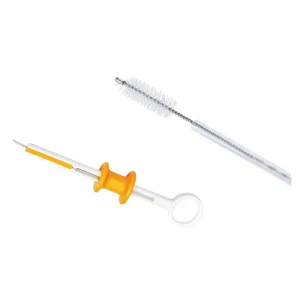
Direct-from-factory diagnostic and operative consumable instrumentation manufactured under cleanroom conditions, optimized for URS, RIRS, PCNL, and endoscopic intraductal interventions.
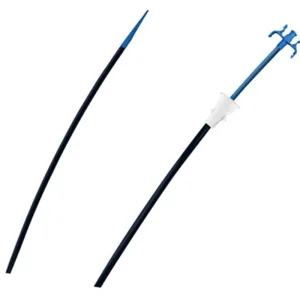
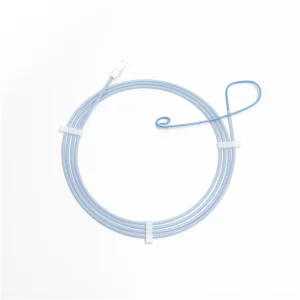
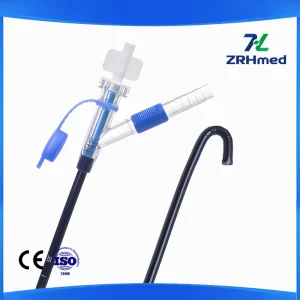
Navigating macroeconomic tailwinds, polymer engineering breakthroughs, and strict MDR/FDA regulatory paradigms reshaping the supply chain for urological surgery centers worldwide.
The international market for urological surgical consumables is currently expanding at a CAGR of 6.8%, projected to cross $7.4 billion by 2030. Historically, operating theaters relied heavily on reusable instrumentation. However, modern infection control imperatives, cross-contamination hazards (such as carbapenem-resistant Enterobacteriaceae), and the soaring fiscal costs of reprocessing delicate flexible fiber-optic scopes have accelerated the definitive shift toward single-use sterile consumables. Jiangxi ZhuoRuiHua Medical Instrument Co., Ltd. (ZRH Med) functions as an OEM/ODM manufacturing engine for global distributors, ensuring cleanroom precision, dimensional stability, and validated biocompatibility across high-volume surgical production.
Modern urological consumables demand superior physical mechanics: high column strength to prevent accordion buckling during tortuous ureteral insertion, alongside hyper-elastic kink resistance.
The regulatory threshold for invasive class IIa and IIb medical devices has intensified dramatically under the EU Medical Device Regulation (MDR 2017/745) and United States FDA 510(k) clearances.
Supply chain fragilities have prompted top-tier international brands to consolidate purchasing with vertically integrated Chinese manufacturers capable of rapid tooling and agile scaling.
How structural innovation in disposable consumables mitigates intrarenal pelvic pressure, reduces surgical sepsis, and streamlines high-frequency stone dusting.
During retrograde intrarenal surgery (RIRS), continuous pressurized irrigation is vital for optic clarity. However, intrarenal pressure exceeding 30 mmHg forces pyelovenous backflow, rapidly seeding bacteria into the systemic blood stream and causing life-threatening postoperative urosepsis.
Blind advancement of rigid dilatators risks ureteral mucosal stripping, false lumen perforation, or long-term fibrotic ischemic strictures. Repetitive passage of extraction baskets causes substantial shear friction.
Holmium and Thulium fiber lasers generate pulverized stone sediment. Without rapid evacuation, the operating field transforms into a blinding "snowstorm," prolonging anesthesia time and requiring tedious manual basket retrieval.
Real-world operative deployments: from high-volume tertiary university operating theaters to cost-constrained ambulatory surgery centers (ASCs).
In managing staghorn or lower-pole renal calculi measuring 10–25mm, modern urologists utilize vacuum-assisted ureteral access sheaths (10/12Fr or 11/13Fr). The sheath provides a protected conduit, allowing the flexible ureterorenoscope to pass multiple times without mucosal friction.
For complex renal stone burdens refractory to extracorporeal shockwave lithotripsy (ESWL), percutaneous nephrostomy sheaths provide secure percutaneous access. High radiopacity is non-negotiable for accurate tract dilation under C-arm fluoroscopy.
Day-surgery units require rapid turnover, zero sterilization downtime, and predictable procedural costs. The adoption of single-use, sterile-packaged consumables eliminates washer-disinfector validation logs and lowers per-case hospital overhead.
| Consumable Category | Core Structural Material | Key Functional Dimensions | Pressure / Tensile Rating | Primary Clinical Designation |
|---|---|---|---|---|
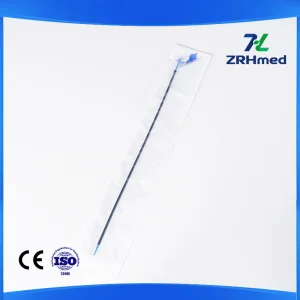
| Suction Ureteral Sheath | Medical TPU + 304V Mesh Braiding + PTFE Inner Liner | 10/12Fr, 11/13Fr, 12/14Fr; 35cm, 45cm, 55cm | Burst Pressure > 4.5 bar; Kink Recovery 98% | RIRS / Stone Dusting |
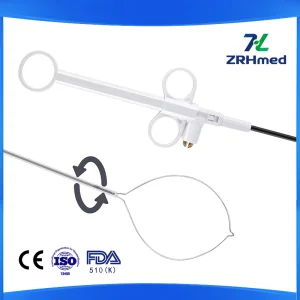
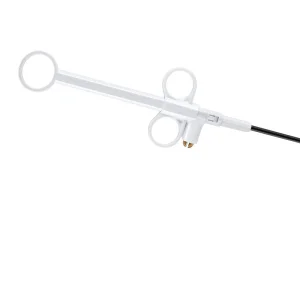
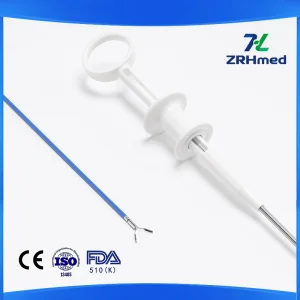
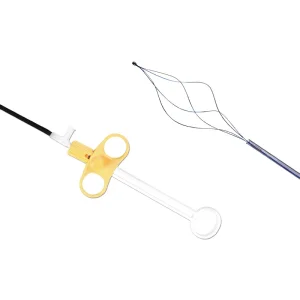
| Nitinol Stone Extractor | Superelastic Nickel-Titanium (NiTi) 4-Wire Basket | Sheath 1.5Fr – 2.2Fr; Wire Basket Width 11mm–15mm | Tensile Joint Strength > 18 N | Caliceal Stone Capture |
| PCNL Access Sheath | High-Density Radiopaque Polypropylene / Pebax | 14Fr, 16Fr, 18Fr, 20Fr, 24Fr; Length 17cm–22cm | Axial Pushability > 25 N without collapse | Percutaneous Dilation |
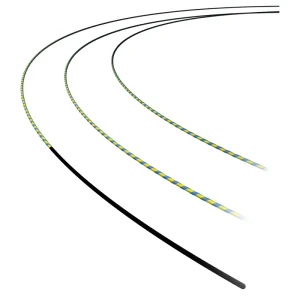
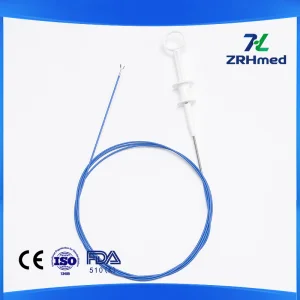
| Hydrophilic Zebra Guidewire | Nitinol Core + Radiopaque Polyurethane Jacket + PVP | 0.032", 0.035", 0.038"; Straight / Angled Tip; 150cm | Elongation at Break < 5%; Hydrophilic Durability 25 passes | Tract Negotiation |
How Jiangxi ZhuoRuiHua Medical Instrument Co., Ltd. transforms clinical endourology needs into mass-producible, high-precision surgical instruments.
Utilizing multi-lumen continuous melt-extrusion technology. By shrinking the wall thickness of ureteral sheaths from 0.45mm to an unprecedented 0.28mm while preserving collapse resistance, clinicians gain enlarged internal lumens without expanding outer French diameter.
Integration of organosilane quaternary ammonium and non-leaching antimicrobial peptide coatings. Prevents bacterial biofilm colonization during extended surgical catheter placement, drastically lowering catheter-associated urinary tract infections (CAUTI).
Integrating micro-fiber-optic Fabry-Perot pressure sensors directly into the sheath wall matrix. Transmits real-time intrarenal pressure data to intelligent irrigation pump displays, triggering automatic fluid cut-offs if pressures surpass safe clinical thresholds.
Deployment of vision-guided 6-axis robotic arms for high-tolerance wire weaving, automated micro-welding of Nitinol tips, and optical camera verification for every manufactured basket cage, eradicating human assembly variation.
Operating under a certified ISO 13485:2016 quality management regime, Jiangxi ZhuoRuiHua Medical Instrument Co., Ltd. maintains advanced Class 100,000 (ISO Class 8) cleanrooms equipped with positive-pressure HEPA filtration cascades, electrostatic discharge controls, and temperature/humidity logging. Every production run undergoes verified three-tier QC gates: Raw Material Inbound Fourier Transform Infrared Spectroscopy (FTIR), In-Process Dimensional Laser Micrometry, and Finished Product Tensile, Burst, and Ethylene Oxide Sterilization Residue (GC chromatography) analysis.
Detailed technical, operational, and regulatory clarifications designed to inform international hospital procurement directors and B2B medical supply chains.
Engineered for maximum reliability across complex endoscopic retrograde cholangiopancreatography (ERCP), polypectomy resection, and negative-pressure endourology.