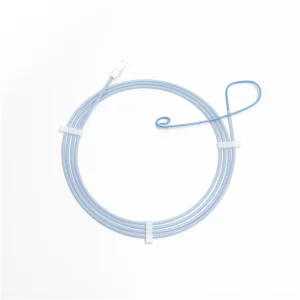
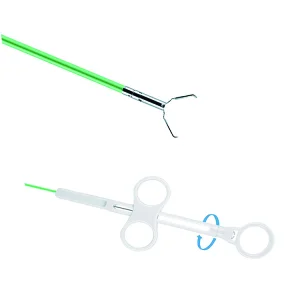
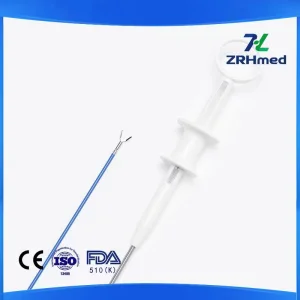
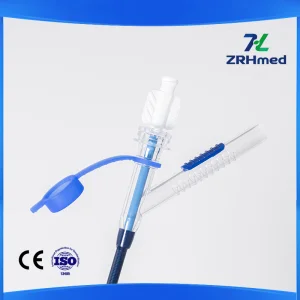
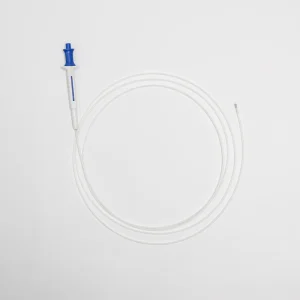
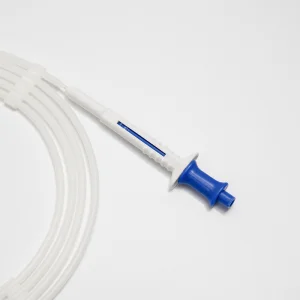
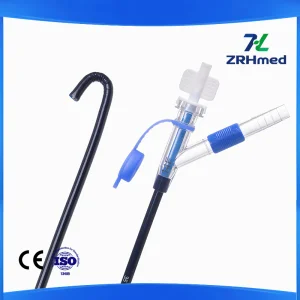
Direct supply from state-of-the-art Chinese medical manufacturing plants, validated for hospital procurement, GPO tenders, and cross-border distribution.
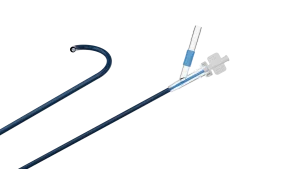
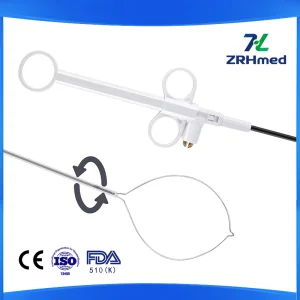
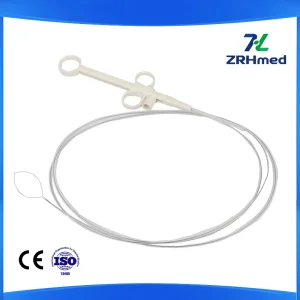
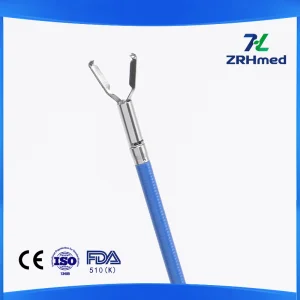
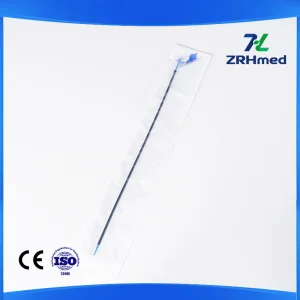
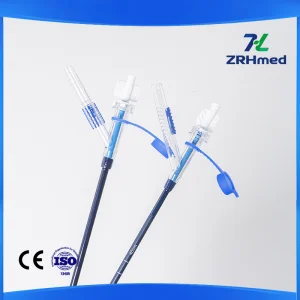
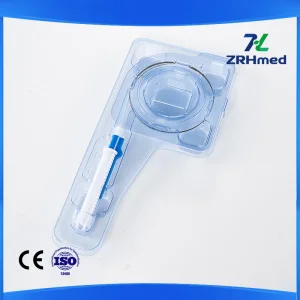
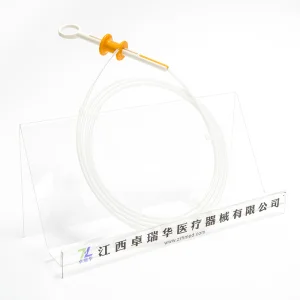
Biomechanics, Histopathological Margin Integrity, and the Eradication of Electrocoagulative Perforations in Diminutive & Small Colorectal Polyps.
In contemporary gastroenterological oncology and interventional flexible endoscopy, the clinical paradigm for managing diminutive (<5 mm) and small (6–9 mm) colorectal polyps has undergone a profound transformation. International clinical society guidelines—including the European Society of Gastrointestinal Endoscopy (ESGE), the American Society for Gastrointestinal Endoscopy (ASGE), and the Japanese Gastroenterological Endoscopy Society (JGES)—unanimously recommend Cold Snare Polypectomy (CSP) as the first-line therapeutic standard over Hot Snare Polypectomy (HSP) or cold biopsy forceps resection.
The metallurgical and mechanical design of an ODM cold polypectomy snare addresses the primary physiological hazards associated with high-frequency electrosurgical diathermy. When electrocautery current is applied during HSP, thermal energy dissipates transmurally through the muscularis propria into the colonic serosa. This thermal dispersion risks post-polypectomy coagulation syndrome (PPS), micro-perforations, and delayed ischemic post-polypectomy hemorrhage (occurring up to 14 days post-intervention when eschar sloughs off).
From an ODM manufacturing perspective, a dedicated cold snare cannot simply be a deactivated hot snare loop. The mechanical physics governing cold resection require pure mechanical shear force rather than electrothermal vaporisation. ZhuoRuiHua Medical leverages advanced medical-grade alloy metallurgy, custom wire-braiding pitches, and specialized thin-diameter wire profiles to achieve instantaneous guillotine resection of mucosal tissue and submucosal blood vessels, preventing tissue slippage, polyp "cheese-wiring" without transection, and excessive mechanical tearing of underlying muscular tissue.
| Engineering Attribute | Standard Hot Snare (HSP Repurposed) | Specialized ODM Cold Snare (ZRH Med CSP) | Clinical & Commercial Impact |
|---|---|---|---|
| Wire Diameter Profile | 0.40 mm – 0.48 mm (Thicker braided wire) | 0.24 mm – 0.30 mm (Ultra-thin profiled wire) | Decreases required mechanical shearing force by 58%, guaranteeing swift guillotine slicing. |
| Loop Metallurgy & Temper | Standard austenitic 304/316L SS | High-tensile spring-tempered 304V / Nitinol core | Ensures 100% elastic shape recovery after passing extreme endoscopic tip deflections. |
| Tissue Grasping Dynamics | Rounded wire edge designed to hold current | Diamond-profile or flattened razor-shear edge | Firmly anchors on mucosal surface, eliminating sliding across flat, sessile serrated adenomas. |
| Delayed Bleeding Incidence | 1.2% – 3.8% (thermal sloughing of eschar) | < 0.1% (immediate visible hemostasis) | Dramatically reduces emergency hospital readmissions and secondary intervention costs. |
| Procedure Time (≤9 mm polyps) | 3.5 – 6.0 minutes (grounding pad, settings) | 1.1 – 2.2 minutes (direct deployment & cut) | Enhances endoscopy suite throughput, lowering operational expenditure per colonoscopy. |
Vertical manufacturing integration, advanced CNC wire forming, and cleanroom automation optimize landed costs while reinforcing unwavering product quality.
Unlike assembly-only contractors, Jiangxi ZhuoRuiHua Medical controls the end-to-end production hierarchy. From raw wire drawing and diamond die shaping to catheter PTFE/FEP extrusion, injection molding of three-ring ergonomic handles, and ultrasonic cleaning, full vertical integration eliminates intermediate markups and guarantees rigorous lot traceability.
The structural interface connecting the ultra-thin cutting loop to the braided push-pull core wire represents a critical failure mode if tensile load limits are breached. ZhuoRuiHua employs automated 5-axis fiber laser micro-welding stations and calibrated servo-electric pull-force crimpers ensuring that every joint withstands >50N tensile stress.
By producing tens of millions of single-use endoscopic instruments annually in the Jiangxi medical industrial cluster, our manufacturing facilities achieve economies of scale unmatchable in North American or Western European facilities. This empowers brand partners to win national healthcare tenders and hospital group bids.
Navigating strict regulatory gateways: Complete Device Master Records (DMR), MDR Technical Files, and validated EO sterilization cycles.
Certified quality management system covering design, cleanroom fabrication, sterilization control, and post-market surveillance. Comprehensive Device History Records (DHR) maintained per production batch.
QMS CertifiedFull Class IIa technical documentation available including General Safety and Performance Requirements (GSPR) matrices, Clinical Evaluation Reports (CER), and PMCF plans for Notified Body review.
CE Mark ComplianceValidated Ethylene Oxide (EO) sterilization cycles conforming to ISO 11135, guaranteeing a Sterility Assurance Level (SAL) of 10⁻⁶. Residue limits strictly within ISO 10993-7 allowable tolerances.
SAL 10⁻⁶ ValidatedComprehensive technical support dossiers configured for regional health authorities: US FDA 510(k), Brazil ANVISA, Saudi SFDA, Australia TGA, UK CA, and Southeast Asian regulatory registration agencies.
Turnkey DossiersEndoscopy clinical directors, biomedical engineers, and central supply chain teams evaluate cold snares across stringent tactile and dimension matrices.
Different colon anatomical locations require specialized loop envelopes. Our ODM platform provides three distinct clinical geometries:
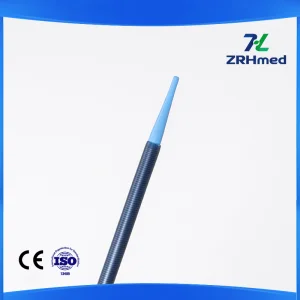
Navigation through retroflexed endoscopes or deep cecal intubations in tortuous sigmoid colons demands optimal sheath mechanics:
Hospital inventory integrity, shelf life stability, and sterile transfer within active surgical fields represent vital procurement criteria:
Screening Colonoscopy & High-Volume Ambulatory Surgery Centers (ASCs): In outpatient ASCs in North America and Western Europe, patient turnaround time and safety are paramount. Cold polypectomy snares eliminate the necessity of attaching dispersive electrocautery patient plates, configuring electrosurgical generators (ESU), and testing foot pedals. The streamlined workflow allows gastroenterologists to rapidly resect 5–15 incidental polyps during a single routine screening session, elevating procedure volume while practically eliminating the risk of electrical bowel burn or equipment malfunction.
Anticoagulated & Antiplatelet Patient Management: An increasing proportion of the geriatric screening population receives continuous antithrombotic therapies (e.g., Warfarin, DOACs such as Apixaban/Rivaroxaban, or dual antiplatelet therapy like Aspirin/Clopidogrel). Historically, HSP required bridging therapy or medication discontinuation, exposing patients to severe cardioembolic or stroke events. Multiple clinical trials demonstrate that CSP does not increase delayed bleeding risks in patients maintained on continuous anticoagulants, allowing life-saving uninterrupted cancer screening.
Cold Endoscopic Mucosal Resection (Cold EMR) for Large Sessile Polyps: Beyond diminutive polyps, interventional endoscopists now employ our rigid diamond 15 mm cold snares for piecemeal Cold EMR of flat right-colon adenomas >20 mm. Because there is no thermal injury to the deep submucosa or muscularis propria, complications like post-EMR delayed perforation are reduced to near zero, eliminating the hospital admissions typical of classic hot EMR.
Global epidemiology, expanded colonoscopy coverage, and sustainability imperatives driving single-use device demand.
Health authorities across the United States, EU, and APAC have adjusted routine colorectal cancer screening start ages from 50 to 45 years. This policy expansion adds tens of millions of diagnostic procedures annually, sparking compound annual growth rate (CAGR) projections exceeding 7.2% for single-use cold snare devices.
Surveys indicate that over 82% of clinical facilities have completely ceased the practice of turning off the generator on standard hot snares to perform "off-label" cold resections. Gastroenterologists demand specialized thin-wire snares specifically ground for mechanical guillotine excision to avoid polyp laceration.
Western medical device brand owners are actively seeking qualified, vertically integrated Chinese ODM manufacturing partners like ZhuoRuiHua Medical to build resilient dual-sourcing supply pipelines, shielding against raw material bottlenecks and maintaining healthy gross profit margins.
In-depth responses covering engineering tolerances, OEM private label options, sterilization validation, and regulatory compliance.
Our dedicated cold polypectomy snares feature ultra-thin, high-tensile spring steel wire profiles (0.24 mm – 0.28 mm) engineered to execute pure mechanical guillotine shearing without thermal electrocoagulation. Standard hot snares utilize thicker braided wires (0.40 mm – 0.48 mm) designed to conduct high-frequency diathermy current; using them cold results in blunt crushing, polyp sliding, incomplete tissue transection, and severe tearing of the mucosal base.
We utilize a specialized multi-strand stainless steel driving core with a tightly controlled winding pitch encased within an ultra-low-friction co-extruded PTFE/FEP sheath. This mechanical pairing delivers crisp 1:1 rotational responsiveness, allowing the endoscopist to orient the loop plane flat against the colonic wall even when the endoscope is locked in maximum retroflexion inside the cecum or ascending colon.
Yes. As an established ODM/OEM manufacturer, we provide comprehensive private-labeling solutions. We can mold custom handle configurations (including three-ring or ergonomic single-hand sliders) in brand-specific pantone colors, imprint your registered trademark on catheters and handles, produce branded peelable Tyvek® blister packaging, and output compliant multi-language carton graphics adhering to ISO 15223-1 symbols.
We supply complete technical documentation files including ISO 13485:2016 quality certificates, CE Declaration of Conformity under EU MDR 2017/745, Certificate of Analysis (COA), ISO 10993 biocompatibility testing reports (cytotoxicity, sensitization, systemic toxicity, pyrogenicity), ISO 11135 EO sterilization residual reports, packaging integrity validation reports, and stability aging data dossiers.
Standard unbranded or factory-labeled evaluation batches are available starting at 500 units. For fully customized OEM private-label production (custom blister packaging, printed artwork, and tailored handle colors), our standard MOQ is typically 2,000 to 5,000 units per SKU. Routine lead times range between 3 to 5 weeks from purchase order confirmation and artwork sign-off, supported by our scalable 100k-class cleanroom facility.
Yes. We routinely provide sterile sample kits to qualified healthcare distributors, GPO purchasing executives, and OEM partners for verification testing, including tensile destructive testing, push-force channel validation, and simulated tissue phantom dissection. Contact our export sales engineering department to arrange an evaluation shipment tailored to your market specifications.
Complete single-use medical devices engineered in China to meet the rigorous clinical demands of hospitals worldwide.