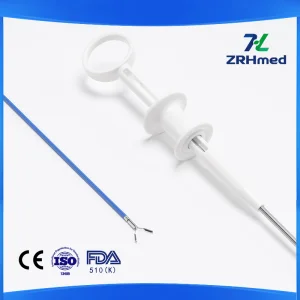
Engineered for seamless integration with Olympus, Fujifilm, and Pentax working channels, providing clinical reliability across mucosal resection and ERCP interventions.
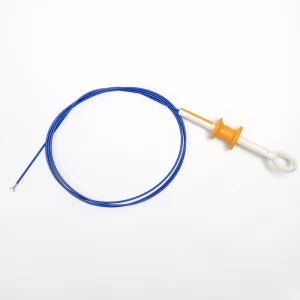
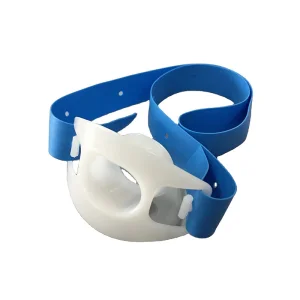
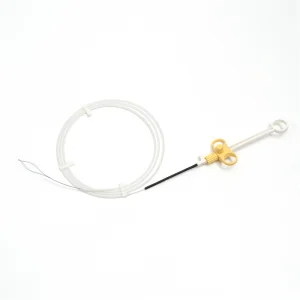
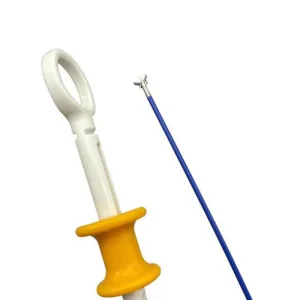
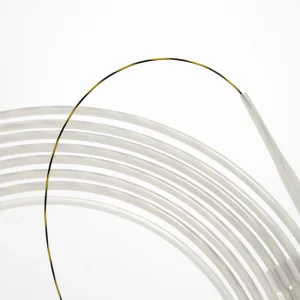
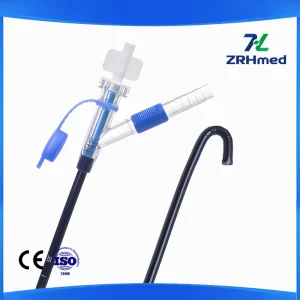
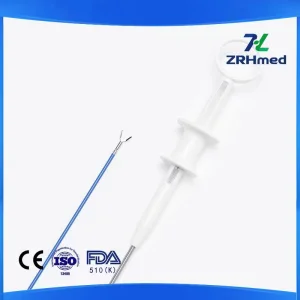
Analyzing how integrated hydro-dissection platforms eliminate catheter exchange, elevate resection speeds, and protect structural muscularis layers during complex mucosal interventions.
Traditional ESD protocols historically demanded repetitive device exchanges between needle injectors and electrosurgical cutting knives, increasing procedural time and hemorrhage risks. Modern flush knife technology synthesizes high-pressure micro-hydration channels inside a 1.5mm to 2.5mm tungsten or platinum electrode. By channeling saline or viscous lifting solutions directly through the core tip, clinicians maintain submucosal elevation continuously without instrument retraction.
Electrosurgical dissection within the GI wall operates within sub-millimeter margins of the muscularis propria. Advanced ODM knife designs implement ceramic-insulated collars and micro-beveled tips that constrain radiofrequency energy dispersion. These innovations drastically suppress unintended thermal transfer, preventing transmural micro-perforations while ensuring instantaneous hemostatic soft-coagulation for exposed feeder vessels.
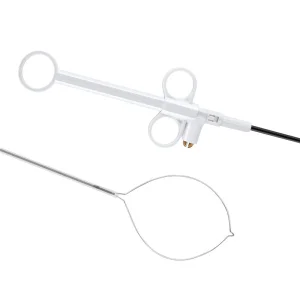
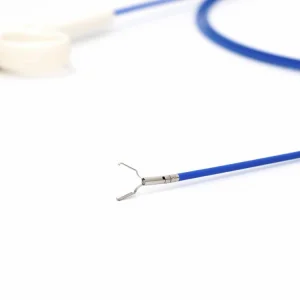
OEM brand strategies now dictate customized distal tip geometries tailored to specific anatomic friction zones. Flush ball tips prevent muscularis snagging during deep gastric dissections; needle configurations deliver high-current-density mucosal incisions; and rotatable mini-scissor variants ensure precise grasping and vessel transection in tortuous colonic flexures, driving institutional clinical preference.
Addressing the stringent technical parameters, multi-regional validation standards, and supply chain redundancies required by medical tier-one brand owners and regional hospital distributors.
Procurement teams demand robust polyimide and PTFE fluoropolymer multi-layer co-extrusions capable of withstanding peak high-frequency voltages exceeding 3,000Vp without dielectric breakdown, even along acute retroflexion angles inside the gastric fundus.
Fluid lumens must sustain pressures up to 1.2 MPa without ballooning, delamination, or distal connector separation. Our automated luer-lock bonding techniques guarantee uniform hydrodynamic delivery of contrast and lifting agents during extended surgical procedures.
Braided stainless steel micro-wire jacketing ensures zero hysteresis and seamless rotational responsiveness. When an operator rotates the ergonomic proximal handle 45 degrees, the distal tip replicates the exact angular shift without whip or elastic lag.
Distributors require ready-to-file Technical Documentation dossiers (EU 2017/745 MDR Class IIb) including ISO 10993 biocompatibility testing, accelerated shelf-life stability data, and validated ethylene oxide (EO) residual degassing reports.
From precision laser micro-welding to fully validated cleanroom packaging, our factories provide an end-to-end framework translating clinical concepts into commercial market dominance.
Our in-house CNC wire-EDM and Swiss-type multi-axis turning centers fabricate electrosurgical dissection electrodes with dimensional accuracy down to ±5 microns. We formulate and process proprietary refractory tungsten-rhenium alloys and high-purity ceramic insulators to resist carbonization, minimize tissue eschar adhesion, and sustain stable impedance across extended mucosal cuts.
By housing catheter extrusion, catheter braiding, handle injection molding, laser micro-welding, and automated packaging within a single centralized industrial ecosystem, we mitigate third-party supply vulnerabilities. Global partners achieve direct-from-factory cost efficiencies that maintain retail competitiveness while defending high margin structures during hospital tender bid cycles.
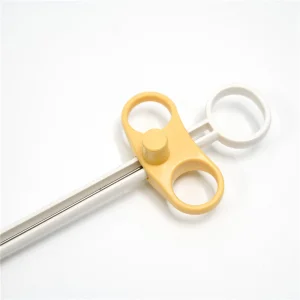
We tailor procedural ergonomics to individual clinician preferences across diverse geographic markets. OEM solutions include single-hand thumb actuation sliders, secondary fluid injection ports, custom color coding for rapid recognition, laser-etched graduation marks along the catheter, and custom-molded thermoformed trays fitted with sterile barrier Tyvek pouches.
Meeting rigorous international medical device standards through automated cleanroom manufacturing, 100% in-line verification, and exhaustive technical validation files.
Comprehensive Quality Management Systems operating under strict ISO 13485 standards. Full lifecycle lot traceability from raw polymer resin and electrode billets through to final palletized sterile product releases.
Fully compliant with the elevated safety parameters and Clinical Evaluation Reports (CER) of the European Medical Device Regulation, empowering our EU distributor network with compliant, hassle-free market introduction.
Validated Ethylene Oxide sterilization cycles executing precise parametric monitoring to ensure a Sterility Assurance Level (SAL) of 10⁻⁶ with strictly verified non-toxic residual levels compliant with ISO 10993-7.
Custom packaging artworks supporting localized languages, IFU translations, country-specific registration dossiers, ANVISA, NMPA, and FDA 510(k) pathway technical file support for our global client partners.
Anticipating clinician requirements with pioneering materials, intelligent electrosurgical generator feedback, and AI-navigated mucosal intervention systems.
Deployment of ultra-thin fluorocarbon and ceramic nanocomposite coatings onto knife cutting margins, completely eliminating eschar adherence and thermal carbonization during extended high-output dissection sessions.
Micro-sensor tips providing real-time tissue bio-impedance feedback to electrosurgical units, automatically adapting coagulation depth and RF waveforms to prevent muscularis propria perforation in real-time.
Hybridization of co-axial fluid channels with flexible hollow silica optical fibers, allowing clinicians to switch between pneumatic hydro-elevation, mechanical dissection, and thulium/holmium laser cutting.
Miniaturized flush knife architectures engineered explicitly for articulated master-slave endoscopic surgical robots, featuring sub-millimeter multi-degree-of-freedom articulation and automated fluid injection.
Key insights into channel compatibility, private-label minimum order thresholds, generator matching, and regulatory compliance protocols.
Our flush knife assemblies are manufactured with catheter outer diameters ranging between 1.8mm and 2.6mm, making them fully compatible with standard 2.8mm to 3.7mm gastroscope and colonoscope biopsy working channels without compromising scope suction or fluid aspiration.
We incorporate micro-polished, electro-chemically passivated internal lumen walls with hydrophobic fluoropolymer liners. In tandem with an engineered distal jet orifice taper, this architecture resists viscous fluid residue accumulation and prevents backward blood infiltration during coagulation cycles.
Yes. Our devices are engineered with universal HF connectors that interface seamlessly with major electrosurgical units, including Erbe VIO 200/300/3 series, Olympus ESG-400, and Medtronic systems, utilizing standard Cut, Swift Coag, and Forced Coag mode algorithms.
For custom ODM/OEM designs requiring dedicated tip geometries, unique handle branding, and customized blister packaging, standard trial production runs begin at 500 to 1,000 units, while standardized catalog SKUs support lower distribution trial quantities.
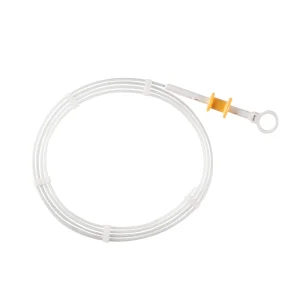
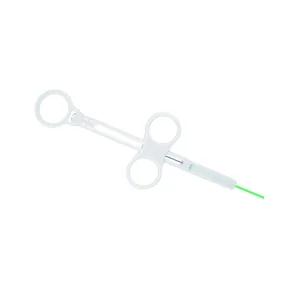
High-turnover, CE-certified endoscopic consumables developed to complement ESD platforms, ensuring seamless procedural success across mucosal resections, hemostasis, and stone management.