Engineered with sub-millimeter concentricity, biocompatible medical polymers, and verified low-friction lubricious surface technology.
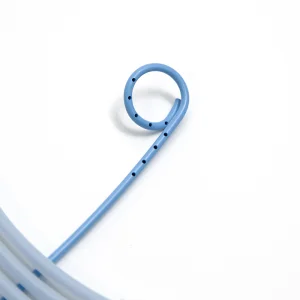
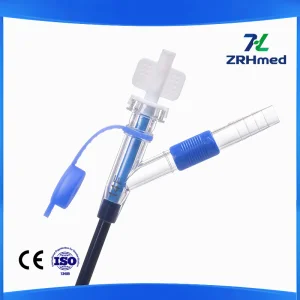
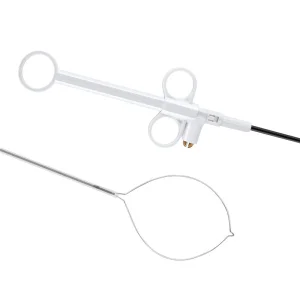
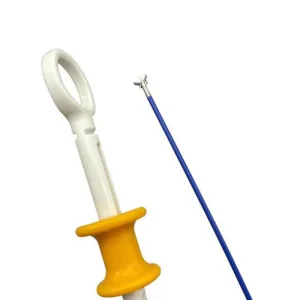
A comprehensive examination of rated burst pressure dynamics, dual-lumen extrusion profiles, and non-compliant polymer balloon blow molding.
In modern interventional urology, balloon dilatation catheters represent the gold standard for atraumatic, radial tissue expansion. Unlike rigid axial dilators (such as Amplatz or fascial dilator sets) which induce longitudinal shear stresses and micro-lacerations against tortuous ureteral mucosa, high-pressure balloon dilatation systems transfer uniform hydraulic force outwards at a perpendicular angle to the stricture axis. As an experienced ODM urology balloon dilatation catheter manufacturer in China, our facility engineers non-compliant and semi-compliant dilatation platforms that resolve luminal narrowing across the upper and lower urinary tracts without triggering post-procedural fibrotic response.
Key Clinical Premise: Preserving mucosal integrity during ureteral dilation requires a calibrated balance between ultra-high rated burst pressure (RBP up to 30 atmospheres) and sub-millimeter profile recovery during negative-pressure deflation. Minimal balloon shoulder elongation prevents iatrogenic trauma to adjacent healthy tissue.
The core structural efficacy of our urological balloon catheter resides in proprietary multi-layer micro-extrusion technology. The shaft incorporates an inner guidewire lumen (optimized for 0.035" and 0.038" stiff or hydrophilic nitinol wires) and an outer inflation lumen with an asymmetric co-axial flow geometry. This geometry dramatically reduces fluid viscosity resistance during contrast agent and saline mixture loading, yielding inflation and deflation times that are 40% faster than conventional symmetrical lumens.
For the balloon membrane, we utilize pharmaceutical-grade linear aliphatic polyamides (Nylon 12) compounded with proprietary cross-linked polyether block amides (Pebax®). This semi-crystalline thermoplastic elastomer system exhibits extraordinary tensile strength under high hoop stress, resisting dog-boning (central constriction under stricture resistance) and preventing over-expansion beyond the nominal diameter. When treating dense, hyperplastic strictures or obliterative scar tissue post-endopyelotomy, our catheter maintains its cylindrical shape up to 24–30 atm without radial deviation.
| Catheter Feature | Standard Commercial Benchmark | ZRH Med High-Precision ODM Specification | Clinical Advantage |
|---|---|---|---|
| Balloon Material System | Conventional PET or Standard Nylon | Cross-linked Nylon 12 / High-Durometer Pebax Composite | Strict zero-radial compliance prevents tissue shearing |
| Rated Burst Pressure (RBP) | 14 – 18 atm | 20 – 30 atm (Customizable per clinical anatomy) | Penetrates refractory, calcified, or post-radiation strictures |
| Shoulder Geometry | Standard conical taper (45° angle) | Atraumatic ultra-short shoulder (70°–80° transition) | Restricts radial expansion strictly to lesion margin |
| Deflation Profile Memory | Single or dual pleat (variable re-wrap) | Quad-fold or 6-fold automated laser pleating | Effortless instrument removal through 6Fr/8Fr sheaths |
| Surface Lubricity | Silicone oil or uncoated shaft | PVP covalent bonded hydrophilic hydrogel | Friction coefficient < 0.02; zero pushability loss |
End-to-end tooling design, automated catheter tip forming, cleanroom blow molding, and comprehensive global registration support under ISO 13485.
Our Jiangxi manufacturing campus hosts state-of-the-art 5-axis CNC machining, EDM wire cutting, and micro-injection molding. We design and validate custom balloon molds within 3 to 4 weeks, enabling global OEM/ODM clients to swiftly enter niche markets with bespoke balloon lengths (10mm to 100mm) and diameters (3mm to 30mm).
Every single balloon dilatation catheter batch undergoes 100% burst test sampling, dimensional verification using digital optical comparators, and automated pull-force tensile testing for catheter hub joints. We strictly eliminate micro-pinhole defects through automated helium mass-spectrometry leak detection.
By integrating raw polymer compounding, precision tube extrusion, and sterile blister packaging under one vertical structure, we offer hospital distributors a formidable margin advantage. Our supply chains resist geopolitical disruptions, empowering international partners to win national healthcare tenders against multinational conglomerates.
Detailed pathways demonstrating the biomechanical deployment of balloon dilatation systems across complex nephrological and urological interventions.
Treating both intrinsic and extrinsic UPJ obstructions post-pyeloplasty or congenital stenosis. The catheter is navigated across the high-resistance junction over a stiff 0.035" guidewire under fluoroscopy. High hydraulic pressure effaces the waist of the stricture, stretching surrounding fibrous bands without triggering ischemia.
Establishing a single-step transcutaneous renal working tract. Our specialized high-pressure nephrostomy tract balloon dilator, paired with a matching Amplatz working sheath (24Fr to 30Fr), expands the renal parenchyma radially in seconds, effectively tamponading parenchymal capillaries and cutting procedural blood loss compared to telescoping dilators.
In narrow or spastic ureters where a 12/14Fr or 11/13Fr access sheath cannot pass atraumatically, a short 5mm x 40mm balloon dilatation catheter softens the distal ureteral orifice and intramural tunnel, preventing full-thickness avulsion or severe mucosal shear tears during retrograde intrarenal surgery (RIRS).
A frequent complication following radical cystectomy with ileal conduit or neobladder reconstruction. These devascularized, scarred strictures require non-compliant dilatation pressures up to 25 atm to remodel collagen without causing retroperitoneal perforation or enteric disruption.
Analyzing drug-coated balloon innovations, hospital value-based procurement shifts, and global distributor risk mitigation.
A transformative trend currently reshaping the urology balloon catheter sector is the migration of cardiovascular drug-eluting principles into endourology. Simple mechanical balloon dilation of recurrent ureteral or urethral strictures historically demonstrated recurrence rates exceeding 40–60% within 12 months due to fibroblast migration and hyperplastic scar remodeling. The application of paclitaxel-coated or sirolimus-eluting urological balloons delivers targeted anti-proliferative therapy directly into the sub-epithelial layers during the brief 2-minute dilation window. Our R&D engineering division is actively partnering with international medical entities to develop proprietary micro-crystalline carrier matrices that optimize drug retention during catheter tracking and achieve 85%+ tissue transfer efficiency at nominal pressure.
Global public healthcare systems (such as the UK NHS, European health tenders, and Latin American social security networks) are executing rigorous Value-Based Procurement (VBP) policies. Hospital procurement officers no longer accept premium-priced single-use consumables unless matched by demonstrable clinical equivalence and lower per-case acquisition costs. By standardizing high-volume production lines in China, our factory provides private-label OEM partners with identical raw materials (Arkema Pebax, Evonik Vestamid, DSM coatings) at a 40–55% cost reduction compared to legacy Western suppliers. This enables regional distributors to aggressively secure national tenders while protecting robust commercial operating margins.
Endourology procedures historically suffered from reprocessing bottlenecks, micro-luminal biofilm accumulation, and mechanical fatigue in re-sterilized dilators. Global surgical guidelines increasingly mandate single-use sterile disposable catheterization packs. Every urology balloon dilatation catheter manufactured in our facility is double-sterile blister sealed, with optional integrated inflation devices, high-pressure stopcocks, and pre-mounted peel-away Amplatz sheaths. This eliminates hospital autoclave logistics, guarantees pristine balloon folding dynamics, and reduces nosocomial urinary tract infections (UTIs) to near zero.
Distributor Sourcing Insight: Enterprise distributors expanding their private-label catalog benefit from our comprehensive regulatory modular dossier. We provide completed biocompatibility testing (cytotoxicity, systemic toxicity, sensitization, intracutaneous reactivity, hemocompatibility), accelerated aging reports verifying a 3 to 5-year shelf life, and detailed C-arm visibility clinical evaluations.
Crucial engineering, regulatory, and logistics answers for hospital supply chain directors, contract manufacturing clients, and biomedical engineers.
Semi-compliant balloons (typically formulated from PE or lower durometer Pebax) continue to expand in diameter by 10–20% as inflation pressure increases from nominal to burst, risking over-dilation in healthy segments. Non-compliant balloons (engineered from high-density Nylon 12 or PET) increase less than 3–5% beyond their nominal size, focusing high burst energy strictly on stricture dissipation.
We swage high-density Platinum-Iridium (90/10) or Gold radiopaque markers directly onto the internal shaft under digital microscope vision before balloon laser welding. Each marker is tested via automated pull-off shear testing (>15N) to ensure zero detachment risk during catheter advancement through tortuous anatomical curves.
We provide full-spectrum customization: custom balloon diameters (3mm to 30mm), balloon lengths (15mm to 120mm), shaft working lengths (40cm for nephrostomy, 65–100cm for ureteral dilation), guidewire lumen compatibility (0.018", 0.035", 0.038"), customized color-coded hubs, and private-labeled retail carton packaging.
RBP is determined statistically according to ISO 10555-4. We inflate balloon samples in a 37°C water bath until rupture. The RBP is calculated such that at least 99.9% of the balloons will survive with 95% statistical confidence. Batch test certificates accompany every export consignment.
For existing tooling geometries, typical OEM production turnaround is 3 to 4 weeks, including EO sterilization and aeration cycles. For completely new ODM projects requiring dedicated extrusion dies or blow mold fabrication, the engineering phase spans 6 to 8 weeks through functional prototype sign-off.
Yes. Our regulatory affairs team furnishes complete technical documentation dossiers, including ISO 13485 certification, CE MDR declarations of conformity, biocompatibility reports (ISO 10993), stability and aging studies, risk management analysis (ISO 14971), and clinical evaluation summaries.
Complete single-source procurement for endoscopic diagnostic instruments, hemostasis devices, and sterile guide systems.