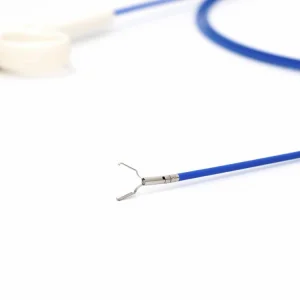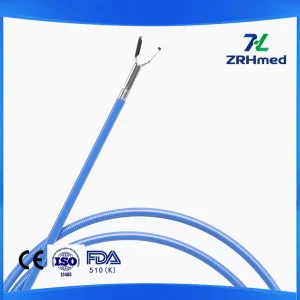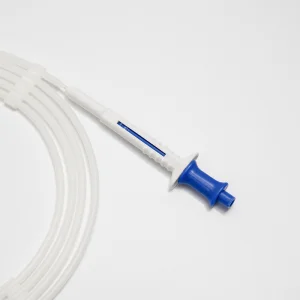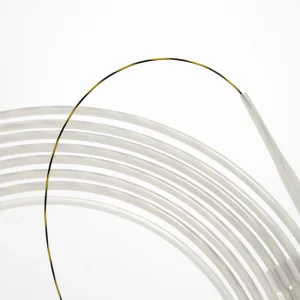
OEM & private-label certified solutions manufactured under stringent cleanroom specifications.
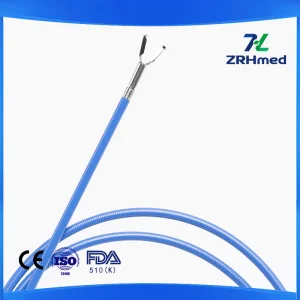
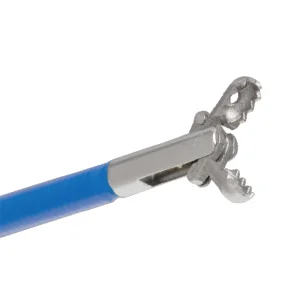
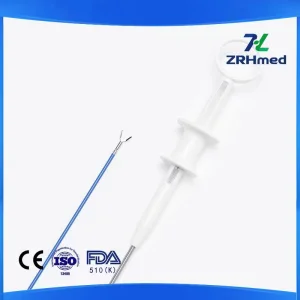
Strategic insight into mechanical hemostasis trends, reimbursement dynamics, and therapeutic risk mitigation.
Endoscopic submucosal dissection (ESD) and endoscopic mucosal resection (EMR) have expanded from specialized academic institutes into standard ambulatory surgery centers. With larger lesions resected en bloc, delayed perforation and post-procedure bleeding risks escalate exponentially. Clinical guidelines now advocate proactive mechanical defect closure, demanding hemoclips with wider jaw expanses (9mm to 16mm) that can gather deep muscularis layers without causing localized tissue ischemia.
Early-generation clips committed the operator upon initial closure, turning misdirected placements into procedural bottlenecks. Modern clinical workflow mandates clips capable of infinite reopening and repositioning prior to ultimate deployment. This mechanical feedback eliminates clip wastage, minimizes procedure durations under anesthesia, and safeguards against inadvertent clipping of non-target mucosa in challenging anatomical flexures such as the duodenal bulb or retroflexed gastric fundus.
Global regulatory bodies, including the US FDA and EU competent authorities, continue tightening vigilance over scope channel contamination. Single-use, pre-mounted hemoclips remove the risk of cross-contamination inherent in obsolete reloadable systems. By optimizing automated micro-assembly and progressive stamping, qualified OEM factories deliver sterile, blister-packaged hemoclips at price points compatible with tight diagnosis-related group (DRG) hospital reimbursement policies.
How Tier-1 medical device brands and hospital distributors de-risk supply chain vulnerability through factory direct contracts.
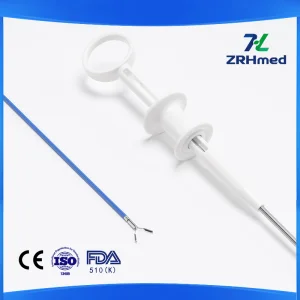
Procurement directors scrutinize tactile feedback. A major failure mode of substandard clips is rotational lag inside tortuous scopes. Our proprietary braided stainless-steel catheter and multi-filar core wire ensure 1:1 bi-directional rotation even in a 210° gastroscope retroflexion. This empowers endoscopists to address tangential spurting vessels precisely at the first pass.
Clips must resist early shedding before tissue healing is complete (typically 7–14 days). Engineered with surgical-grade 17-7 PH and 316L medical stainless steel or shape-memory nitinol alloys, our locking jaws maintain consistent compressive pressures exceeding 15N, sealing bleeding lumens while safeguarding against secondary necrosis through blunt micro-serration designs.
Instrument channel damage creates substantial repair expenditures for hospital suites. Our clips feature smooth outer profile transitions, rounded tip caps, and hydrophilic-compatible sheaths that prevent internal channel scarring during rapid device insertion through fully articulated therapeutic scopes (2.8mm and 3.2mm channel compatibility).
Complete traceability and international dossier compilation backing seamless national healthcare registrations.
Navigating global regulatory landscapes requires exhaustive testing documentation. ZhuoRuiHua provides full design history files (DHF), biocompatibility data (ISO 10993 cytotoxicity, sensitization, systemic toxicity), ethylene oxide (EO) residual degradation reports (ISO 11135), and accelerated 3-year aging validations for CE MDR (EU 2017/745), US FDA 510(k), ANVISA, and NMPA filings.
We configure localized labeling satisfying global Unique Device Identification (UDI) mandates. Options include custom heat-sealed Tyvek-to-PETG blister packaging, multi-lingual instruction for use (IFU) inserts, and tailored carton configurations adapted to individual regional customs clearance protocols and hospital purchasing specifications.
Our cross-functional technical teams maintain proactive clinical dialogues. We provide distributor sales personnel and hospital procurement committees with video bench testing, deployment force tension profiling, and mechanical fatigue simulations, ensuring your frontline reps present unmatched technical authority during competitive hospital tenders.
Continuous R&D investments driving the horizon of minimally invasive gastrointestinal therapeutics.
To eliminate foreign body retention risks and secondary ulceration from long-term embedded metals, our R&D team is piloting polymer-magnesium alloy composites. These bioresorbable architectures provide robust acute hemostatic clamping throughout the critical healing window before gradual, benign enzymatic degradation occurs safely within the gastrointestinal tract.
By harnessing pseudo-elastic nitinol formulations, upcoming clip iterations achieve expansive 18mm+ jaw openings without proportional increases in outer catheter French sizing. This innovation allows deeper, full-thickness defect adaptations during challenging Natural Orifice Transluminal Endoscopic Surgeries (NOTES) and complex post-bariatric revisions.
Integrating micro-mechanical pressure thresholds directly into the handle assembly provides operators with instantaneous tactile and auditory confirmation upon optimal vascular occlusion. This intelligent feedback eliminates subjective guesswork, preventing both tissue shearing from over-compression and secondary bleeding from under-clamping.
Essential guidance covering engineering specifications, customization parameters, and supply chain timelines.
Comprehensive therapeutic portfolio engineered for rapid deployment across gastroenterology and endoscopy suites.