
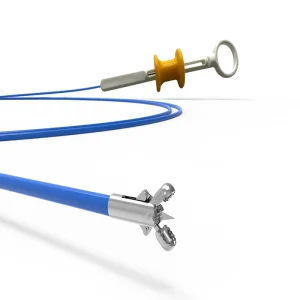
High-turnover, CE & FDA aligned endoscopic and urological devices designed for zero cross-contamination, instant tactile responsiveness, and rapid turnover in high-volume GI departments.
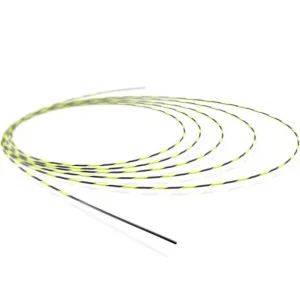
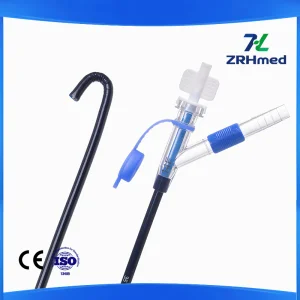
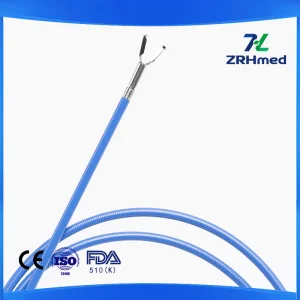
How infection control protocols, outpatient volume surges, and stringent sterilization economics are redefining procurement strategies across tier-1 healthcare networks.
Nosocomial infections related to residual bio-debris inside working channels have catalyzed global transitions toward single-use sterile consumables. Modern endoscopy suites enforce strict single-patient policies to safeguard immunocompromised patients against carbapenem-resistant Enterobacteriaceae (CRE) transmission.
Reusable endoscopic accessories incur substantial hidden costs: enzymatic cleaning agents, manual ultrasonic pre-cleaning labor, autoclave wear, and continuous microbiological assay sampling. Single-use sterile suites convert volatile operational overhead into transparent, per-case fixed accounting.
Subtle variations in metallurgical elasticity or sheath friction can degrade interventional outcomes. OEM hospital supplies must guarantee exact tactile response, responsive 360-degree clip rotation, ultra-smooth kink-resistant catheter pushability, and immaculate cutting force even in tortuous anatomical tracts.
Hospital Group Purchasing Organizations (GPOs), regional health authorities, and private surgical hospital chains face mounting complexity when securing medical consumables. An interruption in endoscopic biopsy forceps or hemostasis clips directly forces suite downtime, causing cancelled diagnostics, delayed oncology staging, and revenue attrition. Direct factory partnerships with an established OEM/ODM medical manufacturer bypass multiple distribution markups while locking in multi-year price stability and uniform batch quality.
In analyzing global procurement portfolios across Tier-3 tertiary hospitals and ambulatory surgical centers (ASCs), the primary evaluation metrics have shifted from pure unit cost to a multi-variable performance index encompassing biocompatibility dossiers, automated assembly validation, sterilization traceability, and rapid lead-time predictability.
| Procurement Metric | Traditional Multi-Tier Sourcing | Direct Factory OEM/ODM Supply | Clinical / Economic Benefit |
|---|---|---|---|
| Direct Material Margins | Compounded distributor margins (+35-60%) | Direct ex-factory contract pricing | Direct preservation of procurement operating margins |
| Sterility & Lot Control | Fragmented batches across disparate suppliers | Consolidated batch records with EO residue data | Accelerated hospital audit compliance & recall prevention |
| Design Customization | Fixed catalog dimensions; rigid specifications | Adjustable working length, diameter, and jaw geometry | Perfect compatibility across Olympus, Pentax, and Fujifilm scopes |
| Inventory Pipeline | Susceptible to port bottlenecks and third-party stock-outs | Buffer-stock agreements and scheduled batch releases | Guaranteed uninterrupted continuity for high-turnover suites |
From mucosal diagnostic screening to complex hepatobiliary and endourological interventions, we engineer complete suite consumables harmonized for clinical efficiency.
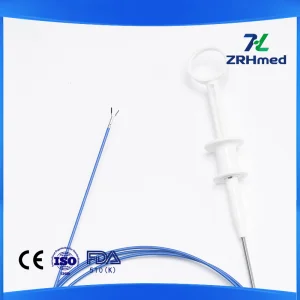
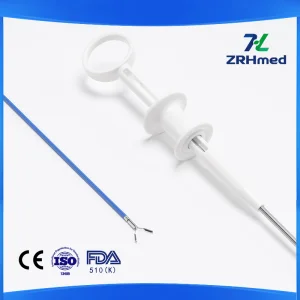
Precision histology hinges on clean, untorn tissue samples that preserve cellular architecture for pathologists. Our single-use biopsy forceps feature surgical-grade stainless steel cups micro-ground to razor sharpness, an optional central needle for stabilized mucosal positioning, and coated spring coils that slide friction-free through acutely articulated endoscope channels.
Acute gastrointestinal bleeding demands instant mechanical clamping. Our disposable hemoclips deliver synchronized 360-degree bidirectional rotation, generous jaw spans up to 16mm, and short stem profiles that prevent lumen obstruction. Engineered for multi-open and close repositionability, clinicians can position the clip with absolute millimeter precision prior to final lock and deployment.
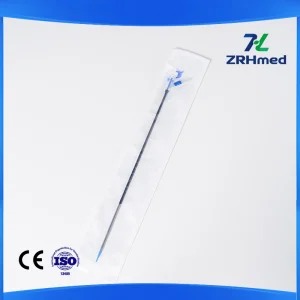
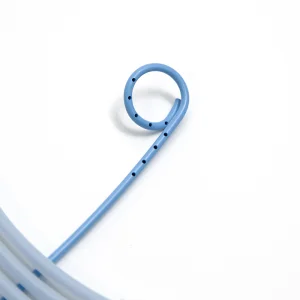
Navigating the ampulla of Vater requires instruments with predictable torque response and superior radiopacity. Our ERCP portfolio includes hydrophilic guidewires with shape-memory nitinol cores, dual-lumen sphincterotomes for precise papilla orientation, and pigtail drainage catheters that ensure smooth bile flow and minimize stricture-induced cholangitis.
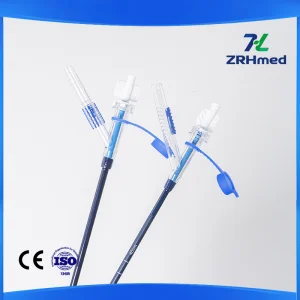
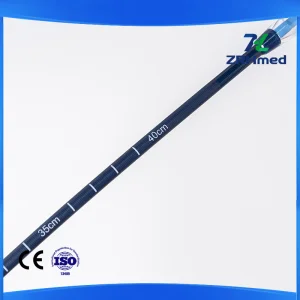
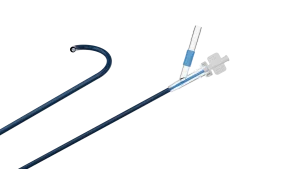
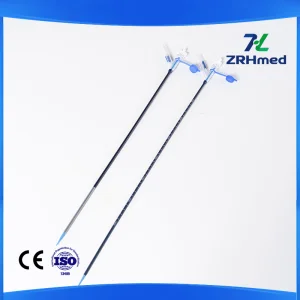
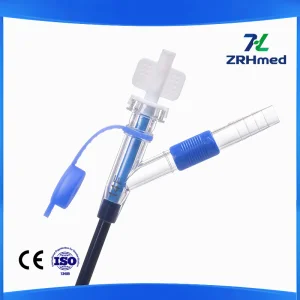
Elevated intrarenal pressure during flexible ureteroscopy (fURS) increases the hazard of pyelovenous backflow, septic shock, and renal parenchyma injury. Our patented negative-pressure suction ureteral access sheaths feature a built-in evacuation port that actively expels stone dust and saline irrigation fluid, maintaining clear visibility while keeping intrarenal pressure safely below 30 mmHg.
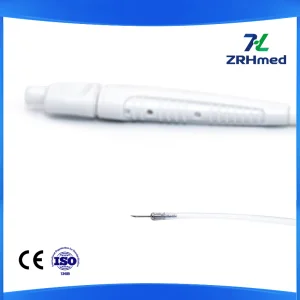
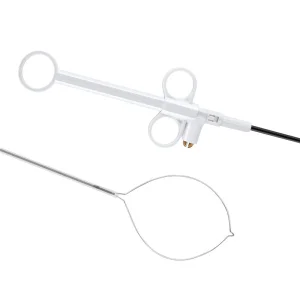
Endoscopic Mucosal Resection (EMR) and Submucosal Dissection (ESD) require exact lesion elevation and snare capture to prevent muscularis propria perforation. We provide ultra-fine braided cold and hot polypectomy snares alongside spring-assisted submucosal injection needles that guarantee controlled fluid depot formation and swift resections.
Maintaining long-term channel patency between high-volume cases requires comprehensive accessory support. Our protective medical bite blocks safeguard expensive flexible endoscope shafts from patient involuntary bite reflex, while channel cleaning brushes with rounded, non-scratch tips maximize microbial bio-burden removal across all lumen configurations.
Navigating complex international medical device regulations requires exhaustive technical dossiers, biocompatibility profiles, and seamless QMS traceability.
Distributors and OEM private label partners receive end-to-end documentation packages aligned with European Medical Device Regulation (EU MDR 2017/745) Class IIa and IIb criteria, and FDA 510(k) premarket notification guidelines. Every product line is substantiated by comprehensive risk assessments following ISO 14971, clinical evaluation reports (CER), and usability engineering data.
Direct mucosal and intravascular contact mandates stringent biological safety verification. All materials, adhesives, and polymer resins undergo exhaustive GLP-certified testing under ISO 10993 (cytotoxicity, sensitization, systemic toxicity, and hemocompatibility). Sterilization processes comply with ISO 11135 for Ethylene Oxide (EO), verifying that residual ethylene oxide and ethylene chlorohydrin remain well below international release limits.
Anticipating the technological horizon of interventional endoscopy through 2030, our R&D division is actively engineering smart-sensor integration and eco-conscious polymer alloys.
Integrating micro-piezoresistive pressure sensors at the distal tip of ureteral access sheaths. These active sensors transmit continuous renal pelvic pressure data back to an external operating console, triggering automated fluid aspiration if intrarenal pressure spikes above safe physiological thresholds.
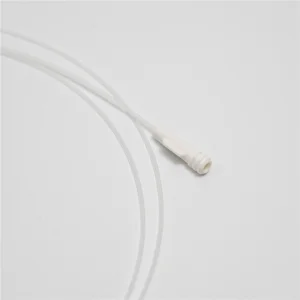
Next-generation spray catheters paired with micro-fluidic vortex nozzles designed to dispense narrow-spectrum organic contrasting agents (such as indigo carmine and Lugol’s solution) in microscopic, ultra-uniform droplet layers, accelerating early gastric neoplastic margin identification.
Pioneering environmental sustainability in hospital medical waste without sacrificing clinical performance. Research initiatives in bio-resorbable sheath handles, recycled medical packaging trays (Tyvek-compatible), and non-halogenated fluoropolymers designed to mitigate clinical incinerator emissions.
Straightforward answers regarding OEM customizations, minimum order quantities (MOQ), sterilization certificates, and factory lead-times.
Expanding your hospital suite capabilities with precision polyp snares, stone retrieval baskets, chromoendoscopy catheters, and atraumatic ureteral sheaths.
Request confidential product sample kits, detailed ISO 13485 test data, or schedule an engineering consultation for custom OEM private-label manufacturing.