Clinically validated diagnostic and therapeutic accessories engineered to exacting ISO 13485 standards for acute biliary intervention, mucosal biopsy, and interventional hemostasis.
An analytical overview of high-molecular polymer dynamics, atraumatic distal geometries, and micro-drainage fluidics in biliary decompression.
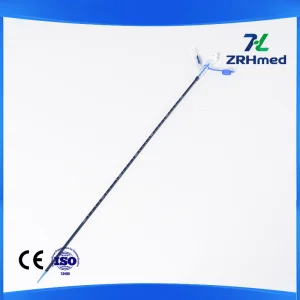
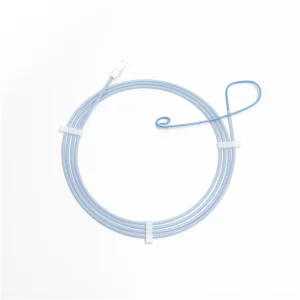
Endoscopic Nasobiliary Drainage (ENBD) represents an indispensable, life-saving intervention across interventional gastroenterology. Primarily indicated for emergent biliary decompression during acute suppurative cholangitis, temporary relief of severe obstructive jaundice, dynamic postoperative cholangiography, and prophylactic perfusion against post-ERCP pancreatitis (PEP), ENBD catheterization bridges acute stabilization and definitive surgery. Historically, legacy catheters suffered from frequent lumen occlusion, poor guidewire trackability, and severe patient discomfort during transnasal conversion.
In modern biliary endoscopy, next-generation OEM nasobiliary drainage tube manufacturing centers on thermo-responsive polyurethane (TPU) and cross-linked polyether block amide (Pebax®). These advanced elastomers exhibit high flexural modulus at ambient cleanroom temperatures (20°C–24°C) to allow effortless pushability through the 2.8mm to 4.2mm working channels of duodenoscopes. Upon exposure to physiological human core body temperatures (37°C), the catheter undergoes controlled softening, minimizing mucosal shear stress, mechanical erosion of the ampulla of Vater, and traumatic ulceration of the posterior pharynx.
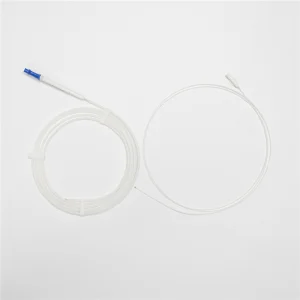
Catheter dislodgement and biofilm clogging remain persistent clinical failure modes in nasobiliary procedures. To mitigate proximal displacement induced by peristaltic gastrointestinal waves, certified OEM factories deploy thermal convection annealing to produce shape-memory retention geometries—predominantly Alpha-loops, Classical Pigtails, and multi-curve S-configurations. Laser-machined drainage side-holes are oriented in an elliptical helical pattern along the inner and outer curvature of the pigtail. This structural configuration prevents mucosal suction collapse and guarantees uninterrupted drainage even if the primary distal tip abuts hyperplastic biliary tissue or calculus debris.
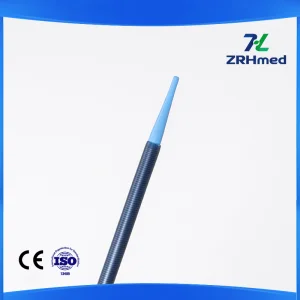
Seamless transition from a stiff proximal shaft (Shore 72D) for 1:1 tactile transmission and pushability, to an ultra-soft atraumatic distal tip (Shore 85A) to eliminate ductal perforation risks.
Micro-burr-free side apertures drilled with ultraviolet femtosecond lasers, preserving structural hoop strength and eliminating micro-thrombus or particulate adherence sites.
Uniformly distributed 20%–40% radiopaque filler compounds throughout the polymer matrix, ensuring complete fluoroscopic visibility under ultra-low-dose C-arm X-ray guidance.
Navigating regional health authority certifications, sterile barrier packaging integrity, and total cost of ownership (TCO) benchmarks.
Hospital Group Purchasing Organizations (GPOs), international medical device distributors, and private label OEM brand owners face mounting friction in global endoscopy procurement. The transition from the European Medical Devices Directive (MDD 93/42/EEC) to the stringent Medical Device Regulation (EU MDR 2017/745) has caused extensive attrition among legacy device vendors. For Class IIa and IIb single-use sterile devices like ENBD catheters, notified bodies now demand clinical evaluation reports (CER) backed by rigorous post-market clinical follow-up (PMCF) data, full raw material extractable/leachable (E&L) profiling under ISO 10993, and biological safety verification.
In addition, the United States Food and Drug Administration (FDA) 510(k) clearance requirements require stringent demonstration of substantial equivalence regarding tensile yield strength at tube-to-hub bonding joints, guidewire passability tolerances (typically accommodating 0.035-inch or 0.025-inch hydrophilic guidewires), kink-resistance ratios, and ethylene oxide (EO) residual levels conforming strictly to ISO 11135 (EO residues < 4 mg/device and ECH < 9 mg/device).
| Dimensional French Gauge (Fr) | Outer Diameter (mm) | Inner Lumen Diameter (mm) | Working Length (cm) | Recommended Guidewire | Primary Clinical Target |
|---|---|---|---|---|---|
| 5.0 Fr | 1.67 ± 0.04 | 1.10 ± 0.03 | 250 – 280 | 0.025" / 0.035" | Pediatric ERCP, high-grade biliary strictures, tortuous ductal anatomy |
| 6.0 Fr | 2.00 ± 0.04 | 1.35 ± 0.03 | 250 – 280 | 0.035" | Standard diagnostic drainage, low-viscosity biliary decompression |
| 7.0 Fr | 2.33 ± 0.05 | 1.55 ± 0.04 | 250 – 280 | 0.035" | High-viscosity infected bile, post-stone extraction, purulent cholangitis |
| 8.5 Fr | 2.83 ± 0.05 | 1.95 ± 0.04 | 250 – 280 | 0.035" / 0.038" | Severe suppurative cholangitis, stone-dissolution perfusion flushing |
Automated ISO Class 7/8 manufacturing clusters, robotic quality control gates, and vertical integration delivering unmatched lead times.
The manufacturing ecosystem for interventional endoscopy has undergone structural transformation. China's state-of-the-art Medical Device 4.0 industrial parks integrate advanced polymer compounding, ultra-precision multi-lumen micro-extrusion lines, robotic thermal pigtail shaping, automated ultrasonic tipping, and high-speed blister packing within certified ISO 14644-1 Class 7 cleanrooms.
By leveraging vertically integrated supply chains, leading Chinese OEM factories eliminate multi-tiered sub-contracting layers. From raw medical-grade pellets imported from Lubrizol or Arkema to final EO sterilization validation conforming to ISO 11135, every manufacturing station operates under an Enterprise Resource Planning (ERP) and Manufacturing Execution System (MES) infrastructure. This delivers comprehensive digital batch records, single-device serialization, and full lot traceability directly down to raw compound masterbatches.
MFI, Shore hardness, and FTIR spectroscopic validation of incoming medical TPU/Pebax resins to eliminate lot variances.
Continuous closed-loop laser micrometer tracking to regulate OD/ID tolerances within ±0.03mm across 280cm extrusions.
Controlled thermal annealing fixtures shaping memory pigtails, ensuring elastic recovery after duodenoscope ejection.
Laser side-hole drilling and automated RF tipping, crafting completely round, atraumatic distal guide-wire entries.
Medical-grade Tyvek® heat-sealing, 100% dye-penetration leak testing, and validated 7-day degassed EO cycles.
From emergent intensive care decompression to elective therapeutic stone flushing: the essential clinical footprint of ENBD.
The clinical utilization of OEM nasobiliary drainage tubes varies across geographic markets based on healthcare infrastructure and clinical training doctrines:
1. Acute Suppurative Obstructive Cholangitis (ASOC): In Southeast Asia and Latin America, where choledocholithiasis prevalence remains high, ENBD represents the first-line emergency decompression intervention. Unlike internal plastic biliary stents, ENBD provides immediate visible confirmation of bile flow volume and purulence, while allowing transnasal antibiotic irrigation to clear stagnant infected sludge.
2. Prophylactic Irrigation Against Post-ERCP Pancreatitis (PEP): In high-volume endoscopic surgery centers in Western Europe and North America, temporary nasobiliary drainage is deployed post-sphincterotomy or during challenging cannulation cases. By continuously decompressing the common bile duct, the pressure gradient across the sphincter of Oddi is equalized, markedly attenuating the incidence of chemical and pressure-induced pancreatitis.
3. Post-Operative Biliary Leak Management: Following laparoscopic cholecystectomy or complex liver resections, ductal leaks can result in localized bilomas or generalized peritonitis. ENBD placement diverts intraductal bile pressure away from the rupture site, accelerating spontaneous fistula closure without requiring exploratory open laparo-conversion.
Detailed clarifications on contract manufacturing agreements, customization limits, regulatory documentation, and quality controls.
Expanding your commercial distribution footprint with high-turnover medical accessories engineered for minimally invasive precision.