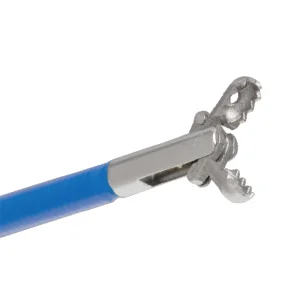
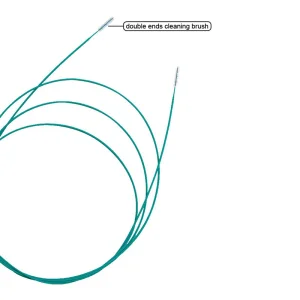
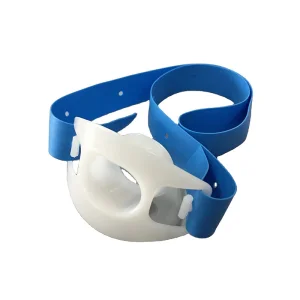
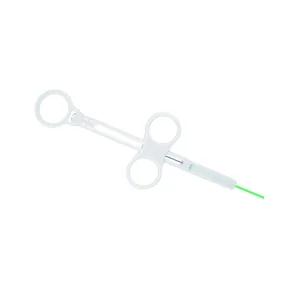
Explore our foundational range of disposable, sterile medical devices integrated with precision nitinol and medical-grade alloys.
A strategic overview of nickel-titanium shape memory alloys driving structural innovations in medical intervention and precision robotics.
Nickel-Titanium (Nitinol) represents the pinnacle of smart metallurgy, characterized by two distinctive phenomena: Superelasticity (Pseudoelasticity) and the Thermal Shape Memory Effect. Originating from reversible martensitic-austenitic phase transformations, Nitinol wire enables engineering designs once deemed physically impossible with standard stainless steel or cobalt alloys. As an OEM Nitinol wire supplier and dedicated contract manufacturer, our operations address the rising global demand across minimally invasive intervention, structural transcatheter therapies, micro-actuators, and advanced industrial instrumentation.
In modern med-tech ecosystems, the transition toward less traumatic endoscopic, transcatheter, and micro-laparoscopic interventions has positioned ultra-fine Nitinol wire at the core of supply-chain competitiveness. Tight global raw material capacities, stringent ASTM F2063 compositional compliance, and rigorous fatigue thresholds require specialized OEM production environments featuring vacuum consumable arc remelting (VAR), cold-drawing automation, and laser-guided micrometer monitoring.
Mapping technological inflections that redefine how OEMs source, form, and utilize Nitinol across multiple sectors.
Thermomechanical rolling protocols achieve nanoscale grain distribution, elevating kink resistance, ultimate tensile strength (UTS > 1450 MPa), and cyclic fatigue thresholds for dynamic intravascular deployments.
Proprietary active Af (Austenite Finish) temperature calibration within ±1.5°C ensures immediate superelastic recovery at physiological core human temperature (37°C) without risk of permanent deformation.
Restricting intermetallic non-metallic inclusions (Ti2NiOx carbides and oxides) to under 12.5 microns minimizes nucleation sites for microcracks, directly increasing survival rates in long-term implantables.
Laser and chemical electropolishing builds an impervious titanium oxide (TiO2) barrier with minimal nickel ion release, passing stringent ISO 10993 cytotoxicity, hemocompatibility, and biocompatibility protocols.
From complex endourology devices to aerospace micro-actuators, inspect how Nitinol wire forms critical operational backbones.
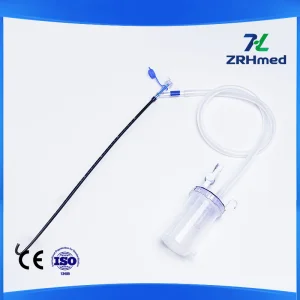
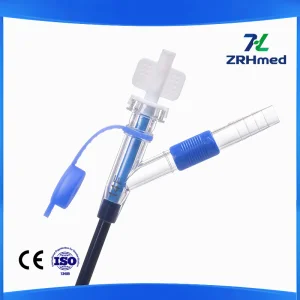
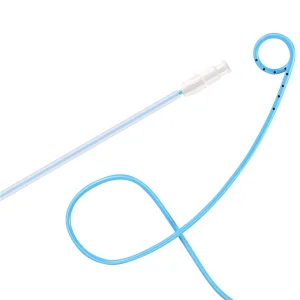
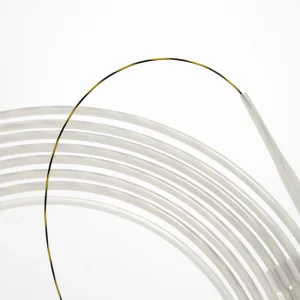
Nitinol core wire serves as the resilient cage mechanism in basket stone extractors and flexible kink-free core wires for ureteral access systems, holding geometric form despite aggressive tortuous anatomical routing.
Braided Nitinol micro-wires provide high radial resistive force coupled with chronically low outward force, expanding automatically upon deployment from catheter sheaths without vascular intimal rupture.
Utilizing high recoverable strain capacity (up to 8%), Nitinol staples and intramedullary wire bundles generate continuous dynamic compression across fracture sites, promoting rapid bone osteosynthesis.
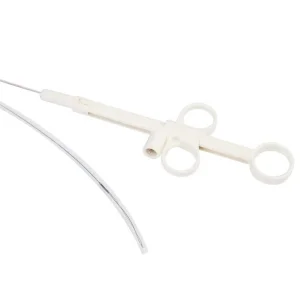
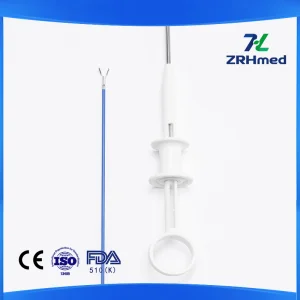
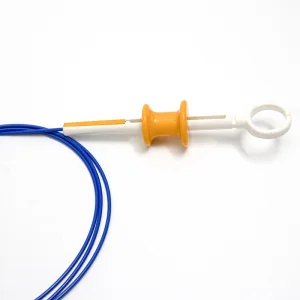
Nitinol core cables integrated inside polypectomy snares and sphincterotomes ensure that the wire loop deploys symmetrically, retains roundness, and cuts clean mucosal tissue without plastic distortion.
Medical exoskeletons and robotic surgical end-effectors harness the elastic flex endurance of Nitinol wire ropes to transmit continuous tensile loads across tight multi-axis joint curvatures.
Thermal shape memory wire assemblies operate as non-explosive release mechanisms (NERMs) and solid-state actuators in satellites, eliminating mechanical wear and hydraulic fluids in extreme temperatures.
Standard engineering baselines managed within our ISO 13485 production cells for global medical devicemakers.
| Parameter Classification | Standard Specification Range | OEM Tailoring Available | Testing & Compliance Method |
|---|---|---|---|
| Wire Diameter Dimension | 0.025 mm – 3.00 mm (0.001" – 0.118") | Custom draws down to ±0.0015 mm | Continuous dual-axis laser micrometry |
| Alloy Composition | 55.0 – 56.5 wt% Ni balance Ti (ASTM F2063) | Binary, Ternary (Pt, Cr, Cu doped) | X-ray Fluorescence (XRF) & ICP-OES |
| Active Af (Transformation) | -15°C to +95°C (Medical SE: +15°C to +32°C) | Adjusted per batch heat treatment | Differential Scanning Calorimetry (DSC) / BFR |
| Mechanical Plateau Stress | Upper Plateau ≥ 450 MPa, Lower ≥ 180 MPa | Soft, medium, or stiff spring profiles | Uniaxial tension testing per ASTM F2516 |
| Surface Finish Options | Black Oxide, Amber Oxide, Light Oxide, Cleaned, Electropolished | Pt-iridium or gold plated, PTFE coated | Auger electron spectroscopy (AES), SEM |
| Sterilization Compatibility | Ethylene Oxide (EO), Gamma Radiation, E-Beam, Autoclave | Cleanroom pre-packaged or bulk spools | ISO 11135 / ISO 11137 bioburden validation |
Solving complex procurement risks, regulatory hurdles, and design-for-manufacturability bottlenecks.
Dedicated metallurgical support engineers translate CAD geometry into specialized shape-setting mandrels, providing first-article Nitinol components in as fast as 10 business days for early clinical animal trials.
Every shipment is accompanied by comprehensive certified material test reports (CMTRs), covering chemical composition, inclusions per ASTM F2063, tensile elongation, and DSC transformation curve data.
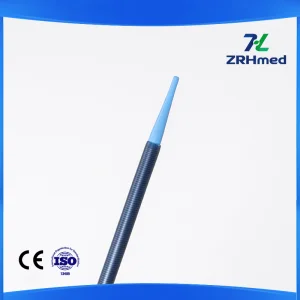
Our manufacturing capabilities encompass high-speed precision centerless grinding for tapered guidewires, CNC micro-laser cutting, EDM machining, shape setting, welding, and medical cleanroom packaging.
We mitigate raw ingot market volatility through proactive raw material stockpiling and localized multi-source melt stocking, offering OEM contract partners fixed-price framework agreements.
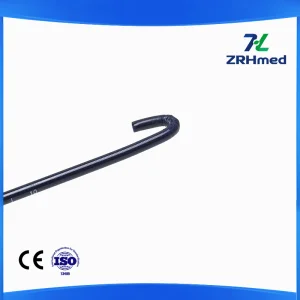
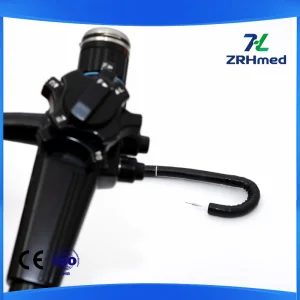
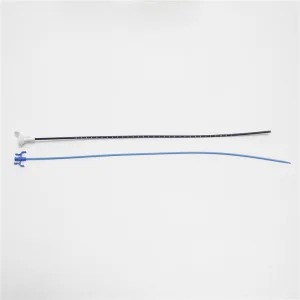
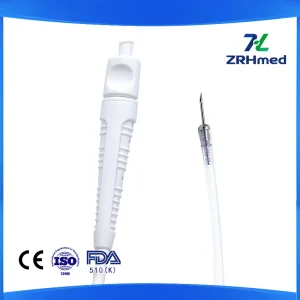
Advanced diagnostic and therapeutic instruments manufactured under strict lot-traceable OEM protocols.
In-depth responses to technical inquiries frequently raised by R&D directors, component purchasers, and quality assurance managers.
Superelastic Nitinol is fully austenitic at room/body temperature (Af < 22°C to 37°C). When subjected to stress, it instantly transforms into stress-induced martensite, accommodating massive elastic deformation up to 8% before springing back immediately upon release. Shape memory Nitinol wire exhibits an Af temperature higher than ambient conditions (often 40°C to 90°C). It remains in a malleable martensitic phase until heated past its Af, which triggers a crystal restructuring to austenite and returns the material to its pre-programmed geometry.
Af temperature is influenced by fractions of a percent in chemical composition (a 0.1 wt% shift in nickel can shift transformation points by over 10°C). We regulate this by combining precise vacuum melting with closely monitored final shape-setting and thermal aging cycles. We evaluate transformation characteristics using Differential Scanning Calorimetry (DSC) in compliance with ASTM F2004 or the Bend and Free Recovery (BFR) technique per ASTM F2082 to guarantee precise consistency.
We supply Nitinol wire in several standard finishes: Black Oxide (direct draw), Amber/Light Oxide (intermediate heat-treated), Oxide-Free Etched, and Electropolished. For blood-contacting and long-term implantable devices, electropolishing is strongly advised because it removes nickel-rich surface layers, generating a uniform, high-purity TiO2 (titanium dioxide) passivation barrier that minimizes nickel ion dissolution and eliminates thrombogenic risks.
Yes. Our integrated factory facility is equipped with dedicated multi-axis CNC wire-forming equipment, customized vacuum heat-treating furnaces, and specialized automated centerless grinding machines. We can supply straight continuous spools, centerless ground distal tapers for guidewires, or intricate pre-formed geometry components including multi-leg retrieval baskets, vascular filters, and customized endoscopic snare loops.
Our manufacturing and quality oversight frameworks operate under certified ISO 13485:2016 quality management systems. All OEM Nitinol wire raw stock and processed components conform to ASTM F2063 (Standard Specification for Wrought Nickel-Titanium Shape Memory Alloys for Medical Devices and Surgical Implants), complete with lot traceability, dimensional verification logs, mechanical tensile stress test charts, and comprehensive biocompatibility certifications matching ISO 10993.