
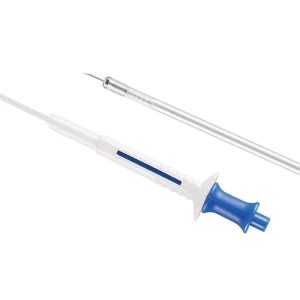
Engineered for seamless compatibility with standard Japanese endoscope working channels (2.8mm to 3.7mm), ensuring responsive tactile feedback during submucosal injection and mechanical intervention.
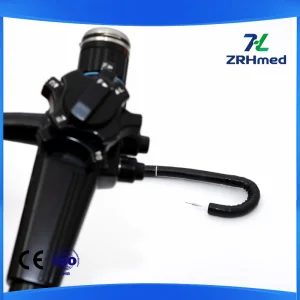
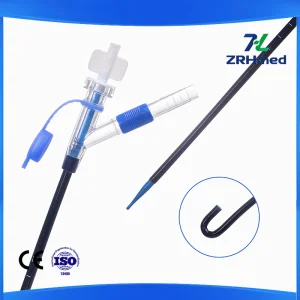
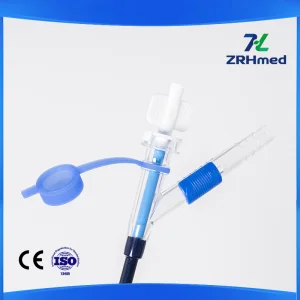
Japan is widely acknowledged as the cradle of therapeutic digestive endoscopy. Driven by nationwide screening programs for gastric cancer, Japanese gastroenterologists pioneered Endoscopic Mucosal Resection (EMR) in the 1980s and developed Endoscopic Submucosal Dissection (ESD) in the late 1990s.
Japanese hospital networks (such as the National Cancer Center Hospital and university centers in Tokyo and Osaka) uphold the world's most rigorous benchmarks for en bloc resection, clear surgical margins (R0), and histopathological preservation.
Endosurgical consumables must maintain structural stiffness without damaging microvascular networks.
While domestic Japanese medical corporations maintain dominant tier-1 brand distribution, cost containment pressures under Japan's National Health Insurance (NHI) drug and device reimbursement revisions have driven leading device suppliers to partner with certified OEM cleanroom factories abroad.
These partnerships provide customized manufacturing solutions that maintain Japanese surgical standards while controlling production overhead.
Supplying the Japanese healthcare market demands strict adherence to the Pharmaceuticals and Medical Devices Agency (PMDA) under the Act on Securing Quality, Efficacy and Safety of Products Including Pharmaceuticals and Medical Devices.
Every product batch must feature full technical dossiers, sterilization validation (ISO 11135), and biological evaluation data conforming to ISO 10993 standards.
A rigorous review of mechanical thresholds, channel mechanics, and dynamic behaviors required by Japanese clinical protocols.
| Evaluation Parameter | Endoscopic Mucosal Resection (EMR) | Endoscopic Submucosal Dissection (ESD) | ZhuoRuiHua Factory OEM Benchmark |
|---|---|---|---|
| Clinical Target | EMR Lesions < 20mm; polypoid mucosal adenomas | ESD Lesions > 20mm; ulcer-positive early gastric/colonic neoplasia | Dual-platform tool flexibility (Snare & Electrosurgical Knives) |
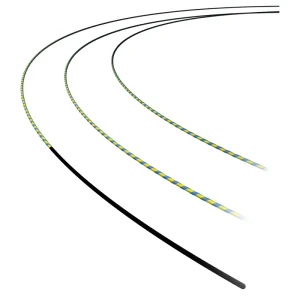
| Channel Dynamic | Fast deployment loop snares; cold/hot resection wires | Stepwise circumferential mucosal incision and dissection | Braided stainless steel / nitinol core with 1:1 torque ratio |
| Fluid Cushion Stability | Saline or dilute epinephrine bolus injection | High-viscosity hyaluronate or hydroxyethyl starch delivery | High-pressure bevel injection needle, 23G/25G leak-free seals |
| Hemostasis Need | Preventative clip application post-resection | Targeted coag-rasper closure and rotatable hemoclipping | 135°–165° rotatable jaw, repositionable before final release |
| Complication Risk | Perforation rate < 0.5%; bleeding 1–2% | Perforation risk 1.5–4.5%; micro-dissection risk | High-rigidity sheathing to prevent channel deflection during cutting |
Accelerate your OEM supply chain with PMDA-ready technical dossiers, cleanroom batch traceability, and rapid custom prototyping.
Combining competitive cleanroom manufacturing at scale with stringent quality validation matching the Japanese Ministry of Health, Labour and Welfare (MHLW) Ordinance 169.
Every lot of endoscopic injection needles, snares, and hemoclips is assembled inside controlled cleanrooms adhering to ISO 14644-1. Automated ultrasonic cleaning, vacuum drying, and continuous particle monitoring prevent particulate and bioburden risks.
Japanese procurement demands complete accountability. We track raw materials down to specific batches of medical-grade 304/316L stainless steel wire, nitinol superelastic core components, and medical-grade PTFE tubing, maintaining digital documentation across the entire process.
We work directly with Japanese Marketing Authorization Holders (MAH / Seizo-Hanbai-Gyo) and authorized distributors to compile comprehensive Drug Master Files (DMF), biological safety reports, and stability data required for PMDA approval.
Real-world integration across Japanese university hospital centers, prefecture cancer facilities, and outpatient endoscopy clinics.
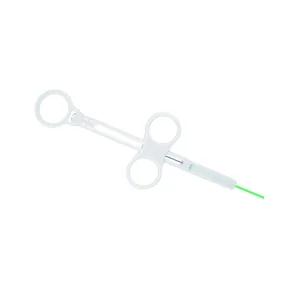
In high-volume Japanese gastric oncology centers, endoscopic resection requires steady submucosal elevation. ZhuoRuiHua's precision injection needles provide steady fluid dynamics without leakage at the proximal Luer connector.
Complementary flexible rotatable hemoclips offer instantaneous 360-degree orientation, allowing surgeons to close defect margins and arrest arterial pumping bleeds in complex retroflexed endoscopic orientations.
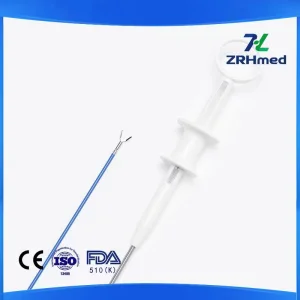
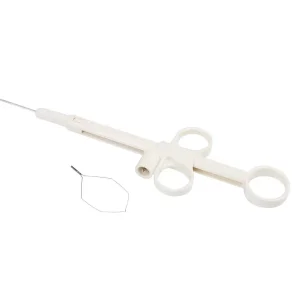
Japanese clinical guidelines emphasize cold snare polypectomy (CSP) for sub-centimeter colorectal polyps to avoid electrocautery-induced transmural thermal injury and delayed perforation. Our fine-wire nitinol and stainless steel snares deliver clean mechanical cutting without thermal damage.
For mucosal lesions between 10mm and 20mm, our EMR combination sets allow rapid injection lift followed by complete ensnaring and clean transection.
Continuous R&D investments dedicated to advancing endoluminal surgery, addressing demanding clinical challenges faced by next-generation GI endoscopists.
Carbonization and tissue adhesion significantly prolong ESD operative duration. Our engineering teams are piloting advanced nano-fluoropolymer coatings on dissection blades and snares to minimize tissue adhesion, stabilize electrical contact, and shorten procedure times.
Collaborating with imaging and algorithmic platforms, ZhuoRuiHua is optimizing device radiopacity and surface markers. This enables real-time visual tracking of knife tip depth and mucosal boundaries under AI-assisted computer-aided detection (CADe/CADx) environments.
Closing extensive post-ESD mucosal defects remains a vital defense against delayed bleeding. Our development pipeline includes internal traction pulleys and through-the-scope continuous suture assemblies designed to lower overall hospitalization costs for Japanese healthcare providers.
Essential guidance for procurement directors, product managers, and regulatory leaders evaluating ZhuoRuiHua Medical for OEM, ODM, or direct distribution supply.
Explore our broader line of single-use therapeutic instruments for tissue sampling, hemostasis, access management, and endoscopic resection across upper/lower GI and urology suites.
Get in touch with our international business team today for tender quotations, sample evaluations, and tailored OEM production arrangements.