Core instruments supplied directly to hospital syndicates, regional procurement consortia, and specialty distributors in Nigeria.
Analyzing epidemiological trends, procedural modernization, and systemic constraints in managing urinary calculi across Sub-Saharan Africa's largest demographic healthcare matrix.
Rapid demographic urbanization, dietary transitions toward high-sodium processed foods, and persistent tropical dehydration profiles across Northern Nigeria (Kano, Kaduna, Maiduguri) and the Sahel fringe have dramatically driven the prevalence of calcium oxalate and uric acid lithiasis in Nigerian adults.
Historically dominated by invasive open nephrolithotomy and pyelolithotomy due to capital equipment constraints, Nigerian teaching hospitals (such as LUTH in Lagos, UCH in Ibadan, and AKTH in Kano) are transitioning to minimally invasive Retrograde Intrarenal Surgery (RIRS) and mini-PCNL.
A significant clinical hurdle in Nigerian urology remains post-operative urosepsis following high-power Holmium or Thulium laser dusting. Elevating intrarenal pressure (IRP) beyond 30–40 mmHg promotes fluid pyelovenous backflow, an acute complication that our negative-pressure suction technology directly circumvents.
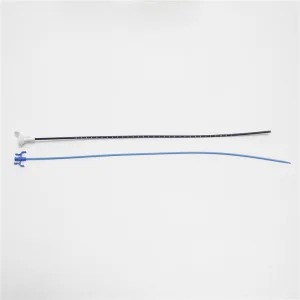
Traditional passive ureteral access sheaths rely exclusively on convective gravity backflow around the exterior of flexible ureteroscopes, risking catastrophic pressure spikes, tissue denudation, and retained infectious stone dust. The Negative-Pressure Ureteral Access Sheath (N-UAS) establishes a controllable, closed-loop hydrodynamic circuit.
Structured manufacturing and documentation protocols designed to streamline bulk supply chains, customs tariffs, and local regulatory hurdles for Nigerian medical distributors.
Comprehensive regulatory compilation including Free Sales Certificates (FSC), ISO 13485 QMS audit dossiers, Certificate of Analysis (CoA), and CE declarations to expedite product registration with Nigeria's National Agency for Food and Drug Administration and Control.
Sterile medical tyvek-foil barrier systems optimized to maintain hermetic integrity under West Africa's elevated ambient temperatures, humid equatorial ports (Apapa, Tin Can Island, Onne), and high seasonal particulate dust during Harmattan.
Navigating Central Bank of Nigeria (CBN) FX liquidity allocations through flexible trade structures, Form M processing, verified LC support, and dedicated factory direct FOB/CIF clearing protocols with verified lead times.
Dedicated capability for custom institutional labeling, specialized working lengths (35cm, 45cm, 55cm), custom French calibers (10/12Fr, 11/13Fr, 12/14Fr), and private branding for established African medical equipment suppliers.
Continuous clinical iterations dedicated to reducing procedural risk and democratizing advanced stone surgery worldwide.
High-slip photo-cured hydrophilic cross-linked coating on distal sheath shafts minimizes mucosal insertion friction by over 62%, drastically lowering the risk of ureteral dissection.
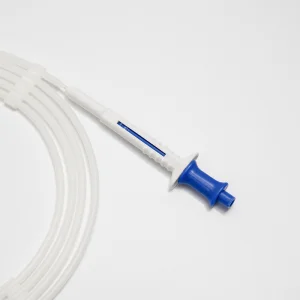
Ergonomic manual suction regulation valve allows the operating surgeon to throttle suction pressure instantaneously via thumb valve without disrupting scope maneuverability.
Integrating micro-piezoelectric pressure sensor filaments into the distal sheath rim to deliver real-time digital intrarenal pressure data directly to visual theatre monitors.
Dynamic fluidic vortex technology that coordinates pulse saline inflow with automated suction pulses, pulverizing and clearing large staghorn burdens without basket instrumentation.
Request bulk hospital tender quotations, samples for clinical evaluation, or discuss private-label OEM distribution contracts with our international surgical engineering division.
Direct technical answers regarding performance parameters, Nigerian regulatory customs clearance, and clinical deployment.
In conventional Retrograde Intrarenal Surgery (RIRS), continuous irrigation fluids can dramatically elevate intrarenal pressure (often exceeding 40–60 mmHg), especially during lengthy dusting procedures with high-power lasers. In resource-constrained environments where intensive care beds are limited, this elevated pressure causes bacterially colonized urine to extravasate through the renal parenchyma into systemic circulation, leading to severe urosepsis. Our negative-pressure ureteral access sheath incorporates an integrated vacuum port that continuously evacuates irrigation fluid and fragmented debris, keeping intrarenal pressure strictly below 20 mmHg and reducing post-op sepsis complications by more than 85%.
Every shipment and distributor partnership is supported by a comprehensive regulatory dossier conforming to NAFDAC medical device importation guidelines. This includes manufacturer ISO 13485:2016 certificates, CE MDR conformity declarations, Free Sale Certificates (FSC) authenticated by relevant authorities, product-specific Certificate of Analysis (CoA), full biocompatibility reports according to ISO 10993 (cytotoxicity, systemic toxicity, sensitization), and ethylene oxide (EO) sterilization validation dossiers per ISO 11135.
For adult male and female endourological procedures, the 11/13Fr and 12/14Fr inner/outer diameter sheaths are the most universally deployed across Nigerian regional centers. They accommodate standard 7.5Fr to 8.5Fr flexible ureteroscopes while maintaining an ample annular gap for continuous aspiration of micro-fragments up to 2.5 mm. For male patients, a 45cm or 50cm working length is standard, whereas a 35cm sheath is optimal for female ureteral anatomy. Pediatric and adolescent cases are served by our 10/12Fr, 25cm–35cm configurations.
The sheath's lateral suction arm is engineered with an international standard tapered stepped connector, enabling plug-and-play integration with both central hospital pipeline vacuum outlets and mobile electric surgical suction units (such as standard surgical pumps common in Nigerian private and government operating theatres). A built-in manual air vent regulator allows the endourologist or scrub nurse to toggle between atmospheric equilibrium and controlled negative pressure (-0.02 to -0.05 MPa) with precise fingertip control.
For standard institutional catalog models, our standard production lead time is 7 to 15 working days. Air freight consignments dispatched to Murtala Muhammed International Airport (LOS) in Lagos or Nnamdi Azikiwe International Airport (ABV) in Abuja routinely transit within 5 to 7 days via major global logistics carriers (DHL, Emirates SkyCargo, Qatar Cargo). Bulk seafreight consolidations to Apapa or Tin Can Island Ports transit within 28 to 35 days. Minimum order quantities for trial distributor shipments start at modest volumes to support clinical evaluation.
Verified single-use endoscopic and endourological accessories manufactured in ISO-certified cleanroom environments for dependable, infection-free interventions.