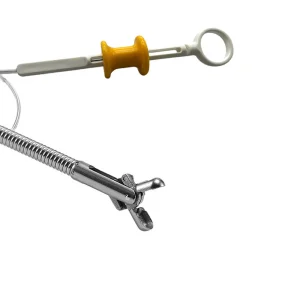
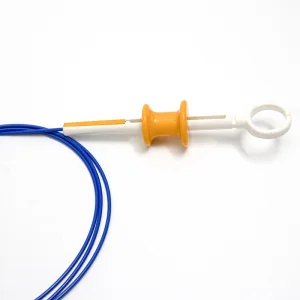
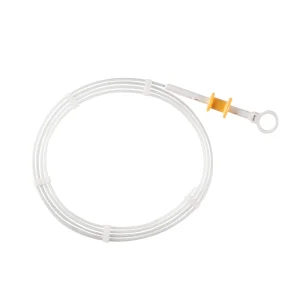
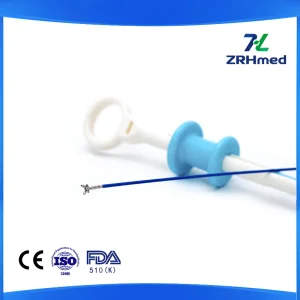
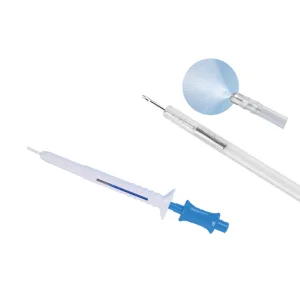
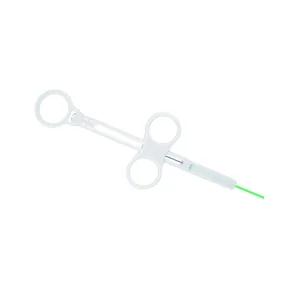
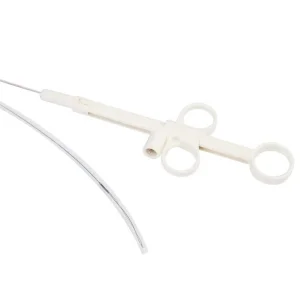
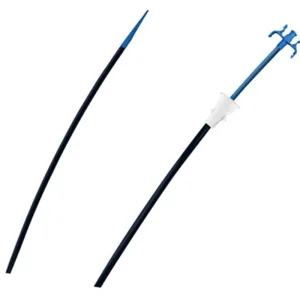
Engineered for maximum tissue yield, low mechanical resistance, and zero cross-contamination risk in rigorous ambulatory surgical center (ASC) and hospital settings.
Navigating the convergence of acute clinical demand in the world's largest medical complex and the supply chain realities of medical device OEM/ODM production.
Houston represents the pinnacle of therapeutic oncology, gastroenterology, and thoracic care, anchored by the Texas Medical Center (TMC)—the largest medical center in the world. With major institutions including MD Anderson Cancer Center, Houston Methodist, and Memorial Hermann, Houston processes tens of thousands of gastrointestinal (GI) and pulmonological biopsies annually.
The regional industrial demand differs fundamentally from conventional procurement: Houston’s advanced GI suites require high-yield pathology specimens with minimal crush artifact to facilitate immediate molecular marker detection, genomic tumor profiling, and next-generation sequencing (NGS). However, local hospital networks are simultaneously confronted with the rising operational overhead of sterile processing departments (SPD). As a consequence, there is a seismic shift across the Gulf Coast toward premium single-use ODM/OEM biopsy forceps that deliver surgical-grade stainless performance while eliminating cross-contamination and reprocessing costs.
Globally, the endoscopic biopsy device market is undergoing structural realignment. Regulatory scrutiny under MDR 2017/745 in Europe and stringent FDA 510(k) post-market surveillances in the Americas have heightened compliance barriers. Concurrently, public and private payor systems are incentivizing outpatient screenings (colorectal cancer screening, Barrett's esophagus surveillance, EBUS-TBNA procedures), creating immense volumetric demands.
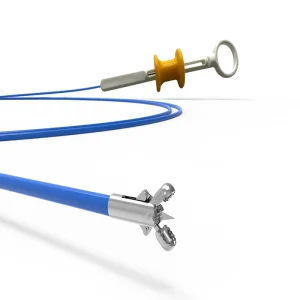
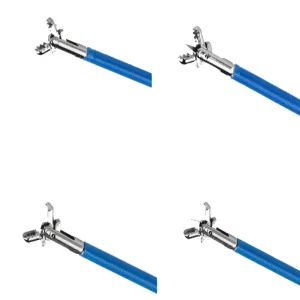
High-mix, high-volume production requires tight integration between metallurgical engineering and precision automated manufacturing. Traditional tiered medical supply chains are turning to specialized ODM factories capable of delivering custom jaw geometries (serrated alligator, fenestrated oval, spike-stabilized) with micron-level tolerances. Through direct factory-to-distributor collaboration, medical brands eliminate unnecessary intermediation, maintaining gross margins while guaranteeing hospitals continuous inventory resilience against global supply disruptions.
Matching device metallurgy and biomechanics to complex endoluminal procedures executed across Texas clinical centers.
In outpatient ambulatory centers throughout Katy, The Woodlands, and Pearland, screening colonoscopy volume is continuous. Forceps require smooth insertion through fully retroflexed colonoscopes. The coiled sheath must maintain axial rigidity with optimal pushability to avoid looping inside redundant colons, enabling precise targeting of flat, serrated adenomas.
In specialized oncology suites around MD Anderson and Baylor St. Luke's, transbronchial lung biopsy (TBLB) through tight peripheral bronchoscopes requires miniature 1.8mm working diameters. Rotatable designs allow pulmonologists to orient serrated alligator jaws perpendicular to suspicious mucosal lesions without torquing the flexible bronchoscope.
Following Seattle Protocol surveillance, clinicians need multiple serial samples. Our graduated sheath allows Houston endoscopists to accurately measure lesion depth and position relative to the squamocolumnar junction (Z-line), retrieving specimens of uniform thickness while reducing procedural time and patient sedation duration.
Driving technological innovation in tissue sampling: from laser-sintered micro-hinges to intelligent sensor integration.
Phase 1: Advanced Surface Metallization. Implementation of low-friction hydrophobic coatings across the stainless steel spring tube to completely eliminate endoscope working channel abrasion, extending the lifecycle of expensive flexible endoscopes.
Phase 2: Micro-MIM (Metal Injection Molding). Transitioning jaw architecture to sub-micron MIM precision casting, yielding razor-sharp serrated cutting edges that slice without tearing tissue cells, securing intact architecture for immunohistochemical (IHC) diagnostic accuracy.
Phase 3: Sensor-Assisted Feedback & AI Integration. Prototyping impedance-sensing biopsy tips that allow endoscopists in surgical hubs like Houston to evaluate mucosal tissue density prior to grasping, reducing arterial tear rates.
Turnkey Private Labeling (OEM/ODM): End-to-end support including custom outer sheath color coding, localized laser-etched markings, sterile blister packaging design, and FDA/CE compliance technical file assembly.
Risk-Mitigated Supply Chain Architecture: Dual-site material buffer stocks and localized US warehousing support for Houston-based distributors, avoiding container congestion and maintaining strict Just-In-Time (JIT) fulfillment.
Full-Spectrum Lot Traceability: Every production batch undergoes automated optical sorting and destructive tensile testing, supported by batch-specific sterilization validation records (ISO 11135 EO parameters).
Partner with an engineering-driven factory to configure custom specifications, working lengths, and private-label packaging for your market.
Send Inquiry NowComprehensive answers regarding materials, regulatory adherence, and supply customization.
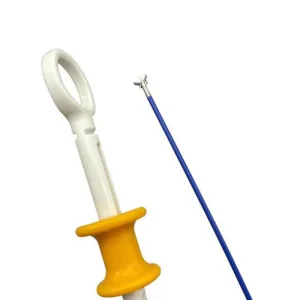
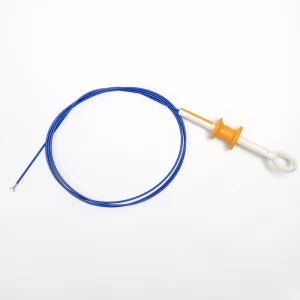
Our forceps cups are constructed from high-tensile 304/316L medical-grade stainless steel with specialized electro-polishing to remove burrs. The inner control wire utilizes high-fatigue braided stainless cables to guarantee tactile responsiveness without stretching, while the outer coil is coated with heat-shrink PTFE or PE to ensure zero friction within the endoscope working channel.
While reusable forceps historically seemed economical, independent clinical studies demonstrate high reprocessing labor costs, persistent residual bioburden risks in tiny hinges, and mechanical degradation (dull cups causing tissue crush artifacts). Single-use forceps guarantee 100% sharp cutting capability every single time, zero cross-contamination risk, and immediate compliance with stringent Joint Commission and CMS infection control standards.
Yes. Through our ODM program, we manufacture outer diameters ranging from 1.0mm (ultra-thin bronchoscopy) to 2.3mm and 3.0mm (therapeutic colonoscopes), with catheter lengths customizable from 1050mm to 2300mm. We also engineer custom jaw profiles including smooth oval, fenestrated oval, serrated alligator, and centered-needle (spike) configurations.
We provide full technical dossier files, ISO 13485:2016 quality management system documentation, biocompatibility testing certificates in accordance with ISO 10993 (cytotoxicity, sensitization, systemic toxicity), and ethylene oxide (EO) residual analysis reports according to ISO 11135.
Standard ODM configurations support low initial trial batches (from 500 units) to assist distributors in hospital sampling and evaluation. Full-scale production cycles typically average 3 to 4 weeks, with dedicated expedited air freight routing directly to Houston George Bush Intercontinental Airport (IAH) or consolidated ocean freight via the Port of Houston.
Explore our complete ecosystem of single-use therapeutic accessories, EMR/ESD tools, and specialized forceps.